

Google Ads are expensive due to high competition, cost-per-click (CPC) pricing models, and factors like ad quality and targeting precision. Businesses often bid aggressively for keywords, driving up costs significantly.
Understanding why Google Ads are so expensive is crucial for businesses looking to optimize their advertising budgets. Misjudging the costs or overlooking key factors can lead to wasted resources and missed opportunities for effective customer engagement.
This article delves into the core reasons behind the high costs of Google Ads, including the impact of competition, CPC dynamics, and the importance of ad quality and targeting strategies.
What factors contribute to the high cost of Google Ads?
The high cost of Google Ads is primarily driven by competition, keyword selection, and bidding strategies. Advertisers compete for visibility in search results, leading to increased prices for popular keywords. Additionally, the complexity of bidding strategies can further elevate costs based on performance and targeting options.
One of the most significant factors influencing Google Ads costs is competition. In highly competitive industries, multiple advertisers vie for the same keywords, driving up the cost-per-click (CPC). For example, industries such as finance, insurance, and legal services typically see much higher CPCs due to the lucrative nature of customer acquisitions in these sectors.
Keyword selection also plays a crucial role in determining costs. Advertisers must choose between high-volume keywords, which are often more expensive, and long-tail keywords that may be less competitive but yield lower traffic. The right balance can significantly impact overall advertising expenses and return on investment (ROI).
- Bidding strategies affect how much advertisers pay. Google Ads operates on an auction system where advertisers set bids for keywords. Higher bids can lead to better ad placements but also result in increased costs.
- Quality Score, a metric based on ad relevance and landing page quality, can lower costs. A higher Quality Score can reduce CPC, making effective ad copy and website optimization important.
- Targeting options such as geographic and demographic settings can also influence costs. More precise targeting often leads to higher costs, but can improve conversion rates.
Expert Tip: Advertisers should regularly analyze performance data and adjust strategies accordingly. Employing a combination of high and low-cost keywords along with optimizing Quality Score can yield a more effective and economical advertising campaign.
How can I reduce my Google Ads costs?
To reduce Google Ads costs, implement strategies such as keyword optimization, ad scheduling, and precise targeting adjustments. By refining these aspects, advertisers can achieve better performance without overspending. This approach not only minimizes costs but also enhances overall campaign efficiency.
- Conduct Keyword Research: Identify high-performing keywords that align with your business goals. Focus on long-tail keywords, which often have lower competition and cost-per-click (CPC) compared to broader terms.
- Optimize Quality Score: Improve your ads’ Quality Score by enhancing ad relevance, improving click-through rates, and optimizing landing pages. A higher Quality Score can lower your CPC and improve ad placement.
- Implement Ad Scheduling: Analyze performance data to identify peak times when your target audience is most active. Schedule your ads to run during these times to maximize visibility and reduce wasted spend.
- Refine Targeting Options: Use demographic targeting, geographic targeting, and audience segmentation to reach users who are more likely to convert. Narrowing your audience can decrease competition and lower costs.
- Utilize Negative Keywords: Incorporate negative keywords to prevent your ads from appearing in irrelevant searches. This tactic reduces unnecessary clicks and ensures that your budget is spent more effectively.
Regularly reviewing and adjusting your Google Ads strategy is essential for ongoing cost reduction. Monitor key metrics and make data-driven decisions to continually optimize your campaigns.
Expert Tip: Test different ad formats and extensions to enhance engagement and conversion rates. Ad variations can lead to improved performance, which in turn can lower your overall costs by increasing the efficiency of your spend.
Is Google Ads worth the investment?
Yes, Google Ads can be worth the investment, particularly for businesses seeking immediate visibility and traffic. However, its effectiveness heavily depends on industry, competition, and campaign management. A careful evaluation of its return on investment (ROI) compared to other platforms is essential for businesses.
When assessing the value of Google Ads, consider its unique advantages over other advertising platforms, such as Facebook Ads and LinkedIn Ads. Google Ads operates on a pay-per-click (PPC) model, allowing advertisers to target users actively searching for specific products or services. This intent-driven approach often leads to higher conversion rates, making Google Ads particularly effective for businesses with clear, actionable offerings. In contrast, social media platforms like Facebook rely more on demographic and interest-based targeting, which may result in lower conversion rates for certain industries.
Another factor to consider is cost. Google Ads typically has a higher upfront investment due to competitive bidding for keywords, especially in industries like finance, legal, and e-commerce. In comparison, Facebook Ads may offer lower cost-per-click rates, but this often translates to a less targeted audience. A detailed analysis of each platform’s performance metrics, such as click-through rates (CTR) and customer acquisition costs (CAC), can provide insights into which advertising strategy yields the best ROI.
Key Differences in Advertising Platforms
- Targeting: Google Ads targets users based on search intent; Facebook Ads focus on user interests and demographics.
- Cost: Google Ads generally has higher costs due to competitive keywords; Facebook Ads can be more cost-effective but may have lower conversion rates.
- Conversion Rates: Google Ads typically results in higher conversion rates due to intent-driven traffic; social ads may require more nurturing and engagement.
Expert Tip: Regularly analyze and adjust your Google Ads campaigns based on performance data. This ensures optimal ROI and allows for more effective budget allocation across different advertising channels.
What is the average cost of Google Ads per click?
The average cost per click (CPC) for Google Ads typically ranges from $1 to $2 on the Search Network. However, this figure can vary significantly based on industry, competition, and keyword relevance, with some sectors experiencing CPCs as high as $50 or more.
Several factors influence the cost of Google Ads. The primary determinants include:
- Industry Competition: Highly competitive industries, such as finance and legal services, often see higher CPCs due to increased bidding for limited keywords.
- Keyword Relevance: Keywords that are closely aligned with user intent and have high search volumes typically demand higher prices.
- Quality Score: Google assigns a Quality Score based on the relevance of ads and landing pages. A higher Quality Score can lower CPCs.
- Geographic Targeting: Advertising in urban areas or regions with higher purchasing power can lead to increased costs.
- Device Targeting: CPCs may vary by device type (desktop vs. mobile) depending on user behavior and conversion rates.
The implications of these cost variations are significant for advertisers. Businesses must tailor their strategies based on their specific market conditions and objectives. For example, a lower CPC may be more achievable in niche markets with less competition, allowing for more budget flexibility.
Expert Tip: Regularly monitoring and optimizing ad campaigns can improve Quality Scores, effectively reducing CPC over time while maximizing return on investment.
How long does it take to see results from Google Ads?
Typically, businesses can expect to see initial results from Google Ads within 1 to 3 months. However, the timeline for generating significant traffic and conversions can vary widely based on several factors, including campaign setup and industry competition.
The effectiveness of a Google Ads campaign largely depends on the quality and relevance of the ad content, as well as the targeting strategies employed. For example, campaigns targeting highly competitive keywords may take longer to yield results due to increased bidding costs and more extensive competition. Conversely, campaigns focusing on niche markets or long-tail keywords often produce quicker results because they face less competition.
Additionally, the optimization of landing pages plays a crucial role in conversion rates. If landing pages are tailored effectively to meet user expectations and provide valuable content, conversions can increase rapidly. Regular monitoring and adjustments based on performance analytics help speed up the results. A/B testing different ad copies and landing page designs can also accelerate the process by identifying the most effective strategies.
Expert Tip: To maximize the effectiveness of your Google Ads campaigns, consider implementing remarketing strategies to re-engage visitors who did not convert on their first visit. This can significantly enhance conversion rates and yield faster results.
What are the best practices for managing Google Ads budgets?
Effectively managing Google Ads budgets requires strategic planning and continuous monitoring. Implementing best practices can enhance ad performance while controlling costs. Here are key practices to consider for optimal budget management.
First, set clear objectives that align with your business goals. Defining specific targets, such as increasing website traffic or generating leads, helps allocate resources effectively. This clarity allows for better decision-making regarding where to invest budget for maximum impact.
- Utilize Automated Rules: Automate budget adjustments based on performance metrics. For example, set rules to increase spending on high-performing ads or pause underperforming ones. This ensures funds are allocated efficiently without constant manual oversight.
- Implement Bid Strategies: Choose bid strategies that align with your goals. For instance, if maximizing clicks is a priority, consider using the “Maximize Clicks” strategy. Alternatively, use “Target CPA” to focus on conversions. Tailoring bid strategies to objectives can significantly affect budget utilization.
- Monitor Performance Regularly: Conduct weekly or bi-weekly reviews of campaign performance. Analyze key metrics such as click-through rates (CTR), conversion rates, and cost per acquisition (CPA). This ongoing evaluation provides insight into necessary adjustments and helps prevent overspending on ineffective ads.
- Segment Campaigns: Divide campaigns into smaller, targeted segments. By creating separate campaigns for different products or services, it becomes easier to track their performance individually. This segmentation allows for more precise budget allocation, focusing on high-performing segments.
Expert Tip: Consider implementing a daily budget cap to prevent overspending, especially during peak traffic periods. Additionally, leverage data-driven insights from your campaigns to refine future budget decisions, ensuring continuous improvement in performance.
Why do some keywords cost more than others in Google Ads?
The cost of keywords in Google Ads varies due to factors such as competition, search volume, and relevance. Keywords with high competition or significant search volume typically command higher prices, as advertisers bid more for visibility. Additionally, the relevance of the keyword to the advertiser’s business can further influence costs.
For example, consider the keywords “running shoes” and “best running shoes for marathon training.” The former might have a higher cost-per-click (CPC) due to its broad appeal and high search volume, attracting a larger number of advertisers. In contrast, while the latter keyword may have lower search volume, it is more specific, often leading to lower competition and, consequently, a lower CPC. Advertisers targeting niche keywords can find opportunities to reach their audience without the steep costs associated with more generic terms.
Moreover, the pricing dynamics are influenced by the Quality Score assigned by Google, which considers factors like the ad’s relevance and expected click-through rate. A high Quality Score can lower the effective cost of a keyword, allowing advertisers to achieve better results even with a smaller budget. Therefore, a strategic approach to keyword selection, focusing on both competition and relevance, can help manage costs effectively while maximizing ad performance.
Expert Tip: To optimize keyword costs, consider long-tail keywords that are specific to your product or service. These often have lower competition and can yield higher conversion rates, ultimately providing better ROI.
The Role of Competition in Google Ads Pricing
This section examines how competition among advertisers directly influences the costs associated with Google Ads, focusing on bidding strategies, industry dynamics, and real-world examples. Understanding these factors is essential for advertisers seeking to optimize their ad spend.

Competitive Bidding Strategies
In Google Ads, advertisers employ various bidding strategies that significantly affect ad costs. These strategies can be classified into manual bidding, automated bidding, and enhanced cost-per-click (eCPC). Each approach allows advertisers to control how much they are willing to pay per click (CPC), but the competitive landscape dictates the effectiveness of these strategies.
- Manual Bidding: Advertisers set their maximum CPC, which can lead to higher costs if competing against aggressive bidders.
- Automated Bidding: Google optimizes bids based on performance goals, which can drive up costs in competitive markets.
- eCPC: This strategy adjusts bids automatically to maximize conversions, often resulting in higher CPC when competition is fierce.
Impact of Industry Competition on CPC
The level of competition within specific industries plays a pivotal role in determining CPC rates. Industries such as finance, insurance, and legal services often experience higher CPC due to a concentration of advertisers vying for the same audience. In contrast, niche markets with fewer advertisers typically see lower CPC rates.
For example, the average CPC for the insurance industry can exceed $50, while less competitive sectors like travel may average around $1.50. This disparity illustrates how competition drives prices and influences advertiser budgets.
Case Studies of High vs. Low Competition Keywords
Analyzing keyword competition provides insight into ad pricing. High competition keywords, such as “car insurance,” often have multiple advertisers bidding aggressively, leading to elevated costs. Conversely, long-tail keywords like “best eco-friendly car insurance for families” tend to attract less competition, resulting in lower CPC.
- High Competition Example: “Personal Injury Lawyer” – CPC can reach $120.
- Low Competition Example: “Local Pet Grooming Services” – CPC averages $3.
Long-Term Trends in Competition and Pricing
Over the past decade, the landscape of Google Ads has evolved, with increasing competition leading to rising costs. Factors contributing to this trend include the proliferation of digital marketing, the entry of new advertisers, and the growing importance of online visibility. As more businesses recognize the value of Google Ads, CPC rates are expected to escalate further.
Recent data indicates that average CPC has increased by approximately 20% year-over-year in competitive industries. This trend underscores the necessity for advertisers to continuously adapt their strategies to remain cost-effective.
Many advertisers mistakenly believe that simply increasing their bids will guarantee better ad placement. However, this approach can lead to diminishing returns, especially in highly competitive markets. Instead, focusing on optimizing ad quality and targeting can yield more sustainable results.
To effectively manage Google Ads costs amidst competition, advertisers should consider the following actions:
- Conduct thorough keyword research to identify both high and low competition keywords relevant to your business.
- Implement A/B testing on ad copy and landing pages to enhance quality scores.
- Monitor competitor activity and adjust bidding strategies accordingly to avoid overspending.
Understanding Quality Score and Its Impact on Costs
This section delves into Google’s Quality Score, a pivotal factor that influences ad costs and visibility in Google Ads campaigns. Understanding and optimizing Quality Score can lead to significant cost savings and improved ad performance.

Definition and Components of Quality Score
Quality Score is a metric used by Google to assess the relevance and quality of ads, keywords, and landing pages. It is scored on a scale from 1 to 10, with 10 being the highest. The primary components of Quality Score include:
- Expected Click-Through Rate (CTR): This predicts how likely an ad is to be clicked when shown for a particular keyword.
- Ad Relevance: This measures how closely the ad matches the intent behind the user’s search query.
- Landing Page Experience: This evaluates the quality and relevance of the landing page that users are directed to after clicking the ad.
How Quality Score Influences CPC
Quality Score directly impacts cost-per-click (CPC) in Google Ads. A higher Quality Score can lead to lower CPCs, allowing advertisers to achieve better ad placements at reduced costs. Google uses Quality Score as a factor in determining ad rank, which is calculated as follows:
Ad Rank = Quality Score x Maximum Bid
Techniques for Improving Quality Score
To enhance Quality Score, advertisers can implement several strategies:
- Optimize Ad Copy: Ensure that the ad copy is closely aligned with the keywords being targeted, emphasizing unique selling propositions.
- Refine Keywords: Use highly relevant keywords and consider organizing them into tightly themed ad groups to improve relevance.
- Improve Landing Pages: Create landing pages that offer a seamless user experience, fast loading times, and content directly related to the ad and keywords.
Real-World Examples of Quality Score Impact
Many advertisers have experienced substantial differences in costs due to Quality Score variations. For instance, a company selling athletic shoes found that by improving their ad relevance and landing page experience, their Quality Score increased from 5 to 8. This change resulted in a 30% reduction in CPC and a 50% increase in ad impressions. Conversely, another advertiser with a low Quality Score faced higher costs and diminished visibility, underscoring the importance of this metric.
Nuance / Expert Layer
Common misconceptions about Quality Score often involve its perceived complexity. Many believe that only the ad copy matters; however, all components, including landing page experience and expected CTR, play a critical role. Additionally, Quality Score is not static; it can fluctuate based on real-time performance metrics, meaning continuous optimization is essential. Furthermore, a high Quality Score does not guarantee conversions; it simply enhances visibility and reduces costs. Advertisers must focus on conversion rates and ROI to fully leverage the benefits of a high Quality Score.
Practical Application
To leverage the insights on Quality Score effectively, advertisers should:
- Regularly audit ad performance and adjust keywords and ad copy for greater relevance.
- Test different landing page designs and content to discover what yields the best user experience.
- Monitor Quality Score metrics frequently to identify trends and areas needing improvement.
By applying these strategies, advertisers can mitigate the question of “Why Is Google Ads So Expensive” and achieve more cost-effective results in their campaigns.
Comparative Analysis: Google Ads vs. Other Advertising Platforms
This section provides a detailed comparison of Google Ads with alternative advertising platforms such as Facebook and Bing Ads, focusing on cost-effectiveness and strategic advantages. Understanding these differences is essential for marketers seeking to optimize their advertising budgets.
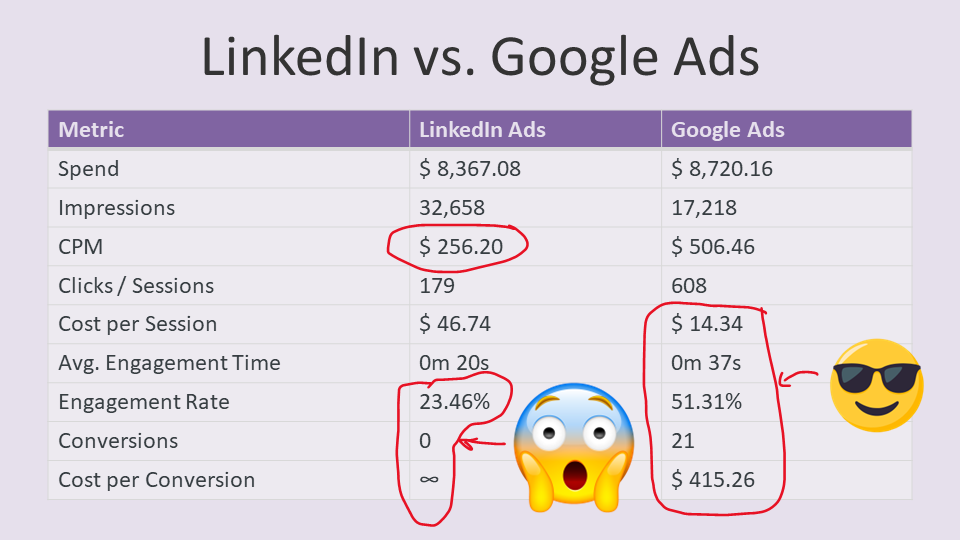
Cost Comparison Across Platforms
The cost structures of Google Ads, Facebook Ads, and Bing Ads vary significantly, impacting overall advertising expenses. Google Ads typically operates on a cost-per-click (CPC) model, with average CPC rates ranging from $1 to over $2, depending on the industry. In contrast, Facebook Ads often have a lower average CPC, generally between $0.50 and $1.00. Bing Ads, while less commonly used, can offer CPCs similar to Google but typically attract a smaller audience.
- Google Ads: $1 – $2+ (varies by industry)
- Facebook Ads: $0.50 – $1.00
- Bing Ads: $1 – $2
Audience Targeting Differences
Targeting capabilities are crucial when evaluating advertising platforms. Google Ads excels in intent-based targeting, allowing advertisers to reach users actively searching for specific keywords. This results in a higher likelihood of conversion. Facebook Ads, on the other hand, focuses on demographic and interest-based targeting, making it effective for brand awareness campaigns. Bing Ads offers similar targeting features to Google but generally captures a different audience demographic, often skewing older.
Performance Metrics and ROI Analysis
Performance metrics such as click-through rates (CTR) and return on investment (ROI) play a critical role in assessing the effectiveness of advertising platforms. Google Ads often shows higher CTRs due to its search-centric approach, with average CTRs around 3.17%. Facebook Ads can achieve CTRs of approximately 0.90%, while Bing Ads generally fall in between. However, the ROI from Google Ads can be higher in competitive industries where intent-driven search leads to more qualified leads.
When to Choose Google Ads Over Competitors
Selecting Google Ads over platforms like Facebook or Bing is advantageous in specific scenarios:
- When targeting users with high purchase intent, such as searching for specific products or services.
- For industries where competition is fierce, and visibility on search engines is paramount.
- When a comprehensive keyword strategy is in place to capitalize on high-value search terms.
Choosing Google Ads is particularly beneficial for businesses that rely on immediate conversions rather than long-term brand awareness. The platform’s ability to capture intent-driven traffic often leads to higher sales and customer acquisition rates.
Many marketers mistakenly assume that lower CPC rates on platforms like Facebook mean better cost-effectiveness. However, the true measure lies in the quality of leads generated and conversions achieved. Google Ads may appear more expensive upfront but can yield a better ROI when used strategically.
To leverage this analysis effectively, businesses should assess their target audience, campaign goals, and industry competition. Consider running small-scale tests across platforms to gather data on performance before allocating larger budgets. Prioritize Google Ads for campaigns aimed at capturing high-intent traffic, while using Facebook for broader demographic targeting campaigns. This strategic approach will maximize advertising spend efficiency.
Common Mistakes That Lead to High Google Ads Costs
This section highlights frequent pitfalls that advertisers encounter, which contribute to inflated Google Ads expenses. By addressing these mistakes, advertisers can optimize their campaigns and reduce unnecessary costs.

Ignoring Negative Keywords
One of the most common mistakes in Google Ads management is neglecting to utilize negative keywords. These are terms that, when included, prevent ads from appearing for irrelevant searches. Without negative keywords, campaigns may attract low-quality traffic, resulting in high costs per click (CPC) without conversions. Advertisers should regularly review search term reports to identify and add negative keywords that filter out unwanted traffic.
Poor Targeting Choices
Effective targeting is essential for controlling costs. Advertisers often fall into the trap of broad targeting, which leads to clicks from audiences unlikely to convert. Poor targeting can include:
- Overly broad geographic locations
- Generic audience demographics
- Ignoring device targeting
To mitigate these issues, refine targeting parameters based on data analytics. Use tools such as audience insights and conversion tracking to focus on high-intent users, ensuring that ad spend is directed toward the most relevant prospects.
Neglecting Ad Testing and Optimization
Failing to conduct regular ad testing can result in continued expenditure on underperforming ads. Advertisers may become complacent with initial ad copies, missing opportunities for improvement. A/B testing different ad variations allows for the identification of high-performing elements. Key aspects to test include:
- Ad headlines and descriptions
- Call-to-action phrases
- Ad formats (text vs. responsive)
Continuous optimization based on test results can lead to improved click-through rates (CTR) and lower CPC, effectively reducing overall campaign costs.
Failure to Analyze Performance Data
Data analysis is critical in identifying areas for cost reduction. Many advertisers overlook the importance of analyzing performance metrics, leading to missed insights. Key performance indicators (KPIs) to monitor include:
- Click-through rate (CTR)
- Conversion rate
- Cost per conversion
Regularly reviewing these metrics enables advertisers to pinpoint inefficiencies and adjust strategies accordingly. Implementing automated reporting tools can streamline this process, allowing for more timely and informed decision-making.
While these common mistakes can severely impact Google Ads costs, there are nuances that experienced advertisers must consider. For instance, some may believe that high CPC is solely driven by competition. However, factors like Quality Score also play a significant role. A low Quality Score can increase CPC, even in less competitive markets. Therefore, maintaining a strong Quality Score through relevant ad content and landing pages is vital.
To effectively minimize Google Ads costs, advertisers should take the following actionable steps:
- Implement a comprehensive list of negative keywords.
- Refine targeting based on demographic and geographic insights.
- Conduct regular A/B tests on ad variations.
- Establish a routine for analyzing performance data and adjusting campaigns accordingly.
By avoiding these common pitfalls, advertisers can optimize their Google Ads campaigns, resulting in reduced costs and improved ROI.
Frequently Asked Questions
What factors contribute to the high cost of Google Ads?
High competition for popular keywords, quality score metrics, and bidding strategies significantly influence the cost of Google Ads. Advertisers must also consider their target audience and geographic location, which can further drive up expenses.
How can I reduce my Google Ads costs?
To lower Google Ads costs, focus on improving your Quality Score by optimizing ad relevance and landing page experience. Additionally, utilizing long-tail keywords and adjusting bidding strategies can help manage expenses effectively.
Is Google Ads worth the investment?
Google Ads can be a valuable investment for businesses looking to increase visibility and drive traffic. When managed correctly, the return on investment (ROI) often justifies the costs associated with the platform.
What is the average cost of Google Ads per click?
The average cost per click (CPC) for Google Ads varies widely by industry, typically ranging from $1 to $2 for search ads. However, competitive industries can see CPCs exceeding $50 for certain keywords.
How long does it take to see results from Google Ads?
Results from Google Ads can often be seen within a few days, but significant improvements may take several weeks. The timeline depends on campaign settings, budget, and the competitiveness of the chosen keywords.
What are the best practices for managing Google Ads budgets?
Effective budget management for Google Ads involves setting clear goals, regularly monitoring performance, and adjusting bids based on data. Utilizing automated rules and budget caps can also help maintain control over spending.
Why do some keywords cost more than others in Google Ads?
Keyword costs in Google Ads are influenced by competition, search volume, and the relevance of the keyword to user intent. High-demand keywords often attract more advertisers, driving up their cost per click.
Final Thoughts on Why Is Google Ads So Expensive
The high cost of Google Ads is a multifaceted issue driven by competition, the significance of Quality Score, and the platform’s unique auction system. Understanding these dynamics is essential for advertisers who wish to navigate the complexities of digital marketing effectively.
To optimize your Google Ads investment, conduct a thorough analysis of your Quality Score and adjust your ad campaigns accordingly to enhance relevance and lower costs. This targeted approach can significantly improve your return on investment.
Mastering the intricacies of Google Ads not only enhances advertising efficiency but also directly impacts the bottom line, making it a critical area of focus for businesses aiming to thrive in a competitive marketplace.
Leave a Reply