
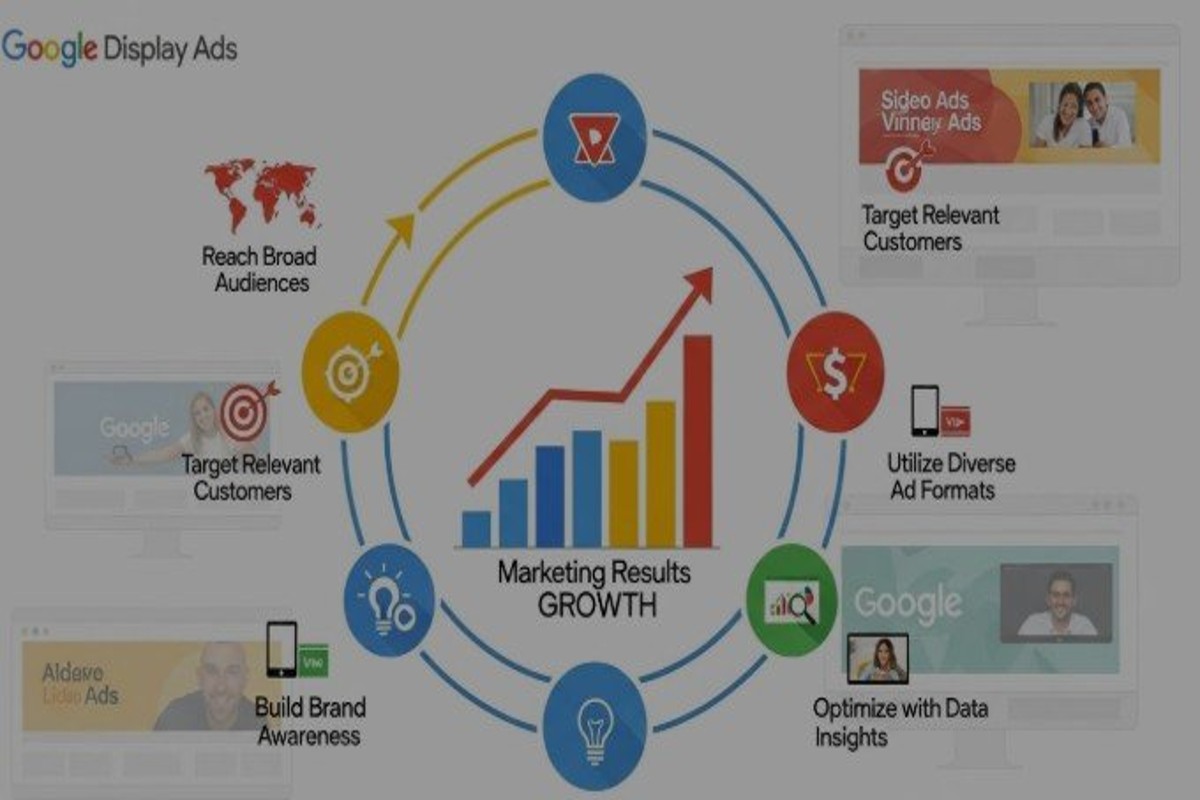
Google Display Ads grow marketing results for advertisers by increasing brand visibility across millions of websites and apps, targeting specific audiences, and driving conversions through remarketing strategies.
Understanding how Google Display Ads operate is crucial for marketers aiming to enhance their advertising effectiveness. Failing to leverage these tools can result in missed opportunities for engagement and conversion, ultimately impacting overall marketing performance.
This article delves into the mechanics of Google Display Ads, examining their role in brand visibility, audience targeting techniques, and the effectiveness of remarketing strategies to boost conversion rates.
What are Google Display Ads and how do they work?
Google Display Ads are visual advertisements that appear on websites across the Google Display Network, which includes millions of sites, apps, and videos. These ads can be in various formats, such as banners, images, or rich media, and are designed to reach potential customers while they are browsing content online. By targeting specific audiences based on their interests, demographics, and online behavior, Google Display Ads aim to increase brand awareness and drive conversions for advertisers.
The Google Display Network (GDN) operates through a complex auction system that determines which ads are displayed to users. Advertisers set specific targeting criteria, including keywords, topics, and placements. This allows ads to be shown to users who are likely to be interested in the products or services being advertised. Additionally, Google utilizes advanced algorithms to optimize ad placements, ensuring that the right message reaches the right audience at the right time.
- Targeting Options: Advertisers can utilize demographic targeting (age, gender), interest categories, remarketing strategies, and contextual targeting based on website content.
- Ad Formats: Google Display Ads support various formats, including static images, animated GIFs, and HTML5 ads, allowing for creative flexibility.
- Performance Tracking: Advertisers can measure the effectiveness of their campaigns through metrics such as click-through rates (CTR), conversions, and return on ad spend (ROAS).
As a result, Google Display Ads can significantly enhance marketing results by increasing visibility across diverse platforms, engaging users at various stages of the buying journey. The ability to retarget users who have previously interacted with a brand is particularly valuable, as it keeps the brand top-of-mind and encourages conversions.
Expert Tip: For optimal performance, regularly testing different ad formats and targeting strategies is essential. Continuous optimization based on data insights can lead to improved engagement rates and better overall campaign results.
How can I measure the effectiveness of Google Display Ads?
Measuring the effectiveness of Google Display Ads involves tracking various performance metrics that reflect user engagement and conversion rates. Key metrics include impressions, clicks, click-through rates (CTR), conversions, and return on ad spend (ROAS). Utilizing Google Ads tools and analytics can provide insights into these metrics.
Follow these steps to effectively measure your Google Display Ads:
- Set Up Conversion Tracking: Implement conversion tracking in your Google Ads account to monitor actions taken by users after interacting with your ads. This includes purchases, sign-ups, or any desired actions.
- Analyze Impressions and Clicks: Regularly check the number of impressions (how often your ads are displayed) and clicks (how often users engage with your ads). A high number of impressions with low clicks may indicate a need for improved ad relevance or design.
- Calculate Click-Through Rate (CTR): Divide the total number of clicks by total impressions to find your CTR. A higher CTR typically suggests that your ads resonate well with your target audience.
- Monitor Conversion Rate: Track the percentage of users who complete a desired action after clicking your ads. A low conversion rate may indicate issues with landing pages or targeting.
- Evaluate Return on Ad Spend (ROAS): Calculate ROAS by dividing the revenue generated from ads by the amount spent on those ads. A positive ROAS indicates that your ads are generating more revenue than they cost.
Utilizing Google Analytics in conjunction with Google Ads can provide additional insights, such as user behavior on your website, demographics, and traffic sources. Regularly reviewing these metrics will help refine your advertising strategies and improve overall performance.
Expert Tip: Segment your data by audience demographics, devices, and ad placements to identify areas for optimization. This granular approach allows for tailored strategies that enhance engagement and conversion rates.
What is the average cost of Google Display Ads?
The average cost of Google Display Ads typically ranges from **$0.10 to $0.30 per click (CPC)** or **$1 to $3 per 1,000 impressions (CPM)**. The specific cost for an advertiser can vary significantly based on several factors, including campaign goals and audience targeting.
Google Display Ads operate on a bidding system, allowing advertisers to choose between two primary pricing models: **CPC (cost-per-click)** and **CPM (cost-per-thousand impressions)**. CPC is ideal for campaigns focused on driving traffic to a website, while CPM is more suited for brand awareness initiatives. Advertisers can set a maximum bid for their campaigns, influencing their ad placement and visibility on the Google Display Network.
- Target Audience: The cost of ads can increase based on the competitiveness of the targeted demographics. High-demand audiences may incur higher CPC or CPM rates.
- Ad Quality: Google rewards high-quality ads with lower costs. Ads with better engagement rates and relevance scores can benefit from reduced bids and improved placements.
- Industry Competition: Certain industries, such as finance or technology, may experience higher average costs due to increased competition among advertisers for visibility.
Additionally, the geographic targeting and the time of day when ads are displayed can also impact costs. Some regions may have higher competition, leading to increased costs. Advertisers should evaluate their specific goals and budget constraints to determine the most effective bidding strategy.
To optimize costs, regularly monitor campaign performance and adjust bids accordingly. Using A/B testing for ad creatives and targeting can also yield insights into cost-effective strategies that enhance overall marketing results.
How do Google Display Ads compare to Search Ads?
Google Display Ads and Search Ads serve different purposes in digital marketing. Display Ads focus on visual engagement through images and videos on websites, while Search Ads target users actively searching for specific keywords on Google. Both have unique benefits, but their effectiveness varies based on targeting, visibility, and performance metrics.
Targeting: Display Ads leverage demographic, interest-based, and behavioral targeting, allowing advertisers to reach users based on their online behavior and preferences. In contrast, Search Ads primarily target users based on their search queries, capturing intent-driven traffic. Advertisers can utilize a combination of both methods to maximize reach and engagement.
Visibility: Display Ads appear on a vast network of websites and apps, providing broader visibility across the internet. This can foster brand awareness among users who may not be actively searching for a product. Conversely, Search Ads are shown at the top of search results, making them highly visible to users with immediate intent, which often leads to higher click-through rates (CTR).
Performance: In terms of performance, Display Ads typically generate lower conversion rates compared to Search Ads, as they target users who may not be in a buying mindset. However, Display Ads can effectively nurture leads and boost brand recall. Search Ads often result in higher conversions due to their alignment with user intent. Advertisers should analyze their specific goals and adjust their strategies accordingly.
Comparative Overview
| Aspect | Display Ads | Search Ads |
|---|---|---|
| Targeting | Demographics, interests, behaviors | Keywords, user intent |
| Visibility | Wide reach across websites | Top of search results |
| Performance | Lower conversions, higher brand awareness | Higher conversions, immediate intent |
Advertisers should consider integrating both Display and Search Ads to create a comprehensive marketing strategy. By doing so, they can capture potential customers at various stages of the buying journey, maximizing their overall marketing impact.
What are the best practices for creating effective Google Display Ads?
Creating effective Google Display Ads requires a strategic approach to design and messaging. Advertisers should focus on clarity, visual appeal, and audience targeting to enhance engagement and drive clicks. Following these best practices can significantly improve ad performance.
- Use High-Quality Visuals: Eye-catching images or graphics can capture attention quickly. Ensure that visuals are relevant to the product or service and maintain a professional quality that reflects your brand.
- Craft Clear and Compelling Headlines: Headlines should be concise and informative, clearly communicating the ad’s value proposition. Use action-oriented language to encourage clicks and make it clear what users can expect.
- Incorporate Strong Calls to Action (CTAs): Effective CTAs guide users on the next steps. Phrases like “Shop Now,” “Learn More,” or “Get Started” create urgency and motivate users to engage with the ad.
- Optimize for Mobile Devices: A significant portion of users access the internet via mobile devices. Design ads that are easily viewable and clickable on smaller screens to reach a broader audience.
- Leverage Audience Targeting: Use Google’s targeting features to reach specific demographics, interests, or behaviors. Tailoring ads to the right audience increases the likelihood of engagement and conversion.
These best practices not only enhance the visual appeal of ads but also improve their effectiveness in reaching potential customers. Advertisers should continuously test different elements, such as imagery and messaging, to determine what resonates best with their target audience. A/B testing can provide valuable insights into optimizing ad performance further.
Expert Tip: Regularly review performance analytics to adjust your targeting and creative strategies. Understanding which ads perform best can inform future campaigns and lead to more effective budget allocation.
How long does it take to see results from Google Display Ads?
Typically, advertisers can expect to see measurable results from Google Display Ads within 1 to 3 months after launching their campaigns. However, the exact timeline can vary based on several factors, including campaign objectives, budget, and audience targeting.
The initial phase of a Display Ads campaign often involves gathering data and optimizing the ads for better performance. During the first few weeks, advertisers may not see significant engagement or conversions as the algorithm learns which audiences are most likely to respond. This learning phase is crucial for optimizing ad placements and targeting settings, which can impact the overall effectiveness of the campaign.
Several factors can influence the timeline for seeing results. Campaign budget plays a key role; higher spending can accelerate data collection and optimize ad performance more quickly. Additionally, the complexity of the audience targeting—such as demographics, interests, and behaviors—can either hasten or delay the process. A well-defined target audience typically leads to faster results, while broad targeting may require more time to refine.
Practical Implications
Advertisers should set realistic expectations regarding the timeline for results. Continuous monitoring and adjustments should be made throughout the campaign to enhance performance. Engaging in A/B testing for different ad creatives and placements can also expedite performance improvements. Understanding the nuances of your specific campaign will help in achieving better results faster.
To optimize timelines, consider implementing retargeting strategies. These can capitalize on previous visitors to your site, improving conversion rates and yielding faster results. Additionally, leveraging seasonal trends or promotions can provide a boost in visibility and engagement during critical periods.
Expert insight: For campaigns targeting niche audiences, allow additional time for results to materialize. These campaigns may benefit from extended testing periods to ensure the right messaging resonates with the intended audience.
Can Google Display Ads help with brand awareness?
Yes, Google Display Ads can significantly enhance brand awareness for advertisers. By utilizing visually appealing formats and precise targeting, these ads reach a vast audience across millions of websites, effectively increasing visibility and recognition.
For instance, consider a new organic skincare brand launching a campaign using Google Display Ads. The brand can create eye-catching banner ads featuring their products and brand story. By targeting specific demographics, such as health-conscious consumers aged 25-40, the ads will appear on relevant websites, lifestyle blogs, and forums where potential customers frequently visit. As these ads are displayed repeatedly, they contribute to a growing familiarity with the brand, making it more likely that consumers will remember it when making purchasing decisions.
Another example involves a local coffee shop aiming to attract more customers. By leveraging Google Display Ads, the shop can showcase enticing images of their beverages and cozy atmosphere. By targeting users in the vicinity and utilizing geo-targeting features, the ads can appear on local news sites and community blogs. This strategy not only increases foot traffic but also instills a sense of local presence and community connection, further enhancing brand recognition.
Expert Tip: To maximize brand awareness, advertisers should focus on creating visually cohesive ads that reflect their brand identity, ensuring consistent messaging across all platforms. Regularly analyzing ad performance metrics will help refine targeting strategies and improve overall effectiveness.
Advanced Targeting Strategies for Google Display Ads
This section delves into sophisticated targeting techniques within Google Display Ads, emphasizing the importance of precise audience segmentation and advanced strategies that enhance marketing effectiveness for advertisers.
Audience Segmentation Techniques
Effective audience segmentation is critical for maximizing the impact of Google Display Ads. Advertisers can create distinct groups based on various criteria, including behavior, interests, and purchase intent. Segmentation can be based on:
- Demographics: Age, gender, and location.
- Interests: Categorized interests and hobbies relevant to the brand.
- Behavioral data: User behavior online, such as website visits and engagement levels.
By segmenting audiences, advertisers can tailor their messaging, ensuring that ads resonate with specific groups and drive higher engagement rates.
Utilizing Custom Intent Audiences
Custom intent audiences allow advertisers to target users actively searching for specific products or services. This feature leverages user data from Google search queries, enabling advertisers to create tailored audience segments. Advertisers can define custom intent audiences based on:
- Keywords relevant to their offerings.
- Specific URLs that indicate interest in competitor products.
- App usage that aligns with their services.
This advanced targeting strategy enhances ad relevance, capturing users at critical moments in their buyer’s journey, thereby increasing the likelihood of conversions.
Leveraging Remarketing Lists
Remarketing lists are a powerful tool for re-engaging past visitors who have previously interacted with a brand. Advertisers can create lists based on specific actions, such as:
- Users who visited a product page but did not complete a purchase.
- Visitors who spent a certain amount of time on the site.
- Users who filled out a form but did not convert.
By targeting these groups with tailored ads, advertisers can remind potential customers of their interest and encourage them to return for a conversion.
Contextual Targeting
Contextual targeting matches ads with relevant content on websites within the Google Display Network. This approach ensures that ads appear in environments that align with the product or service being advertised. Advertisers can utilize:
- Keyword targeting to place ads on related content.
- Topic targeting to reach users browsing specific subject areas.
- Placement targeting to select particular websites for ad placements.
By aligning ads with relevant content, advertisers can increase visibility and engagement, making it more likely that users will interact with the ad.
While many advertisers implement basic targeting strategies, they often overlook the potential of advanced techniques. For instance, the misconception that demographic targeting alone suffices can lead to missed opportunities. Advertisers should consider the dynamic nature of user behavior and preferences, utilizing a multi-faceted approach that combines demographic, intent-based, and contextual strategies to maximize ad effectiveness.
To leverage these advanced targeting strategies effectively, advertisers should:
- Analyze existing audience data to identify key segments.
- Create custom intent audiences based on relevant keywords and URLs.
- Develop remarketing lists focused on user engagement metrics.
- Implement contextual targeting to ensure ads match the content users are consuming.
By applying these strategies, advertisers can significantly enhance how Google Display Ads grow marketing results for advertisers, driving higher engagement and conversion rates.
Common Mistakes to Avoid with Google Display Ads
Advertisers often encounter pitfalls when implementing Google Display Ads that can hinder their campaign effectiveness. Recognizing these common mistakes is essential to optimizing performance and achieving desired marketing results.
Neglecting to Optimize Ad Creatives for Different Formats
Google Display Ads come in various sizes and formats, such as static images, responsive ads, and videos. Failing to tailor ad creatives for these different formats can lead to reduced engagement and effectiveness. Each format has unique specifications and best practices, including image dimensions, file sizes, and text limits. Advertisers should ensure that creatives are optimized for each format to maximize visibility and impact.
Failing to Set Clear Campaign Goals and KPIs
Without defined campaign goals and key performance indicators (KPIs), measuring success becomes challenging. Advertisers should establish specific objectives, such as increasing brand awareness, generating leads, or driving website traffic, along with corresponding KPIs to track progress. This clarity allows for focused strategies and the ability to assess whether the campaign meets its targets.
Overlooking the Importance of A/B Testing
A/B testing is a critical component of optimizing Google Display Ads. Advertisers often overlook this practice, which can lead to missed opportunities for improvement. By testing various elements, such as headlines, images, and calls-to-action, advertisers can identify what resonates best with their audience. Implementing A/B tests systematically can significantly enhance ad performance over time.
Ignoring Performance Data and Analytics for Campaign Adjustments
Performance data and analytics provide invaluable insights into how Google Display Ads are performing. Advertisers frequently make the mistake of ignoring this data, which can lead to ineffective campaigns. Regularly reviewing metrics such as click-through rates (CTR), conversion rates, and return on ad spend (ROAS) enables advertisers to make informed adjustments. Data-driven decisions can enhance targeting, creative strategies, and overall campaign effectiveness.
Nuance / Expert Layer
One common misconception is that once a campaign is launched, it requires minimal attention. In reality, continuous optimization is essential. Advertisers should view the initial launch as just the beginning. Factors like seasonal trends, competitive landscape shifts, and audience behavior changes necessitate ongoing analysis and adaptation. Additionally, understanding the interplay between different ad formats and placements can provide deeper insights into optimizing ad spend and improving overall performance.
Practical Application
- Regularly review and update ad creatives to ensure they are optimized for various formats.
- Establish clear campaign goals and KPIs before launching any display ad campaign.
- Implement A/B testing to refine ad elements and identify the most effective strategies.
- Monitor performance data consistently and adjust campaigns based on analytics insights.
Real-World Case Studies of Successful Google Display Ads Campaigns
This section examines specific examples of brands that have effectively utilized Google Display Ads to achieve their marketing objectives. Understanding these case studies provides insight into the practical applications and outcomes of display advertising strategies.
Case Study: Retail Brand’s Ad Campaign
A leading retail brand, XYZ Clothing, launched a Google Display Ads campaign targeting young adults aged 18-30. The campaign aimed to increase brand awareness and drive online sales during a seasonal promotion. By utilizing visually appealing banner ads across relevant websites, XYZ Clothing achieved a 35% increase in site traffic and a 20% boost in online sales compared to previous seasons. Remarkably, the campaign’s click-through rate (CTR) was 2.5 times higher than industry averages, showcasing the effectiveness of targeted display advertising.
Impact on Customer Acquisition for a Service-Based Business
ABC Plumbing Services, a local service provider, sought to enhance customer acquisition through Google Display Ads. The company targeted homeowners in its service area with ads highlighting exclusive promotions. After implementing a strategic display campaign, ABC Plumbing reported a 50% increase in service inquiries and a 30% rise in booked appointments within three months. The use of remarketing techniques allowed the business to re-engage potential customers who had previously visited their website, further amplifying conversion rates.
Non-Profit Fundraising Success
DEF Charity, a non-profit organization, utilized Google Display Ads to promote a fundraising campaign for community development. By creating compelling visual ads that conveyed their mission, DEF Charity increased its online donations by 60% during the campaign period. The targeted approach allowed them to reach a broader audience, leading to a significant uptick in new donors. Additionally, the organization leveraged interest-based targeting to connect with individuals passionate about social causes, maximizing their ad spend effectiveness.
Lessons from Failed Campaigns
Not all Google Display Ads campaigns yield positive results. A tech startup, GHI Innovations, experienced a disappointing campaign due to poorly defined target audiences and generic ad creatives. Despite a reasonable budget, the campaign resulted in a low CTR of 0.5% and minimal conversions. Key lessons from this experience include:
- Conduct thorough audience research to define specific target segments.
- Create tailored ad creatives that resonate with the intended audience.
- Continuously monitor campaign performance and adjust strategies based on real-time data.
Nuance in Display Advertising Strategies
While many assume that display ads primarily drive immediate sales, their impact extends beyond conversions. Display ads can also enhance brand recall and customer engagement. A common misconception is that display advertising is only effective for large corporations. However, small and medium-sized businesses can achieve significant results through well-structured campaigns, emphasizing the importance of audience targeting and creative execution. Additionally, many overlook the significance of A/B testing different ad formats and messaging to optimize performance effectively.
Practical Applications
Advertisers seeking to leverage Google Display Ads should consider the following actionable steps:
- Define clear marketing objectives, whether brand awareness, customer acquisition, or fundraising.
- Conduct audience segmentation to tailor ads effectively.
- Create compelling visuals and messaging that resonate with your target audience.
- Implement remarketing strategies to re-engage previous website visitors.
- Regularly analyze campaign performance and adjust tactics based on insights.
Integrating Google Display Ads with Other Marketing Channels
Integrating Google Display Ads with other marketing channels fosters a cohesive strategy that amplifies brand visibility and engagement. This section explores how advertisers can leverage cross-channel marketing to enhance their overall campaign effectiveness.
Benefits of Cross-Channel Marketing for Increased Reach
Cross-channel marketing allows advertisers to reach audiences across multiple platforms, significantly expanding their potential customer base. By harmonizing efforts across various channels, brands can reinforce their messaging, which increases the likelihood of conversion. Key benefits include:
- Enhanced Brand Recognition: Consistent messaging across channels solidifies brand identity.
- Improved Customer Journey: Touchpoints throughout the customer journey ensure a seamless experience.
- Data Synergy: Insights from one channel can optimize strategies in others, leading to better targeting.
Aligning Display Ads with Social Media Campaigns
Integrating Google Display Ads with social media campaigns can create a powerful synergy. Advertisers can retarget users who have interacted with their social media content, thus reinforcing brand messages and driving conversions. Key strategies include:
- Retargeting: Use Display Ads to reach social media visitors who didn’t convert initially.
- Content Consistency: Ensure that visuals and messaging align between Display Ads and social content.
- Cross-Promotion: Promote social media campaigns through Display Ads to drive traffic and engagement.
Combining Email Marketing with Display Ads for Better Engagement
Email marketing and Google Display Ads can complement each other effectively. By using Display Ads to retarget email recipients, advertisers can boost engagement rates and nurture leads. Consider these tactics:
- Follow-Up Campaigns: Send personalized emails and then target recipients with Display Ads related to the email content.
- Segmented Targeting: Use customer data to tailor Display Ads based on email engagement levels.
- A/B Testing: Test different email and Display Ad combinations to identify the most effective strategies.
Using Data from Display Ads to Inform SEO and Content Strategies
Data gleaned from Google Display Ads can provide critical insights that enhance SEO and content strategies. By analyzing performance metrics such as click-through rates and audience behavior, marketers can refine their content offerings. Key considerations include:
- Keyword Insights: Identify high-performing keywords from Display Ads to optimize content for SEO.
- Audience Segmentation: Use audience data from Display Ads to tailor content that resonates with specific demographics.
- Content Gaps: Analyze which topics are driving traffic through Display Ads and create content that fills these gaps.
Common misconceptions about integrating marketing channels include the belief that each channel must operate in isolation. A fragmented approach can dilute brand messaging and reduce overall effectiveness. Instead, a unified strategy leveraging data and insights from various channels can substantially enhance marketing effectiveness.
To implement these strategies, advertisers should take the following actionable steps:
- Audit existing marketing channels to identify integration opportunities.
- Develop cohesive messaging and visuals for all channels.
- Utilize analytics tools to track performance and adjust strategies accordingly.
- Test and iterate based on data to optimize cross-channel efforts.
Frequently Asked Questions
What are Google Display Ads and how do they work?
Google Display Ads are visual advertisements that appear on websites within the Google Display Network. They work by targeting specific audiences based on demographics, interests, and online behavior to increase visibility and engagement.
How can I measure the effectiveness of Google Display Ads?
The effectiveness of Google Display Ads can be measured using metrics such as click-through rate (CTR), conversion rate, and return on ad spend (ROAS). Google Ads provides detailed analytics to track these performance indicators.
What is the average cost of Google Display Ads?
The average cost of Google Display Ads varies widely based on factors like targeting, competition, and ad quality, typically ranging from $0.10 to $3.00 per click. Advertisers can set daily budgets to control spending.
How do Google Display Ads compare to Search Ads?
Google Display Ads focus on visual engagement and brand awareness, while Search Ads target users actively searching for specific keywords. Display Ads can reach a broader audience, whereas Search Ads often drive immediate conversions.
What are the best practices for creating effective Google Display Ads?
Effective Google Display Ads should include eye-catching visuals, clear messaging, and a strong call-to-action. Additionally, targeting the right audience and testing different ad formats can enhance performance.
How long does it take to see results from Google Display Ads?
Results from Google Display Ads can often be seen within a few days to weeks, depending on factors like campaign settings and audience targeting. Continuous monitoring and optimization can improve outcomes over time.
Can Google Display Ads help with brand awareness?
Yes, Google Display Ads are highly effective for increasing brand awareness by reaching a vast audience across various websites. Their visual nature and targeted placement help reinforce brand messages and visibility.
Final Thoughts on how does google display ads grow marketing results for advertisers
Leveraging Google Display Ads is essential for advertisers seeking to enhance brand visibility and drive measurable marketing results. By employing advanced targeting strategies and continuously measuring performance, advertisers can significantly optimize their campaigns and achieve a higher return on investment.
To capitalize on these insights, advertisers should implement A/B testing on their creatives and targeting options to refine their approach, ensuring they reach the most relevant audience effectively.
In an increasingly competitive digital landscape, mastering Google Display Ads can be the differentiator that propels brands to new heights of engagement and conversion.
Leave a Reply