
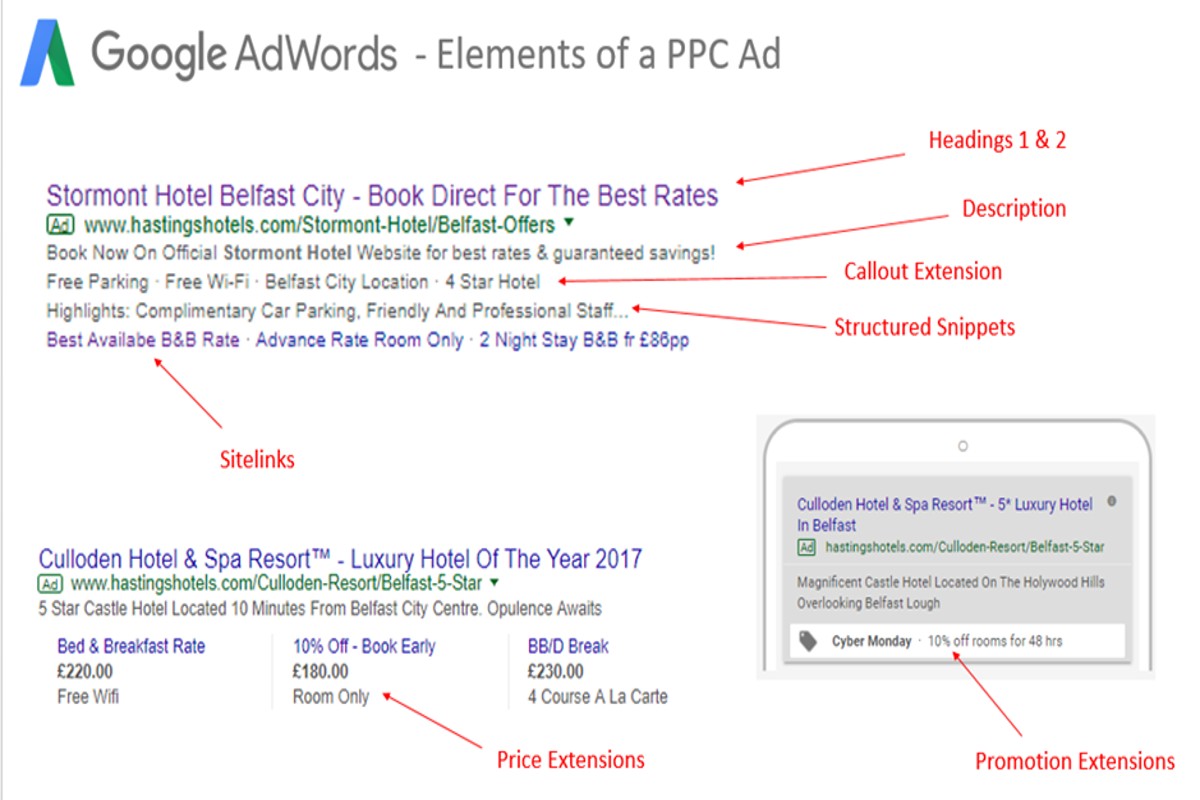
A description in Google Ads is a text snippet that provides additional information about your ad. It appears below the headline and is crucial for attracting clicks.
Understanding the role of descriptions in Google Ads is essential for marketers and businesses aiming to enhance their online visibility and engagement. A well-crafted description can significantly impact click-through rates and overall ad performance, making it imperative to get this element right to maximize advertising ROI.
This guide will detail the key components of effective Google Ads descriptions, best practices for writing compelling text, and strategies for optimizing your ads for better performance.
What are the key components of a Google Ads description?
A Google Ads description consists of several key components that convey the value of the advertised product or service. These components are designed to engage potential customers, provide essential information, and encourage them to take action. A well-crafted description typically includes a clear message, a call to action, and relevant keywords.
The primary elements of a Google Ads description include:
- Clear Value Proposition: The description should highlight the unique benefits or features of the product or service. This helps potential customers understand why they should choose this particular offering over competitors.
- Call to Action (CTA): A strong CTA directs users on what to do next, such as “Shop Now,” “Learn More,” or “Get Started.” This encourages immediate engagement and can significantly increase click-through rates.
- Keywords: Including relevant keywords related to the product or service can improve the ad’s visibility and relevance in search results. This aligns the ad with user queries, enhancing the likelihood of attracting the right audience.
In addition to these components, the character limits for descriptions in Google Ads are also critical. Typically, descriptions can be up to 90 characters long, which necessitates concise and impactful messaging. Advertisers should also consider the use of emotional language or urgency to further motivate potential customers.
Incorporating these elements effectively can lead to improved ad performance. Regularly testing and optimizing descriptions based on performance data can also reveal insights into what resonates best with the target audience.
Expert Tip: Utilize A/B testing for different descriptions to identify which components yield the highest engagement. This data-driven approach allows for continuous improvement and adaptation to changing consumer preferences.
How do I write effective descriptions for Google Ads?
To write effective descriptions for Google Ads, focus on clarity, relevance, and action-oriented language. Descriptions should convey the unique selling points of the product or service while encouraging users to take action. Aim for concise yet compelling messages that resonate with your target audience.
Start by identifying the main benefits of your offering. Highlight what sets it apart from competitors and why users should choose it. Use keywords relevant to your audience’s search queries to improve visibility. Ensure that the descriptions align with the ad’s headline and landing page content for a cohesive user experience.
- Be Concise: Aim for 90 characters or less. Short, impactful phrases increase readability and engagement.
- Use Action Verbs: Start sentences with verbs like “Get,” “Discover,” or “Save” to prompt immediate action from the reader.
- Include Unique Selling Propositions: Clearly state what makes your offer valuable, such as discounts, free trials, or exclusive features.
- Address Pain Points: Identify common problems your audience faces and present your product or service as the solution.
- Incorporate a Call to Action: End with a clear call to action, such as “Shop Now” or “Learn More,” to guide users on what to do next.
Testing different descriptions is essential. Use A/B testing to evaluate which messages resonate best with your audience. Monitor performance metrics to refine your approach continually.
Utilize dynamic keyword insertion if applicable to personalize the ad based on user searches. This can significantly enhance relevance and click-through rates.
Effective descriptions not only inform but also entice potential customers. Aim for a balance of creativity and factual information to maximize engagement.
Expert Tip: Regularly update your descriptions based on seasonal trends or emerging keywords. Staying relevant can significantly enhance ad performance over time.
What is the difference between Google Ads description and headlines?
The main difference between Google Ads descriptions and headlines lies in their function and format within an advertisement. Headlines are typically the first line of text that captures attention, while descriptions provide additional context and details about the product or service being advertised. Both elements play distinct yet complementary roles in enhancing ad performance.
Headlines are designed to be concise and impactful, with a character limit of 30 characters per line. Their primary purpose is to grab the audience’s attention and encourage them to engage with the ad. Conversely, descriptions allow for more elaboration, with a character limit of 90 characters, enabling advertisers to convey key selling points or calls to action. This difference in length and purpose means that headlines focus on immediate appeal, while descriptions aim to inform and persuade.
- Character Limit: Headlines can have up to 30 characters; descriptions can contain up to 90 characters.
- Purpose: Headlines attract attention; descriptions provide additional details and context.
- Placement: Headlines appear at the top of the ad; descriptions follow the headline, enhancing the ad’s message.
The effectiveness of both elements can significantly impact ad performance. A compelling headline can increase click-through rates, while a well-crafted description can improve conversion rates by clarifying the value proposition. Advertisers should strategically balance both components to maximize their advertising effectiveness.
Expert Tip: Utilize A/B testing for both headlines and descriptions to identify which combinations yield the highest engagement and conversion rates. Tailoring these elements based on performance data can lead to significantly improved ad outcomes.
Are there character limits for Google Ads descriptions?
Yes, Google Ads descriptions have specific character limits. Each description line can contain a maximum of 90 characters, and most ads include two description lines. This means that, in total, advertisers can use up to 180 characters for descriptions in a standard ad format.
Character limits play a crucial role in crafting effective Google Ads. Adhering to these limits ensures that your message is fully visible to potential customers without being truncated. Additionally, the character count includes spaces and punctuation, so careful word choice is necessary to maximize impact. Advertisers should also be aware that different ad formats and placements, such as responsive search ads, may have varying requirements.
- Be concise: Focus on the most relevant information. Use clear language that conveys your message quickly.
- Utilize keywords: Incorporate important keywords naturally within the character limits to improve ad relevance and performance.
- Test variations: Experiment with different descriptions to see which resonates most with your audience. This can help optimize click-through rates.
- Include a call-to-action: Encourage users to take action, such as “Shop Now” or “Learn More,” to increase engagement.
Adhering to character limits is not merely about compliance; it also influences ad performance. Effective descriptions can significantly enhance click-through rates and conversions. Regularly reviewing and optimizing ad copy based on performance metrics is essential for continual improvement.
Expert Tip: Utilize tools like the Google Ads Preview Tool to see how your ads will appear with different character counts before launching your campaigns. This can help ensure your message is both compelling and compliant with character limits.
What common mistakes should I avoid in Google Ads descriptions?
Common mistakes in Google Ads descriptions include using generic language, exceeding character limits, and neglecting to include a clear call to action. These errors can diminish ad effectiveness and lead to lower click-through rates.
For instance, consider an ad for a local bakery. If the description reads, “We sell baked goods,” it fails to capture attention. Instead, a more engaging description like, “Indulge in freshly baked artisan bread and pastries, made daily!” not only specifies the products but also evokes a sensory experience. This differentiation can significantly enhance user engagement.
Another frequent error is exceeding the character limit, which is typically 90 characters for descriptions. If an advertiser attempts to convey too much information, the ad may be truncated or rejected. A concise, focused approach ensures that the essential message is delivered effectively. Additionally, including a clear call to action, such as “Order now for same-day delivery,” can motivate potential customers to take immediate action, improving conversion rates.
Lastly, avoid using jargon or overly technical language that may alienate potential customers. Aim for clarity and relatability in the language to connect with a broader audience.
Expert Tip: Regularly A/B test different descriptions to identify which variations resonate best with your target audience. This data-driven approach can lead to continuous improvement in ad performance.
How much does it cost to run Google Ads with good descriptions?
The cost to run Google Ads can vary widely, typically ranging from $1 to $2 per click on average, but can exceed $50 per click in competitive industries. The quality and effectiveness of your ad descriptions can significantly influence these costs, as they impact your ad’s click-through rate (CTR) and Quality Score.
Several factors affect the overall cost of Google Ads, particularly when considering the role of ad descriptions. A well-crafted description can improve your ad’s performance, leading to better placement and lower costs. Key cost factors include:
- Bid Amount: Higher bids can lead to better ad placements, but they also increase overall costs. A strong description can enhance the effectiveness of your bid.
- Quality Score: Google assigns a Quality Score based on relevance and performance. Effective descriptions can raise this score, leading to lower costs per click.
- Industry Competition: Highly competitive industries may see higher costs. A compelling description can differentiate your ad and improve CTR, which can mitigate some of these costs.
- Targeting Options: The audience you target can impact costs. Tailoring descriptions to specific demographics can improve engagement and reduce wasted spend.
Moreover, the overall budget for a Google Ads campaign should account for ongoing testing and optimization of ad descriptions. Regularly updating and refining descriptions based on performance data can lead to sustained improvements in both CTR and cost efficiency.
Expert Tip: Utilize A/B testing for different descriptions to identify which versions yield the best results, ensuring that your ad spend is optimized effectively over time.
How long does it take to see results from Google Ads descriptions?
Results from Google Ads descriptions typically become noticeable within a few days to a couple of weeks after the campaign launch. However, the time frame can vary based on several factors such as budget, competition, and the effectiveness of the ad copy.
The speed at which results manifest is influenced by the volume of traffic to the advertised product or service, as well as the overall performance of the campaign. For example, if the ad is targeted to a highly competitive keyword, it may take longer to see meaningful engagement and conversion rates. Conversely, a well-optimized ad in a less competitive niche may show results more rapidly.
Another critical factor is the ongoing optimization of the ad descriptions. Regularly updating and testing new versions of ad copy can lead to improved performance over time. A/B testing different descriptions can provide insights into which messaging resonates better with the target audience, thereby accelerating the timeline for achieving desired results.
Practical Implications
Advertisers should monitor key performance indicators (KPIs) such as click-through rates (CTR) and conversion rates during the initial period after launching a campaign. Setting realistic expectations is essential; while immediate results are desirable, it’s common for ads to require time to refine and optimize fully. Continuous analysis of the data collected will guide future adjustments, leading to sustained improvement.
Expert Tip: Utilize Google Ads’ performance tracking tools to gain insights into how different descriptions perform. This data-driven approach will help in fine-tuning ads and achieving faster results.
Crafting Compelling Google Ads Descriptions: Techniques and Strategies
This section delves into effective techniques for writing Google Ads descriptions that resonate with target audiences and enhance click-through rates (CTR). By implementing these strategies, advertisers can significantly improve their ad performance and achieve better results.
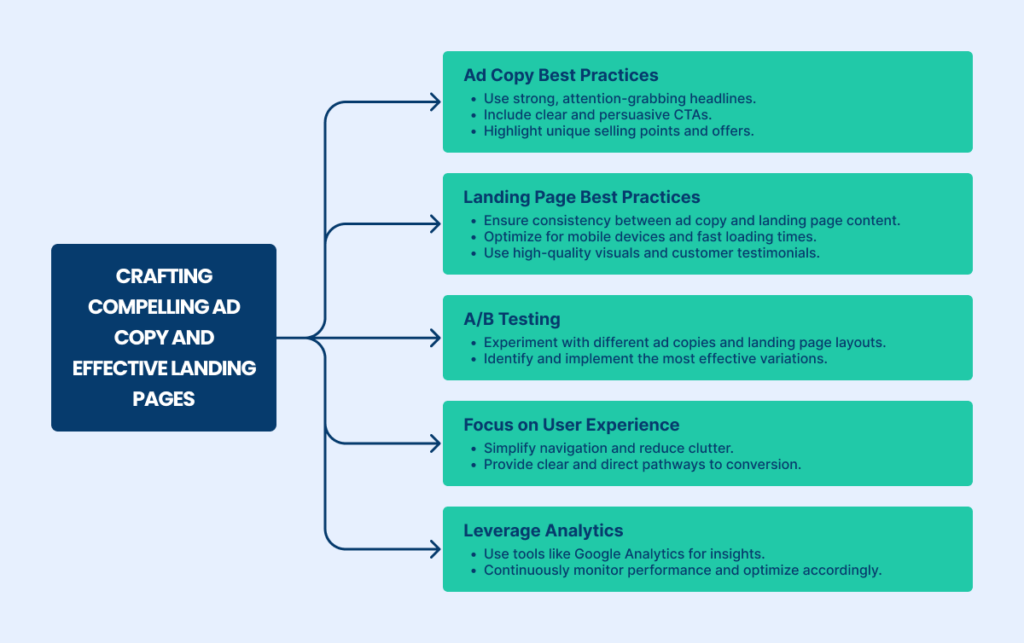
Utilizing Strong Call-to-Action Phrases
Incorporating call-to-action (CTA) phrases is essential for compelling Google Ads descriptions. CTAs prompt users to take immediate action, which can lead to higher engagement and conversion rates. Effective CTAs include phrases such as:
- Shop Now
- Get Started Today
- Claim Your Free Trial
These phrases create a sense of urgency and encourage potential customers to click on the ad, ultimately driving traffic to the website.
Incorporating Relevant Keywords for SEO
Integrating relevant keywords into descriptions not only enhances visibility but also aligns the ad with user search intent. Identifying high-performing keywords associated with your product or service is crucial. Aim to include these keywords naturally within the description, ensuring they fit seamlessly into the message without appearing forced.
For optimal results, research tools like Google Keyword Planner can help identify keywords with high search volume and low competition, allowing advertisers to tailor their descriptions effectively.
Highlighting Unique Selling Propositions
Clearly articulating your unique selling propositions (USPs) can differentiate your ads from competitors. USPs should focus on what makes your offering distinct or superior, such as:
- Exclusive discounts
- Free shipping options
- Exceptional customer service
By emphasizing these elements, advertisers can capture the attention of potential customers, making a compelling case for why they should choose your brand over others.
Testing Different Variations for Optimization
Continuous improvement is vital in digital advertising. Testing various description formats allows advertisers to identify which elements resonate best with their audience. Utilize A/B testing to compare different versions of descriptions, focusing on factors such as wording, CTAs, and keyword placement. Regularly review performance metrics to refine descriptions based on data-driven insights.
Common misconceptions about Google Ads descriptions include the belief that longer descriptions are always better. In reality, concise and impactful descriptions often outperform lengthy ones. Focus on clarity and brevity to convey the message effectively.
Another misconception is that using too many keywords will enhance visibility. Overstuffing descriptions with keywords may lead to lower quality scores from Google, negatively affecting ad performance. Prioritize quality and relevance over quantity when selecting keywords.
To apply these techniques effectively, follow these actionable steps:
- Identify and incorporate strong CTAs relevant to your target audience.
- Research and integrate high-performing keywords into your descriptions.
- Highlight your unique selling propositions clearly.
- Implement A/B testing to refine descriptions based on performance data.
By employing these strategies, advertisers can create compelling Google Ads descriptions that not only attract clicks but also drive conversions, ultimately leading to improved advertising outcomes.
Analyzing the Impact of Descriptions on Ad Performance
This section examines the critical role of ad descriptions in Google Ads and their direct influence on key performance metrics, including click-through rates (CTR) and conversion rates. Understanding these dynamics is essential for optimizing ad campaigns effectively.

Understanding Click-Through Rates Related to Descriptions
Ad descriptions significantly affect CTR, which measures the percentage of users who click on an ad after viewing it. A compelling description can capture user attention and entice clicks. For instance, using action-oriented language and clear value propositions can lead to higher CTRs. Research indicates that ads with well-structured descriptions can experience a CTR increase of up to 30% compared to those with vague or generic descriptions.
Evaluating Conversion Rates from Descriptive Ads
While CTR measures initial interest, conversion rates assess how many clicks result in desired actions, such as purchases or sign-ups. Descriptions that align closely with user intent and provide specific benefits can improve conversion rates. A case study involving a retail brand revealed that descriptive ads highlighting unique selling points led to a 15% increase in conversions. This demonstrates that effective descriptions do not just drive clicks but also enhance the likelihood of completing a transaction.
Using A/B Testing to Measure Effectiveness
A/B testing is a valuable method for evaluating the effectiveness of different ad descriptions. By creating variations of an ad with distinct descriptions, advertisers can analyze performance metrics to determine which version resonates better with the target audience. Key metrics to assess during A/B testing include CTR, conversion rates, and overall ROI. Implementing systematic A/B testing can lead to data-driven decisions that refine ad strategy and boost performance.
Analyzing Competitor Descriptions for Insights
Examining competitor ads can provide valuable insights into effective descriptions. Analyzing competitors’ language, offers, and calls to action can reveal trends and strategies that resonate with the target market. This competitive analysis can inform ad description strategies and inspire innovative approaches that stand out in a crowded marketplace.
Nuance / Expert Layer
Common misconceptions about ad descriptions often revolve around the belief that longer descriptions are inherently better. However, the effectiveness of a description is not solely dependent on length. A concise, impactful description can outperform a lengthy one filled with jargon. Additionally, advertisers may overlook the importance of mobile optimization in descriptions. With a significant portion of users accessing ads via mobile devices, ensuring that descriptions are concise and formatted for mobile viewing is critical for maximizing engagement.
Practical Application
To leverage this information effectively, advertisers should:
- Craft descriptions that highlight unique selling points and align with user intent.
- Conduct regular A/B tests to refine ad descriptions based on performance metrics.
- Analyze competitors’ descriptions to identify successful strategies and adapt them to fit your brand.
- Optimize descriptions for mobile viewing to enhance user engagement and conversion rates.
Real-Life Case Studies: Successful Google Ads Descriptions
This section examines real-world examples of high-performing Google Ads descriptions, highlighting their effectiveness and the strategies behind them. Understanding these successful campaigns provides valuable insights for optimizing ad copy.

Case Study Analysis of High-Performing Ads
Several brands have excelled in crafting compelling Google Ads descriptions that resonate with their target audiences. For instance, a major online retailer utilized a description that emphasized limited-time offers and free shipping. Their ad copy read: “Shop Now for 20% Off Your First Order + Free Shipping!” This approach created a sense of urgency and incentivized clicks.
Another example is a local service provider who focused on customer satisfaction. Their ad description stated: “Trusted by 1,000+ Local Customers! Book Your Free Consultation Today.” By showcasing social proof and offering a free consultation, they effectively built trust and encouraged user engagement.
Lessons Learned from Successful Campaigns
- Clarity and Brevity: Effective descriptions communicate the value proposition clearly and concisely.
- Incorporation of Keywords: Using relevant keywords enhances visibility and relevance to user queries.
- Call to Action (CTA): Strong CTAs prompt immediate responses, increasing click-through rates.
Identifying Trends in Effective Descriptions
Analysis of high-performing ads reveals several trends. First, successful descriptions often include time-sensitive language, such as “limited time” or “last chance,” which creates urgency. Second, ads that highlight unique selling points, such as “locally sourced” or “eco-friendly,” attract environmentally conscious consumers. Lastly, incorporating customer testimonials or ratings can significantly enhance credibility.
Applying Insights to Your Own Ad Strategy
To implement these insights into your Google Ads strategy, consider the following steps:
- Conduct thorough keyword research to identify terms that resonate with your audience.
- Craft descriptions that are clear and concise, focusing on your unique value propositions.
- Incorporate compelling CTAs that encourage users to take immediate action.
While understanding what is description in Google Ads is vital, it is equally important to adapt these strategies to fit your brand’s voice and objectives. Regularly testing and refining ad copy based on performance data will ensure ongoing improvement.
To maximize the effectiveness of your Google Ads descriptions, analyze competitors, leverage A/B testing for different versions of your ads, and stay updated on industry trends. This iterative approach will enhance your ad performance and drive better results over time.
Future Trends in Google Ads Descriptions: What to Expect
This section examines emerging trends shaping the future of Google Ads descriptions, highlighting the significance of innovation in ad copy creation. Understanding these trends is essential for marketers aiming to enhance ad performance and engagement.
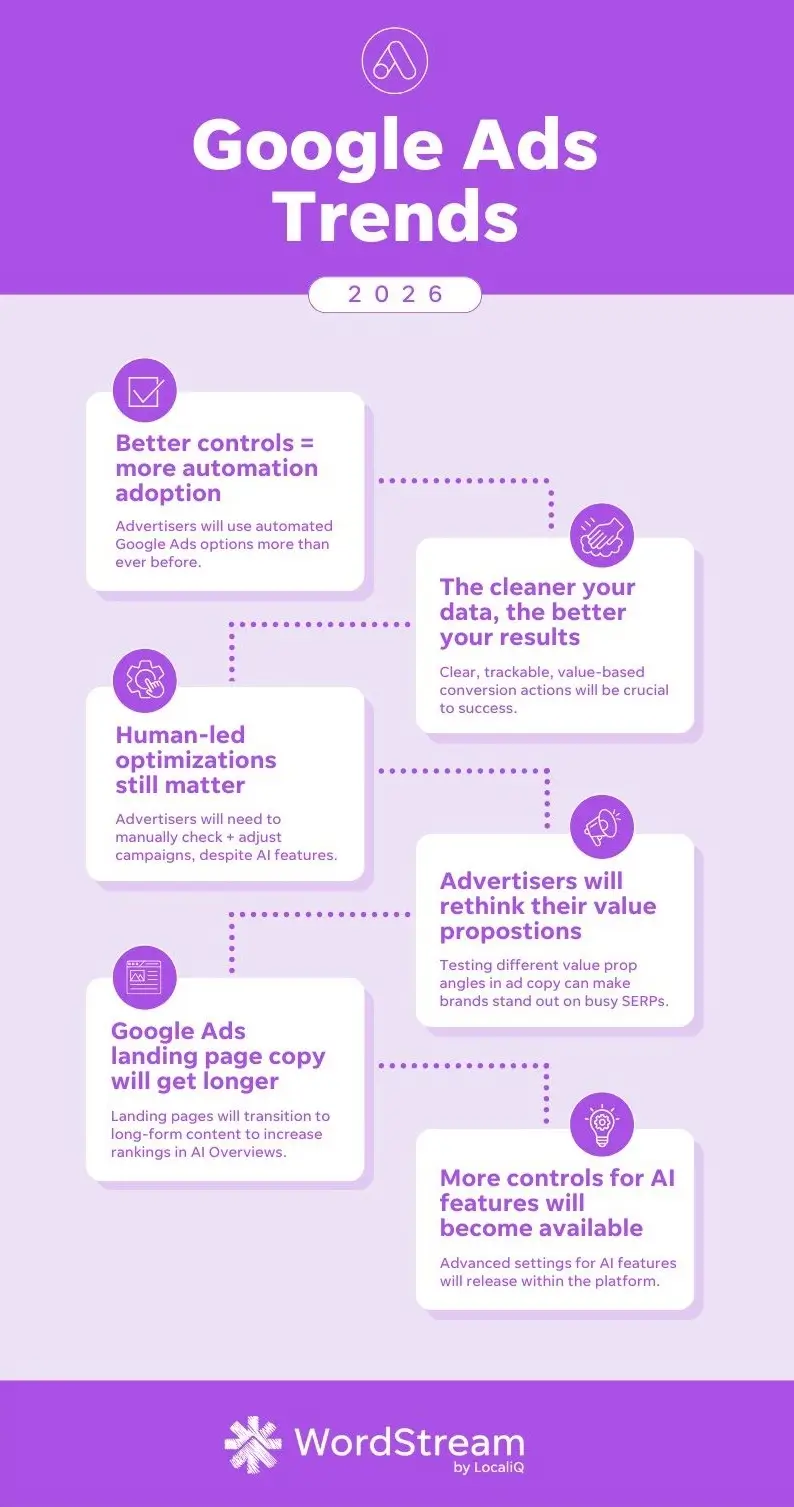
The Role of AI in Ad Copy Generation
Artificial Intelligence (AI) is revolutionizing ad copy generation by automating the creation of compelling descriptions. Tools like Google’s AI-powered Smart Compose can analyze previous ad performance and user interactions to generate optimized descriptions that resonate with target audiences. This technology not only speeds up the ad creation process but also allows for continuous refinement based on real-time data analytics.
Personalization and Dynamic Descriptions
As consumers increasingly expect tailored experiences, the use of personalization in ad descriptions will continue to rise. Dynamic descriptions, which adjust content based on user data and behavior, will enable advertisers to deliver more relevant messages. For example:
- Incorporating user location to highlight nearby services.
- Customizing offers based on past purchase behavior.
- Adjusting language style to align with user demographics.
This level of personalization can significantly improve click-through rates and conversion, making it a critical strategy for future campaigns.
Impact of Voice Search on Ad Descriptions
The rise of voice search is transforming how consumers interact with search engines, necessitating changes in ad description strategies. Descriptions must now be optimized for conversational queries and natural language. Marketers should focus on creating concise yet informative descriptions that directly answer potential questions. This shift will require an understanding of the types of phrases users employ when using voice-activated devices.
Adapting to Changes in Consumer Behavior
Consumer behavior is evolving, driven by factors such as increased reliance on mobile devices and growing privacy concerns. Advertisers must adapt their descriptions to reflect these changes. Key adaptations include:
- Focusing on mobile-first design to enhance user experience.
- Emphasizing transparency and trustworthiness in messaging.
- Utilizing data-driven insights to predict emerging consumer trends.
By staying ahead of these shifts, advertisers can craft descriptions that resonate with contemporary audiences.
Expert-level discussions often overlook the nuanced relationship between ad descriptions and overall campaign strategy. While many emphasize creativity, the integration of analytical tools to track performance metrics is equally crucial. Advertisers should balance creative flair with data-driven decisions to fine-tune messaging effectively.
To leverage these insights, marketers should begin by experimenting with AI tools for ad copy generation and implementing dynamic descriptions in their campaigns. Additionally, they should prioritize voice search optimization and continuously monitor consumer behavior trends. Regularly updating ad descriptions to reflect these insights will not only enhance relevance but also improve overall campaign effectiveness.
Frequently Asked Questions
What are the key components of a Google Ads description?
A Google Ads description includes the main message, a call to action, and relevant keywords. These elements work together to engage potential customers and encourage clicks.
How do I write effective descriptions for Google Ads?
Effective Google Ads descriptions should be clear, concise, and compelling. Focus on the unique selling points of your product or service and include a strong call to action to drive engagement.
What is the difference between Google Ads description and headlines?
Google Ads descriptions provide additional details about the product or service, while headlines are designed to grab attention. Both elements work together to create a cohesive ad but serve different purposes.
Are there character limits for Google Ads descriptions?
Yes, Google Ads descriptions have a character limit of 90 characters each. This constraint requires concise messaging that effectively communicates the ad’s value.
What common mistakes should I avoid in Google Ads descriptions?
Avoid using jargon, being overly vague, or neglecting a call to action in Google Ads descriptions. Additionally, ensure that descriptions are relevant to the keywords and align with user intent.
How much does it cost to run Google Ads with good descriptions?
The cost of running Google Ads varies based on factors like industry competitiveness and bidding strategy. Well-crafted descriptions can improve click-through rates, potentially lowering overall costs.
How long does it take to see results from Google Ads descriptions?
Results from Google Ads descriptions can typically be observed within a few days to weeks. However, the time frame may vary based on factors such as budget, targeting, and overall campaign strategy.
Final Thoughts on what is description in google ads
Effective Google Ads descriptions are a critical component of ad performance, influencing click-through rates and conversion outcomes. By mastering the art of crafting concise, compelling descriptions that complement headlines, advertisers can significantly enhance their campaigns and drive better results.
To optimize your Google Ads descriptions, conduct A/B testing on different variations to identify which wording resonates most with your target audience, allowing for data-driven improvements in your ad copy.
Understanding the nuances of Google Ads descriptions is essential for any brand aiming to stand out in a competitive digital landscape and achieve measurable success.
Leave a Reply