
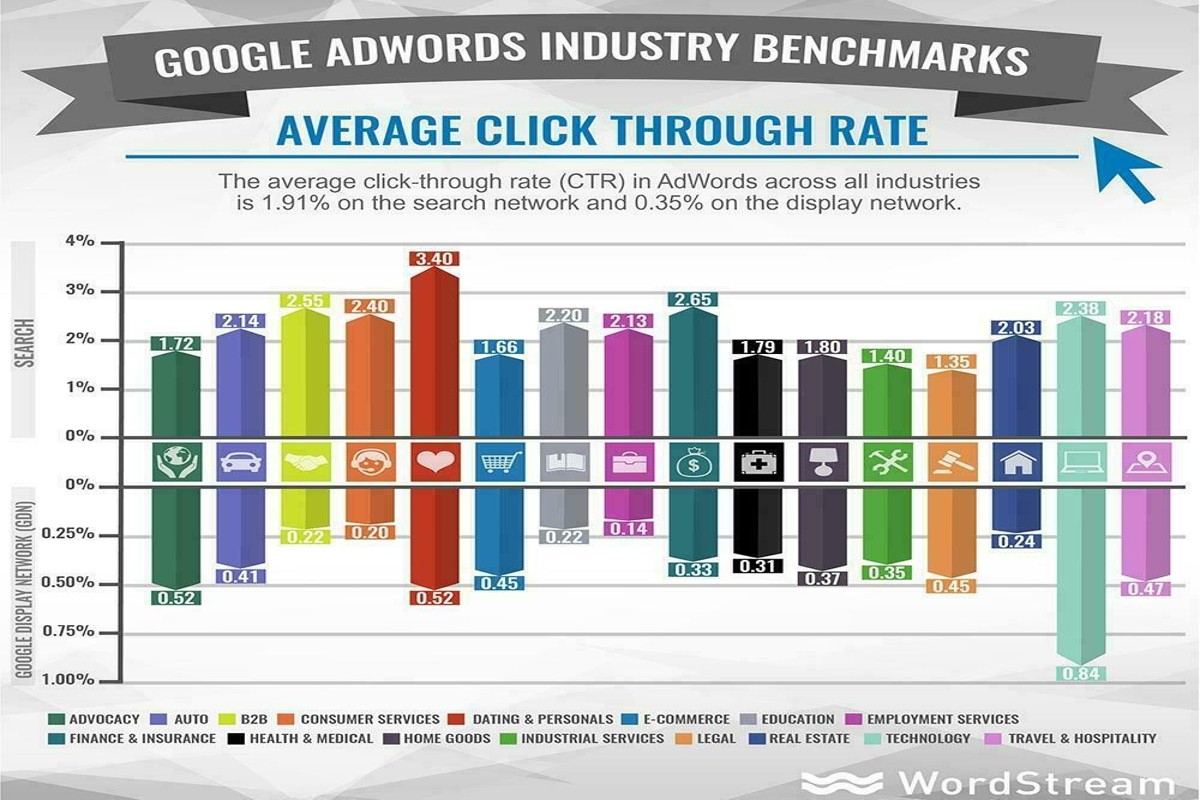
A good CTR for Google Ads typically ranges from 2% to 5%, depending on the industry and campaign type. Higher CTRs indicate more effective ads, suggesting that your messaging resonates with the target audience.
Understanding what constitutes a good CTR is crucial for marketers and advertisers aiming to optimize their campaigns. A miscalculation can lead to wasted budgets and missed opportunities for engagement, making it essential to grasp this metric’s nuances.
This article will detail the factors influencing CTR, provide benchmarks across various industries, and offer actionable tips for improving ad performance. You’ll gain insights into how to assess and enhance your Google Ads strategy effectively.
What is a good CTR for Google Ads?
A good click-through rate (CTR) for Google Ads typically ranges from 2% to 5%, depending on the industry and campaign type. This metric measures the percentage of users who click on an ad after seeing it, providing insight into its effectiveness. A higher CTR indicates that the ad is resonating well with the target audience.
Average CTR benchmarks vary significantly across different industries. For instance, the travel industry often sees higher CTRs, averaging around 4%, while the legal sector may have lower rates, closer to 1.5%. Understanding these benchmarks is crucial because they help advertisers assess their performance relative to industry standards. Factors such as ad relevance, targeting accuracy, and the competitiveness of keywords can all influence CTR.
- Industry Variance: Different sectors have distinct average CTRs, influenced by user intent and ad placement.
- Ad Quality: Ads that are relevant, well-designed, and have compelling calls-to-action tend to achieve higher CTRs.
- Targeting: Precise targeting of demographics, locations, and interests can significantly enhance ad performance.
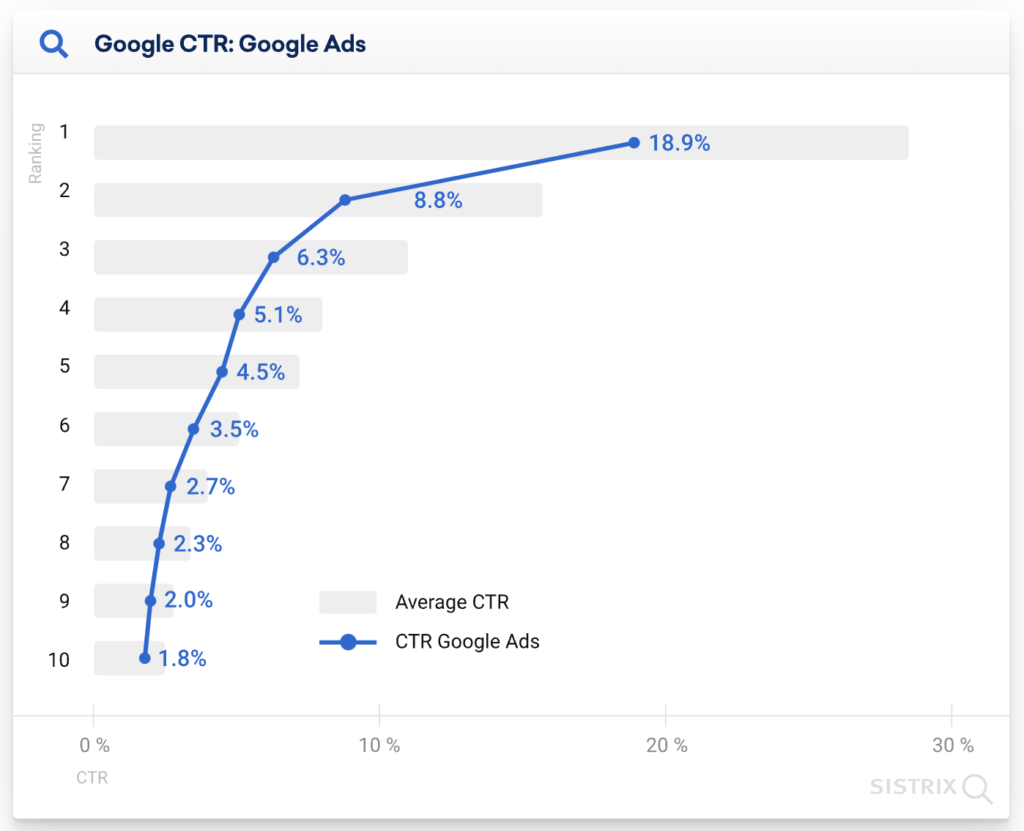
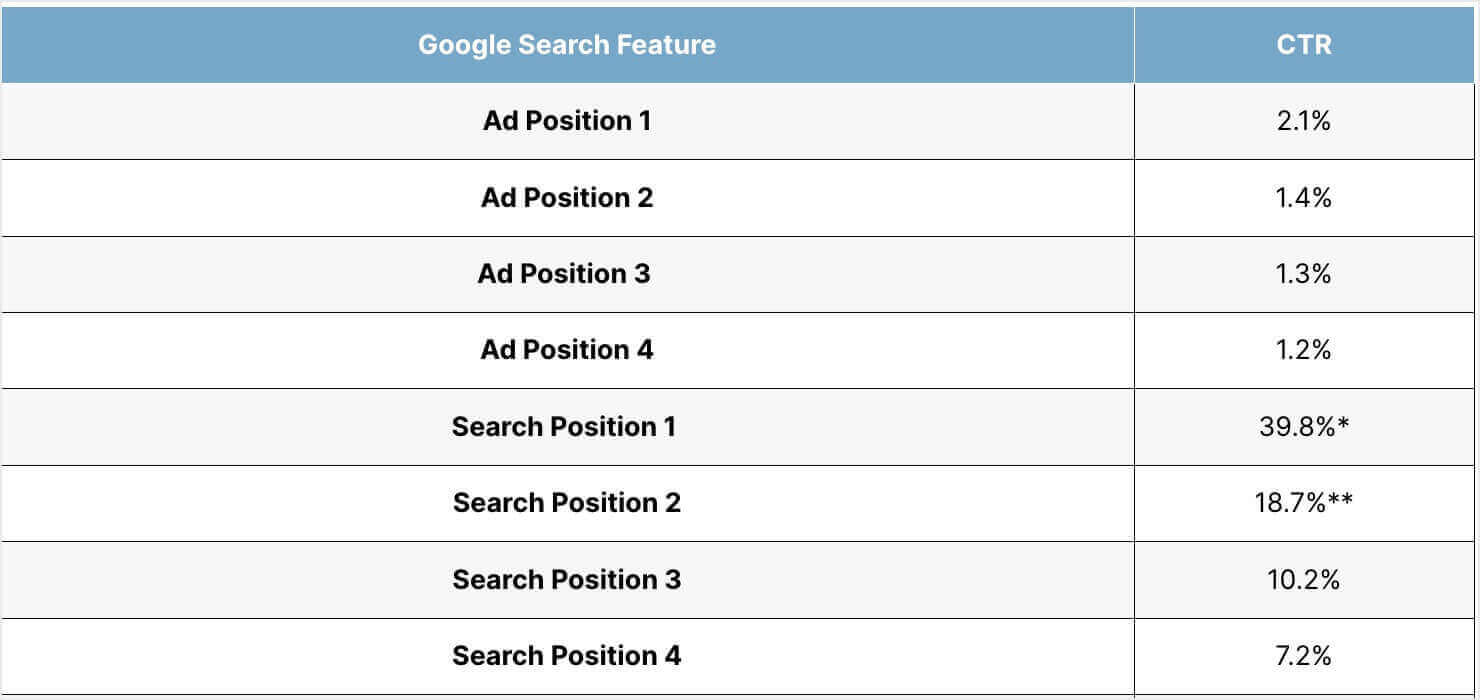
Additionally, the position of the ad on the search results page affects CTR. Ads in the top positions generally receive more clicks than those further down. Tracking CTR over time can help identify trends and areas for improvement, allowing advertisers to refine their strategies effectively.
Expert Tip: Regularly conducting A/B testing on ad copy, visuals, and targeting options can lead to optimized CTRs, ensuring that advertising spend yields the best possible returns. Aim not only for higher CTRs but also for conversions, as a high CTR without resulting sales can indicate misalignment in targeting or messaging.
How can I improve my CTR in Google Ads?
Improving your CTR in Google Ads requires a strategic approach focused on ad relevance and user engagement. By optimizing various elements of your campaigns, you can attract more clicks and enhance overall performance. Implement the following strategies to boost your click-through rate effectively.
- Refine Your Targeting: Utilize Google Ads’ targeting options to reach the most relevant audience. Focus on demographics, interests, and locations that align with your ideal customer profile.
- Craft Compelling Ad Copy: Write clear, engaging headlines and descriptions that highlight the unique benefits of your product or service. Use strong calls to action (CTAs) to encourage clicks.
- Utilize Ad Extensions: Incorporate ad extensions like sitelinks, callouts, and structured snippets to provide additional information. This can increase visibility and make your ads more appealing.
- Optimize Landing Pages: Ensure that your landing pages are relevant to your ads and provide a seamless user experience. A well-designed landing page can enhance conversions and positively influence CTR.
- Test Different Ad Variations: Conduct A/B testing on different ad copies, formats, and layouts. Analyze performance data to determine which variations yield the highest CTRs.
- Monitor and Adjust Bids: Adjusting bids can help position your ads more effectively. Higher positions often lead to better visibility, which can enhance click-through rates.
- Utilize Negative Keywords: Implement negative keywords to filter out irrelevant traffic. This helps ensure that your ads are shown only to users who are likely to be interested in your offerings.
Regularly review and analyze your Google Ads performance to identify areas for improvement. Continuous optimization is key to maintaining a competitive CTR.
Expert Tip: Leverage audience insights and analytics to inform your strategies. Understanding user behavior and preferences allows for more tailored ads that resonate with your target market, ultimately boosting CTR.
What factors influence CTR in Google Ads?
The click-through rate (CTR) in Google Ads is influenced by several key factors, including ad copy quality, targeting precision, and competitive landscape. Each of these components plays a crucial role in determining how often users engage with ads. Understanding these factors can help optimize ad performance and improve CTR.
Ad copy quality is one of the most significant determinants of CTR. Compelling and relevant ad text can capture attention and encourage clicks. Elements such as strong calls to action, clear value propositions, and alignment with user intent are essential. In contrast, poorly written or generic ads tend to underperform, as they fail to resonate with the target audience.
Targeting precision also profoundly impacts CTR. Well-defined audience segments that align with the ad’s message can significantly enhance engagement rates. Advertisers can utilize demographic targeting, geographic targeting, and keyword selection to reach the most relevant users. Inadequate targeting may result in showing ads to audiences less likely to engage, thus lowering CTR.
Finally, the competitive landscape affects CTR. High competition in specific niches can lead to ad fatigue and lower click rates as users become accustomed to seeing similar ads. Conversely, in less competitive areas, ads may achieve higher CTRs due to less saturation and increased visibility. Advertisers must continuously monitor competition to adjust their strategies accordingly.
- Ad Copy Quality: Compelling and relevant text captures user attention.
- Targeting Precision: Accurate audience segmentation increases engagement.
- Competitive Landscape: Competition levels affect visibility and user fatigue.
To enhance CTR, focus on continuously testing and optimizing ad copy while refining targeting strategies. Regularly analyzing competitor performance can also provide insights that inform adjustments to improve click rates.
Is a higher CTR always better for Google Ads?
A higher click-through rate (CTR) is not always better for Google Ads. While a high CTR can indicate effective ad messaging, it doesn’t guarantee overall campaign success. Focusing solely on CTR can lead to neglecting other critical performance metrics, such as conversion rates and Quality Score.
CTR is a component of Google Ads’ Quality Score, which also considers landing page experience and ad relevance. A high CTR with low conversion rates can suggest that ads are attracting clicks but failing to meet user expectations, resulting in wasted ad spend. Therefore, achieving a balance between CTR and conversion quality is essential for maximizing return on investment (ROI).
- Focus on ad relevance: Ensure your ads are closely aligned with the keywords you are targeting. This will help improve both CTR and Quality Score.
- Optimize landing pages: Create landing pages that provide a seamless user experience and relevant content. A well-optimized landing page can help convert clicks into customers, even if the CTR isn’t exceptionally high.
- Monitor conversion rates: Track how many clicks lead to desired actions, such as purchases or sign-ups. A lower CTR might still be acceptable if it results in a higher conversion rate.
- Test ad variations: Experiment with different ad formats, headlines, and calls to action to find the most effective combinations. This helps improve both CTR and overall campaign performance.
- Use negative keywords: Implement negative keywords to filter out irrelevant traffic. This can lead to a lower CTR but a higher conversion rate by attracting more qualified leads.
Focusing on CTR alone can be misleading. A comprehensive approach that includes monitoring Quality Score and conversion metrics will yield better long-term results. Regular analysis of both CTR and conversion data is critical for sustained campaign success.
What is the average cost per click for high CTR ads?
The average cost per click (CPC) for high click-through rate (CTR) ads typically ranges from **$1 to $2**, depending on various factors. High-performing ads often have lower CPCs due to better Quality Scores, which result from effective targeting and compelling ad copy. However, costs can vary widely based on industry and competition.
Several factors influence the CPC of high CTR ads:
- Industry Competition: Highly competitive industries, such as finance or legal services, usually have higher CPCs. Conversely, niche markets may enjoy lower costs.
- Quality Score: Google assigns a Quality Score based on the relevance of the ad, expected CTR, and landing page experience. A higher Quality Score can lead to lower CPC.
- Ad Position: Ads appearing in higher positions generally incur higher costs. Those in the top three positions often have increased visibility and, consequently, higher CPCs.
Additionally, geographic targeting can affect CPC. Ads targeting urban areas with high competition may see elevated costs compared to rural regions. Seasonality also plays a role; certain times of the year, such as holidays, can drive up CPC due to increased competition for ad space.
Expert Tip: To optimize CPC while maintaining a high CTR, regularly analyze ad performance and adjust bidding strategies. Implementing A/B testing on ad copy and landing pages can yield valuable insights that improve both CTR and reduce costs.
How long does it take to improve CTR in Google Ads?
Improving click-through rate (CTR) in Google Ads can take anywhere from a few weeks to several months. The timeline largely depends on the complexity of the campaign, the initial quality of the ads, and the frequency of adjustments made based on performance data.
Several factors influence how quickly CTR can improve. First, the volume of data collected plays a critical role. Google Ads requires a sufficient amount of traffic to generate reliable insights. If a campaign has low traffic, it can take longer to identify trends and make effective changes. Additionally, the competitiveness of the industry affects the timeline; more competitive sectors may require more time to optimize ads effectively.
Another factor is the nature of the changes implemented. Simple adjustments, such as tweaking ad copy or improving targeting settings, can yield quicker results, often within a few weeks. In contrast, significant overhauls, like changing the ad format or reworking the entire campaign strategy, generally take longer to show improvements in CTR. Continuous monitoring and iterative testing are essential, as they allow for incremental optimizations that can gradually enhance performance.
Expert Tip: Regularly analyze the performance of different ad variations through A/B testing. This method not only accelerates improvements but also provides insights into what resonates best with your target audience, leading to sustained CTR growth over time.
What are common mistakes that lower CTR in Google Ads?
Common mistakes that lower CTR in Google Ads include irrelevant ad copy, poor targeting, and weak calls to action. Each of these factors can significantly diminish an advertisement’s effectiveness and reduce the likelihood of clicks. Understanding these pitfalls is crucial for optimizing ad performance.
For example, consider a business selling luxury watches that creates an ad with the headline “Affordable Timepieces.” This ad misrepresents the product and targets the wrong audience. Users searching for luxury watches expect quality and exclusivity, not affordability. As a result, this mismatch leads to a lower CTR because potential customers are unlikely to click on an ad that does not align with their expectations.
Another frequent mistake is neglecting to tailor ads to specific audience segments. For instance, a local bakery running a general campaign for “fresh bread” without specifying location or special offers may fail to attract local customers. By not addressing the target audience’s needs and preferences, the ad’s relevance diminishes, leading to fewer clicks. Additionally, failing to include a compelling call to action, such as “Order Now” or “Get 20% Off Today,” can leave potential customers unsure of the next steps, further reducing CTR.
Expert Tip: Regularly analyze ad performance metrics and A/B test different elements, including headlines and calls to action, to identify which combinations yield higher engagement. Tailoring ads to meet the specific interests and motivations of the target audience will significantly enhance CTR.
How does CTR vary by industry in Google Ads?
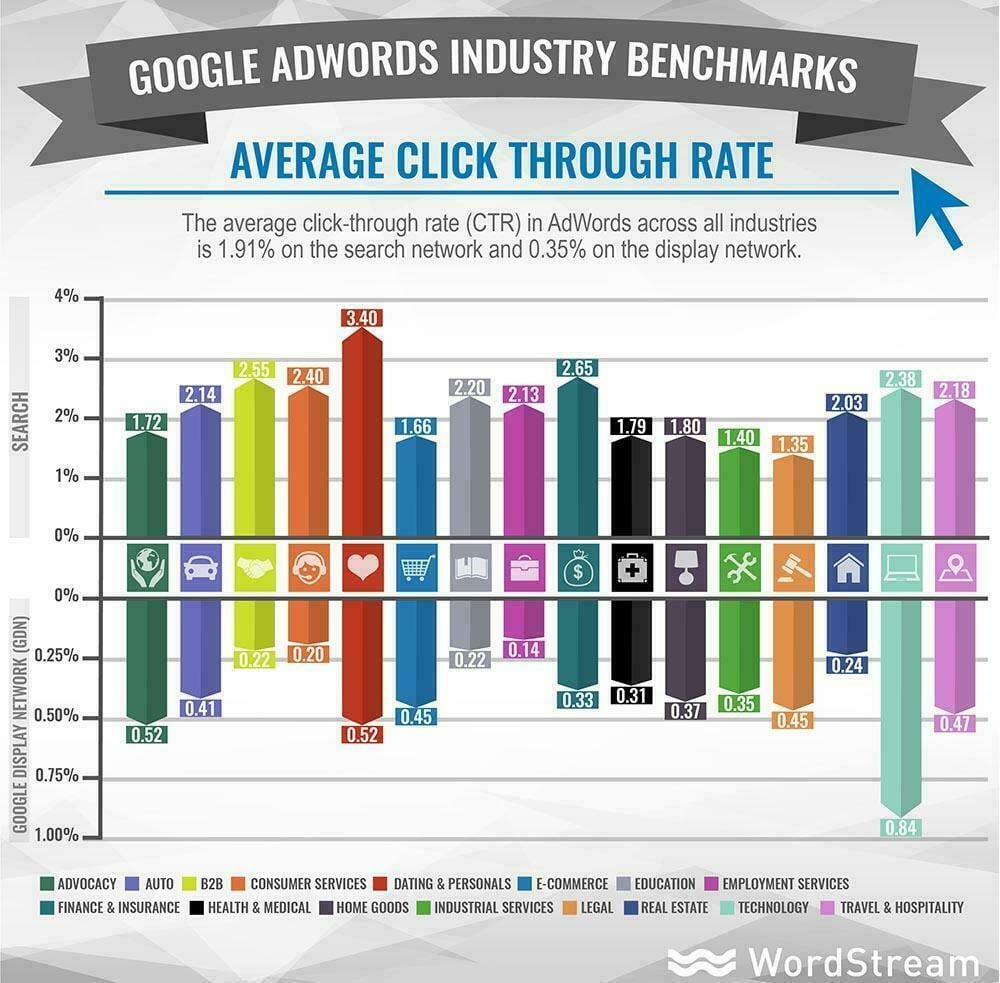
Click-through rates (CTR) in Google Ads vary significantly by industry, reflecting differences in consumer behavior, competition, and ad relevance. Generally, higher CTRs are observed in industries with more targeted audiences and compelling offers. Understanding these benchmarks helps advertisers set realistic expectations and optimize their campaigns effectively.
Several industries exhibit distinct CTR benchmarks. For instance, the finance sector often sees CTRs around 2-5%, largely due to high competition and the necessity for detailed information in advertising. In contrast, the retail industry typically has a wider range, with CTRs averaging between 1.5-3%, influenced by seasonal promotions and consumer trends. The technology sector may experience even lower CTRs, averaging around 1-2%, as potential customers often conduct extensive research before making a purchase.
- Finance: 2-5%
- Retail: 1.5-3%
- Technology: 1-2%
Variations in CTR can also be attributed to factors such as ad placement, quality score, and the effectiveness of the ad copy. Industries with highly relevant keywords and engaging content tend to achieve higher CTRs. Moreover, mobile versus desktop performance can differ, impacting overall CTR as well. Advertisers should continuously analyze their campaigns against industry benchmarks to identify areas for improvement.
Expert Tip: Regularly testing ad copy and optimizing for specific audience segments can lead to improved CTRs, particularly in competitive industries. Implementing A/B testing strategies ensures that the most effective messaging resonates with the target audience.
Understanding the Importance of CTR in Google Ads
Click-Through Rate (CTR) serves as a key performance indicator in Google Ads, influencing multiple aspects of campaign success. This section delves into the critical role of CTR in determining ad effectiveness, cost, and overall strategy.
CTR’s Role in Determining Quality Score
Quality Score is a vital metric that Google uses to assess the relevance and quality of ads. A higher CTR directly contributes to a better Quality Score, which in turn can lead to lower costs per click (CPC). Google rewards advertisers with relevant ads by enhancing their Quality Score, allowing them to achieve better ad placements at reduced costs. Thus, maintaining a high CTR is essential for maximizing return on investment (ROI).
How CTR Affects Ad Positioning
Ad positioning is influenced significantly by CTR. Google prioritizes ads with higher CTRs, placing them in more favorable positions on the search results page. This elevated visibility not only increases the likelihood of clicks but also enhances brand exposure. A consistent high CTR can lead to a sustained top position, making it crucial for advertisers to focus on creating compelling ad copy and targeting the right audience.
The Relationship Between CTR and Conversion Rates
While a high CTR indicates that users are clicking on ads, it does not always guarantee conversions. However, a strong correlation often exists between CTR and conversion rates. Ads with a high CTR typically attract more interested users, leading to improved conversion potential. Analyzing both metrics together allows advertisers to refine targeting strategies and optimize landing pages for better performance.
Long-Term Implications of Maintaining a Good CTR
Maintaining a good CTR has long-term implications for advertising strategies. Consistent performance can lead to a lower average cost per acquisition (CPA) and increased customer lifetime value (CLV). Additionally, advertisers with a strong CTR build brand credibility and trust, resulting in repeat business and customer loyalty. Over time, a focus on CTR can transform an ad campaign from a short-term tactic into a long-term growth strategy.
Nuance and Expert Insights
Common misconceptions about CTR often revolve around the idea that a high CTR alone guarantees success. While it is a significant metric, it must be considered in conjunction with other performance indicators such as conversion rate and cost per click. Additionally, industries vary widely in average CTR benchmarks. High competition sectors may experience lower CTRs due to saturation, making it essential for advertisers to set realistic expectations based on their specific market context. Misinterpreting CTR data can lead to misguided adjustments in campaign strategy.
Practical Application
To leverage CTR effectively, advertisers should focus on these actionable strategies:
- Conduct regular A/B testing on ad copy to identify what resonates with the target audience.
- Refine targeting options to reach the most relevant users, enhancing both CTR and conversion rates.
- Monitor industry benchmarks to set realistic CTR goals and adjust campaigns accordingly.
- Optimize landing pages to ensure a seamless user experience post-click, improving conversion rates.
By prioritizing these strategies, advertisers can enhance their overall performance and achieve a good CTR in Google Ads, ultimately driving business growth.
Advanced Strategies for Maximizing CTR
This section delves into effective techniques for enhancing click-through rates (CTR) in Google Ads. Implementing these strategies can significantly improve ad performance and drive higher conversion rates.
Creating Compelling Ad Copy and CTAs
Ad copy is the first impression potential customers have of your business. To increase CTR, focus on crafting headlines that grab attention, highlight unique selling points, and evoke curiosity. Use power words that inspire action, such as “discover,” “exclusive,” or “limited-time offer.” The call-to-action (CTA) should be clear and compelling, directing users on what to do next. Examples include “Shop Now,” “Get Your Free Trial,” or “Learn More.”
Utilizing A/B Testing for Ad Variations
A/B testing involves creating multiple versions of an ad to determine which performs best. This method allows for the systematic evaluation of different elements, such as headlines, descriptions, and CTAs. To implement A/B testing:
- Identify key variables you want to test.
- Create two or more variations of your ad.
- Run the ads simultaneously to the same audience.
- Analyze the results based on CTR and other metrics.
Regularly testing ad variations provides insights into audience preferences, enabling continuous optimization.
Leveraging Audience Targeting Options
Google Ads offers various audience targeting options that can enhance CTR by reaching the right users. Consider using:
- Demographic targeting: Tailor ads based on age, gender, and household income.
- Remarketing: Re-engage users who have previously interacted with your website.
- In-market audiences: Target users actively searching for products or services similar to yours.
Refining audience targeting ensures your ads are seen by those most likely to engage, thereby improving CTR.
Adjusting Bids Based on Performance Data
Monitoring and adjusting bids according to performance data is essential for maximizing CTR. Utilize Google Ads’ reporting tools to gain insights into which keywords and ads yield the highest CTR. Consider the following steps:
- Review performance metrics regularly.
- Increase bids for high-performing keywords or ads.
- Reduce bids or pause ads that underperform.
This data-driven approach allows for more efficient budget allocation and improved ad visibility.
Many advertisers overlook the impact of ad relevance on CTR. Ads must not only attract clicks but also align closely with user intent. Misleading ads may generate clicks but can lead to high bounce rates, negatively affecting Quality Score and overall campaign performance. Ensuring ad copy accurately reflects the landing page content is critical for maintaining a positive user experience and optimizing CTR over the long term.
To implement these strategies effectively, start by reviewing current ad performance metrics, then identify areas for improvement. Create a testing schedule for ad variations and prioritize audience targeting based on your market research. Regularly adjust bids based on performance data to ensure your ads remain competitive. By applying these actionable tactics, you can significantly enhance your CTR and achieve better results in your Google Ads campaigns.
Analyzing CTR Trends and Benchmarks Across Industries
This section provides a detailed examination of click-through rate (CTR) benchmarks across various industries, highlighting key trends and insights that can guide advertisers in setting realistic performance goals.
Comparative Analysis of CTR Benchmarks by Industry
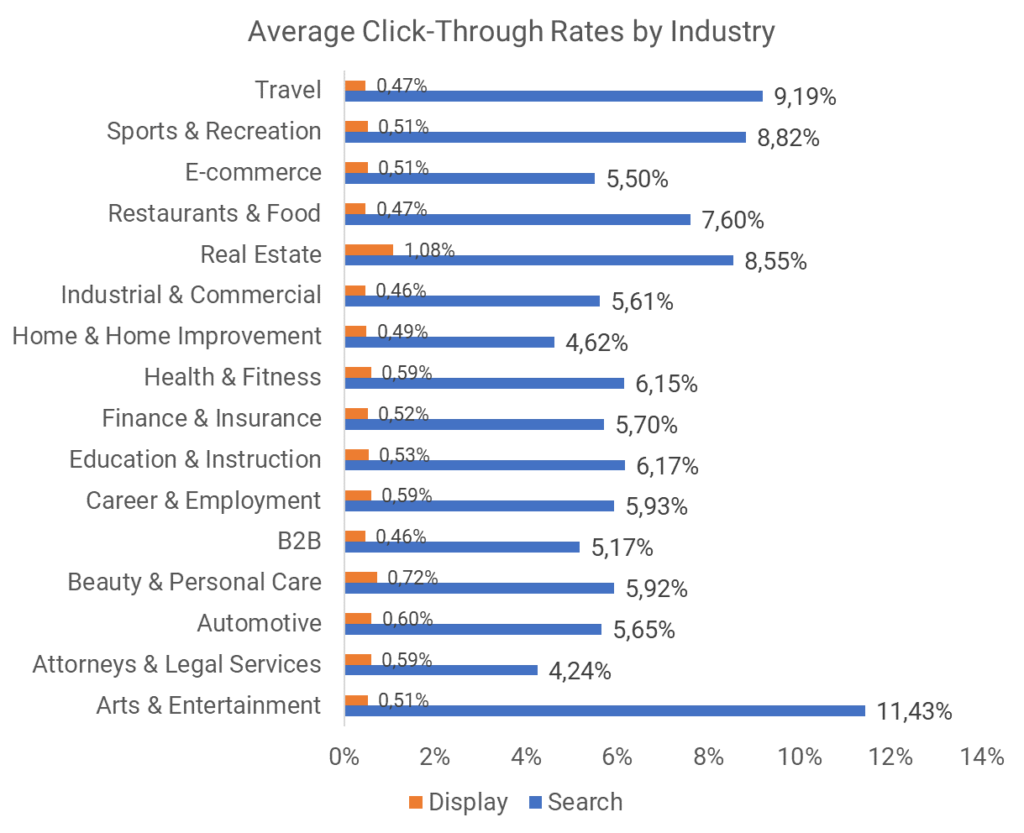
CTR benchmarks can vary significantly by industry, influenced by factors such as competition, audience engagement, and ad quality. The following data illustrates average CTRs across selected sectors:
- Retail: 2.0% – 3.5%
- Travel: 3.0% – 5.0%
- Finance: 1.5% – 2.5%
- Healthcare: 2.5% – 4.0%
- Technology: 1.0% – 2.0%
These benchmarks serve as a foundation for advertisers to assess their campaign performance relative to industry standards, allowing for more targeted optimization strategies.
Identifying High-Performing Sectors
Within the landscape of Google Ads, certain industries consistently exhibit higher CTRs. The travel and retail sectors often outperform others due to their visually appealing ads and strong promotional offers. Notably, seasonal promotions and time-sensitive deals can further enhance engagement levels in these areas.
Understanding Seasonal Trends Affecting CTR
CTR can be significantly influenced by seasonal trends and marketing cycles. For example:
- Holiday Seasons: Retail ads typically see a spike in CTR during holiday campaigns, such as Black Friday or Christmas.
- Travel Peaks: CTR for travel ads usually rises during vacation planning periods, often peaking in early spring.
- Back-to-School Sales: Retailers focused on educational products can experience increased engagement in late summer.
Advertisers must align their campaigns with these seasonal trends to maximize CTR and overall ad effectiveness.
Insights from Case Studies of Successful Campaigns
Case studies illustrate how strategic adjustments can lead to significant CTR improvements. For instance, a leading e-commerce brand increased its CTR by 50% after implementing dynamic keyword insertion and A/B testing different ad formats. Similarly, a financial services company achieved a 30% CTR increase by refining its audience targeting and utilizing compelling ad copy that resonated with potential clients.
Many advertisers mistakenly believe that a higher budget guarantees better CTR. However, focusing on ad relevance, targeting precision, and continuous optimization often yields more substantial results. Additionally, underestimating the impact of ad extensions can lead to missed opportunities, as these features enhance visibility and engagement.
To effectively utilize this information, advertisers should regularly analyze their industry-specific CTR benchmarks and seasonal trends. Implement A/B testing to identify the most effective ad formats and copy. Leverage insights from successful campaigns to refine strategies and set realistic CTR goals that align with industry standards.
Evaluating the Impact of Ad Extensions on CTR
This section examines how ad extensions can significantly enhance the visibility and engagement of Google Ads, ultimately leading to a higher click-through rate (CTR). Understanding the various types of ad extensions and their benefits is essential for optimizing ad performance.
Types of Ad Extensions and Their Benefits
Ad extensions provide additional information and options for potential customers, making ads more attractive and informative. The main types of ad extensions include:
- Site Link Extensions: These allow advertisers to link to specific pages on their website, increasing the likelihood of clicks by directing users to relevant content.
- Call Extensions: This feature enables users to call a business directly from the ad, facilitating immediate customer engagement.
- Location Extensions: By displaying the business’s address and a map, these extensions help local customers find the business easily.
- App Extensions: These encourage users to download an app directly from the ad, increasing app engagement and downloads.
- Price Extensions: These showcase prices for a product or service, helping users make informed decisions quickly.
Best Practices for Implementing Ad Extensions
To maximize the impact of ad extensions on CTR, consider the following best practices:
- Relevance: Ensure that the ad extensions are relevant to the ad content and target audience, increasing the chances of engagement.
- Regular Updates: Continuously review and update extensions to reflect current promotions, services, or products.
- Consistent Branding: Maintain a consistent brand message across ad extensions to reinforce recognition and trust.
- Utilize All Available Extensions: Take advantage of all applicable ad extensions to provide comprehensive information and enhance visibility.
Measuring the Effectiveness of Ad Extensions on CTR
Tracking the performance of ad extensions is essential for understanding their impact on CTR. Key metrics to assess include:
- Click-Through Rate: Monitor changes in CTR before and after implementing ad extensions to gauge their effectiveness.
- Conversion Rate: Evaluate whether increased clicks lead to higher conversions, indicating that ad extensions are attracting the right audience.
- Impression Share: Analyze how often your extensions appear in relation to the competition, as higher visibility can correlate with increased CTR.
Real-World Examples of Successful Ad Extension Usage
Numerous companies have successfully utilized ad extensions to enhance their Google Ads performance. For instance, a local restaurant implemented location and call extensions, resulting in a 30% increase in phone inquiries and foot traffic. Similarly, an e-commerce retailer employed site link and price extensions, leading to a 25% boost in CTR and subsequent sales conversions.
Common misconceptions about ad extensions include the belief that they are secondary to ad copy. In reality, effective ad extensions can improve overall ad quality scores, thus reducing cost-per-click (CPC) and enhancing visibility. Additionally, not all businesses utilize extensions effectively, leading to missed opportunities for engagement and conversion.
To leverage the benefits of ad extensions effectively, marketers should conduct regular audits of their ad campaigns. Identify which extensions are performing well and which are not, and make data-driven adjustments to enhance overall ad performance. Implementing relevant and timely ad extensions can result in a noticeable improvement in CTR, contributing to a more successful Google Ads strategy.
Frequently Asked Questions
What is a good CTR for Google Ads?
A good CTR for Google Ads typically ranges from 2% to 5%, depending on the industry and campaign type. Higher CTRs indicate more effective ad targeting and engagement.
How can I improve my CTR in Google Ads?
Improving CTR in Google Ads can be achieved by optimizing ad copy, using relevant keywords, and implementing targeted audience strategies. A/B testing different ad formats can also help identify what resonates best with users.
What factors influence CTR in Google Ads?
CTR in Google Ads is influenced by factors such as ad relevance, keyword selection, and the quality of the landing page. Competitive landscape and ad placement also play significant roles in determining click-through rates.
Is a higher CTR always better for Google Ads?
While a higher CTR is generally favorable, it is not always better if it leads to low-quality traffic or conversions. Focus on the overall conversion rate and return on investment (ROI) for optimal campaign performance.
What is the average cost per click for high CTR ads?
The average cost per click (CPC) for high CTR ads can vary widely depending on the industry, competition, and keyword targeting. Typically, industries with higher competition may see CPCs ranging from $1 to over $10.
How long does it take to improve CTR in Google Ads?
Improving CTR in Google Ads can take anywhere from a few weeks to several months, depending on the changes implemented and the campaign’s responsiveness. Continuous monitoring and adjustments are key to seeing improvement.
What are common mistakes that lower CTR in Google Ads?
Common mistakes that lower CTR in Google Ads include using irrelevant keywords, poorly written ad copy, and ineffective targeting. Not optimizing for mobile users can also significantly impact click-through rates.
How does CTR vary by industry in Google Ads?
CTR can vary significantly by industry, with some sectors like retail and travel often achieving higher rates compared to others like B2B services. Understanding industry benchmarks can help set realistic CTR goals for campaigns.
Final Thoughts on what’s a good ctr for google ads
A good CTR for Google Ads is not solely defined by a universal benchmark, but rather by the context of your industry, campaign goals, and audience engagement strategies. Achieving a high CTR indicates effective ad relevance and targeting, but it is essential to balance it with conversion rates to ensure overall campaign success.
To optimize your CTR, conduct A/B testing on ad copy and visuals while leveraging advanced targeting options, ensuring that your ads resonate with your intended audience and drive actionable results.
Understanding and improving CTR in Google Ads is crucial for maximizing ad performance and achieving business objectives in an increasingly competitive digital landscape.
Leave a Reply