
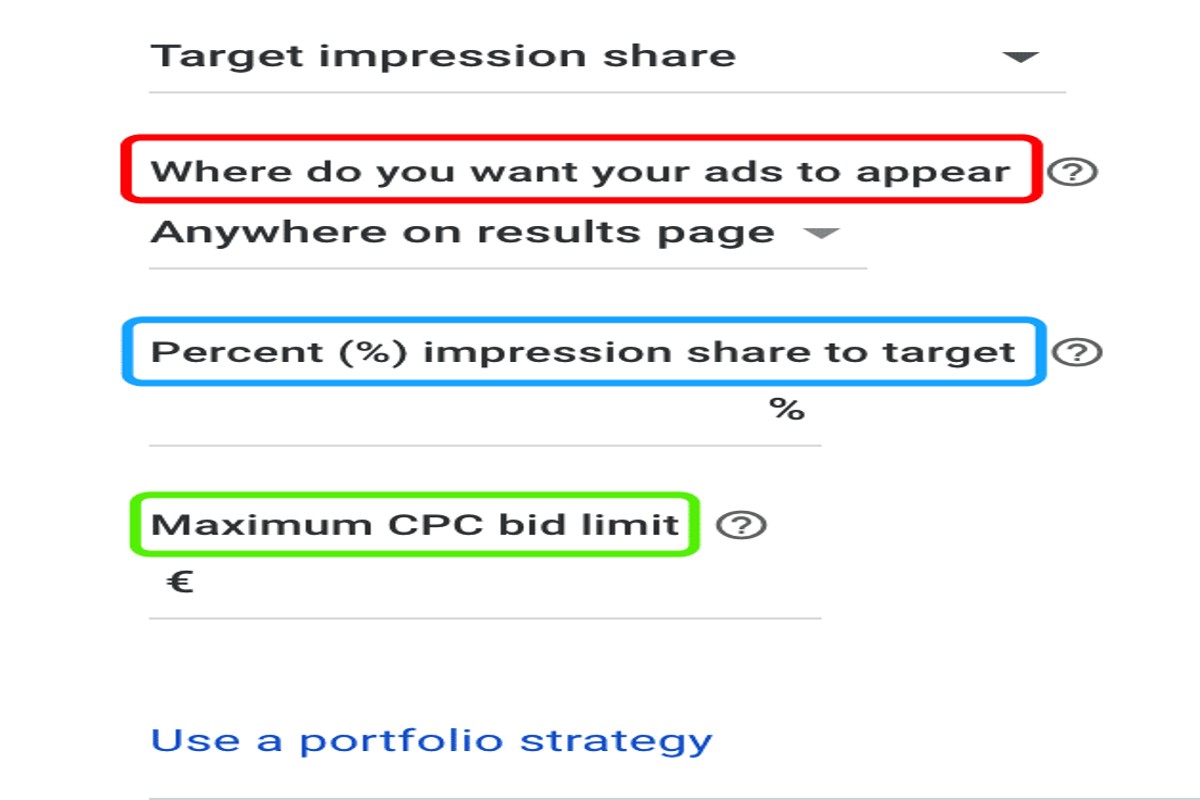
Target impression share in Google Ads is a bidding strategy that aims to achieve a specific percentage of impressions for your ads. This approach helps advertisers prioritize visibility on the search results page, ensuring that their ads appear in front of potential customers effectively.
Understanding target impression share is crucial for digital marketers and businesses seeking to enhance their online visibility. Mismanaging this strategy can lead to wasted ad spend or missed opportunities in capturing valuable traffic, ultimately affecting campaign performance and ROI.
This article will explain how target impression share works, the different settings available, and best practices for implementing this bidding strategy to maximize ad visibility and effectiveness.
What does target impression share mean in Google Ads?
Target impression share is a bidding strategy in Google Ads that aims to achieve a specified percentage of impressions for a particular ad within a given search result, typically the top of the page or the absolute top position. This strategy is designed to increase ad visibility by automatically adjusting bids based on the likelihood of the ad being shown in the desired location. Advertisers can set their campaigns to fulfill specific impression share goals, which can enhance brand presence and drive traffic.
This bidding approach is particularly significant for advertisers focused on maximizing exposure in competitive markets. Target impression share can be set based on different objectives, such as ensuring ads appear at the top of search results or in a specific location on the page. Factors such as budget, competition, and ad quality can all influence the effectiveness of this strategy.
- Top of Page: Ensures that ads appear at least at the top of the search results page.
- Absolute Top of Page: Focuses on achieving the very first position on the results page.
- Target Impression Share Location: Allows advertisers to specify where on the page they want to achieve their impression goals.
Using target impression share effectively requires a clear understanding of the campaign’s goals and the competitive landscape. Advertisers should monitor performance metrics closely to ensure that their bids align with budget constraints while maximizing visibility. Regular adjustments based on campaign performance can lead to improved results.
For optimal results, combine target impression share with strong ad creative and effective landing pages. This holistic approach not only increases visibility but also enhances conversion rates, ensuring that increased impressions translate into tangible business outcomes.
How do I set up target impression share in Google Ads?
Setting up target impression share in Google Ads involves several straightforward steps. This bidding strategy allows advertisers to set a target percentage of impressions for their ads in specific locations on the search results page. Follow the steps below to configure this bidding strategy effectively.
- Sign in to Google Ads: Begin by logging into your Google Ads account. Ensure you have administrative access to make changes to your campaigns.
- Select the campaign: Navigate to the campaign where you wish to implement the target impression share strategy. This can be an existing campaign or a new one.
- Access the Campaign Settings: Click on the campaign name, then select the “Settings” tab. Here, you will find various options for adjusting your campaign settings.
- Change Bidding Strategy: Under the bidding section, click on the pencil icon to edit the current bidding strategy. Choose “Target impression share” from the dropdown menu.
- Set your target: Specify your target impression share percentage. You can choose options such as “Top of page,” “Absolute top of page,” or a custom percentage based on your goals.
- Define your location: Decide where you want your ads to appear. Options include “Any search result page” or “Top of search results,” depending on your campaign objectives.
- Save your settings: After configuring your preferences, click “Save” to apply the changes. Monitor your campaign performance to ensure the bidding strategy aligns with your goals.
When implementing target impression share, consider your overall advertising objectives. This strategy can be particularly effective for brand awareness campaigns but may not be suitable for all goals. Regularly review your campaign metrics to assess performance and make necessary adjustments.
Expert Tip: Utilize automated rules or scripts to adjust your target impression share settings based on performance metrics. This proactive approach can help optimize your ad visibility while managing your budget effectively.
What are the advantages of using target impression share?
Target impression share in Google Ads offers several advantages, primarily enhancing brand visibility and the potential for improved return on investment (ROI). It allows advertisers to specify the percentage of impressions they want to achieve for specific keywords or placements, effectively increasing presence in competitive markets.
One significant benefit of using target impression share is the assured visibility of ads in key placements. This strategy is particularly useful for brands aiming to dominate search results or display networks. By setting a target impression share, advertisers can ensure their ads appear at the top of search results or on premium placements, which is critical for brand recognition and recall.
- Optimize Budget Allocation: Allocate budgets more effectively by targeting high-traffic times or specific demographics. This ensures that your ads receive maximum exposure when potential customers are most active.
- Enhance Brand Awareness: Consistent ad visibility leads to higher brand recall. By maintaining a strong presence in relevant searches, businesses can establish themselves as leaders in their industry.
- Focus on Specific Goals: Tailor your strategy to meet specific marketing objectives, such as launching a new product or increasing market share. This allows for greater control over campaign outcomes.
- Data-Driven Insights: Monitor performance metrics closely to adjust strategies in real-time. This responsiveness can lead to improved ad performance and increased ROI as campaigns evolve.
By implementing target impression share, advertisers can better align their campaigns with overall marketing objectives, ensuring a strategic approach to visibility and engagement. This method not only boosts brand authority but also drives conversion rates through enhanced exposure.
Expert Tip: Regularly review and adjust your target impression share settings based on seasonality and market trends to maintain optimal ad performance. This proactive approach can yield significant long-term benefits in competitive sectors.
How does target impression share compare to other bidding strategies?
Target impression share is a bidding strategy in Google Ads focused on achieving a specific share of impressions for ads. It contrasts with strategies like cost-per-click (CPC) and cost-per-acquisition (CPA), which prioritize different outcomes. Each strategy serves distinct marketing goals, influencing both visibility and cost management.
Target impression share aims to secure a desired percentage of impressions within a defined set of parameters, such as specific keywords or placements. This strategy is particularly beneficial for brand awareness campaigns, where visibility is critical. In contrast, CPC bidding focuses on maximizing clicks within a budget, allowing advertisers to pay only when users click on their ads. This method is ideal for driving traffic but may not guarantee a high impression share.
On the other hand, CPA bidding targets conversions by setting bids based on the desired cost per acquisition. This approach helps advertisers manage their budget effectively by focusing on tangible results rather than just visibility or clicks. While CPA can lead to a higher return on investment, it may not prioritize ad impressions, potentially limiting brand visibility.
- Target Impression Share: Focuses on maximizing ad visibility, ensuring a specific share of impressions.
- CPC: Prioritizes driving traffic by paying per click, which may not guarantee high impressions.
- CPA: Concentrates on conversions, optimizing costs based on acquisition goals, often at the expense of impressions.
Each strategy has its strengths and weaknesses, and choosing the right one depends on the campaign’s objectives. Advertisers should consider their specific goals—whether they seek brand awareness, traffic, or conversions—when selecting a bidding strategy.
Expert Tip: Regularly analyze performance metrics to adjust bidding strategies as needed. A hybrid approach, combining elements of different strategies, can be particularly effective in achieving a balanced outcome across visibility, clicks, and conversions.
What is the cost associated with target impression share bidding?
The cost associated with target impression share bidding can vary significantly based on several factors, but generally, advertisers can expect to pay anywhere from a few cents to several dollars per click. This bidding strategy focuses on achieving a specific impression share, meaning costs can fluctuate as competition for ad placements changes.
Costs under this bidding strategy are influenced by a multitude of factors, including:
- Competition: The number of advertisers bidding for the same keywords directly affects cost. Higher competition typically leads to increased bids.
- Quality Score: Google assigns a Quality Score based on ad relevance, expected click-through rate, and landing page experience. A higher Quality Score can reduce costs.
- Bid Strategy Settings: The specific target impression share setting (e.g., top of page vs. absolute top of page) will influence how aggressively Google bids on behalf of the advertiser.
- Geographic Targeting: Costs can vary based on the location being targeted. Some regions may have higher competition and, therefore, higher costs.
- Time of Day and Seasonality: Costs can fluctuate based on the time ads are served. Peak times may see higher costs due to increased competition.
Additionally, advertisers should be aware that while targeting a specific impression share can enhance visibility, it may also lead to overspending if not carefully monitored. Regular performance analysis is essential to ensure that the desired impression share aligns with budget constraints and return on investment objectives.
Expert Tip: Implementing negative keywords can help refine targeting, reduce irrelevant clicks, and ultimately control costs more effectively while using target impression share bidding.
How long does it take to see results from target impression share?
Results from implementing target impression share in Google Ads can typically be observed within 1 to 4 weeks. The exact timeline varies based on factors such as campaign settings, ad spend, and competition in the target market.
Several key factors influence how quickly results become apparent. First, the volume of traffic in the targeted advertising space plays a significant role. In highly competitive industries, it may take longer to achieve the desired impression share, as advertisers compete for limited ad placements. Conversely, in less competitive niches, changes in performance may be visible more quickly. Additionally, the existing performance baseline of the campaign will affect the timeline. If a campaign already has significant visibility, adjustments may produce faster results.
Another important consideration is the budget allocated to the campaign. A higher budget can lead to quicker impressions and data accumulation, allowing for faster performance insights. Furthermore, the learning phase of the Google Ads algorithm can impact timing. Initially, Google may take time to optimize ad placements based on the set target impression share, which can delay noticeable changes in performance metrics.
To maximize the effectiveness of a target impression share strategy, it is advisable to monitor key performance indicators regularly. This includes tracking metrics such as click-through rates, conversion rates, and overall return on ad spend. Evaluating these metrics can provide insights into whether the strategy is effective or if further adjustments are necessary.
Expert Tip: Regularly adjust your target impression share based on performance data. If results plateau, consider revisiting your budget allocation or targeting settings to maintain momentum and optimize campaign effectiveness.
What are common mistakes when using target impression share?
Common mistakes when using target impression share in Google Ads include setting unrealistic targets, neglecting bid adjustments, and failing to optimize ad relevance. Advertisers often aim for a 100% impression share without considering budget implications, which can lead to overspending or ineffective ad placements.
For example, an advertiser aiming for a 100% impression share for a highly competitive keyword may allocate a significant portion of their budget to achieve this goal. If the keyword costs $5 per click and the daily budget is $50, the campaign can only sustain 10 clicks per day. This strategy may result in missed opportunities during peak hours when competition increases, as the budget could be exhausted early in the day. To avoid this, it is essential to analyze the historical performance data to set a more realistic target impression share that aligns with the budget and overall campaign goals.
Another common error is disregarding the importance of ad relevance and quality score when using target impression share. A campaign with high impression share but low-quality ads may not convert effectively, leading to wasted spend. Advertisers should continuously optimize ad copy, landing pages, and targeting strategies to ensure that they maintain a balance between visibility and ad effectiveness, ultimately driving better ROI.
Expert Tip: Regularly review and adjust your target impression share based on performance metrics, such as click-through rates and conversion rates. This proactive approach enables advertisers to adapt to changing market conditions and optimize their campaigns for better results.
Advanced Strategies for Maximizing Target Impression Share
This section delves into advanced techniques for optimizing target impression share in Google Ads. By leveraging audience insights, adjusting bids, and experimenting with ad formats, advertisers can significantly enhance their visibility and engagement.

Utilizing Audience Targeting to Enhance Impression Share
Effective audience targeting can dramatically improve impression share. By identifying and segmenting audiences based on demographics, interests, and behaviors, advertisers can tailor their campaigns to reach the most relevant users. This targeted approach ensures that ads appear to those with a higher likelihood of engagement, which can lead to increased impression share.
- Remarketing Lists: Use remarketing lists to re-engage users who have previously interacted with your site. This tactic often results in higher conversion rates.
- Custom Audiences: Create custom audiences based on specific criteria, such as previous purchases or site visits, to refine targeting.
- In-Market Audiences: Target users actively searching for products or services similar to yours, thereby increasing the chances of gaining impression share.
Adjusting Bids Based on Device Performance
Device performance can significantly impact impression share. Analyzing which devices yield better engagement rates allows for more precise bid adjustments. For instance, if mobile devices generate more conversions, increasing bids for mobile users can enhance visibility and overall impression share.
- Review performance metrics segmented by device type in Google Ads.
- Identify which devices yield the highest conversion rates.
- Adjust bids accordingly to allocate more budget to high-performing devices.
Implementing Geographic Bid Adjustments for Local Visibility
Geographic targeting enhances local visibility and can contribute to higher impression share. By adjusting bids based on the geographic performance of campaigns, advertisers can ensure that their ads appear more frequently in regions with higher potential for conversion.
- Local Market Analysis: Analyze local market data to understand where your target audience is concentrated.
- Location Bid Modifiers: Use location bid modifiers to increase bids in areas with higher performance metrics.
- Store Visits Tracking: If applicable, utilize store visits tracking to measure the effectiveness of geographic targeting efforts.
Testing Different Ad Formats to Improve Engagement
Ad formats play a critical role in engagement and can affect impression share. Testing various ad formats, such as responsive search ads, display ads, and video ads, can provide insights into which formats resonate best with your audience.
Consider implementing A/B tests to compare different ad formats. This approach can reveal which formats yield higher click-through rates (CTR) and ultimately improve impression share.
Many marketers overlook the significance of creative quality in optimizing target impression share. Ensuring high-quality visuals, compelling copy, and clear calls-to-action can differentiate ads in competitive markets. Additionally, optimizing ad relevance to keywords can enhance Quality Score, leading to improved ad placements and increased impression share.
To effectively apply these strategies, begin by analyzing your existing campaigns. Implement audience targeting to refine your reach, adjust bids based on device performance, and conduct geographic bid adjustments to focus on high-potential locations. Finally, test various ad formats to discover the most engaging options for your target demographic. These steps will help maximize your target impression share in Google Ads, driving more visibility and engagement for your campaigns.
Real-World Case Studies of Target Impression Share Success
This section highlights practical examples of businesses that have successfully implemented Target Impression Share strategies in Google Ads to enhance visibility and achieve specific goals. These case studies illustrate how different industries can leverage this bidding strategy effectively.
Case Study 1: Retail Brand Boosting Foot Traffic
A prominent retail brand in the fashion industry aimed to increase foot traffic to its physical stores during a seasonal sale. The brand utilized the Target Impression Share strategy to ensure their ads appeared in prominent positions on search results. By setting a target of 85% impression share, the brand focused on high-traffic keywords related to their seasonal promotions.
- Pre-implementation metrics: The brand recorded a 15% click-through rate (CTR) and an average position of 4.5.
- Post-implementation metrics: After implementing Target Impression Share, the CTR improved to 22%, and the average position increased to 1.8.
- Result: The brand experienced a 30% increase in foot traffic to stores during the campaign period.
Case Study 2: Service-Based Business Generating Leads
A local plumbing service sought to enhance online visibility and generate more leads through Google Ads. By adopting Target Impression Share, the business targeted high-intent keywords while aiming for a 90% impression share. This approach allowed them to effectively dominate local search results.
- Pre-implementation metrics: Initial performance showed a CTR of 10% and only 50 leads per month.
- Post-implementation metrics: After two months of using Target Impression Share, the CTR rose to 18%, and leads increased to 75 per month.
- Result: The business experienced a 50% increase in leads, significantly impacting their revenue.
Lessons Learned and Key Takeaways
Both case studies provide valuable insights into the effective use of Target Impression Share. Key takeaways include:
- Setting precise impression share targets aligned with campaign goals is crucial for maximizing visibility.
- Regular monitoring and adjustment of bids based on performance metrics can lead to substantial improvements in key performance indicators (KPIs).
- Businesses should consider the competitive landscape when determining appropriate impression share targets to ensure they remain visible to their target audience.
Beyond the basics, it is essential to recognize that targeting a high impression share does not guarantee conversions. Factors such as ad relevance, landing page quality, and overall user experience also play significant roles in campaign success. Many articles overlook the necessity of a holistic approach that combines impression share goals with other critical elements of digital marketing.
For businesses looking to implement Target Impression Share in Google Ads, consider the following actionable steps:
- Define clear campaign objectives and identify the key keywords that align with those goals.
- Set appropriate impression share targets based on competitive analysis and desired visibility.
- Continuously track performance metrics and adjust bids and strategies as necessary to optimize results.
By applying these insights, businesses can effectively utilize Target Impression Share to enhance their advertising efforts and achieve measurable success.
Troubleshooting Target Impression Share Issues
This section delves into common challenges associated with achieving optimal target impression share in Google Ads and outlines actionable solutions to enhance performance.
Identifying Low Impression Share Causes
Low impression share can stem from several factors. Identifying these causes is the first step toward resolution. Common reasons include:
- Budget Constraints: Insufficient budget allocation can limit ad visibility.
- Ad Rank Issues: Low Quality Score or bid amounts can hinder ad placement.
- Targeting Settings: Overly restrictive targeting can reduce the audience reach.
Adjusting Campaign Settings to Improve Visibility
To enhance visibility, consider the following adjustments:
- Increase Budget: Raising the daily budget can allow for more impressions.
- Optimize Bids: Adjust bids to improve ad rank and secure better positions.
- Broaden Targeting: Expanding geographic or demographic targeting can increase reach.
Monitoring Competitor Activity and Adapting Strategies
Understanding competitor behavior is essential for optimizing impression share. Regularly monitor competitor ads and strategies to adjust your campaigns. Key tactics include:
- Analyze Competitor Ads: Use tools like Auction Insights to see how your ads compare.
- Adapt Messaging: If competitors are gaining traction, refine your ad copy to differentiate.
- Adjust Bidding Strategies: Consider using automated bidding strategies that respond to competitor activity.
Using Google Ads Tools for Performance Analysis
Leverage Google Ads tools to gain insights into campaign performance. Key tools include:
- Google Ads Reports: Utilize performance reports to identify trends and opportunities.
- Ad Preview and Diagnosis Tool: Check if your ads are showing for specific keywords and locations.
- Keyword Planner: Discover new keywords and assess their potential impact on impression share.
Many advertisers overlook nuances in impression share metrics. For instance, a high impression share does not always correlate with effective ad performance. Advertisers may mistakenly believe that increasing budget alone will solve low impression share issues. However, optimizing Quality Score through relevant ad copy and landing pages is equally vital. Furthermore, understanding the competitive landscape can help tailor strategies that maximize impression share without unnecessary spending.
To effectively address target impression share issues, implement these actionable steps:
1. Conduct a thorough analysis of your current budget and bidding strategies.
2. Regularly assess competitor activity and adjust your campaigns accordingly.
3. Utilize Google Ads tools for ongoing performance monitoring to make data-driven adjustments.
Frequently Asked Questions
What does target impression share mean in Google Ads?
Target impression share is a bidding strategy in Google Ads designed to achieve a specific percentage of impressions for your ads. Advertisers can set goals for where their ads appear on the search results page, such as at the top or on the first page.
How do I set up target impression share in Google Ads?
To set up target impression share, navigate to the campaign settings in Google Ads and select “Bidding.” Choose “Target impression share” and specify your desired target percentage and location on the search results page.
What are the advantages of using target impression share?
Using target impression share allows advertisers to enhance brand visibility and ensure their ads are seen by a larger audience. This strategy is particularly beneficial for campaigns focused on awareness and reach.
How does target impression share compare to other bidding strategies?
Target impression share focuses on maximizing ad visibility, while other strategies like target CPA or ROAS prioritize conversions. This makes target impression share ideal for campaigns aiming to increase brand awareness rather than immediate sales.
What is the cost associated with target impression share bidding?
The cost of target impression share bidding can vary based on competition and your set target percentage. Advertisers may incur higher costs if aiming for top positions, as bids will adjust to meet impression goals.
How long does it take to see results from target impression share?
Results from target impression share can typically be observed within a few days to a couple of weeks, depending on budget and competition. However, optimal performance may require ongoing adjustments and monitoring.
What are common mistakes when using target impression share?
Common mistakes include setting unrealistic impression share targets or failing to monitor performance regularly. Additionally, neglecting to adjust bids based on competition can lead to inefficient spending and missed opportunities.
Final Thoughts on what is target impression share in google ads
Target impression share in Google Ads is a powerful bidding strategy that empowers advertisers to achieve specific visibility goals within their target market. By leveraging this approach, businesses can optimize their ad placements to ensure maximum exposure, thereby enhancing brand recognition and driving potential customer engagement.
To effectively implement target impression share, analyze your campaign goals and set a realistic impression share percentage that aligns with your overall marketing strategy. Regularly monitor performance metrics to fine-tune bids and ensure optimal results.
Understanding and utilizing target impression share is crucial for businesses aiming to dominate their advertising landscape, as it provides a tactical advantage in achieving visibility and outperforming competitors.
Leave a Reply