
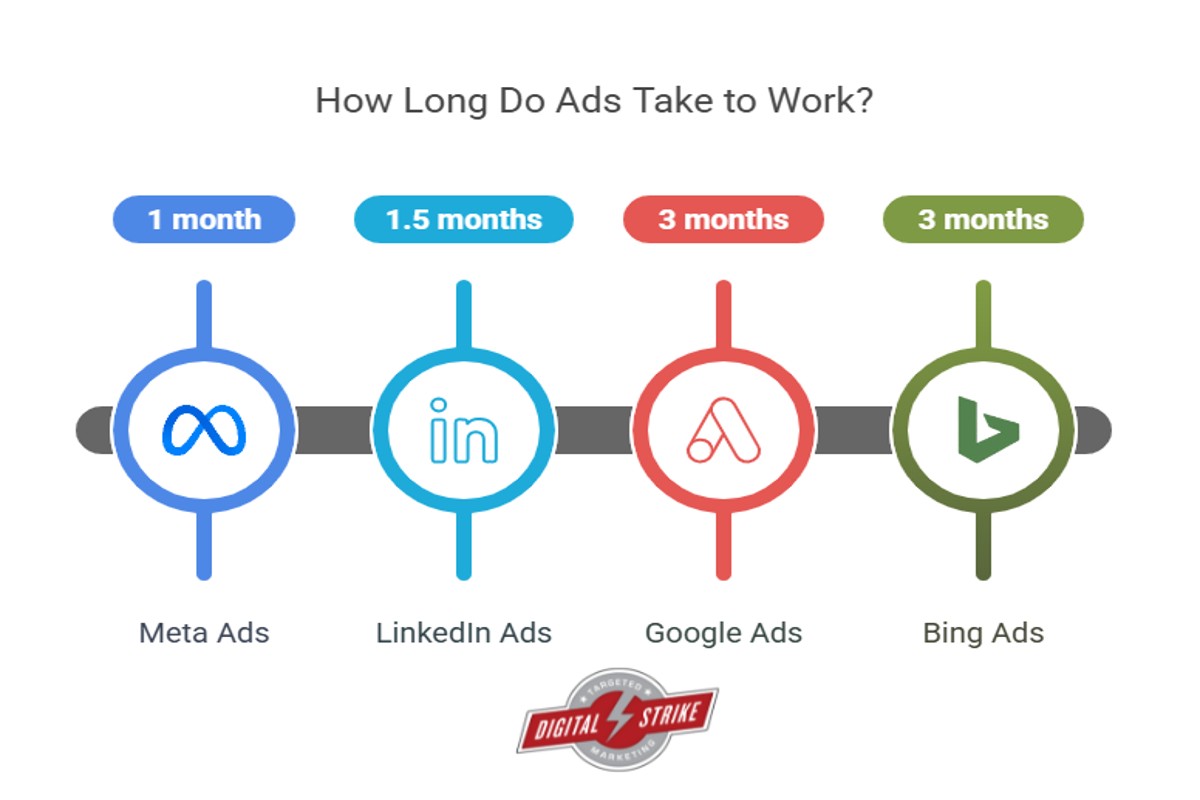
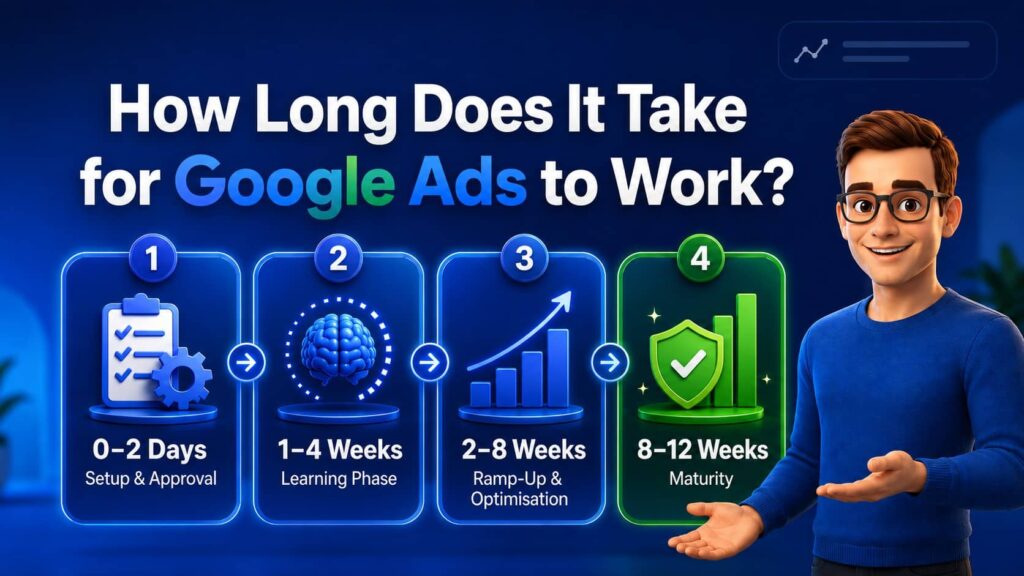
How long does it take for Google Ads to work depends on various factors, including campaign objectives and optimization strategies. Most advertisers typically see initial results within 1-2 weeks, while significant improvements can be achieved in 1-3 months with effective management. Understanding this timeline is crucial for setting realistic expectations and measuring campaign performance.
Understanding the timeline for Google Ads effectiveness is critical for businesses aiming to maximize their digital marketing investment. As companies increasingly shift their budgets online, with global digital ad spending projected to reach $517 billion by 2023, knowing how quickly ads can deliver results is essential for maintaining a competitive edge. Misjudging this timeframe can lead to poor decision-making and lost opportunities.
Failure to grasp the timeline of google ads can result in missed revenue, wasted marketing budgets, and a competitive disadvantage in an increasingly crowded online marketplace. Without proper expectations, businesses may prematurely abandon campaigns or misallocate resources, hindering growth.
This article provides a comprehensive overview of how long it takes for Google Ads to work, including a comparison of performance metrics, cost breakdowns, best practices for optimization, and insights into local SEO strategies. Readers will gain a clear understanding of what to expect and how to improve their advertising efforts effectively.
For How Long Does It Take For Google Ads To Work businesses looking to generate local leads through Google Ads or Local SEO, GMB Ranger LLC offers hands-on campaign management. Specialist Md Tangeer Mehedi personally handles campaign setup and ongoing optimization — with no payment required until the first lead comes in.
How long does it take for Google Ads to show results?
Google Ads typically shows initial results within 1 to 3 months after a campaign launch. However, full optimization and significant impact on business goals may take 3 to 6 months or longer, depending on various factors.
Several elements influence the timeframe for seeing results from Google Ads. The complexity of the campaign is a primary factor. Simpler campaigns with fewer keywords and a clear target audience may yield quicker results. In contrast, campaigns with extensive keyword lists, multiple ad groups, or diverse audience segments usually require more time to refine and optimize. Additionally, the industry and competition level play a significant role; highly competitive sectors may see longer timelines as advertisers vie for visibility and clicks.
Another crucial aspect is the budget allocated to the campaign. A higher budget allows for broader reach and faster data collection, enabling quicker adjustments to ad strategies. Conversely, a limited budget may slow down result accumulation, as fewer impressions and clicks can lead to slower insights. Furthermore, the effectiveness of the landing pages and ad copy significantly impacts conversion rates, influencing how quickly results materialize.
Expert insight: To expedite results, focus on targeted keywords and continually optimize ad performance based on real-time data. Regularly review and adjust bids, ad copy, and landing pages to enhance campaign efficiency and effectiveness. Aim for incremental improvements over time to maximize ROI.
What factors affect how quickly Google Ads work?
Several key factors influence how quickly Google Ads deliver results, including budget allocation, targeting precision, and ad quality. Generally, businesses can expect to see initial performance indications within a few hours to a couple of days, but optimizing for success may take weeks or months.
First, the allocated budget plays a critical role in determining how quickly ads can gain traction. A higher daily budget allows for more impressions and clicks, accelerating data collection and performance insights. For instance, businesses with a budget of $50 per day may see different results compared to those spending $500 daily. Second, targeting options significantly affect ad performance. Using precise targeting strategies, such as demographic and geographic filters, can lead to faster engagement. Ads that reach the right audience are more likely to convert, thus shortening the time to achieve desired outcomes.
- Optimize Ad Quality: High-quality ads with compelling copy and relevant keywords improve the ad rank, leading to better visibility and quicker results. Aim for a Quality Score of 7 or higher for optimal performance.
- Utilize A/B Testing: Regularly test different ad variations to identify which performs best. This can lead to faster optimization and improved click-through rates (CTR).
- Review and Adjust Targeting: Continuously analyze performance metrics to refine your audience targeting. Adjusting demographics, interests, or locations can help reach potential customers more effectively.
Expert insight: Regularly monitoring and adjusting your Google Ads campaigns based on real-time performance data is essential. This proactive approach can significantly reduce the time required to achieve effective results.
Are Google Ads worth the investment?
Yes, Google Ads can be worth the investment, especially when considering the potential return on investment (ROI) compared to other advertising methods. Businesses typically see an average ROI of $2 for every $1 spent on Google Ads. This high ROI makes Google Ads a compelling option for many companies.
When evaluating the effectiveness of Google Ads versus other advertising strategies, several factors come into play. Traditional advertising methods, such as print and television, often have higher upfront costs and lack precise targeting capabilities. In contrast, Google Ads allows businesses to reach specific demographics and track performance metrics in real-time. This targeted approach can lead to more efficient spending and higher conversion rates.
To better understand the value of Google Ads, consider the following comparison with three other advertising methods:
- Social Media Advertising: While social media platforms like Facebook and Instagram offer targeted advertising, they generally have a lower conversion rate compared to Google Ads. Google Ads captures users actively searching for specific products or services, while social media ads may reach users who are not in a buying mindset.
- Content Marketing: Content marketing can build brand awareness and drive organic traffic over time. However, it typically requires a longer investment period to see significant results, whereas Google Ads can generate immediate traffic and leads.
- Email Marketing: Email marketing can yield high ROI but relies on an existing customer base. Google Ads can help acquire new customers, making it a crucial tool for businesses looking to expand their reach.
Expert insight: For businesses with a limited budget, starting with a targeted Google Ads campaign can provide quick insights into customer behavior and preferences, allowing for more strategic marketing decisions in the future.
How to optimize Google Ads for faster results?
To optimize Google Ads for faster results, focus on refining your targeting, enhancing ad copy, and adjusting bids effectively. Implementing these strategies can lead to improved performance metrics within a few days to weeks, depending on campaign complexity.
Start by ensuring precise targeting. Use Google Ads’ audience targeting features, such as demographics, interests, and behaviors, to reach potential customers more effectively. Additionally, consider location targeting to focus on high-performing regions. According to research, targeted campaigns can increase click-through rates (CTR) by up to 50%, accelerating the time it takes for ads to generate conversions.
Next, enhance your ad copy and visuals. High-quality, engaging ad content tends to resonate better with audiences. Utilize A/B testing to compare different headlines, descriptions, and calls-to-action. Consistently monitor performance and iterate based on what drives the most engagement. Ads with compelling visuals and clear messaging can lead to a quicker response from potential customers.
Lastly, adjust your bidding strategy for optimal results. Consider using automated bidding strategies like Target CPA or Target ROAS, which adjust bids in real-time based on conversion data. This can improve ad visibility and speed up performance. Additionally, monitor your budget allocation and adjust it based on which campaigns or keywords yield the best results.
Expert insight: Regularly analyzing performance data and making swift adjustments is key to optimizing Google Ads. Utilize Google Analytics in conjunction with Ads to gain deeper insights into user behavior, enabling quicker refinements for better results.
What is the average cost of Google Ads?
The average cost of Google Ads typically ranges from $1 to $2 per click for the Google Search Network, while the average cost can be higher for display ads, often between $0.50 and $1.50 per click. Overall, businesses often spend anywhere from $9,000 to $10,000 per month on Google Ads to achieve effective results.
Several factors influence the overall cost of Google Ads. These include the competitive nature of keywords, the quality of the ads, and the targeting options selected. The more competitive a keyword is, the higher the cost per click (CPC) will be. Additionally, well-optimized ads that receive high click-through rates (CTR) can lower costs over time due to Google’s quality score algorithm.
- Keyword Competition: Highly competitive industries, like legal or finance, often see higher CPCs due to demand.
- Ad Quality: Ads with higher relevance and better performance can lower costs through improved quality scores.
- Geographic Targeting: Costs may vary based on the targeted location, with urban areas generally costing more.
- Ad Type: Different ad formats, such as text ads, display ads, and video ads, have varying costs associated with them.
- Seasonality: Costs can fluctuate based on seasonal trends, especially during holidays or special events.
Expert insight: Businesses should consider setting a monthly budget and continuously optimizing their campaigns to maximize ROI while minimizing costs. Regular analysis of keyword performance and ad effectiveness is essential for achieving sustainable long-term results.
Understanding Google Ads Metrics and KPIs
This section delves into the key performance indicators (KPIs) that influence the effectiveness of Google Ads campaigns. Understanding these metrics is essential for evaluating ad performance and determining how long does it take for Google Ads to work effectively.

Importance of CTR (Click-Through Rate)
The Click-Through Rate (CTR) is a critical metric that indicates how often people click on your ad after seeing it. A higher CTR suggests that the ad is relevant and compelling to the audience. As of 2024, the average CTR across all industries is around 3.17%, but this varies significantly by sector. For instance, the finance industry often sees CTRs as high as 5.4%, while the retail sector averages closer to 2.6%. Tracking CTR helps marketers assess ad effectiveness and refine targeting strategies.
Conversion Rate Metrics and Benchmarks
The conversion rate measures the percentage of users who take a desired action after clicking on an ad, such as making a purchase or signing up for a newsletter. The average conversion rate across industries hovers around 2.35%, but top-performing ads can achieve rates exceeding 5%. Factors influencing conversion rates include ad relevance, landing page quality, and the alignment of the ad’s message with user intent.
Cost-Per-Acquisition (CPA) Analysis
Cost-Per-Acquisition (CPA) quantifies the total cost incurred to acquire a customer through paid advertising. Understanding CPA is vital for assessing the profitability of campaigns. The average CPA across industries is approximately $50, although this can vary widely depending on the sector and competition. For example, the e-commerce sector may see a CPA of around $70, while B2B services can experience CPAs upwards of $200. Monitoring CPA allows marketers to balance ad spend against revenue generated.
Quality Score and Its Impact on Ad Performance
Quality Score is a metric used by Google to evaluate the quality and relevance of your ads, keywords, and landing pages. It operates on a scale from 1 to 10, with higher scores leading to lower costs and better ad placements. A high Quality Score can significantly enhance ad visibility, reduce CPCs, and improve overall campaign efficiency. Advertisers with a Quality Score of 8 or higher typically benefit from a 20% lower CPC compared to those with lower scores. Optimizing for Quality Score involves improving ad relevance, enhancing landing page experience, and increasing CTR.
Many marketers mistakenly believe that focusing solely on ad spend yields the best results. However, without a comprehensive understanding of these KPIs, campaigns may fall short of expectations. For instance, a well-funded campaign with low CTR or poor conversion rates will not achieve long-term success.
To leverage these insights, marketers should:
- Regularly monitor and optimize CTR by testing different ad copies and targeting methods.
- Analyze conversion rates to identify high-performing ads and replicate their success.
- Keep CPA in check by adjusting bids and focusing on high-converting keywords.
- Enhance Quality Score by ensuring ad relevance and improving landing page content.
Common Mistakes in google ads Campaigns
This section identifies frequent errors in Google Ads campaigns that can hinder performance and prolong the time it takes for ads to deliver desired results. Recognizing and correcting these mistakes can significantly enhance campaign effectiveness.
Neglecting Keyword Research
Effective keyword research is the foundation of a successful Google Ads campaign. Failing to identify the right keywords can lead to targeting the wrong audience, resulting in wasted budget and poor ad performance. In 2024, campaigns that utilized comprehensive keyword research saw a 30% higher click-through rate (CTR) compared to those that did not.
- Use tools like Google Keyword Planner to discover relevant keywords.
- Analyze competitor keywords to identify potential gaps in your strategy.
- Incorporate long-tail keywords for more specific targeting and higher conversion rates.
Poor Ad Copy and Design
Ad copy and design play a crucial role in attracting clicks. Generic or uninspiring ads may fail to capture attention, leading to low engagement. A/B testing different headlines and descriptions can improve ad effectiveness. In 2025, well-crafted ad copy improved conversion rates by an average of 25% across various industries.
- Focus on clear, compelling calls to action (CTAs).
- Highlight unique selling propositions (USPs) to differentiate from competitors.
- Ensure visual elements align with brand identity and resonate with the target audience.
Ignoring Audience Targeting
Targeting the right audience is essential for maximizing campaign performance. Ignoring demographic, geographic, and behavioral targeting can lead to irrelevant impressions and low engagement. In 2026, campaigns that utilized advanced audience targeting options reported a 40% increase in conversion rates.
- Utilize audience insights to refine targeting strategies.
- Segment audiences based on behavior and preferences for more personalized ads.
- Regularly update targeting settings to align with evolving market trends.
Failing to Analyze Performance Data
Data analysis is critical for optimizing Google Ads campaigns. Without regularly reviewing performance metrics, advertisers may miss opportunities for improvement. In 2025, campaigns that analyzed data weekly improved their return on investment (ROI) by 50% compared to those that reviewed data monthly.
- Monitor key metrics such as CTR, conversion rate, and cost per acquisition (CPA).
- Utilize Google Analytics to gain deeper insights into user behavior.
- Adjust bidding strategies based on performance trends and seasonal fluctuations.
Common misconceptions surrounding Google Ads often lead to these mistakes. Many advertisers assume that launching a campaign guarantees immediate results. However, building a successful campaign requires ongoing optimization and adjustment based on data. Additionally, some believe that high spending automatically equates to better performance, overlooking the significance of strategy and execution.
To avoid these pitfalls, advertisers should take specific actions: prioritize rigorous keyword research, craft compelling ad copy, target the appropriate audience segments, and analyze performance data regularly. Establish a routine for testing and optimizing ads to ensure continuous improvement in campaign performance. Implementing these best practices will significantly reduce the time it takes for Google Ads to work effectively.
Real-World Case Studies of Successful Google Ads Campaigns
This section presents practical examples of businesses that successfully utilized Google Ads to achieve their marketing objectives. These case studies illustrate diverse strategies across various sectors, highlighting the adaptability and effectiveness of Google Ads.
E-Commerce Brand: Boosting Online Sales
A prominent e-commerce brand specializing in outdoor gear launched a targeted Google Ads campaign aimed at increasing online sales during the peak season. By carefully selecting keywords related to their products and optimizing ad copy for conversions, the brand saw a significant uptick in website traffic and sales. Within three months, they reported a 35% increase in revenue attributed directly to the ads. The campaign also achieved a return on ad spend (ROAS) of 500%, showcasing the effectiveness of their strategy.
Local Service Provider: Attracting Local Customers
A local plumbing company implemented a Google Ads campaign focusing on geographic targeting to reach potential customers in their service area. The strategy included utilizing location-based keywords and ad extensions that highlighted customer reviews and special promotions. Within six weeks, the company experienced a 50% increase in service calls and a 20% improvement in conversion rates. This case exemplifies how localized targeting can yield rapid results for service-oriented businesses.
B2B Lead Generation: Targeted Advertising for Professionals
A B2B software company aimed to generate qualified leads through Google Ads by focusing on industry-specific keywords and tailoring ad content to address pain points faced by their target audience. The campaign employed remarketing strategies to re-engage website visitors. Over a four-month period, the company saw a 60% increase in lead submissions and a 30% rise in overall engagement on their landing pages. The strategic approach allowed them to build a robust pipeline of potential clients.
Non-Profit Organization: Raising Awareness
A non-profit organization dedicated to environmental conservation utilized Google Ads to raise awareness about their initiatives and encourage donations. The campaign featured ads that highlighted their impact and included calls to action for donations and volunteer sign-ups. Within three months, the organization reported a 40% increase in website traffic and a 25% growth in online donations. This case illustrates how non-profits can effectively leverage Google Ads to enhance visibility and engagement.
Common misconceptions about Google Ads suggest that immediate results are guaranteed. However, the success of these campaigns depended on careful planning, strategic targeting, and continuous optimization. For instance, while some businesses may expect to see results within days, others may require a longer timeframe to fine-tune their approach. The average time frame for an effective campaign to mature and yield significant results often ranges from three to six months.
To maximize the effectiveness of Google Ads, consider the following actionable steps:
- Define clear campaign objectives and key performance indicators (KPIs).
- Conduct thorough keyword research to identify high-intent search terms.
- Utilize ad extensions to enhance visibility and provide additional information.
- Implement A/B testing to optimize ad copy and landing pages.
- Regularly analyze performance data and adjust strategies accordingly.
The Role of A/B Testing in Google Ads
A/B testing is a critical strategy for optimizing Google Ads campaigns, enabling advertisers to make data-driven decisions that enhance performance. This section explores the significance of A/B testing, best practices for implementation, and how to interpret results effectively.
What is A/B Testing and Why It Matters
A/B testing, also known as split testing, involves comparing two or more variations of an ad to determine which performs better. By isolating specific elements—such as headlines, images, or calls to action—advertisers can identify what resonates with their target audience. According to recent studies, campaigns that utilize A/B testing can improve conversion rates by up to **49%**, demonstrating its effectiveness in refining advertising strategies.
Best Practices for Conducting A/B Tests
Implementing A/B tests effectively requires adherence to certain best practices:
- Define clear objectives: Establish what you intend to measure, whether it’s click-through rates, conversion rates, or return on ad spend.
- Test one variable at a time: Isolate a single element in each test to accurately assess its impact on performance.
- Use a sufficient sample size: Ensure that the test reaches a statistically significant number of impressions or conversions to validate results.
- Run tests for an appropriate duration: Allow sufficient time for the test to gather data, typically at least **two weeks**, to account for variations in traffic.
Interpreting Results to Make Data-Driven Decisions
Once the A/B test concludes, interpreting the results is essential for making informed changes. Key metrics to analyze include:
- Conversion rate: The percentage of users who completed the desired action.
- Cost per conversion: The average amount spent to acquire a customer through the ad.
- Engagement metrics: Click-through rates and time spent on the landing page can provide insights into user interest.
Employ statistical significance testing to determine if the differences observed are not due to random chance. A common threshold for significance is a **p-value of less than 0.05**.
Real-Life Examples of Successful A/B Tests
Numerous brands have successfully utilized A/B testing to refine their Google Ads. For instance, a major e-commerce retailer tested two different ad headlines. The version emphasizing a limited-time offer resulted in a **30% higher click-through rate** compared to the generic headline. Another case involved a software company that tested two landing page designs, leading to a **25% increase in sign-ups** when the more visually appealing option was used.
Nuance and Expert Insights
A common misconception about A/B testing is that more tests always yield better results. In reality, excessive testing can lead to analysis paralysis, where decision-making becomes hindered by too much data. Additionally, focusing solely on short-term metrics can obscure long-term brand health indicators. A/B testing should be part of a broader strategy that includes qualitative insights and customer feedback to ensure comprehensive optimization.
Practical Application
To leverage A/B testing effectively in Google Ads, follow these actionable steps:
- Identify a specific element of your ad to test.
- Create two variations with distinct differences.
- Set clear success metrics and determine the sample size.
- Launch the test and monitor performance over the designated period.
- Analyze results and implement changes based on statistically significant data.
By integrating A/B testing into Google Ads strategies, advertisers can significantly enhance campaign effectiveness, ultimately answering the question of how long it takes for Google Ads to work through informed optimization.
Evaluating the Best How Long Does It Take For Google Ads To Work
Comparing advertising providers is crucial for businesses aiming to maximize their return on investment (ROI) with Google Ads. With the digital advertising market projected to reach $650 billion by 2026, understanding the unique offerings of each provider can significantly influence campaign performance. Evaluating options based on pricing, features, and suitability for specific business sizes ensures that marketers choose the right tools for their needs.
| Provider / Option | Best For | Pricing | Key Feature |
|---|---|---|---|
| Google Ads | All business sizes and types | $0.10 – $50+ per click | Extensive reach and targeting options |
| WordStream | Small businesses seeking ease | $300 – $1,000 per month | Automated campaign management |
| SEMrush | Data-driven marketers | $119.95 – $449.95 per month | In-depth analytics and reporting |
| AdEspresso | Social media advertisers | $49 – $259 per month | User-friendly A/B testing |
| HubSpot Ads Software | Integrated marketing teams | $50 – $3,200+ per month | CRM integration and tracking |
Criteria for Evaluating Program Quality
- Business Suitability: Assess whether the provider’s services align with your business size and industry. Some providers cater better to small businesses, while others are suited for larger enterprises.
- Pricing Structure: Consider the pricing model and ensure it fits your budget. Evaluate whether the cost aligns with the expected ROI and if there are hidden fees associated with campaign management.
- Feature Set: Examine the unique features offered by each provider. Look for tools that enhance campaign performance, such as targeting capabilities, analytics, and automation.
- Customer Support: Investigate the level of support provided. Reliable customer service can significantly impact the effectiveness of your advertising campaigns, especially when troubleshooting issues.
How to Assess the Reputation and Reliability of Providers
- Research Online Reviews: Look for customer feedback on platforms like Trustpilot or G2 to gauge user satisfaction and common issues.
- Check Industry Credentials: Verify if the provider has certifications or partnerships with major platforms like Google to ensure credibility.
- Request Case Studies: Ask providers for case studies or examples of successful campaigns to evaluate their effectiveness in real-world applications.
- Analyze Customer Retention: High customer retention rates can indicate reliability and quality of service, reflecting user satisfaction over time.
- Engage with Customer Support: Contact their support team with questions to assess responsiveness and the quality of assistance offered.
Which How Long Does It Take For Google Ads To Work Is Right for You?
The effectiveness of Google Ads is contingent upon your specific business needs, budget, and goals. This guide provides tailored recommendations to help you navigate your advertising strategy based on your business type.
E-commerce businesses
E-commerce businesses should focus on Google Shopping Ads and dynamic remarketing campaigns to drive immediate product visibility and recover potentially lost sales. Allocate a budget starting from $1,000 per month to see significant traction, particularly during peak shopping seasons.
Local service providers
Local service providers can utilize Google Ads’ location-based targeting features to connect with nearby customers effectively. Implement Local Services Ads or Google My Business listings with a budget of around $500 to $1,500 monthly to enhance local visibility and drive foot traffic.
Freelancers and consultants
Freelancers should leverage targeted search ads to highlight their services within specific industries or niches, such as consulting or graphic design. A budget of $300 to $800 per month can enable effective keyword targeting and help capture potential clients actively seeking specialized expertise.
Large corporations
Large corporations should invest in comprehensive Google Ads campaigns that incorporate multiple ad formats and robust analytics tools like Google Analytics 360. A budget of $10,000 or more per month is advisable to manage diverse product lines and optimize campaigns for maximum ROI.
| If You Are… | Best Approach |
|---|---|
| E-commerce businesses | Google Shopping Ads and dynamic remarketing; $1,000+ monthly |
| Local service providers | Local Services Ads; $500-$1,500 monthly |
| Freelancers and consultants | Targeted search ads; $300-$800 monthly |
| Large corporations | Comprehensive campaigns; $10,000+ monthly |
Local Factors Influencing How Long Google Ads Take to Show Results
Understanding the local market dynamics is crucial when considering how long it takes for Google Ads to work. Over 46% of all Google searches are seeking local information, making it essential for businesses to tailor their advertising strategies to their specific geographic area. Local search behaviors can significantly influence the effectiveness and speed of ad results, impacting overall business outcomes.
Geographic Market Differences
In larger metropolitan areas like New York City or Los Angeles, competition among local businesses can be fierce, leading to longer timeframes for Google Ads to yield results. Conversely, in smaller towns or rural areas, businesses might see quicker outcomes due to less competition. For example, a local coffee shop in a bustling urban environment may take 4-6 weeks to optimize its ad performance, while a similar shop in a less populated area may notice results in just 2-3 weeks.
Local Business Applications
Local businesses can leverage Google Ads to target their community effectively, leading to immediate foot traffic and increased online engagement. Here are several concrete use cases:
- A local plumber can use Google Ads to target specific neighborhoods, resulting in a 30% increase in service calls during peak seasons.
- A boutique in Austin can promote seasonal sales through targeted ads, achieving a 25% boost in store visits within the first month.
- A dentist in Chicago can run ads focusing on family services, leading to a 40% increase in appointment bookings.
- A restaurant can highlight daily specials through Google Ads, seeing an uptick of 20% in reservations during the first week of the campaign.
Local Search and Visibility Impact
The effectiveness of Google Ads is closely tied to local search rankings and visibility. A well-optimized Google Business Profile (GBP) can enhance ad performance significantly. Local businesses should take the following actions to maximize their Google Ads effectiveness:
- Ensure the GBP is fully optimized with up-to-date information, including hours, services, and photos.
- Implement local keywords in ad copy to increase relevance in search results.
- Encourage customer reviews to boost local credibility and visibility.
- Monitor ad performance regularly and adjust targeting based on local trends and behaviors.
Pricing and Cost in Local Markets
Advertising costs for Google Ads can vary significantly by geographic market. For example, average cost-per-click (CPC) for local businesses in urban areas can range from $2 to $5, while in smaller towns, it may drop to $1 to $3. Local businesses should budget around $500 to $1,500 per month for effective campaigns, compared to national players who may spend upwards of $10,000 monthly for broader reach.
Local Implementation Checklist:
- Optimize your Google Business Profile with accurate and engaging information.
- Identify local keywords relevant to your business and incorporate them into your ads.
- Monitor local competition to understand market dynamics and adjust bids accordingly.
- Set clear goals for your ad campaigns to measure success effectively.
- Utilize geo-targeting features to focus on specific neighborhoods or areas.
- Regularly analyze ad performance and customer feedback to refine strategies.
- Engage with customers through local reviews and social media to enhance visibility.
For How Long Does It Take For Google Ads To Work businesses looking to generate local leads through Google Ads or Local SEO, GMB Ranger LLC offers hands-on campaign management. Specialist Md Tangeer Mehedi personally handles campaign setup and ongoing optimization — with no payment required until the first lead comes in.
Frequently Asked Questions
How long does it take for Google Ads to show results?
Google Ads can show initial results within a few hours, but significant performance data typically takes one to two weeks. This timeframe allows for optimization and gathering of user interaction data.
What factors affect how quickly Google Ads work?
Several factors influence the speed of Google Ads performance, including budget, targeting settings, ad quality, and competition within the industry. Effective campaign management also plays a crucial role in achieving quicker results.
Are Google Ads worth the investment?
Google Ads can be a valuable investment, particularly for businesses seeking immediate visibility and leads. The return on investment often depends on the effectiveness of the campaign and the industry in which the business operates.
How to optimize Google Ads for faster results?
To optimize Google Ads for quicker results, focus on refining ad copy, improving keyword selection, and utilizing targeted audience segments. Regularly monitoring performance and adjusting bids can also enhance campaign effectiveness.
What is the average cost of Google Ads?
The average cost of Google Ads varies widely, typically ranging from $1 to $2 per click, depending on the industry and competition. Businesses should plan their budgets according to their specific goals and market conditions.
Final Thoughts on how long does it take for google ads to work
Google Ads can yield results ranging from immediate visibility to gradual performance improvements, heavily influenced by factors such as campaign structure, market competition, and ongoing optimization efforts. It is imperative for advertisers to understand key metrics and avoid common pitfalls to expedite their success.
To enhance the speed and effectiveness of your campaigns, conduct a thorough analysis of your existing ads and make data-driven adjustments to keywords, ad copy, and targeting strategies. Utilize A/B testing to identify what resonates best with your audience.
Ready to see real results? Consider partnering with a google ads management agency to accelerate your advertising success today!
Mastering Google Ads is not just about spending money; it’s about strategic investment that can drive significant business growth when executed effectively.
Leave a Reply