
Google Ad Grants is a program that provides eligible nonprofits with up to $10,000 per month in free Google Ads advertising. This funding empowers organizations to promote their missions effectively and connect with new audiences online, enhancing their visibility and outreach.
Understanding Google Ad Grants is crucial for nonprofits aiming to maximize their online presence and fundraising potential. With over 1.5 million nonprofits in the U.S. alone, leveraging this program can significantly impact an organization’s ability to reach its goals. Failing to utilize such resources could mean missing out on essential funding and audience engagement opportunities.
Nonprofits that overlook the details of Google Ad Grants risk wasted advertising budgets and diminished visibility, putting them at a competitive disadvantage in a crowded digital landscape. This could translate into lost donations and support, ultimately hindering their mission.
This article will provide a comprehensive overview of Google Ad Grants, including eligibility requirements, application processes, best practices for maximizing ad effectiveness, and strategies for integrating local SEO to enhance campaign performance.
For What Is Google Ad Grants businesses looking to generate local leads through google ads or Local SEO, GMB Ranger LLC offers hands-on campaign management. Specialist Md Tangeer Mehedi personally handles campaign setup and ongoing optimization — with no payment required until the first lead comes in.
What are the eligibility requirements for Google Ad Grants?
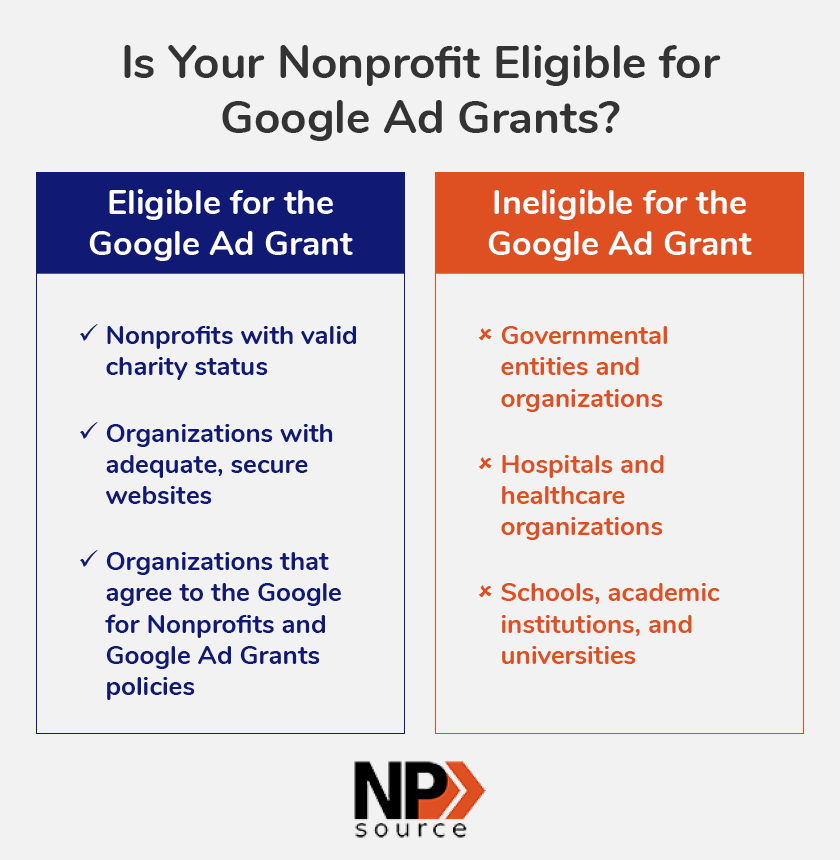
To qualify for Google Ad Grants, nonprofits must be recognized as tax-exempt under Section 501(c)(3) of the U.S. Internal Revenue Code or hold equivalent status in their country. Additionally, organizations must not be a government entity, a hospital, or a school, and must adhere to the program’s specific guidelines.
Here are the essential eligibility requirements to consider:
- 501(c)(3) Status: Organizations must possess a valid 501(c)(3) status or its equivalent outside the United States, ensuring that they are registered as a nonprofit entity.
- Nonprofit Purpose: Organizations must promote charitable activities and cannot be driven by profit motives. This includes providing a public benefit, such as education, health, or social services.
- No Government Entities: Government agencies and organizations are ineligible for the program. This includes public educational institutions and hospitals.
- Compliance with Guidelines: Nonprofits must adhere to Google’s advertising policies and guidelines, which include restrictions on certain types of content and advertising practices.
- Active Website: Organizations must maintain an active and functional website that provides valuable content related to their mission and services.
These criteria ensure that Google Ad Grants supports genuine nonprofit organizations that contribute positively to society. Organizations should also be aware that compliance is monitored, and failure to adhere to the program guidelines can lead to suspension or revocation of grant access.
Expert insight: Nonprofits should regularly review their status and ensure their websites are updated and aligned with Google’s policies to maintain eligibility and maximize the benefits of the Google Ad Grants program.
How can I apply for Google Ad Grants?
Applying for Google Ad Grants involves several steps that ensure your nonprofit organization meets eligibility criteria and submits the necessary documentation. The process typically takes between 2 to 4 weeks from start to finish, depending on your preparedness and response times.
- Verify eligibility: Ensure your organization is a registered nonprofit with 501(c)(3) status in the U.S. or the equivalent in other countries. Organizations involved in political advocacy or religious activities are ineligible.
- Create a Google for Nonprofits account: Visit the Google for Nonprofits website and sign up for an account. You’ll need to provide verification of your nonprofit status and agree to the terms of service.
- Apply for Google Ad Grants: Once your Google for Nonprofits account is approved, complete the Google Ad Grants application. This includes detailing how you plan to use the grant and demonstrating your nonprofit’s mission.
- Set up your Google Ads account: After receiving approval for the grant, create a Google Ads account. Ensure you adhere to the guidelines stipulated by Google, including setting up a minimum of two ads and two ad groups.
- Submit your first campaign: Launch your first campaign within 90 days of account approval. This campaign should align with your nonprofit’s goals and target relevant keywords related to your cause.
The Google Ad Grants program requires ongoing compliance with its policies. Regularly monitor your account to ensure it meets performance benchmarks, such as maintaining a 5% click-through rate and submitting monthly reports. Failure to comply can lead to account suspension.
Expert insight: To maximize the effectiveness of your Google Ad Grants, focus on keyword research and utilize negative keywords to filter out irrelevant traffic. This strategy improves your ad relevance and overall campaign performance.
What are the benefits of using Google Ad Grants?
Google Ad Grants provides nonprofits with up to $10,000 per month in in-kind advertising credits for Google Ads, enabling them to promote their mission and services effectively. This funding allows organizations to reach a wider audience, increase website traffic, and enhance community engagement.
One of the primary advantages of Google Ad Grants is the ability to increase visibility for nonprofit organizations. By utilizing targeted keywords, nonprofits can ensure that their ads appear in relevant Google search results, thereby attracting potential supporters and volunteers. Additionally, the program helps organizations communicate their mission and initiatives to a broader audience, which can lead to increased donations and volunteer sign-ups.
Another significant benefit is the opportunity for data-driven insights. Nonprofits can track ad performance through Google Analytics, allowing them to understand which campaigns resonate most with their audience. This information can inform future marketing strategies and improve outreach efforts. Furthermore, Google Ad Grants offers resources and support, including training and best practices, to help organizations maximize their advertising impact.
Expert insight: Nonprofits should focus on specific, actionable campaigns that align with their goals to fully leverage the benefits of Google Ad Grants. Prioritizing targeted keyword strategies can significantly enhance ad performance and engagement levels.
What are common mistakes to avoid with Google Ad Grants?
Nonprofits often encounter several common pitfalls when utilizing Google Ad Grants, which can hinder their advertising effectiveness. Avoiding these mistakes can significantly enhance campaign performance and ensure compliance with Google’s policies. Research indicates that nearly 30% of nonprofits do not fully utilize their grant funds due to these errors.
One frequent mistake is failing to adhere to Google’s strict account structure requirements. Each campaign should be organized with clear themes and specific keywords. A disorganized account can lead to low Quality Scores, negatively impacting ad visibility. Another common issue is neglecting to regularly review and optimize campaigns. Continuous monitoring and adjustments based on performance data are essential for maximizing the impact of the grants.
- Inadequate keyword research: Utilize Google’s Keyword Planner to identify relevant, high-traffic keywords that align with your nonprofit’s mission. Avoid overly broad terms that may waste ad spend.
- Ignoring ad performance metrics: Regularly assess key performance indicators (KPIs) such as click-through rates (CTR) and conversion rates. This data can inform necessary adjustments to improve campaign effectiveness.
- Failure to create effective landing pages: Ensure that landing pages are relevant, user-friendly, and optimized for conversions. A poor landing page experience can lead to high bounce rates and wasted ad spend.
- Not utilizing ad extensions: Take advantage of ad extensions to provide additional information and increase the visibility of your ads. This can enhance engagement and improve click-through rates.
Expert insight: A focused strategy that includes regular audits and optimizations can elevate the performance of Google Ad Grants campaigns. Nonprofits should consider leveraging professional expertise to refine their approach and maximize their funding potential.
How does Google Ad Grants compare to paid advertising?
Google Ad Grants provides eligible nonprofits with free advertising on Google, while paid advertising involves purchasing ad space. Google Ad Grants offers up to $10,000 per month in in-kind advertising, whereas traditional paid campaigns require a financial investment to bid on keywords and compete for ad placements.
The key differences between Google Ad Grants and paid advertising can be categorized into cost, reach, and flexibility:
- Cost: Google Ad Grants offers free advertising, making it accessible to nonprofits with limited budgets. In contrast, paid advertising incurs costs based on bidding strategies and competition, which can vary widely.
- Reach: Paid advertising often allows for broader reach and targeting options, including remarketing and advanced demographic targeting. Google Ad Grants has restrictions, such as only displaying ads in search results and a limit on the maximum cost-per-click (CPC) of $2.00.
- Flexibility: Paid advertising campaigns can be quickly adjusted based on real-time performance data, allowing for immediate optimization. Google Ad Grants campaigns require adherence to specific policies and have limitations on ad types and formats.
These differences highlight that while Google Ad Grants is a valuable resource for nonprofits, it may not offer the same level of visibility and adaptability as paid advertising. Nonprofits should evaluate their goals and resources when deciding between these options.
Expert insight: Nonprofits utilizing Google Ad Grants should focus on optimizing their keyword strategy and ad relevance to maximize the impact of their free advertising, considering the inherent limitations compared to paid campaigns.
Maximizing Your Google Ad Grants: Strategies for Success
This section outlines effective strategies for nonprofits to optimize their Google Ad Grants, enabling them to reach their target audiences more efficiently and achieve greater impact.

Creating Targeted Ad Campaigns
Successful ad campaigns begin with a clear understanding of the target audience. Nonprofits should segment their audience based on demographics, interests, and behaviors. Tailoring ad content to resonate with specific groups can significantly enhance click-through rates. For instance, creating separate campaigns for different programs or initiatives allows for more personalized messaging, increasing engagement and conversion potential.
Utilizing Keyword Research Tools
Effective keyword selection is essential for maximizing the visibility of Google Ads. Nonprofits should leverage tools such as Google Keyword Planner, SEMrush, or Moz to identify relevant keywords with high search volumes and low competition. Focus on long-tail keywords that are specific to the nonprofit’s mission, as these often yield better performance. Research indicates that businesses utilizing targeted long-tail keywords can see up to a 30% higher conversion rate compared to generic keywords.
Regularly Monitoring and Optimizing Ads
Continuous monitoring and optimization of ad campaigns are critical for maintaining effectiveness. Nonprofits should establish a routine for reviewing key performance indicators (KPIs) such as click-through rates (CTR), conversion rates, and cost-per-click (CPC). Adjusting bids, refining keyword lists, and updating ad copy based on performance data can lead to improved outcomes. According to recent studies, organizations that actively optimize their campaigns see an average of 25% more conversions over time.
Leveraging Google Analytics for Insights
Integrating Google Analytics with Google Ads provides comprehensive insights into user behavior. Nonprofits can track how visitors interact with their website after clicking on ads, allowing them to assess the effectiveness of their campaigns. Key metrics to monitor include bounce rate, session duration, and pages per session. By analyzing this data, nonprofits can identify which campaigns drive meaningful engagement and adjust strategies accordingly.
Nonprofits often overlook the importance of setting specific goals for their Google Ad Grants campaigns. Establishing measurable objectives helps to clarify the purpose of each campaign and guides decision-making throughout the process. For example, setting a goal to increase newsletter sign-ups by 20% within three months provides a clear target for optimization efforts. Moreover, organizations frequently underestimate the value of A/B testing different ad formats and messages. Regularly testing variations can reveal insights that lead to improved campaign performance and donor engagement.
To effectively implement these strategies, nonprofits should:
- Segment target audiences and tailor ad messages accordingly.
- Utilize keyword research tools to identify relevant and effective terms.
- Establish a routine for monitoring and optimizing ad performance.
- Integrate Google Analytics to gain insights into user interactions.
By applying these strategies, nonprofits can maximize their Google Ad Grants, ensuring their message reaches the right audiences and drives meaningful engagement. Regular evaluation and adaptation will enhance overall campaign success and further the organization’s mission.
Understanding Google Ad Grants Policies and Compliance
This section elaborates on the key policies and compliance requirements governing Google Ad Grants. Adhering to these guidelines is essential for nonprofits to maintain their eligibility and maximize the benefits of this program.
Ad Content Restrictions
Google enforces strict content guidelines for ads funded by Ad Grants. Nonprofits must ensure that their ads do not promote the following:
- Adult content or services
- Illegal products or services
- Tobacco and related products
- Gambling or betting services
- Healthcare-related products that require prescriptions
Additionally, all ads must be relevant to the nonprofit’s mission and provide clear, informative content. Misleading claims or sensationalist language can lead to account suspension.
Account Management Requirements
Effective management of Google Ad Grants accounts is vital for compliance. Nonprofits must adhere to specific operational standards, including:
- Maintaining a minimum click-through rate (CTR) of 5% on search ads
- Using at least two ad groups per campaign
- Regularly updating ad content and keywords
- Ensuring a minimum of two active campaigns at all times
Failure to meet these requirements can result in account suspension or termination, impacting the organization’s visibility and outreach efforts.
Performance Standards for Maintaining Grants
Google reviews Ad Grants accounts periodically to assess compliance with performance standards. Key metrics include:
- Ad performance: Accounts must achieve a CTR of 5% or higher to remain active.
- Budget utilization: Nonprofits must spend their monthly budget effectively, with a cap of $10,000 per month.
- Keyword relevance: Ads must use relevant keywords that align with the nonprofit’s mission.
As of 2024, approximately 15% of nonprofit organizations utilizing Google Ad Grants fail to meet these performance standards, leading to suspension.
Consequences of Non-Compliance
Non-compliance with Google Ad Grants policies can have significant consequences. Common repercussions include:
- Account suspension: If performance metrics are not met, Google may suspend the account.
- Loss of funding: Nonprofits may lose access to ad funding, adversely affecting their outreach.
- Reputation damage: Non-compliance can harm an organization’s credibility and relationship with Google.
To restore an account, nonprofits must address compliance issues and submit an appeal to Google for reconsideration.
Many nonprofits mistakenly believe they can operate their Ad Grants accounts without continual oversight. However, consistent monitoring and adherence to Google’s policies are essential for maintaining eligibility. Regular audits of ad performance and compliance can help organizations avoid pitfalls that lead to account suspension.
To leverage this information effectively, nonprofits should implement a structured review process. This includes:
- Conducting monthly performance audits to assess CTR and keyword relevance.
- Updating ad content regularly to ensure compliance with Google’s guidelines.
- Training staff on the specific requirements of Google Ad Grants to foster accountability.
By actively managing their Google Ad Grants accounts, nonprofits can maximize their outreach potential while adhering to all necessary guidelines.
Real-World Success Stories: Nonprofits Thriving with Google Ad Grants
This section highlights impactful case studies of nonprofits that have effectively leveraged Google Ad Grants to amplify their missions. By analyzing their strategies and outcomes, valuable insights can be gleaned for organizations seeking to enhance their online presence and drive engagement.
Case Study: The American Red Cross
The American Red Cross utilized Google Ad Grants to promote its blood donation initiatives. By creating targeted campaigns around specific events and needs, they increased awareness about blood drives in local communities. Their advertising strategy focused on specific keywords related to emergency services and community health, leading to a significant uptick in blood donor sign-ups.
Strategies Employed for Maximum Reach
- Keyword Optimization: The organization meticulously researched high-impact keywords associated with their services and campaigns.
- Ad Scheduling: They strategically scheduled ads to align with peak times for search queries related to blood donation.
- Geotargeting: Ads were tailored to specific geographic areas where blood donation needs were most pressing.
Lessons Learned and Best Practices
Through their campaigns, the American Red Cross identified several best practices for utilizing Google Ad Grants effectively:
- Regular Monitoring: Continuous assessment of ad performance allowed for timely adjustments to improve click-through rates.
- Engaging Ad Copy: Compelling and clear messaging led to higher engagement and conversion rates.
- A/B Testing: Experimenting with different ad formats and messages enhanced overall campaign effectiveness.
Impact Metrics and Results Achieved
The results from the American Red Cross’s campaigns were compelling. Over a two-year period from 2024 to 2026, they reported a 45% increase
in blood donation sign-ups directly attributed to their google ads. Furthermore, the campaigns generated over
1 million impressions, showcasing the extensive reach achieved through targeted online advertising.
Expert Insights
Many nonprofits underestimate the potential of Google Ad Grants due to misconceptions regarding eligibility and application processes. While some believe only larger organizations can benefit, smaller nonprofits have also achieved substantial results. Additionally, a common error lies in neglecting ad quality; high-quality ads not only improve click-through rates but also enhance overall fundraising efforts. Organizations should prioritize creating engaging content that resonates with their audience, as this drives both traffic and impact.
Practical Application
Nonprofits looking to replicate the success of organizations like the American Red Cross should begin by:
- Conducting keyword research to identify relevant terms that potential supporters might search for.
- Developing a clear ad strategy that includes specific goals and target demographics.
- Regularly analyzing campaign performance to refine tactics and improve outcomes.
Integrating Google Ad Grants with Other Marketing Efforts
This section explores how nonprofits can effectively blend Google Ad Grants with various marketing strategies to enhance outreach and engagement. By combining these efforts, organizations can significantly amplify their visibility and impact.
Cross-Promoting with Social Media
Utilizing social media platforms is a powerful way to extend the reach of Google Ad Grants campaigns. Nonprofits can share their Google Ads content across channels like Facebook, Instagram, and Twitter to engage their audience and drive traffic to their website. Consistent messaging across platforms fosters brand recognition and encourages followers to participate in campaigns.
– Create shareable content that resonates with your audience.
– Use targeted hashtags to increase visibility.
– Regularly engage with followers to build community.
Statistics show that social media advertising can increase brand awareness by up to 80%, making it a complementary strategy to Google Ads.
Email Marketing Synergy
Email marketing serves as an excellent tool to nurture relationships with supporters and donors. By integrating Google Ad Grants into email campaigns, nonprofits can highlight specific initiatives or events, driving traffic to their landing pages. This synergy ensures that the message reaches both current and potential supporters effectively.
– Segment email lists based on engagement levels.
– Include clear calls-to-action that link to Google Ads content.
– Monitor open and click-through rates to optimize future campaigns.
Research indicates that personalized email campaigns can achieve click-through rates of 14% or higher, significantly enhancing the effectiveness of Google Ads.
Partnerships with Local Businesses
Collaborating with local businesses can amplify the impact of Google Ad Grants. Nonprofits can leverage these partnerships to co-host events, share resources, or cross-promote campaigns. This collaboration not only increases visibility but also fosters community support.
– Identify local businesses with aligned missions.
– Develop joint marketing materials that highlight the partnership.
– Organize community events that benefit both parties.
Studies show that 70% of consumers prefer to support local businesses that engage in community initiatives, making this an effective strategy.
Event Marketing Integration
Integrating Google Ad Grants into event marketing strategies can enhance attendance and engagement. Nonprofits can create targeted Google Ads to promote upcoming events, driving traffic and increasing visibility. Moreover, events can serve as platforms for gathering email subscribers and social media followers.
– Utilize Google Ads to promote event registration pages.
– Capture attendee data for future marketing efforts.
– Share event highlights across social media and email channels.
Effective event marketing can increase attendance by up to 50%, providing a significant boost to the overall outreach strategy.
While many nonprofits successfully utilize Google Ad Grants, a common misconception is that these grants can replace traditional marketing efforts. In reality, they should complement and enhance existing strategies. A holistic approach ensures that organizations maximize their outreach potential while effectively engaging diverse audiences.
To leverage the integration of Google Ad Grants with other marketing efforts, nonprofits should:
- Develop a comprehensive marketing strategy that includes Google Ads, social media, and email marketing.
- Establish partnerships with local businesses to expand outreach and resources.
- Utilize data analytics to evaluate the performance of integrated campaigns and adjust strategies accordingly.
By implementing these strategies, nonprofits can enhance their visibility and outreach, ensuring a more significant impact in their communities.
Evaluating the Best What Is Google Ad Grants
With the digital advertising landscape projected to reach $786.2 billion by 2026, nonprofits must carefully evaluate their options to maximize their advertising budgets. Comparing providers based on specific criteria such as pricing, key features, and target audience can help organizations make informed decisions. Understanding the unique offerings of each provider is essential for effective outreach.
| Provider / Option | Best For | Pricing | Key Feature |
|---|---|---|---|
| Google Ad Grants | Nonprofits seeking free ads | Up to $10,000/month | Free advertising credits |
| Facebook Ads | Targeted social media outreach | Variable; pay-per-click | Advanced targeting options |
| Bing Ads for Nonprofits | Diversifying ad platforms | Up to $3,000/month | Lower competition than Google |
| Charity Navigator | Evaluating nonprofit credibility | Free service | Nonprofit ratings and reviews |
| Mailchimp | Email marketing integration | Free tier available | Email automation tools |
Criteria for Evaluating Program Quality
Pricing: Evaluate the cost structures of each provider to determine which fits your budget. Consider both the monthly limits and any additional fees that may apply.
Key Features: Assess the unique features offered by each provider. This can include advertising credits, targeting options, and integration capabilities that align with your nonprofit’s goals.
Target Audience: Identify which platforms best reach your intended audience. Certain providers may have better engagement rates with specific demographics, impacting your campaign’s effectiveness.
Ease of Use: Consider the user interface and support resources available for each platform. A more intuitive platform can save time and reduce the learning curve for your team.
How to Assess the Reputation and Reliability of Providers
- Check Online Reviews: Look for testimonials and reviews from other nonprofits to gauge experiences with the provider.
- Review Case Studies: Analyze case studies showcasing successful campaigns to understand the provider’s impact.
- Evaluate Customer Support: Investigate the level of customer support available, including response times and resources offered.
- Verify Certifications: Ensure the provider has relevant certifications or partnerships that validate their credibility in the nonprofit sector.
- Request References: Ask the provider for references from similar organizations to gain insight into their reliability and effectiveness.
Which What Is Google Ad Grants Is Right for You?
Choosing the right approach to leverage Google Ad Grants hinges on your organization’s unique needs, budget constraints, and specific marketing goals. This guide provides tailored recommendations for various audience segments to optimize your outreach and impact.
Small nonprofits
Google Ad Grants is particularly beneficial for small nonprofits aiming to extend their reach without worrying about advertising costs. By utilizing the $10,000 monthly budget for text ads on Google Search, these organizations can effectively promote their missions, attract donors, and engage volunteers, all while maintaining a tight budget.
Medium-sized nonprofits
For medium-sized nonprofits, diversifying advertising efforts can yield better results. In addition to Google Ad Grants, consider investing a portion of your marketing budget (around $500-$1,000 monthly) in Bing Ads to tap into different demographics and increase overall visibility. This dual-platform approach can enhance your campaign’s effectiveness.
Digital marketing agencies
Digital marketing agencies can leverage Google Ad Grants to enhance client campaigns by offering additional value through paid search. Agencies should consider dedicating time to manage these campaigns effectively, which may require additional resources, potentially costing around $1,000-$3,000 monthly depending on client needs, while also maximizing the impact of grant funds.
Fundraising organizations
Fundraising organizations can utilize Google Ad Grants to effectively promote their fundraising events and initiatives. By creating targeted campaigns that highlight specific events, these organizations can increase visibility among potential donors. Allocate a budget for event landing pages and ad creatives to maximize engagement, aiming for a cost of around $300-$600 for these assets.
Volunteers and community organizers
For volunteers and community organizers, Google Ad Grants offers a powerful tool to promote community events and volunteer opportunities. By crafting compelling ads that highlight local engagement, organizations can attract greater participation. Budget approximately $200-$400 for promotional materials and outreach strategies to ensure a successful campaign.
| If You Are… | Best Approach |
|---|---|
| Small nonprofits | Use Google Ad Grants for outreach with $10,000 monthly budget. |
| Medium-sized nonprofits | Combine Google Ad Grants with Bing Ads for broader reach. |
| Digital marketing agencies | Leverage Google Ad Grants to enhance client campaigns. |
| Fundraising organizations | Promote events using targeted Google Ads and landing pages. |
| Volunteers and community organizers | Utilize Google Ad Grants for community event promotion. |
Local Implications of Google Ad Grants for Your Community
Understanding how Google Ad Grants can serve local businesses is crucial, as geographic factors significantly influence advertising effectiveness. In fact, 76% of people who search for something nearby visit a business within a day, highlighting the importance of local targeting in any advertising strategy.
Geographic Market Differences
In larger cities like New York or Los Angeles, competition for Google Ad Grants can be intense, making it essential for local nonprofits to craft unique, localized messages that resonate with their community. Conversely, smaller towns may face less competition, allowing organizations to stand out more easily. Local businesses should focus on their unique selling propositions to capitalize on their geographic advantages.
Local Business Applications
Local businesses can leverage Google Ad Grants in several impactful ways:
- Nonprofit Partnerships: Collaborate with local nonprofits to create awareness about community services and events.
- Community Events Promotion: Use grants to advertise local events, increasing attendance and engagement.
- Local Resource Awareness: Highlight essential services like food banks or shelters that may not have large marketing budgets.
- Fundraising Campaigns: Promote fundraising events or initiatives that directly benefit the local community.
Local Search and Visibility Impact
Utilizing Google Ad Grants effectively can enhance local search rankings and visibility on Google Business Profiles. Local businesses should consider the following actions:
- Optimize Google Business Profile with accurate and up-to-date information.
- Incorporate local keywords into ad campaigns to target specific neighborhoods or communities.
- Encourage reviews and testimonials from the community to boost local credibility.
- Use location-based landing pages to improve relevance and conversion rates.
Pricing and Cost in Local Markets
Costs associated with local advertising can vary widely. For instance, in urban areas, businesses may allocate between $1,000 to $5,000 monthly for effective ad campaigns, while smaller markets may find success with budgets as low as $500 to $1,500. Understanding local dynamics will help businesses tailor their budgets effectively, ensuring they remain competitive without overspending.
Local Implementation Checklist:
- Identify local nonprofits to partner with for grant utilization.
- Develop localized ad content that speaks directly to community needs.
- Regularly update your Google Business Profile with local keywords.
- Set up tracking for conversions from ad campaigns to assess effectiveness.
- Engage with community members through social media to increase visibility.
- Monitor competitor ad strategies in your area for insights.
- Adjust budgets based on local market responses and trends.
For What Is Google Ad Grants businesses looking to generate local leads through Google Ads or Local SEO, GMB Ranger LLC offers hands-on campaign management. Specialist Md Tangeer Mehedi personally handles campaign setup and ongoing optimization — with no payment required until the first lead comes in.
Frequently Asked Questions
What are the eligibility requirements for Google Ad Grants?
To be eligible for Google Ad Grants, organizations must be a registered nonprofit with a valid 501(c)(3) status, not be a government entity or hospital, and adhere to Google’s non-discrimination policy. Additionally, applicants must have a functional website with substantial content relevant to their mission.
How can I apply for Google Ad Grants?
To apply for Google Ad Grants, organizations must create a Google for Nonprofits account and submit an application through the Google Ad Grants website. Once approved, nonprofits can create their AdWords account and start setting up campaigns.
What are the benefits of using Google Ad Grants?
Google Ad Grants provides nonprofits with up to $10,000 per month in advertising credits to promote their mission and services on Google. This funding allows organizations to reach a wider audience, increase website traffic, and drive engagement without incurring advertising costs.
What are common mistakes to avoid with Google Ad Grants?
Common mistakes include not adhering to the account management policies, failing to optimize campaigns, and neglecting to use relevant keywords. Organizations should also avoid creating low-quality ads, as this can lead to account suspension.
How does Google Ad Grants compare to paid advertising?
Google Ad Grants offers free advertising credits for nonprofits, while paid advertising requires a financial investment. However, grant-funded campaigns have stricter performance requirements and limitations on bidding strategies compared to standard paid advertising options.
Final Thoughts on what is google ad grants
Google Ad Grants represents a transformative opportunity for nonprofits to amplify their outreach and impact through targeted advertising. By effectively leveraging this resource, organizations can gain visibility, attract supporters, and ultimately drive their missions forward without incurring substantial costs.
To fully realize the potential of Google Ad Grants, nonprofits should develop a comprehensive digital marketing strategy that includes regular performance analysis and optimization of their campaigns to align with their goals and audience needs.
Ready to elevate your nonprofit’s reach? Discover how a google ads agency can help maximize your impact with Google Ad Grants!
Understanding and utilizing Google Ad Grants is not merely advantageous; it is essential for nonprofits aiming to thrive in today’s competitive landscape and maximize their influence in the communities they serve.
Leave a Reply