
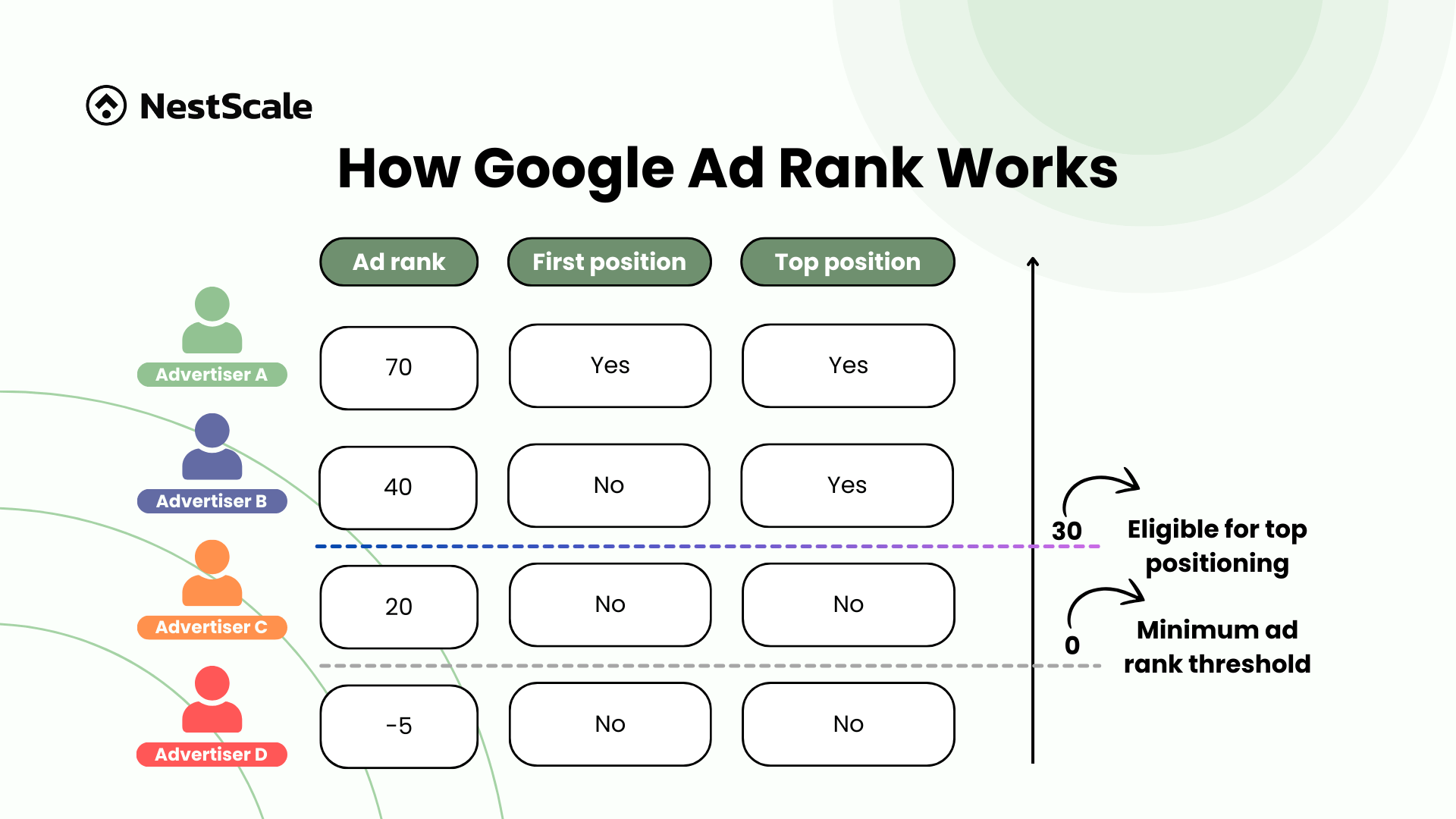
To improve ad rank in Google Ads, focus on increasing your Quality Score, optimizing your bid strategy, and enhancing your ad relevance and landing page experience. These factors directly influence your ad’s position and visibility in search results.
Understanding how to improve ad rank is crucial for businesses and marketers looking to maximize their advertising investment. A low ad rank can lead to poor visibility, lower click-through rates, and ultimately, ineffective campaigns that fail to generate desired results.
This article outlines expert strategies for enhancing your ad rank, including actionable insights on optimizing Quality Score, refining bid strategies, and improving both ad relevance and landing page effectiveness.
What factors determine ad rank in Google Ads?
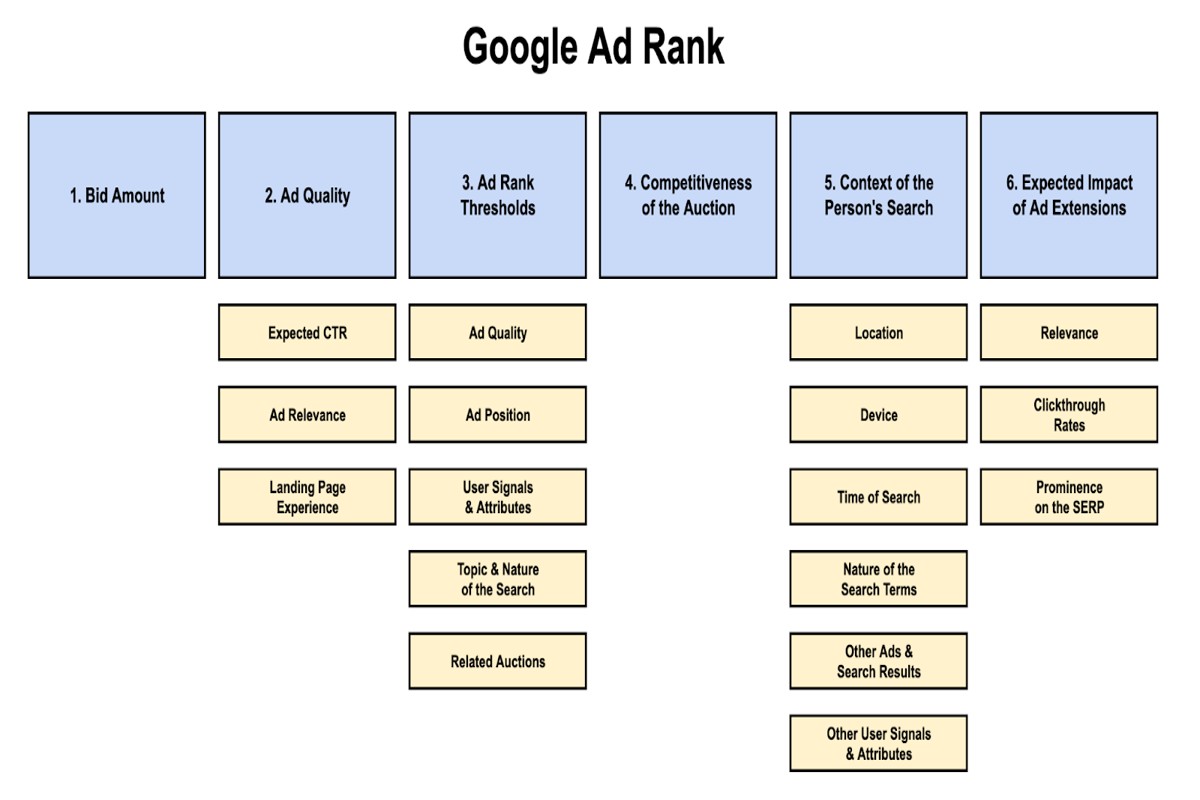
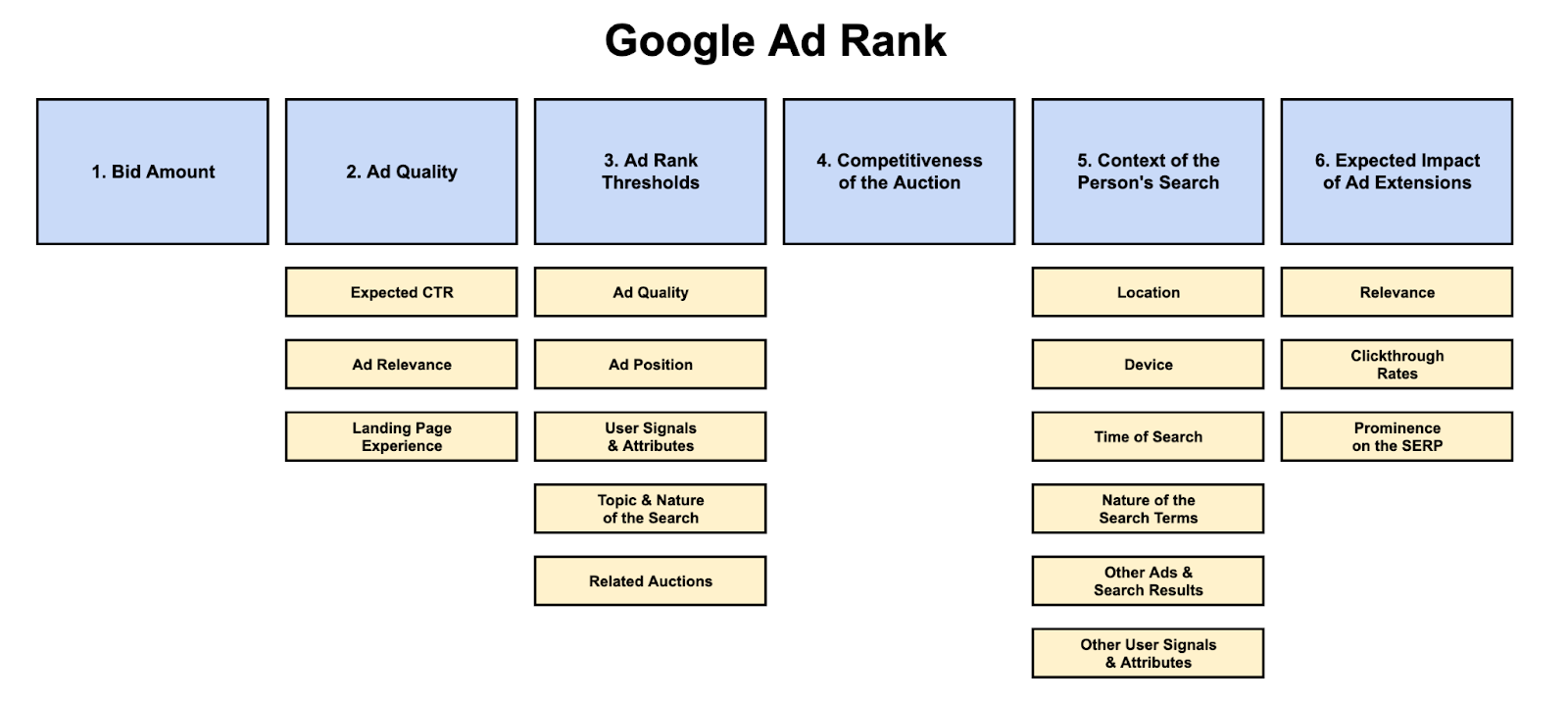
Ad rank in Google Ads is determined by a combination of your bid amount, the quality of your ads, and the expected impact of extensions and other ad formats. Specifically, these components work together to establish your ad’s position on the search results page. A higher ad rank leads to better visibility and potentially lower costs per click.
The primary factors influencing ad rank include:
- Bid Amount: The maximum amount you are willing to pay for a click on your ad. A higher bid can increase your ad rank but must be balanced with overall campaign profitability.
- Ad Quality: This is assessed through the Quality Score, which considers your ad’s relevance to the search query, expected click-through rate (CTR), and the landing page experience. Higher quality ads typically rank better.
- Ad Extensions: These are additional pieces of information that can be added to your ads, such as site links or callouts. They provide more value to users and can improve your ad rank by enhancing the overall ad quality.
In addition to these primary factors, competition also plays a crucial role. If multiple advertisers are bidding on the same keywords, the ad rank is determined not just by the bid and quality scores but also by how these elements compare against competitors. Consequently, ongoing optimization is essential to maintain or improve ad rank over time.
To effectively improve ad rank, regularly analyze performance metrics and adjust your bids, enhance ad copy, and refine landing pages based on user behavior. Testing different ad extensions can also provide insights into what resonates best with your audience.
Expert Tip: Focus on optimizing your Quality Score by improving ad relevance and user experience on landing pages, as this can yield better ad placements at lower costs than merely increasing bid amounts.
How can I increase my Quality Score in Google Ads?
To increase your Quality Score in Google Ads, focus on enhancing ad relevance, optimizing landing pages, and improving expected click-through rates (CTR). A higher Quality Score can lead to lower costs and better ad positions. Implementing targeted strategies is essential for achieving a competitive edge.
- Enhance Ad Relevance: Ensure that your ad copy closely aligns with the keywords you are targeting. Use specific, relevant keywords in your headlines and descriptions to capture user intent effectively.
- Optimize Landing Pages: Create landing pages that are directly relevant to your ads. The page should deliver a seamless user experience, load quickly, and contain clear calls to action that match the ad’s promises.
- Improve Expected Click-Through Rates: Craft compelling ad messages that resonate with your target audience. Use engaging language, strong value propositions, and relevant ad extensions to boost your CTR.
- Utilize Negative Keywords: Implement negative keywords to prevent your ads from appearing in irrelevant searches. This helps improve your ad relevance and can enhance your Quality Score over time.
- Regular Performance Monitoring: Continuously analyze your ad performance metrics. Use A/B testing to experiment with different ad variations and landing pages, making adjustments based on data-driven insights.
Focusing on these strategies will not only improve your Quality Score but also enhance overall campaign effectiveness. Regularly updating your ads and landing pages in response to performance data is vital for long-term success.
Expert Tip: Consider segmenting your campaigns by ad groups and tailoring ads to specific audience demographics. This granular approach can yield higher engagement and further elevate your Quality Score.
What is the best bidding strategy for improving ad rank?
The best bidding strategy for improving ad rank in Google Ads often depends on campaign goals and performance metrics. Generally, Cost Per Click (CPC) and Cost Per Acquisition (CPA) are two widely used strategies that can significantly impact ad rank. Each has its advantages and nuances that can affect overall performance.
Cost Per Click (CPC) bidding allows advertisers to set the maximum amount they are willing to pay for each click on their ad. This method focuses on driving traffic to the website and can be effective for campaigns aiming for visibility and engagement. In contrast, Cost Per Acquisition (CPA) targets conversions by optimizing bids based on the desired cost for each acquisition, which usually results in higher-quality traffic and can enhance ad rank by improving click-through rates (CTR).
- CPC Bidding: Best for campaigns focused on traffic, allowing for flexibility in click pricing.
- CPA Bidding: Ideal for conversion-focused campaigns, optimizing for cost-effective acquisitions.
- Maximize Conversions: A smart bidding strategy that uses machine learning to automatically set bids to get the most conversions within a budget.
When comparing these strategies, consider the overall goals of the campaign. If the priority is to increase traffic, CPC might be more suitable. Conversely, if the aim is to maximize conversions, CPA would be more beneficial. Additionally, automated strategies like Maximize Conversions leverage Google’s algorithms to adjust bids in real-time, which can further enhance ad rank by improving CTR and Quality Score.
Expert Tip: Regularly monitor and adjust your bidding strategy based on performance data. A/B testing different bidding strategies can reveal which approach yields the best ad rank improvement for your specific objectives.
How much does improving ad rank cost?
Improving ad rank in Google Ads can involve various costs, often ranging from a few dollars to several hundred dollars per month. The exact cost depends on several factors, including the competitiveness of your industry and the strategies you employ. Implementing effective techniques can enhance your ad rank without significantly increasing your overall ad spend.
Several factors influence the cost of improving ad rank:
- Industry Competition: Highly competitive industries may require higher bids to achieve a better ad rank. In contrast, niche markets might see lower costs due to less competition.
- Quality Score: A higher Quality Score can reduce the cost per click (CPC) necessary to improve ad rank. This score is influenced by ad relevance, click-through rates, and landing page experience.
- Bid Strategy: The choice between manual and automated bidding strategies can affect costs. Automated strategies may optimize bids more effectively, potentially lowering overall spend while improving rank.
- Ad Relevance and Optimization: Investing in ad copy improvement and A/B testing can lead to better performance without substantially increasing costs. Well-optimized ads tend to perform better, enhancing ad rank.
Ultimately, while costs can vary widely, strategic investments in ad quality and targeting can lead to improved ad rank and better return on investment (ROI). Focusing solely on increasing bids may not be the most effective approach; optimizing ad components can yield significant benefits.
Expert Tip: Regularly review and adjust your campaigns based on performance data. Continuous optimization can help maintain a competitive ad rank while controlling costs effectively.
How long does it take to see improvements in ad rank?
Typically, you may start seeing changes in ad rank within a few weeks of implementing optimization strategies. However, the time frame can vary based on several factors, including the competitiveness of the keywords and the extent of the changes made.
Several variables influence how quickly ad rank improves. First, the frequency of ad auctions in your industry plays a significant role. In highly competitive markets, where auctions occur more regularly, changes to ad rank may manifest faster. Conversely, in less competitive niches, it may take longer to observe significant shifts. Additionally, the quality of your ad copy and landing pages can impact how quickly improvements are recognized. High-quality ads that resonate with users can lead to better click-through rates (CTR), which in turn can elevate ad rank more swiftly.
Another critical factor is the performance history of your account. Newer accounts without a solid history may take longer to see improvements compared to established accounts with a track record of successful ad campaigns. Google’s algorithms consider various metrics, such as CTR and ad relevance, over time, so consistency in optimization efforts is paramount. Regularly monitoring performance and making incremental adjustments can enhance the speed of improvement.
Expert Tip: To expedite improvements, utilize Google’s ad suggestions and experiment with A/B testing for various ad copies and landing pages. Continuous optimization based on performance data can lead to quicker enhancements in ad rank.
What are some common mistakes to avoid when trying to improve ad rank?
To improve ad rank effectively, it is essential to avoid common pitfalls that can hinder performance. Neglecting ad relevance, poor landing page experiences, and inadequate keyword selection are among the key mistakes that can negatively impact your ad rank. Addressing these issues can lead to a more competitive standing in Google Ads.
First, ensure that your ads are highly relevant to the keywords you are targeting. This means crafting ad copy that resonates with user intent and reflects the products or services being offered. Failing to align ads with the search queries can lead to lower click-through rates (CTR) and ultimately diminish your ad rank. Regularly reviewing and updating your ad copy based on performance metrics can help maintain relevance.
- Optimize landing pages: A poor landing page experience can significantly hurt your ad rank. Ensure that your landing pages load quickly, are mobile-friendly, and provide valuable content that matches the promise of your ad. A seamless user experience encourages higher conversion rates, which positively influences ad rank.
- Avoid broad keyword targeting: Using overly broad keywords can dilute your ad’s effectiveness. Focus on long-tail keywords that are more specific to your offerings. This strategy not only improves relevance but can also lower costs per click (CPC).
- Neglecting Quality Score: Google uses Quality Score as a critical factor in determining ad rank. Regularly monitor this score and aim to improve it by enhancing ad relevance, optimizing landing pages, and increasing CTR. A higher Quality Score can lead to better ad placements at lower costs.
Expert Tip: Regular A/B testing of ad copy and landing pages can provide insights into what resonates best with your audience. This data-driven approach allows for continuous improvement, enhancing both ad relevance and user experience, ultimately leading to a better ad rank.
Can ad extensions help improve ad rank?
Yes, utilizing ad extensions can provide additional information and improve ad visibility, positively impacting ad rank. By adding relevant ad extensions, advertisers can enhance their ads’ appeal and increase the likelihood of user engagement, which in turn can elevate their ad rank.
For example, consider a local bakery running a Google Ads campaign. By incorporating ad extensions such as location, call, and site link extensions, the bakery can display its address, phone number, and links to specific menu items directly in the ad. This additional information not only makes the ad more informative but can also entice potential customers to click, leading to higher click-through rates (CTR). When CTR increases, Google often rewards the advertiser with a better ad rank, as it indicates relevance and quality to users.
Furthermore, ad extensions can provide strategic advantages in competitive markets. If several businesses bid on the same keywords, ad extensions can differentiate one ad from another. For instance, if the bakery’s ad includes special promotions or customer reviews via review extensions, it can stand out among competitors, drawing more attention and clicks. This competitive edge can translate into a better ad rank, allowing the bakery to achieve greater visibility without necessarily increasing its bid amount.
Expert Tip: Regularly monitor the performance of each ad extension type and adjust based on user engagement. Testing various combinations can reveal which extensions yield the highest CTR and positively influence ad rank.
How do landing page experience affect ad rank?
Landing page experience significantly influences ad rank in Google Ads by impacting user satisfaction and engagement. Google evaluates the relevance and quality of the landing page that users reach after clicking an ad, which directly affects the ad’s performance in auctions. A positive landing page experience can lead to higher ad placements and lower costs per click.
The landing page experience is assessed based on several factors, including:
- Relevance: The content of the landing page should closely match the ad’s messaging and the keywords being targeted. This alignment ensures that users find what they expect after clicking an ad.
- Loading Speed: A fast-loading landing page enhances user experience. Slow pages can lead to high bounce rates, negatively impacting both ad rank and overall campaign performance.
- Mobile-Friendliness: With the increasing use of mobile devices, a landing page must be optimized for mobile viewing. Google prioritizes landing pages that provide a seamless experience across all devices.
Additionally, user engagement metrics such as time spent on the page and click-through rates can influence landing page experience evaluations. If users quickly exit the landing page, it signals to Google that the page may not be meeting their needs or expectations. This can ultimately result in a lower ad rank.
To effectively improve landing page experience, advertisers should conduct regular audits of their landing pages, ensuring content remains relevant and up-to-date. A/B testing different elements, such as headlines and call-to-action buttons, can also provide insights into what resonates best with the target audience.
Expert Tip: Focus on creating a clear and intuitive navigation structure on the landing page to enhance user experience. A well-designed page not only improves ad rank but also increases conversion rates, maximizing the return on ad spend.
Advanced Techniques for Boosting Ad Rank
This section delves into advanced strategies designed to enhance your Google Ads Ad Rank. By implementing these techniques, advertisers can achieve greater visibility and improved ad performance.
Leveraging A/B Testing for Ad Copy and Landing Pages
A/B testing is a powerful method for optimizing ad performance. By comparing two variations of an ad or landing page, advertisers can identify which elements resonate more effectively with their audience. Key aspects to test include:
- Headlines: Experiment with different phrases, word choices, or structures to gauge impact.
- Call-to-Action (CTA): Test variations of CTAs to determine which prompts more conversions.
- Visual Elements: Analyze how images or videos influence user engagement and click-through rates.
Implementing A/B testing systematically can lead to significant improvements in both ad relevance and landing page effectiveness, directly impacting Ad Rank.
Utilizing Audience Targeting for Enhanced Relevance
Audience targeting refines ad delivery by focusing on users more likely to engage with the content. This involves:
- Demographic Targeting: Tailor ads based on age, gender, and location to reach the most relevant audience.
- In-Market Audiences: Target users actively searching for products or services similar to yours.
- Remarketing: Engage previous site visitors with tailored messages to encourage return visits and conversions.
By enhancing relevance through precise audience targeting, advertisers can improve click-through rates, thereby boosting Ad Rank.
Implementing Automated Bid Strategies Effectively
Automated bidding strategies can simplify campaign management while optimizing for performance. Key strategies include:
- Target CPA: Set a target cost-per-acquisition to optimize bids for conversions.
- Maximize Clicks: Focus on gaining the highest number of clicks within a specified budget.
- Target ROAS: Optimize bids to achieve a specific return on ad spend.
Selecting the appropriate strategy based on campaign goals can significantly influence Ad Rank by increasing bid efficiency.
Analyzing Competitor Performance for Insights
Understanding competitor strategies can provide valuable insights for improving Ad Rank. This analysis should include:
- Ad Copy Examination: Review competitors’ ad language and offers to identify gaps in your messaging.
- Keyword Strategies: Analyze which keywords competitors are targeting and their performance metrics.
- Landing Page Quality: Evaluate the user experience and content of competitor landing pages to identify improvement areas.
Competitor analysis informs strategic adjustments, allowing for enhanced positioning in the ad auction.
To apply these advanced techniques for improving Ad Rank, start by establishing a structured A/B testing schedule for your ads and landing pages. Utilize Google Ads audience targeting features to refine your reach. Implement an automated bidding strategy that aligns with your campaign objectives. Finally, dedicate time to competitor analysis to glean insights that can enhance your own advertising efforts. By systematically applying these methods, your campaigns will likely see improved ad performance and higher Ad Rank.
Real-World Case Studies: Ad Rank Improvements
This section presents real-world examples of businesses that successfully improved their ad rank in Google Ads, highlighting effective strategies and their measurable outcomes. These case studies not only illustrate actionable tactics but also provide insights into potential pitfalls.
Successful E-Commerce Campaign: Boosting Ad Rank
A leading e-commerce retailer faced challenges in maintaining visibility during peak shopping seasons. By implementing a comprehensive strategy focusing on ad relevance and landing page experience, the company improved its ad rank significantly. They optimized their ad copy with targeted keywords, ensuring alignment with user search intent. Additionally, they enhanced their landing pages to provide a seamless shopping experience.
As a result, the e-commerce campaign saw a 25% increase in click-through rate (CTR) and a 15% reduction in cost-per-click (CPC) within three months. This case demonstrates the impact of aligning ad content with user expectations and improving the overall user experience.
Local Business’s Ad Rank Journey
A local coffee shop aimed to increase foot traffic through Google Ads. Initially, their ad rank was low due to high competition and poor ad quality. The shop focused on geotargeting and created ads that highlighted local promotions and customer testimonials. By incorporating relevant keywords and adjusting bids based on local traffic patterns, they were able to increase their visibility.
- Implemented geotargeting to reach nearby customers.
- Utilized local keywords related to coffee and promotions.
- Incorporated customer reviews in ad copy to build trust.
These adjustments led to a remarkable 40% increase in ad rank over six months, resulting in a substantial uptick in in-store visits and sales.
Impact of Seasonal Promotions on Ad Rank
Seasonal promotions can significantly influence ad rank. A retail company launched a holiday campaign, adjusting their bids and ad content to reflect seasonal trends. They created urgency through limited-time offers and leveraged historical data to predict peak times for customer engagement.
This strategic approach resulted in a 30% improvement in ad rank during the promotional period. The campaign not only attracted new customers but also retained existing ones through targeted remarketing efforts.
Lessons Learned from Failed Ad Campaigns
Not all campaigns succeed. A tech startup invested heavily in Google Ads without thorough keyword research or ad testing. Their ads received clicks but failed to convert due to a lack of alignment with user intent and poor landing page experience.
- Ad copy was too technical, deterring average consumers.
- Landing pages were not optimized for mobile users.
- Budget allocation was skewed, with high bids on low-performing keywords.
This led to a decline in ad rank and wasted budget. The key takeaway is the importance of continuous testing and optimization, ensuring that every element of the campaign aligns with user expectations and behaviors.
Improving ad rank in Google Ads requires a multifaceted approach. Businesses should prioritize ad relevance, optimize landing pages, and continuously analyze performance metrics. Regularly testing different ad formats and messages can uncover effective strategies tailored to specific audiences. Utilize seasonal trends and local targeting to enhance engagement and drive conversions effectively.
Common Pitfalls in Ad Rank Optimization
Recognizing and addressing common mistakes in ad rank optimization is essential for maximizing campaign effectiveness. This section highlights critical errors that can hinder performance and offers insights to enhance ad rank in Google Ads.
Ignoring Mobile Optimization for Landing Pages
The growing prevalence of mobile device usage makes mobile optimization non-negotiable. Landing pages that are not optimized for mobile can lead to high bounce rates and low conversion rates. Google considers the user experience on mobile devices when calculating ad rank, so a poorly designed mobile landing page can significantly diminish performance. Ensure that your landing pages load quickly, display correctly, and are easy to navigate on mobile devices.
Overlooking Ad Relevance and Keyword Alignment
Ad relevance plays a pivotal role in determining ad rank. Ads must closely align with the keywords they target. Discrepancies between the ad copy and the keywords can lead to lower quality scores. To improve relevance, conduct thorough keyword research and integrate targeted keywords into ad headlines and descriptions. This alignment not only boosts ad rank but also enhances user engagement and click-through rates.
Failing to Track and Analyze Performance Metrics
Many advertisers neglect the importance of ongoing performance analysis. Without tracking key metrics, such as click-through rate (CTR), conversion rate, and quality score, it becomes challenging to identify areas needing improvement. Regularly review performance data to adjust bidding strategies, refine ad copy, and optimize keywords. Utilizing tools like Google Analytics can provide deeper insights into user behavior and campaign effectiveness.
Not Utilizing Negative Keywords Effectively
Negative keywords are essential for filtering out irrelevant traffic and improving ad relevance. Failing to implement a comprehensive negative keyword strategy can result in wasted ad spend and lower quality scores. Regularly review search term reports to identify terms that are triggering your ads but not converting. Adding these terms as negative keywords helps focus your campaigns on high-quality leads.
Expert Layer: Common Misconceptions
One common misconception is that higher bids automatically lead to better ad rank. While bid amount is a factor, it is not the only determinant. Quality Score, which encompasses ad relevance, expected CTR, and landing page experience, holds significant weight in the ad rank equation. Advertisers often focus solely on increasing bids instead of enhancing ad quality, which can lead to suboptimal results. A balanced approach that prioritizes quality alongside competitive bidding is essential for improving ad rank.
Practical Application
To avoid common pitfalls in optimizing ad rank, implement the following actions:
- Audit landing pages for mobile compatibility and user experience.
- Conduct regular keyword alignment checks to ensure ad relevance.
- Set up a system for tracking essential performance metrics consistently.
- Review and update your negative keyword list to filter out irrelevant traffic.
By addressing these common mistakes, advertisers can create more effective campaigns and significantly improve ad rank in Google Ads.
The Role of Ad Quality in Ad Rank: A Deep Dive
This section elucidates the concept of ad quality, its pivotal components, and their direct impact on ad rank in Google Ads. A comprehensive understanding of ad quality is essential for optimizing advertising performance and achieving cost efficiency.
Defining Ad Quality and Its Components
Ad quality is a critical metric that influences ad rank, which dictates the position of ads in search results. The primary components of ad quality include:
- Click-Through Rate (CTR): A measure of how often users click on the ad after seeing it.
- Ad Relevance: The degree to which the ad content aligns with the keywords being targeted.
- Landing Page Experience: Evaluates the quality and relevance of the landing page users are directed to after clicking the ad.
Each component plays a vital role in determining how effectively an ad can attract clicks and convert users.
Understanding the Correlation Between Ad Quality and Cost-Per-Click
There exists a direct correlation between ad quality and cost-per-click (CPC). Higher ad quality typically leads to lower CPC. Google rewards advertisers with high-quality ads by offering them more favorable ad placements at reduced costs. This mechanism not only enhances visibility but also maximizes return on investment (ROI). Conversely, lower quality ads may incur higher costs while yielding less favorable positions.
Strategies to Enhance Ad Quality Through Continuous Improvement
Improving ad quality requires a strategic approach focused on ongoing optimization. Consider the following strategies:
- Regular A/B Testing: Experiment with different ad copies, headlines, and call-to-actions to identify what resonates best with the target audience.
- Keyword Optimization: Continuously refine keyword lists by adding high-performing keywords and removing underperforming ones.
- Enhancing Landing Pages: Ensure that landing pages are relevant, load quickly, and provide a seamless user experience.
Implementing these strategies can lead to gradual improvements in ad quality metrics.
The Long-Term Benefits of Maintaining High Ad Quality
Maintaining high ad quality yields significant long-term benefits. Advertisers experience:
- Lower Costs: Sustained high-quality ads translate to lower CPC, enhancing overall campaign profitability.
- Increased Visibility: Higher ad placements lead to greater exposure, increasing chances of engagement and conversions.
- Improved Brand Reputation: Consistently high-quality ads foster trust and credibility among potential customers.
These advantages contribute to a more effective advertising strategy over time.
Nuance / Expert Layer
A common misconception is that ad quality is solely determined by CTR. While CTR is crucial, it is essential to recognize that all components of ad quality interact with one another. For instance, a high CTR with poor landing page experience can lead to a high bounce rate, negatively impacting ad rank. Moreover, seasonal trends or industry-specific variables can also affect ad performance. Advertisers must remain vigilant and adapt their strategies based on both internal metrics and external market conditions.
Practical Application
To leverage this information effectively:
- Conduct regular audits of ad performance metrics.
- Implement A/B testing for ad variations on a monthly basis.
- Optimize landing pages based on user feedback and performance analytics.
By actively managing ad quality, advertisers can significantly improve ad rank in Google Ads, leading to enhanced campaign success.
Frequently Asked Questions
What factors determine ad rank in Google Ads?
Ad rank in Google Ads is determined by your bid amount, Quality Score, and the expected impact of ad extensions. These components work together to establish your ad’s position in search results.
How can I increase my Quality Score in Google Ads?
To increase your Quality Score, focus on improving ad relevance, optimizing landing page experience, and enhancing expected click-through rates. Regularly monitoring and adjusting these factors can lead to significant improvements.
What is the best bidding strategy for improving ad rank?
Using a bidding strategy like Target CPA or Maximize Conversions can help improve ad rank by optimizing bids based on performance goals. These strategies focus on maximizing the effectiveness of your budget while aiming for higher ad positions.
How much does improving ad rank cost?
Improving ad rank may involve increased bids or investing in higher-quality ads, which can lead to higher costs. However, better ad placement can result in increased visibility and potentially higher conversion rates, offsetting the initial expense.
How long does it take to see improvements in ad rank?
Improvements in ad rank can typically be observed within a few weeks after implementing changes. The exact timeline may vary based on factors like competition and the effectiveness of your optimizations.
What are some common mistakes to avoid when trying to improve ad rank?
Common mistakes include neglecting to optimize landing pages, failing to use relevant keywords, and not monitoring ad performance regularly. Avoiding these pitfalls can lead to more effective ad campaigns and improved ad rank.
Can ad extensions help improve ad rank?
Yes, ad extensions can enhance ad rank by providing additional information and increasing the expected click-through rate. Utilizing extensions effectively can make your ads more appealing and relevant to users.
How do landing page experience affect ad rank?
Landing page experience significantly impacts ad rank as it influences Quality Score. A relevant, fast-loading, and user-friendly landing page can lead to a higher Quality Score, positively affecting ad rank.
Final Thoughts on how to improve ad rank google ads
Achieving a high ad rank in Google Ads is a multi-faceted endeavor that hinges on optimizing Quality Score, selecting the right bidding strategies, and understanding the intricate dynamics of competition. The most effective approach combines these elements strategically to not only enhance visibility but also ensure cost-efficiency in ad spend.
To make immediate progress, conduct a thorough audit of your current ad campaigns, focusing on identifying underperforming keywords and adjusting your ad copy to align more closely with user intent, thereby improving your Quality Score.
Mastering ad rank is not merely an optimization task; it is a pivotal factor in maximizing return on investment and achieving sustainable growth in an increasingly competitive digital landscape.
Leave a Reply