
Are Google Ad Grants worth it? Yes, they can provide significant advertising benefits for nonprofits, allowing them to reach a wider audience at no cost. However, effective management and strategy are crucial for maximizing their value.
This topic is important for nonprofit organizations seeking to enhance their visibility and outreach. Misunderstanding the requirements or potential of Google Ad Grants can lead to missed opportunities and inefficient use of resources.
This guide will detail the benefits and limitations of Google Ad Grants, effective management strategies, and tips for optimizing ad performance to ensure nonprofits achieve their advertising goals.
What are Google Ad Grants and how do they work?
Google Ad Grants is a program that provides non-profit organizations with free advertising on Google Ads. This initiative allows eligible non-profits to promote their missions and initiatives through text-based ads displayed on Google search results pages.
The program aims to increase awareness and engagement for non-profits, helping them reach a broader audience. Eligible organizations can receive up to $10,000 per month in in-kind advertising, enabling them to run campaigns that align with their goals. However, there are specific eligibility criteria and operational guidelines that organizations must follow.
- Eligibility: Non-profits must possess a valid 501(c)(3) status in the United States or equivalent status in other countries. They must also be registered with Google for Nonprofits.
- Ad Restrictions: Ads must adhere to specific policies, such as not promoting commercial services or products and maintaining a focus on charitable efforts.
- Management Requirements: Organizations must actively manage their campaigns, including maintaining a minimum click-through rate (CTR) and regularly updating ad content.
To maintain eligibility, organizations must comply with Google’s guidelines, which include ensuring ads are relevant and effective. Failure to meet performance standards can result in account suspension. Additionally, the program supports only text ads, limiting the types of campaigns that can be run compared to paid advertising.
Organizations can use Google Ad Grants to enhance their online visibility and drive traffic to their websites, ultimately leading to increased donations and volunteer engagement. The program serves as a valuable resource for non-profits looking to expand their outreach without incurring significant costs.
Expert Tip: To maximize the effectiveness of Google Ad Grants, focus on optimizing ad copy and landing pages for relevant keywords that align with your mission. Regular performance analysis can help identify opportunities for improvement and ensure compliance with Google’s requirements.
How much can nonprofits get from Google Ad Grants?
Nonprofits can receive up to $10,000 per month in Google Ads credits through the Google Ad Grants program. This funding allows organizations to promote their missions and outreach efforts effectively, but there are specific restrictions and guidelines that govern its use.
The amount a nonprofit can utilize from the grant may be influenced by several factors, including compliance with program requirements and the effectiveness of their campaigns. Nonprofits must adhere to specific policies and maintain a minimum click-through rate to continue receiving the full grant amount.
- Program Eligibility: Only organizations that meet Google’s eligibility criteria can access the grant. This includes being a registered nonprofit with 501(c)(3) status in the U.S.
- Ad Spend Limitations: While the maximum funding is $10,000 per month, nonprofits may not always use the full amount. Factors like campaign performance and relevance can limit actual expenditures.
- Account Management: Nonprofits must actively manage their accounts and campaigns. Failure to comply with Google’s requirements, such as maintaining a minimum click-through rate of 5%, can result in reduced funding or suspension of the grant.
Effective management of Google Ad Grants can lead to significant outreach and engagement for nonprofits. However, maximizing the benefits requires understanding the program’s intricacies and ongoing adjustments to campaigns based on performance metrics.
Expert Tip: Nonprofits should continuously analyze their campaign data and adjust their strategies accordingly to ensure they meet performance benchmarks, thereby fully leveraging the grant’s potential.
What are the best practices for using Google Ad Grants?
To maximize the benefits of Google Ad Grants, organizations should implement strategic best practices that enhance ad performance and ensure compliance with grant guidelines. Effective campaign management can lead to increased visibility and engagement with target audiences, ultimately supporting the organization’s mission.
First, focus on relevant keywords. Utilize tools like Google Keyword Planner to identify high-traffic, low-competition keywords that align with your nonprofit’s goals. Aim for a mix of broad and specific keywords to capture a diverse audience while maintaining relevance to your offerings.
- Optimize ad copy: Create compelling, action-oriented ad text that clearly communicates your mission and encourages clicks. Use calls to action that resonate with your audience, ensuring that each ad is tailored to the keywords it targets.
- Utilize ad extensions: Implement ad extensions to provide additional information and improve visibility. Use site link extensions to direct users to specific pages on your website, and callout extensions to highlight unique services or achievements.
- Monitor and adjust campaigns: Regularly review campaign performance using Google Ads reporting tools. Pay attention to metrics such as click-through rates (CTR) and conversion rates. Adjust bids, keywords, and ad text based on this data to continuously enhance performance.
- Set specific goals: Establish clear, measurable goals for your campaigns, such as increasing website traffic or raising awareness about a specific program. This focus allows for more targeted strategies and better evaluation of success.
Lastly, ensure compliance with Google Ad Grants requirements by maintaining a minimum 5% CTR and avoiding prohibited content. Staying informed about policy updates will help in sustaining grant eligibility and effectiveness.
Expert Tip: Regularly conduct A/B testing on ad variations to identify the most effective messaging and formats. This practice can reveal insights into audience preferences, allowing for data-driven adjustments that enhance overall campaign success.
Are Google Ad Grants worth the time investment?
Google Ad Grants can be worth the time investment, but the commitment can vary significantly. On average, managing a Google Ad Grant effectively requires about 5 to 10 hours per week. This time commitment is influenced by factors such as campaign complexity, the number of ads, and the expertise of the team managing the grants.
The initial setup of a Google Ad Grant can take considerable time. Organizations must create a Google Ads account, set up campaigns, and ensure compliance with the program’s guidelines. This phase can consume 20 to 40 hours depending on the organization’s familiarity with digital advertising. Once campaigns are live, ongoing management, including keyword optimization, ad testing, and performance analysis, is essential to maximize effectiveness. This ongoing management typically requires a few hours each week.
Organizations with limited experience in digital marketing may find the learning curve steep, leading to a higher time commitment initially. On the other hand, those with prior experience can streamline processes, reducing the time required. Furthermore, the potential benefits of increased visibility, website traffic, and donations can far outweigh the time invested, especially for nonprofits aiming to enhance their outreach. Ultimately, the return on investment becomes clearer as campaigns mature and performance data accumulates.
Expert Tip: Regularly reviewing and adjusting campaigns based on performance metrics can significantly improve results and reduce wasted time. Investing in training for staff or volunteers can also enhance efficiency and effectiveness in managing Google Ad Grants.
How do Google Ad Grants compare to paid advertising?
Google Ad Grants provide eligible nonprofits with in-kind advertising credits for Google Ads, while paid advertising involves direct financial expenditure for ad placements. Although both options aim to increase visibility and drive traffic, they differ significantly in budget constraints, targeting capabilities, and management requirements.
One major difference lies in budget limitations. Google Ad Grants offer up to $10,000 per month in free advertising credits, but come with strict rules, such as a maximum bid of $2.00 per click and limitations on ad placements. In contrast, paid advertising allows organizations to set their budgets flexibly, enabling them to optimize bids for competitive keywords and potentially achieve better ad placement and visibility.
Targeting capabilities also differ. With paid advertising, organizations can leverage advanced targeting options, such as remarketing and demographic targeting, to reach specific audiences effectively. Google Ad Grants, while still allowing for some targeting, may not provide the same level of granularity, potentially limiting effectiveness in reaching niche audiences. Furthermore, managing Google Ad Grants requires adherence to specific guidelines and regular account maintenance, which can be resource-intensive for nonprofits that may lack dedicated marketing staff.
Comparison Summary
- Budget: $10,000/month for Google Ad Grants vs. flexible budgets for paid advertising.
- Targeting: Limited targeting options with Google Ad Grants vs. advanced targeting capabilities in paid ads.
- Management: Requires adherence to strict guidelines for Google Ad Grants vs. more straightforward management for paid ads.
For nonprofits considering their options, the choice between Google Ad Grants and paid advertising ultimately depends on their specific goals, resources, and audience targeting needs. Organizations with the capacity to manage and optimize their campaigns effectively may find greater success through paid advertising, while those seeking to extend their reach on a budget can benefit from the opportunities provided by Google Ad Grants.
Expert Tip: Regularly monitor and analyze campaign performance metrics to optimize ad spend effectively, regardless of the chosen advertising method. This data-driven approach can significantly enhance marketing outcomes.
What common mistakes should nonprofits avoid with Google Ad Grants?
Nonprofits often overlook key aspects of managing Google Ad Grants, leading to ineffective campaigns and wasted resources. Common mistakes include not aligning ad content with their mission, failing to regularly optimize campaigns, and neglecting the importance of keyword selection.
For example, a nonprofit focused on environmental conservation might create ads that promote a specific event, but if the ad copy does not clearly reflect their mission, it may fail to resonate with the target audience. This disconnect can result in low click-through rates and underutilization of the grant funds. To avoid this, nonprofits should ensure their ads consistently align with their overall mission and objectives, effectively communicating their value proposition.
Another frequent mistake is not regularly optimizing campaigns. Many organizations set up their ads and assume they will run effectively without further intervention. For instance, a nonprofit might continue to use the same keywords without assessing their performance. Regularly reviewing and adjusting keyword strategies, ad copy, and targeting options is essential to maximize visibility and engagement. Utilizing tools like Google Analytics can provide insights into how well campaigns are performing, helping nonprofits make informed adjustments.
Expert Tip: Nonprofits should consider implementing a structured campaign calendar that includes regular reviews of ad performance and updates based on seasonal trends, ensuring their campaigns remain relevant and effective throughout the year.
Can Google Ad Grants help with SEO?
Google Ad Grants can indirectly support SEO efforts by increasing your organization’s visibility and driving traffic to your website. While the grants themselves do not impact organic search rankings, the resulting traffic and engagement can enhance SEO performance over time. Increased awareness can lead to higher organic search interest, which is beneficial for your overall online presence.
Here are several ways Google Ad Grants can contribute to your SEO strategy:
- Increased Website Traffic: Running Google Ads through the grant can boost visitors to your site. More traffic can signal to search engines that your site is relevant, which may positively influence your organic rankings.
- Enhanced Brand Recognition: As your ads appear in search results, users become familiar with your brand. This recognition can lead to more direct searches for your organization, increasing organic traffic.
- Improved User Engagement: Ads that drive users to high-quality, relevant content can lead to longer site visits. Increased dwell time and lower bounce rates are positive signals to search engines, potentially benefiting your SEO.
- Keyword Insights: Analyzing the keywords that perform well in your Ad Grants campaigns can provide valuable data. This information can inform your SEO strategy, allowing you to optimize content for high-performing keywords.
By leveraging the visibility gained from Google Ad Grants, organizations can create a synergistic effect that supports both paid and organic search strategies. As the traffic increases, the potential for gaining backlinks and social shares also rises, further enhancing your SEO efforts.
Expert Tip: Focus on creating landing pages that not only serve your ad campaigns but also provide valuable content for SEO. This dual approach maximizes the benefits of both paid and organic traffic, fostering long-term growth.
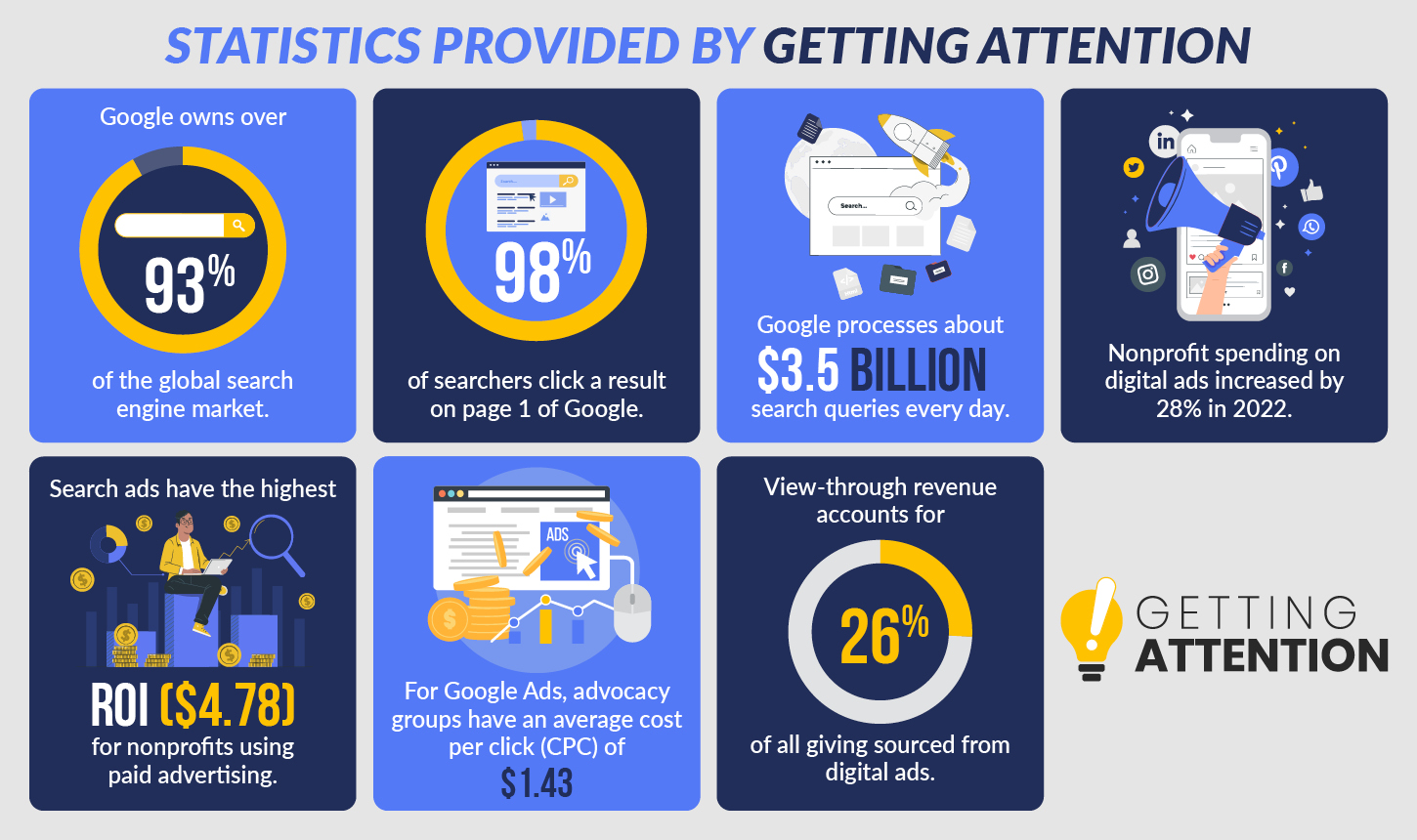
Maximizing ROI from Google Ad Grants: Strategies and Tips
This section delves into advanced strategies for optimizing the effectiveness of Google Ad Grants, focusing on actionable techniques to enhance return on investment (ROI) for nonprofit organizations. Implementing these strategies can significantly elevate campaign performance and overall impact.
Utilizing Keyword Research Tools
Effective keyword research is foundational for maximizing the potential of Google Ad Grants. Employ tools such as Google Keyword Planner, SEMrush, or Ahrefs to identify high-performing keywords relevant to your nonprofit’s mission. Focus on long-tail keywords, which typically have lower competition and higher conversion rates.
- Prioritize keywords with a high search volume and relevance to your cause.
- Analyze competitors’ keywords to uncover opportunities.
- Regularly update your keyword list based on changing trends and performance metrics.
Implementing A/B Testing
A/B testing is essential for refining ad copy and landing pages. This method allows for the comparison of two variations to determine which performs better in terms of click-through rates (CTR) and conversions. Key elements to test include:
- Headlines and descriptions to gauge engagement.
- Call-to-action (CTA) phrases to enhance user response.
- Landing page layout and content to improve user experience.
Run tests over a significant period to gather enough data, then analyze results to inform future campaigns.
Leveraging Remarketing Strategies
Remarketing is a powerful tactic to re-engage users who have previously interacted with your website. This strategy can lead to increased conversions since these users are already familiar with your organization. To implement remarketing effectively:
- Create targeted ads that address previous visitors’ interests.
- Segment audiences based on their behavior on your site.
- Utilize dynamic remarketing to showcase specific programs or services based on user interactions.
Regular Monitoring and Analysis
Consistent monitoring and analysis of campaign performance metrics are vital for ongoing improvement. Utilize Google Ads reporting tools to track key performance indicators (KPIs) such as CTR, conversion rate, and cost-per-click (CPC). Schedule routine reviews of campaign performance to identify trends and areas for adjustment.
- Set up conversion tracking to measure the effectiveness of each campaign.
- Adjust bids and budgets based on performance insights.
- Review search terms to refine keyword targeting.
Many nonprofits underestimate the importance of data analysis in optimizing their campaigns. A common misconception is that once a campaign is set, it requires little to no adjustment. In reality, the digital landscape is dynamic, and ongoing analysis is crucial for maintaining relevance and efficacy.
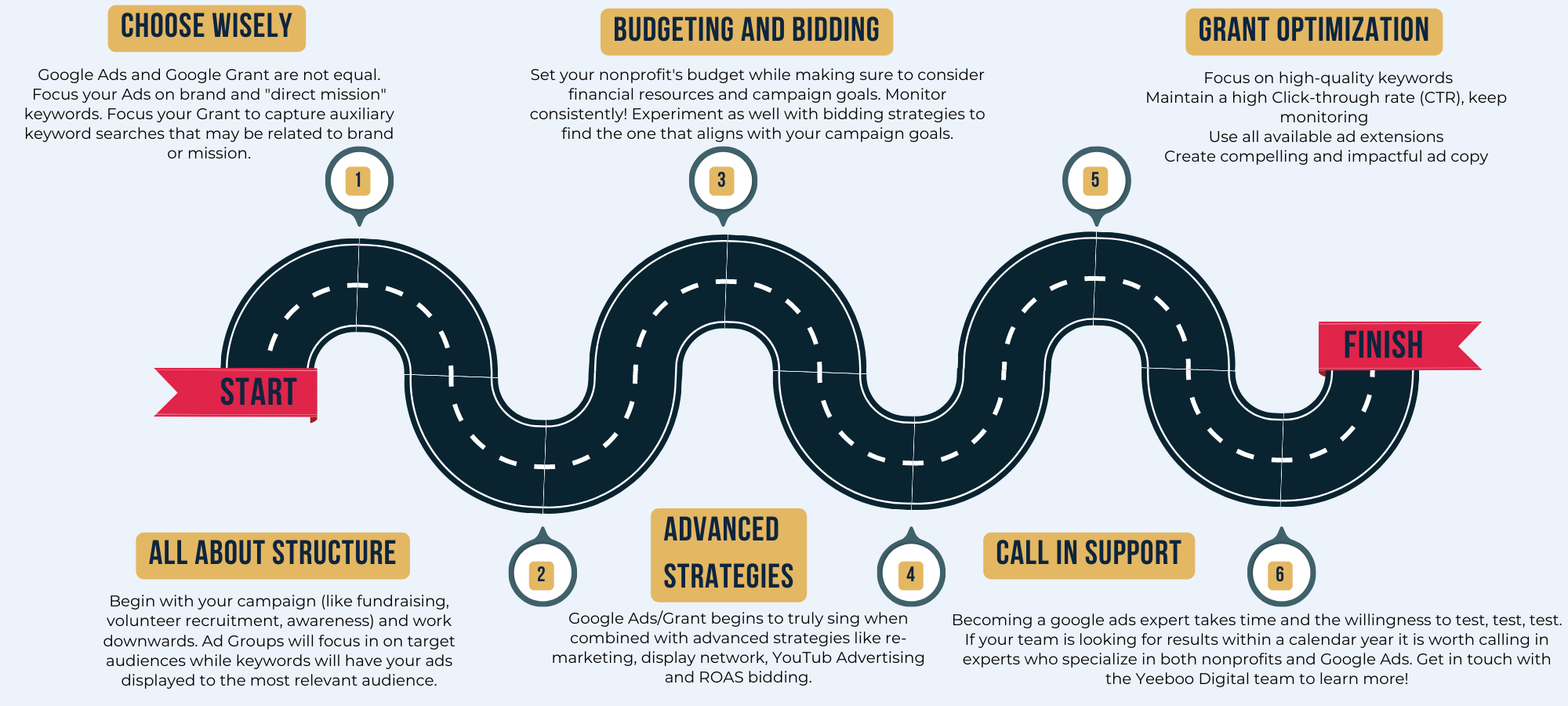
To apply these strategies effectively, nonprofits should establish a structured approach to campaign management. Begin by implementing a robust keyword research process, followed by systematic A/B testing of ads and landing pages. Utilize remarketing to re-engage interested users, and commit to regular performance reviews. By integrating these practices, nonprofits can significantly enhance the ROI from their Google Ad Grants, ensuring that their missions reach a broader audience effectively.
Navigating Google Ad Grants Policies: What You Need to Know
This section outlines the essential policies and compliance requirements that nonprofits must adhere to when utilizing Google Ad Grants. Adhering to these guidelines is critical for maximizing the benefits of the grant and avoiding potential pitfalls.
Eligibility Criteria and Application Process
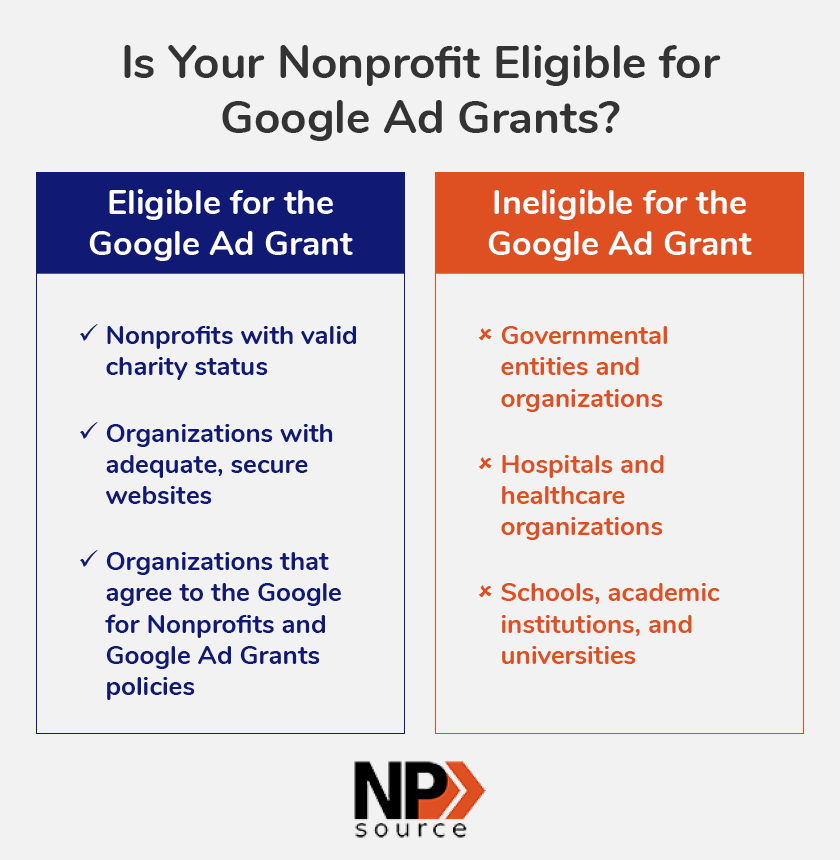
Nonprofits must first confirm their eligibility for Google Ad Grants. To qualify, organizations must be registered as a 501(c)(3) entity in the United States or hold equivalent status in other countries. Additionally, organizations must not be a government entity, hospital, or school, and must adhere to the program’s mission of promoting charitable activities. The application process involves submitting an online form through the Google for Nonprofits portal, where organizations will need to provide documentation to verify their nonprofit status.
Restrictions on Ad Types and Content
Google imposes specific restrictions on the types of ads that can be created using the grant. Nonprofits can only promote their own programs and services. Ads must not promote any commercial services, products, or fundraising activities. Additionally, restricted content includes political advocacy, adult content, and the promotion of alcohol or tobacco. Ad text must also adhere to character limits: headlines can be up to 30 characters, and descriptions can be no longer than 90 characters.
Maintaining Compliance to Avoid Suspension
Ongoing compliance with Google’s policies is vital to maintain the grant. Nonprofits must achieve a minimum click-through rate (CTR) of 5% on their ads. Failure to meet this requirement for two consecutive months can lead to suspension. Regular audits of ad performance, keyword relevance, and adherence to policies are essential steps for sustaining grant eligibility. Nonprofits should also monitor their account for any notifications from Google regarding policy violations.
Keeping Up with Policy Changes and Updates
Google frequently updates its policies and guidelines for Ad Grants. Nonprofits must stay informed about these changes to ensure compliance. Regularly reviewing the Google Ad Grants Help Center and subscribing to relevant newsletters can provide timely updates. Organizations should also participate in webinars or training sessions offered by Google to enhance their understanding of best practices.
Many nonprofits mistakenly assume that once they receive the grant, they can set it and forget it. However, proactive management is necessary to fully leverage the grant’s potential while avoiding the risk of suspension.
Practical Application
- Regularly review eligibility requirements and ensure your organization meets them.
- Develop a content calendar to manage ad campaigns effectively while adhering to content restrictions.
- Set up performance tracking to monitor CTR and adjust campaigns accordingly.
- Subscribe to Google Ad Grants updates and participate in community forums to stay informed.
By adhering to these policies and actively managing campaigns, nonprofits can determine if Google Ad Grants are worth it for their specific needs and maximize their impact.
Real-World Success Stories: Nonprofits Thriving with Google Ad Grants
This section showcases inspiring case studies of nonprofits that have successfully leveraged Google Ad Grants. These examples illustrate effective strategies and measurable outcomes that demonstrate the grants’ potential value.
Case Study: The American Red Cross
The American Red Cross utilized Google Ad Grants to enhance awareness of its disaster relief efforts. By creating targeted ads focused on specific campaigns, such as blood donation drives, the organization achieved a 30% increase in website traffic. This surge in visitors directly correlated with a rise in blood donations, showcasing how grant-funded ads can effectively drive engagement for critical services.
Innovative Approach: Habitat for Humanity
Habitat for Humanity adopted a unique strategy by integrating seasonal campaigns into their Google Ad Grant efforts. They created ads that aligned with local events and community needs, such as home-building projects during National Volunteer Month. As a result, they experienced a 25% increase in volunteer sign-ups and a significant uptick in donations during these campaigns. This approach highlights the importance of aligning messaging with community interests.
Impact on Fundraising Efforts: The Nature Conservancy
The Nature Conservancy used Google Ad Grants to promote specific fundraising campaigns, particularly for environmental protection initiatives. Their targeted ads led to a 40% increase in online donations over a six-month period. By focusing on particular projects, they effectively engaged potential donors who were passionate about conservation, demonstrating how grant-funded ads can enhance overall fundraising strategies.
Testimonials and Lessons Learned
- Maria Thompson, Executive Director of a local food bank: “The Google Ad Grant transformed our outreach. We reached new donors we never knew existed.”
- James Lee, Marketing Coordinator at a wildlife charity: “Our ads not only raised awareness but also helped us build a community of supporters.”
- Linda Garcia, Director of a youth mentorship program: “We learned to tailor our messaging based on analytics. This adaptive approach has been key to our success.”
Common misconceptions about Google Ad Grants include the idea that they only benefit larger organizations. Many small to mid-sized nonprofits have found success by utilizing effective strategies tailored to their unique missions.
To maximize the impact of Google Ad Grants, nonprofits should:
- Define clear goals for each campaign, such as increasing donations or volunteer recruitment.
- Utilize analytics tools to assess the performance of ads and adjust strategies accordingly.
- Develop targeted messaging that resonates with specific audiences and aligns with current events or campaigns.
Implementing these strategies can enhance the effectiveness of grant-funded ads, proving that, indeed, are Google Ad Grants worth it for nonprofits looking to expand their reach and impact.
Frequently Asked Questions
What are Google Ad Grants and how do they work?
Google Ad Grants provide eligible nonprofits with free advertising credits to promote their missions on Google Ads. Organizations can use these funds to create text-based ads that appear in Google search results.
How much can nonprofits get from Google Ad Grants?
Nonprofits can receive up to $10,000 per month in in-kind advertising through Google Ad Grants. This funding allows organizations to reach a wider audience and increase awareness of their cause.
What are the best practices for using Google Ad Grants?
Best practices include creating relevant, keyword-rich ads, optimizing landing pages, and regularly monitoring campaign performance. Nonprofits should also adhere to Google’s policies and guidelines to maintain their grant status.
Are Google Ad Grants worth the time investment?
Google Ad Grants can be worth the time investment if managed effectively, as they provide significant exposure at no cost. However, success depends on the organization’s ability to create and optimize campaigns consistently.
How do Google Ad Grants compare to paid advertising?
Google Ad Grants offer free advertising, but with limitations such as a maximum bid of $2.00 per click and restrictions on ad formats. Paid advertising allows for more flexibility and potentially higher visibility, depending on budget and strategy.
What common mistakes should nonprofits avoid with Google Ad Grants?
Common mistakes include using broad keywords, neglecting to optimize landing pages, and failing to monitor campaign performance. Nonprofits should also avoid violating Google’s policies, which can result in losing grant eligibility.
Can Google Ad Grants help with SEO?
While Google Ad Grants do not directly impact SEO, they can drive traffic to a website, potentially improving organic search performance over time. Increased visibility and engagement from ads may lead to higher search rankings indirectly.
Final Thoughts on are google ad grants worth it
Google Ad Grants represent a powerful opportunity for nonprofits to enhance their visibility and drive mission-driven engagement. When strategically utilized, these grants can yield significant returns, enabling organizations to expand their reach and impact effectively without the burden of advertising costs.
To capitalize on this potential, nonprofits should develop a comprehensive strategy that includes ongoing optimization of campaigns and adherence to Google’s policies. Regularly analyze performance metrics and adjust tactics accordingly to ensure the best possible outcomes from the grant.
Understanding the nuances of Google Ad Grants is crucial, as leveraging this resource can transform how nonprofits connect with their communities and achieve their objectives.
Leave a Reply