
The price for Google Ads typically ranges from $1 to $2 per click on the Google Search Network. This cost is influenced by various factors, including competition and keyword selection, making it crucial for businesses to understand these dynamics to optimize their advertising budgets effectively.
Understanding the price for Google Ads is essential for businesses looking to enhance their online visibility and drive targeted traffic. With billions of searches conducted daily, effective ad placements can lead to significant returns on investment, but miscalculating costs can result in wasted resources. In 2023, businesses are expected to allocate over $200 billion to digital advertising, underscoring the importance of strategic ad spending.
Failure to grasp the nuances of Google Ads pricing can lead to missed revenue opportunities and a competitive disadvantage. Businesses may overspend on poorly performing keywords or miss out on valuable traffic due to underbidding, ultimately impacting their bottom line.
This article will provide a comprehensive overview of Google Ads pricing, including a detailed cost breakdown, comparisons of top providers, best practices for optimizing ad spend, and insights into the local SEO angle to maximize effectiveness.
For Price For Google Ads businesses looking to generate local leads through Google Ads or Local SEO, GMB Ranger LLC offers hands-on campaign management. Specialist Md Tangeer Mehedi personally handles campaign setup and ongoing optimization — with no payment required until the first lead comes in.
What is the average price for Google Ads?
The average price for Google Ads typically ranges from $1 to $2 per click for search ads, though this can vary significantly based on industry and competition. In some sectors, costs can exceed $50 per click, particularly in high-stakes markets like finance and legal services.
Several factors influence the cost of Google Ads, primarily determined by the auction system that Google employs. Advertisers bid on keywords, and the amount they are willing to pay, combined with the quality of their ad, determines the final cost per click. This competitive environment means that prices can fluctuate based on demand and the specific target audience.
- Industry Competition: More competitive industries, such as insurance or travel, generally have higher click costs due to increased bidding activity.
- Quality Score: Google assesses the relevance of your ad, landing page, and expected click-through rate. A higher Quality Score can lower costs.
- Geographic Targeting: Ads targeting high-demand locations may incur higher costs compared to less competitive areas.
- Keyword Selection: Broad or highly sought-after keywords tend to be more expensive than niche terms.
Expert insight: Businesses should focus on optimizing their ads and targeting strategies to improve their Quality Score, which can significantly reduce overall advertising costs while maximizing effectiveness.
How does Google Ads pricing work?
Google Ads pricing operates on an auction system where advertisers bid for ad placements. The cost per click (CPC) can range from a few cents to over $50, depending on competition and keywords.
The Google Ads auction determines the price based on a few critical factors, primarily your bid amount, ad quality, and expected impact. When a user conducts a search, Google evaluates all eligible ads based on these criteria. The ad rank is calculated by multiplying the bid amount by the quality score, which considers factors like click-through rate (CTR) and ad relevance.
- Set your budget: Advertisers start by setting a daily budget, which is the maximum amount they are willing to spend per day on their campaigns.
- Choose a bidding strategy: Various bidding strategies exist, such as manual CPC, automated bidding, or target CPA, allowing advertisers to control how much they pay for clicks or conversions.
- Participate in the auction: When a user searches for a term related to your ad, Google runs an auction to determine which ads will appear and in what order based on the highest ad rank.
- Pay for clicks: Advertisers only pay when a user clicks on their ad. The actual CPC paid may be lower than the maximum bid, depending on the competition and ad rank of competing advertisers.
- Monitor and adjust: Continuously track performance and make adjustments to bids, budgets, and ad content to optimize campaign effectiveness and manage costs.
Expert insight: To maximize your return on investment, focus on improving your ad quality score through relevant keywords and engaging ad copy, as this can lower your CPC and increase ad visibility. Regularly analyzing performance metrics will also enable more informed adjustments to your bidding strategy.
What factors affect the price for Google Ads?
The price for Google Ads is influenced by several key factors, including competition, keyword selection, and ad quality. These elements interact to determine the overall cost of running ad campaigns on the platform. For instance, businesses can expect to pay an average of $1 to $2 per click for Google Ads, but this can vary significantly based on the aforementioned factors.
One significant factor is competition. High-demand industries, such as finance and legal services, often see higher costs due to numerous advertisers vying for the same keywords. This competition drives up the price per click (PPC) as businesses bid against each other to secure ad placements. Additionally, the more advertisers that target a particular keyword, the higher the cost becomes, making it essential to analyze the competitive landscape before choosing keywords.
Keyword selection also plays a crucial role in determining costs. Long-tail keywords, which are typically more specific and less commonly searched, tend to be less expensive than broad, high-volume keywords. Advertisers can often achieve better return on investment (ROI) by focusing on niche keywords that attract a more targeted audience. Furthermore, utilizing keyword research tools can aid in identifying cost-effective options that align with advertising goals.
Lastly, ad quality significantly impacts pricing through the Quality Score metric, which Google uses to evaluate the relevance and effectiveness of ads. Ads with higher Quality Scores are rewarded with lower costs per click and better ad placements. Therefore, optimizing ad content, including headlines, descriptions, and landing pages, can lead to reduced costs and improved campaign performance.
Expert insight: To maximize the effectiveness of Google Ads, focus on refining ad quality and targeting less competitive keywords. This strategy can lower costs while improving ad visibility and conversion rates.
Is google ads worth the cost?
Yes, Google Ads can be worth the cost, especially when considering the potential return on investment (ROI). Businesses that effectively utilize Google Ads can see an average ROI of 200% or more, depending on their industry and ad strategy.
The value of Google Ads varies significantly by business type and marketing goals. For e-commerce businesses, the price for Google Ads may translate directly into increased sales. In contrast, service-oriented businesses might see benefits in lead generation and brand visibility. Understanding the nuances in ROI across different sectors is essential for evaluating whether Google Ads is a worthwhile investment.
Key factors influencing the effectiveness of Google Ads include:
- Industry Type: E-commerce businesses often experience higher conversion rates compared to local services, which may rely more on brand awareness.
- Ad Spend: Higher budgets can increase visibility but do not guarantee better ROI. Efficient targeting and ad quality are crucial.
- Campaign Goals: Goals such as lead generation, brand awareness, or direct sales will influence how the cost of ads translates into value.
Expert insight: Businesses should continuously monitor and adjust their Google Ads strategies based on performance metrics to maximize ROI and ensure that advertising costs remain justified by outcomes.
How can I lower my Google Ads costs?
To lower Google Ads costs, focus on optimizing your campaigns through targeted strategies. By implementing the right techniques, businesses can reduce their cost-per-click (CPC) by up to 30% while maintaining ad effectiveness.
Reducing Google Ads costs requires a multifaceted approach. First, refine your target audience to ensure ads reach the most relevant users. Use tools like Google Analytics to analyze user behavior and demographics. This data can help in creating tailored advertisements that resonate with specific segments, increasing click-through rates (CTR) and conversions while lowering costs.
- Utilize Negative Keywords: Identify and add negative keywords to prevent your ads from showing on irrelevant searches. This strategy can enhance ad relevance and improve Quality Score, leading to lower CPC.
- Optimize Ad Quality: Focus on writing compelling ad copy and using high-quality images. Ads with higher relevance and better engagement metrics achieve a higher Quality Score, which can significantly reduce costs.
- Implement A/B Testing: Regularly test different ad variations to identify which perform best. Small adjustments can lead to substantial improvements in CTR, ultimately lowering overall advertising costs.
- Adjust Bidding Strategies: Consider switching to automated bidding strategies like Target CPA or Target ROAS. These strategies adjust bids in real-time to optimize conversions, potentially reducing costs over time.
Expert insight: Regularly review and adjust your campaigns based on performance data. Continuous optimization is key to sustaining lower costs and improving return on investment in Google Ads.
What is the best bidding strategy for Google Ads?
The best bidding strategy for Google Ads depends on specific campaign goals, budget, and target audience. Common strategies include Manual CPC, Enhanced CPC, Target CPA, and Target ROAS. Each strategy has its strengths, and selecting the right one can improve ad performance significantly, potentially increasing conversion rates by up to 30%.
Manual CPC allows advertisers to set maximum bids for clicks, providing complete control over spending. This strategy is effective for campaigns with defined budgets and specific keywords. Enhanced CPC adjusts bids in real-time to maximize conversions while maintaining manual control, making it ideal for advertisers seeking a balance between control and automation.
- Target CPA: This strategy focuses on getting as many conversions as possible at a specified cost per acquisition. It is beneficial for advertisers with clear conversion goals and historical data, as Google optimizes bids based on the likelihood of conversion.
- Target ROAS: Aimed at maximizing return on ad spend, this strategy is suitable for businesses looking to optimize for revenue rather than just clicks. Advertisers should have sufficient conversion data to support this approach, typically requiring at least 15-30 conversions in the past 30 days.
- Maximize Clicks: This automated bidding strategy aims to get the most clicks within a set budget. It is practical for advertisers focusing on increasing site traffic, though it may not prioritize conversions.
Expert insight: Regularly review and adjust bidding strategies based on performance data. Testing different approaches can lead to improved outcomes and better alignment with evolving business objectives.
How long does it take to see results from Google Ads?
Typically, businesses can expect to see initial results from Google Ads within one to three weeks after launching their campaigns. However, achieving optimal performance may take one to three months, depending on various factors.
The time it takes to see results from Google Ads heavily depends on the industry, competition, and campaign objectives. For instance, highly competitive industries may require a longer time frame to gather sufficient data and optimize campaigns effectively. Additionally, the complexity of the ad targeting and the budget allocated can influence how quickly results manifest. Businesses that invest more in their campaigns and utilize advanced targeting options may see results sooner than those with limited budgets.
Another critical factor is the learning phase of Google Ads. When a campaign is first launched, Google’s algorithms need time to learn which ads perform best for the target audience. This learning period typically lasts about 14 days. During this time, fluctuations in performance are common as the algorithm adjusts. After this phase, advertisers should begin to see more stable results, but ongoing adjustments may still be necessary to refine targeting and budget allocation for optimal performance.
Expert insight: Continuously monitor key performance indicators (KPIs) such as click-through rates and conversion rates throughout the campaign. Regular optimization can significantly shorten the time needed to achieve desired results.
The Impact of Keyword Selection on Google Ads Pricing
The selection of keywords in Google Ads significantly influences both the costs and effectiveness of advertising campaigns. Understanding the dynamics of keyword competition and type is essential for optimizing ad spend and maximizing return on investment.
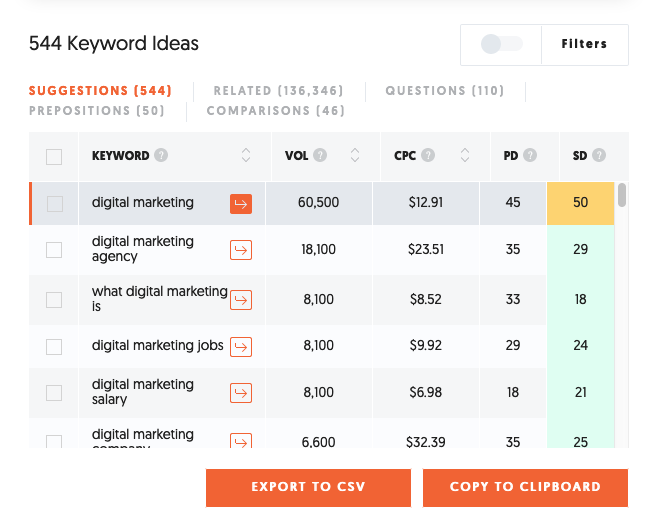
High Competition Keywords vs. Low Competition Keywords
High competition keywords often command elevated prices due to the presence of numerous advertisers vying for visibility. For instance, the average cost-per-click (CPC) for highly competitive keywords in sectors like finance or legal can exceed $50. Conversely, low competition keywords typically yield lower CPCs, making them more affordable for advertisers with limited budgets. These keywords can offer a higher return on investment (ROI) as they attract targeted traffic without the inflated costs associated with their high-competition counterparts.
Long-Tail Keywords and Their Cost-Effectiveness
Long-tail keywords, which consist of three or more words, present a cost-effective alternative to generic keywords. These keywords often have lower search volume but higher conversion rates. For example, a long-tail keyword like “best organic dog food for allergies” may have a CPC of $1.50, compared to $3.00 for the more generic term “dog food.” This price advantage, combined with the specificity of long-tail keywords, results in a more targeted audience and improved ad performance.
Using Keyword Research Tools for Better Selection
Effective keyword selection relies heavily on the use of keyword research tools. Platforms such as Google Keyword Planner, SEMrush, and Ahrefs provide insights into keyword volume, competition, and cost estimates. By analyzing this data, advertisers can identify profitable keywords that align with their campaign goals and budget constraints. Utilizing these tools can lead to a more strategic approach in keyword selection, ultimately impacting the overall pricing strategy for Google Ads.
The Role of Negative Keywords in Cost Management
Incorporating negative keywords into a Google Ads campaign is a crucial strategy for cost management. Negative keywords prevent ads from being displayed for irrelevant queries, thereby reducing wasted ad spend. For instance, if an advertiser sells luxury watches, adding “cheap” as a negative keyword helps avoid clicks from users searching for budget options. This tactic can enhance the efficiency of ad campaigns by ensuring that budget is allocated to more relevant clicks, ultimately lowering the effective CPC.
In 2024, advertisers who effectively utilized negative keywords reported an average reduction in wasted ad spend by up to 20%, underscoring the importance of this strategy in optimizing the price for Google Ads.
Despite the advantages of selecting the right keywords, a common misconception is that higher competition always equates to better performance. While competitive keywords can drive traffic, they do not guarantee conversions. Advertisers must balance keyword selection with target audience alignment and ad copy relevance to achieve desired results.
To leverage these insights, advertisers should take the following actionable steps:
- Conduct thorough keyword research using tools like Google Keyword Planner.
- Identify a mix of high and low competition keywords to optimize ad spend.
- Incorporate long-tail keywords for niche targeting and cost savings.
- Regularly update and refine negative keyword lists to minimize irrelevant clicks.
By implementing these strategies, advertisers can effectively manage their Google Ads pricing and enhance overall campaign performance.
Understanding Google Ads Bidding Strategies
This section explores various Google Ads bidding strategies, highlighting their impact on advertising costs and overall campaign effectiveness. Understanding these strategies is essential for optimizing ad spend and maximizing return on investment.
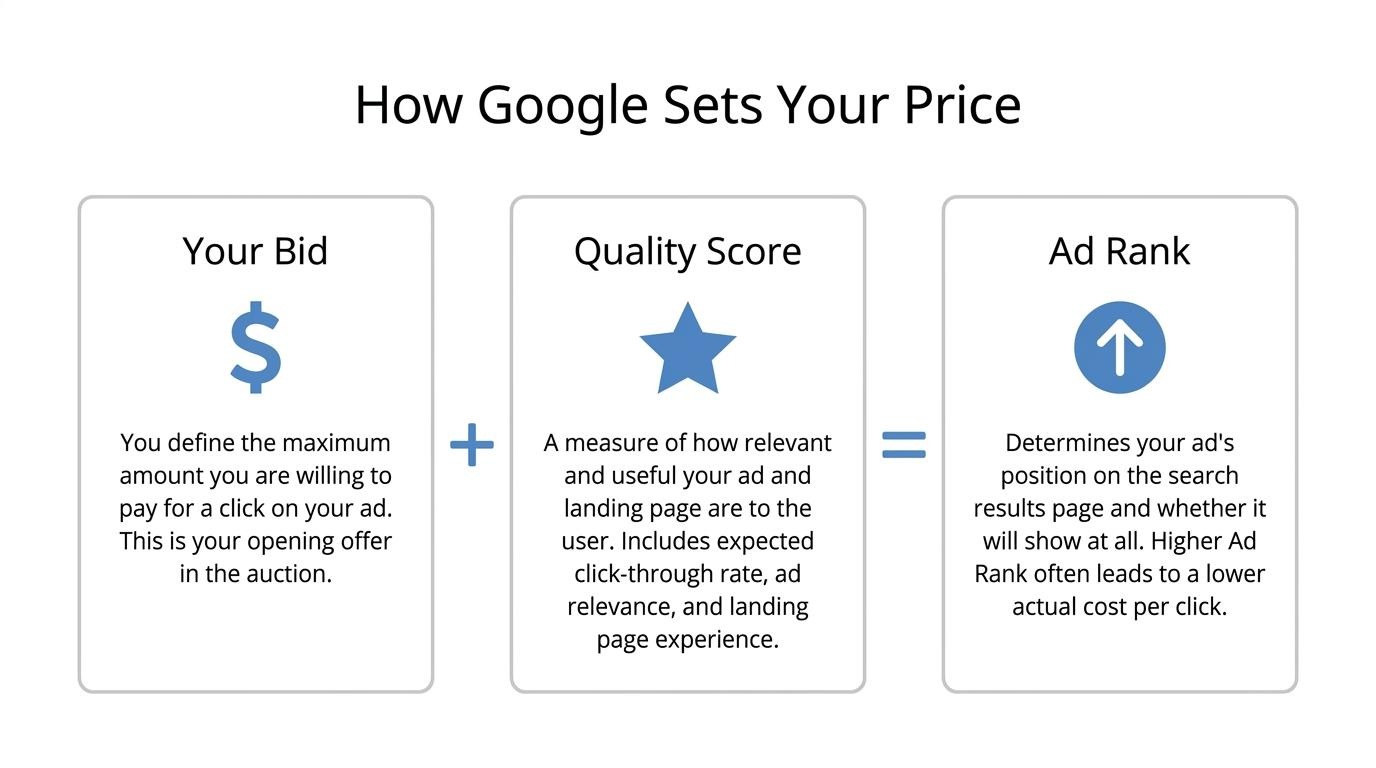
Manual vs. Automated Bidding
Google Ads offers two primary bidding approaches: manual bidding and automated bidding. Manual bidding allows advertisers to set specific bids for individual keywords or placements, providing control over costs and visibility into performance. This strategy is ideal for campaigns where precise budget management is critical.
In contrast, automated bidding leverages Google’s algorithms to optimize bids based on various factors, including competition and user behavior. This approach can save time and adjust bids in real-time, making it suitable for advertisers with larger campaigns or those looking to maximize efficiency.
Cost per Click (CPC) vs. Cost per Acquisition (CPA)
The cost structure of Google Ads is primarily based on two models: Cost per Click (CPC) and Cost per Acquisition (CPA). CPC refers to the amount an advertiser pays each time a user clicks on their ad. This model is beneficial for driving traffic to a website, especially when the goal is to generate leads or sales.
On the other hand, CPA focuses on the cost associated with acquiring a customer. Advertisers set a target CPA, and Google automatically adjusts bids to achieve this goal. This model is particularly effective for campaigns with clearly defined conversion events, ensuring that ad spend aligns with actual sales outcomes.
Maximizing Conversions with Smart Bidding
Smart Bidding represents a subset of automated bidding strategies designed to enhance conversion rates. Techniques such as Target CPA, Target ROAS (Return on Ad Spend), and Maximize Conversions utilize machine learning to analyze historical data and adjust bids accordingly. According to recent statistics, campaigns utilizing Smart Bidding can see conversion rate improvements of up to 30% compared to traditional bidding strategies.
These advanced bidding strategies not only improve efficiency but also help advertisers achieve their specific business objectives, making them a vital consideration for any Google Ads campaign.
Adjusting Bids Based on Performance Data
Monitoring and adjusting bids based on performance data is crucial for optimizing advertising costs. Google Ads provides comprehensive analytics tools that allow advertisers to assess the effectiveness of their campaigns. Key performance indicators (KPIs) such as click-through rates (CTR), conversion rates, and cost per conversion should inform bid adjustments.
- Regularly review keyword performance to identify high and low performers.
- Adjust bids based on device performance, geographic location, and time of day.
- Implement bid adjustments to capitalize on trends and seasonal variations.
Effective bid management can lead to a significant reduction in the overall price for Google Ads, enhancing both profitability and campaign reach.
While many advertisers focus solely on the cost of clicks, it is essential to understand the broader implications of bidding strategies. For instance, a common misconception is that lower bids always yield better results. However, in competitive markets, higher bids may be necessary to secure visibility and drive conversions. Effective management of bidding strategies can lead to improved performance and reduced costs over time.
To apply these insights, advertisers should regularly evaluate their bidding strategy and adjust based on campaign performance metrics. Consider running A/B tests with manual and automated bidding to determine which approach yields the best results for specific objectives. Additionally, leverage Smart Bidding solutions to optimize for conversions and align spending with desired outcomes effectively.
Common Mistakes That Increase Google Ads Costs
Advertisers often incur unnecessary expenses in their Google Ads campaigns due to common mistakes. Identifying and rectifying these errors can significantly enhance campaign efficiency and reduce overall costs.

Ignoring Ad Relevance and Quality Score
Ad relevance and Quality Score are critical metrics in Google Ads that directly impact the price for Google Ads. A low Quality Score can lead to higher costs per click (CPC) and less favorable ad placements. Google assigns Quality Scores based on the relevance of keywords, ad copy, and landing pages. Advertisers should aim for a Quality Score of 7 or higher to optimize costs and improve performance.
Failing to Use Negative Keywords
Negative keywords prevent ads from showing up for irrelevant searches, helping advertisers save money. Without a well-defined negative keyword strategy, campaigns may attract clicks from users who are unlikely to convert. A study indicated that campaigns utilizing negative keywords can reduce wasted spend by up to 30%. Regularly reviewing and updating this list is crucial for maintaining campaign efficiency.
Not Monitoring Campaign Performance Regularly
Regular performance monitoring is essential for identifying underperforming ads and keywords. Many advertisers neglect to analyze their campaign data frequently, leading to prolonged inefficiencies. According to a 2023 report, advertisers who review their campaigns weekly can achieve a 15% lower CPC compared to those who do so monthly. Implementing consistent performance checks allows for timely adjustments and cost savings.
Overlooking Ad Extensions and Their Benefits
Ad extensions enhance the visibility and appeal of ads, often leading to higher click-through rates (CTR) and lower CPCs. Ignoring ad extensions means missing out on valuable real estate on search results pages. Extensions such as site links, callouts, and structured snippets can increase CTR by up to 20%. Utilizing these features maximizes the effectiveness of each ad and contributes to a more favorable pricing structure.
Nuance and Expert Insights
Many advertisers mistakenly believe that increasing budgets will automatically lead to better results. However, without addressing foundational issues like ad relevance and Quality Score, increased spending may yield diminishing returns. Additionally, misconceptions about the effectiveness of broad match keywords can lead to inflated costs. While broad match can increase reach, it often attracts irrelevant traffic if not paired with effective negative keywords and continuous monitoring.
Practical Application
- Conduct a thorough audit of current Quality Scores and identify areas for improvement.
- Develop and maintain a robust list of negative keywords tailored to your campaign.
- Establish a routine for monitoring campaign performance at least once a week.
- Implement all relevant ad extensions to enhance visibility and engagement.
By addressing these common mistakes, advertisers can optimize their campaigns, reduce unnecessary costs, and improve their overall return on investment in Google Ads.
Real-World Case Studies of Google Ads Success
This section explores practical examples of businesses that have maximized their Google Ads investment, showcasing effective strategies and lessons learned from both successes and failures.
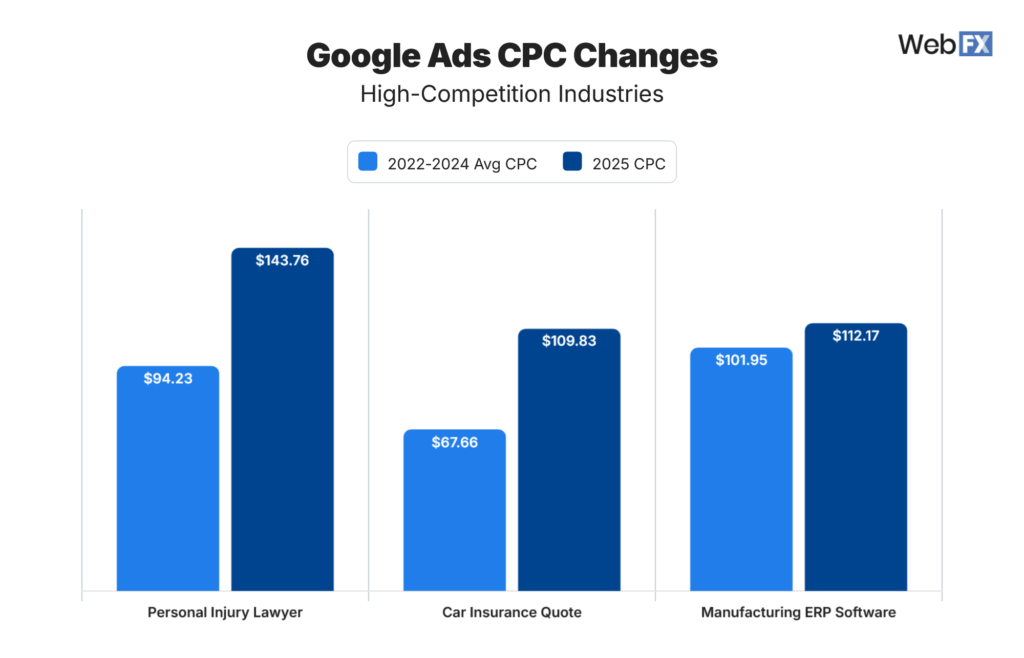
Case Study: Small Business Achieves High ROI
A local landscaping company, GreenScape, leveraged Google Ads to increase its customer base. With an initial budget of $1,000 for a three-month campaign, GreenScape focused on specific keywords like “landscaping services near me” and “affordable landscaping.” The company achieved a 300% return on investment (ROI), translating to $3,000 in revenue generated from new clients. By closely monitoring the performance of their ads and adjusting bids accordingly, they optimized their ad spend effectively.
E-Commerce Success Story with Targeted Ads
Online retailer TrendyThreads experienced remarkable growth through targeted Google Ads campaigns. Initially, TrendyThreads allocated 15% of their annual marketing budget to Google Ads. By utilizing dynamic remarketing, they reached previous website visitors with personalized ads based on their browsing behavior. This strategy led to a 25% increase in conversion rates and a significant drop in cost per acquisition (CPA) from $30 to $22 over 12 months. The targeted approach allowed them to maintain a competitive edge in the crowded e-commerce space.
B2B Company Leveraging LinkedIn Ads Alongside Google Ads
TechSolutions, a B2B software provider, integrated Google Ads with LinkedIn Ads to enhance lead generation efforts. By using Google Ads for broader reach and LinkedIn for precise targeting, TechSolutions achieved a 40% increase in qualified leads over six months. Their strategy included:
- Running Google Ads to capture interest from search engine users.
- Utilizing LinkedIn Ads to engage decision-makers in specific industries.
- Implementing lead magnets, such as free trials, across both platforms.
This multi-channel approach allowed TechSolutions to effectively manage their budget, creating a synergistic effect that improved overall campaign performance.
Lessons Learned from Failed Campaigns
Not all Google Ads campaigns yield favorable outcomes. A restaurant chain, Dining Delights, invested heavily in broad match keywords without considering their relevance. They spent $5,000 in a month but only generated $1,000 in revenue. Key takeaways from this failure include:
- Utilizing keyword research tools to identify high-performing keywords.
- Implementing negative keywords to filter out irrelevant searches.
- Regularly analyzing performance data to make informed adjustments.
This case illustrates the importance of strategic planning and continuous monitoring to avoid costly mistakes.
In a rapidly evolving digital advertising landscape, understanding the nuances of Google Ads can set businesses apart. Common misconceptions include the belief that higher spending guarantees better results. However, effective targeting and optimization often yield greater returns than sheer budget size.
To leverage these insights, businesses should:
- Conduct thorough keyword research before launching campaigns.
- Test different ad formats and targeting options to find the best fit.
- Monitor performance metrics closely and adjust strategies accordingly.
By implementing these strategies, businesses can maximize their investment, ensuring that their price for Google Ads translates into measurable results.
Evaluating the Best Price For Google Ads
Comparing advertising options is crucial for businesses looking to maximize their return on investment. In the digital advertising market, which is projected to reach $786 billion by 2026, understanding the pricing models and features of different platforms can significantly influence campaign effectiveness. Evaluating options based on specific criteria ensures that businesses choose the most suitable provider for their goals.
| Provider / Option | Best For | Pricing | Key Feature |
|---|---|---|---|
| Google Ads | Businesses of all sizes | $1 – $2 per click | Extensive reach and targeting options |
| Bing Ads | Cost-effective alternatives | $0.50 – $1.50 per click | Lower competition in niche markets |
| Facebook Ads | Social media engagement | $0.50 – $3 per click | Rich targeting based on user behavior |
| Amazon Advertising | E-commerce businesses | $0.20 – $2 per click | High purchase intent audience |
| LinkedIn Ads | B2B marketing | $2 – $7 per click | Professional targeting options |
| AdRoll | Retargeting campaigns | $1 – $5 per click | Cross-platform retargeting capabilities |
| Pinterest Ads | Visual product promotion | $0.10 – $1.50 per click | Highly visual ad formats |
Criteria for Evaluating Program Quality
Cost-Effectiveness: Analyze the pricing structure in relation to your advertising budget. Consider not only the cost per click but also the potential return on investment based on your target audience and campaign goals.
Targeting Options: Evaluate the ability of each platform to reach your specific audience. Platforms with advanced targeting capabilities can help optimize ad spend by ensuring that your ads are shown to the most relevant users.
Ad Format Variety: Different platforms offer various ad formats, which can impact engagement rates. Assess whether the available formats align with your marketing strategy and creative assets.
Performance Metrics: Look for platforms that provide comprehensive analytics and reporting tools. Understanding campaign performance through measurable metrics allows for better decision-making and adjustments to improve results.
How to Assess the Reputation and Reliability of Providers
- Research Reviews: Look for customer reviews and testimonials on independent platforms to gauge user satisfaction and common issues.
- Check Industry Credentials: Verify if the provider is recognized within the industry by checking certifications and partnerships.
- Examine Case Studies: Review case studies or success stories that demonstrate the provider’s effectiveness in your industry.
- Request References: Ask the provider for references from similar businesses to understand their experiences and outcomes.
- Test Customer Support: Reach out to customer service with inquiries to evaluate responsiveness and support quality before committing.
Which Price For Google Ads Is Right for You?
Determining the right pricing strategy for Google Ads hinges on your unique business needs, budget constraints, and marketing goals. This guide provides tailored recommendations for various audience segments to help you make informed decisions that align with your objectives.
Small Business Owner
For small business owners, Google Ads offers an excellent opportunity to achieve broad reach while focusing on local targeting. Allocate a budget of $300 to $1,500 per month, depending on your market size. Utilize location-based keywords and create ads that highlight your services to attract local customers effectively.
E-commerce Retailer
E-commerce retailers should combine Google Ads with Amazon Advertising to optimize visibility among high-intent shoppers. Set aside a budget of $500 to $2,000 monthly for Google Ads, focusing on product listing ads and shopping campaigns. This dual approach ensures that your products are visible both on Google and Amazon, driving sales from multiple channels.
B2B Marketer
B2B marketers can maximize their advertising impact by leveraging LinkedIn Ads alongside Google Ads to target professionals in specific industries. A budget of $1,000 to $5,000 per month on LinkedIn Ads can yield high-quality leads. Use Google Ads for retargeting campaigns to keep your brand in front of previously engaged prospects.
Freelancer
For freelancers, Facebook Ads offer budget-friendly options to reach potential clients effectively. A monthly budget of $200 to $800 can provide significant exposure, especially with targeted campaigns aimed at specific demographics or interests. Combine this with Google Ads for broader visibility when promoting specialized services.
| If You Are… | Best Approach |
|---|---|
| Small Business Owner | Google Ads with local targeting ($300-$1,500/month) |
| E-commerce Retailer | Google Ads + Amazon Advertising ($500-$2,000/month) |
| B2B Marketer | LinkedIn Ads + Google Ads ($1,000-$5,000/month) |
| Freelancer | Facebook Ads ($200-$800/month) |
Understanding the Price for Google Ads in Your Local Market
When considering the price for Google Ads, local market dynamics play a crucial role in determining costs and effectiveness. In fact, 46% of all Google searches are seeking local information, highlighting the importance of tailoring ad strategies to local audiences. Businesses that optimize their Google Ads for local search can see conversion rates as high as 20%, significantly boosting their return on ad spend.
Geographic Market Differences
In larger metropolitan areas like New York City or Los Angeles, competition can drive the price for Google Ads significantly higher, often exceeding $10 per click in industries like legal services or real estate. Conversely, smaller cities or rural areas may see CPC rates as low as $1 to $3. Local businesses should assess their competitive landscape to determine if they need to increase their budget for visibility or if they can capitalize on lower costs in less saturated markets.
Local Business Applications
Local businesses can leverage Google Ads effectively by focusing on specific geographic keywords and targeting local customers. Here are some practical use cases:
- Seasonal Promotions: A local bakery can run ads for holiday specials, targeting customers searching for “best cupcakes near me” during festive seasons.
- Event-Based Advertising: A local gym can promote special membership rates during a community health fair, capturing the attention of attendees.
- Service Area Targeting: A plumbing service can create ads targeting specific neighborhoods, ensuring they appear when residents search for emergency plumbing services.
- Local Partnerships: Collaborating with nearby businesses for joint promotions can enhance visibility and reduce overall advertising costs.
Local Search and Visibility Impact
Understanding the price for Google Ads is essential for improving local search rankings. A well-optimized Google Business Profile (GBP) can enhance visibility in local search results, particularly when combined with targeted ads. Local businesses should consider the following steps:
- Optimize your GBP with accurate information and engaging visuals.
- Use local keywords in your ad campaigns to increase relevance.
- Monitor your ad performance in relation to local search metrics.
- Encourage customer reviews to boost your GBP ranking.
Pricing and Cost in Local Markets
Costs for Google Ads can vary widely by geographic market. For instance, local businesses in competitive markets like San Francisco might budget around $5-$15 per click, while those in less competitive areas might find effective spending in the $2-$5 range. Local businesses should evaluate their specific industry benchmarks and adjust their budgets accordingly, keeping in mind that national players often have larger budgets, which can drive up local CPC rates.
Local Implementation Checklist:
- Assess local competitors and their ad spend.
- Set a realistic budget based on geographic CPC data.
- Optimize your Google Business Profile for local searches.
- Utilize local keywords specific to your products or services.
- Monitor ad performance and adjust strategies based on local search trends.
- Encourage customers to leave reviews on Google.
- Consider seasonal and event-based promotions for targeted ad campaigns.
For Price For Google Ads businesses looking to generate local leads through Google Ads or Local SEO, GMB Ranger LLC offers hands-on campaign management. Specialist Md Tangeer Mehedi personally handles campaign setup and ongoing optimization — with no payment required until the first lead comes in.
Frequently Asked Questions
What is the average price for Google Ads?
The average price for Google Ads varies widely, typically ranging from $1 to $2 per click, depending on the industry. Highly competitive sectors may see costs exceeding $50 per click.
How does Google Ads pricing work?
Google Ads pricing operates on a pay-per-click (PPC) model, where advertisers pay each time a user clicks their ad. The cost is determined by a bidding system and the quality score of the ad.
What factors affect the price for Google Ads?
Several factors influence Google Ads pricing, including keyword competitiveness, ad quality, and targeting options. Geographic location and the time of day can also impact costs.
Is Google Ads worth the cost?
Google Ads can be worth the investment if it generates a positive return on ad spend (ROAS). Businesses should analyze their conversion rates and customer acquisition costs to determine value.
How can I lower my Google Ads costs?
To lower Google Ads costs, optimize your ad quality score by improving ad relevance and landing page experience. Additionally, using long-tail keywords and adjusting bidding strategies can help reduce expenses.
What is the best bidding strategy for Google Ads?
The best bidding strategy for Google Ads depends on campaign goals; options include Manual CPC, Target CPA, and Maximize Conversions. Testing different strategies can help identify the most effective approach.
How long does it take to see results from Google Ads?
Results from Google Ads can typically be seen within a few hours to a few days after launching a campaign. However, achieving optimal performance may take several weeks as data accumulates and adjustments are made.
Final Thoughts on price for google ads
The price for Google Ads is not merely a reflection of the budget allocated but a complex interplay of keyword selection, bidding strategies, and market dynamics. Understanding these elements is crucial for optimizing ad spend and ensuring that campaigns deliver a positive return on investment.
To maximize the effectiveness of your Google Ads budget, conduct thorough keyword research and leverage advanced bidding strategies tailored to your specific industry and competition. This approach will help you navigate the fluctuating landscape of digital advertising more effectively.
To maximize your advertising budget, consider partnering with a google ads management agency that can tailor strategies to meet your business needs.
Mastering the nuances of Google Ads pricing is essential for any business looking to thrive in a competitive online marketplace, making informed investment decisions critical to long-term success.
Leave a Reply