
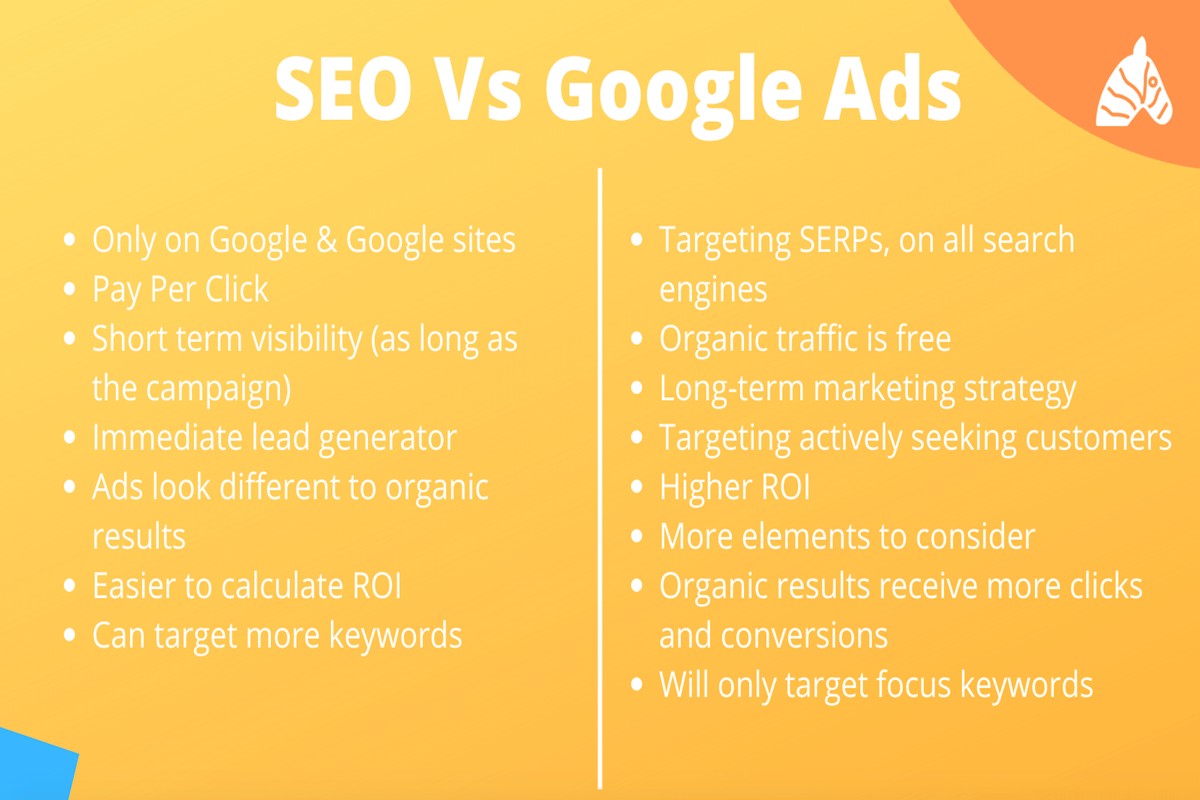
Is Google Ads better than SEO? It depends on your goals. Google Ads offers immediate visibility and traffic, while SEO focuses on building long-term organic reach. Research indicates that SEO can achieve a 14.6% close rate, significantly higher than the 1.7% close rate for paid ads.
Understanding the dynamics between Google Ads and SEO is crucial for businesses aiming to optimize their online marketing strategies. With digital advertising expenditures expected to surpass $600 billion in 2024, the choice between these two approaches can significantly impact a company’s visibility and revenue. Companies that fail to navigate this landscape effectively risk losing market share to competitors who do.
Failure to grasp the nuances of google ads versus SEO can result in wasted marketing budgets, missed revenue opportunities, and an inability to compete effectively in the digital marketplace. Businesses could end up investing heavily in paid advertising without achieving sustainable growth.
This article will provide a comprehensive comparison of Google Ads and SEO, including a breakdown of costs, best practices, the advantages and disadvantages of each, and insights into how local SEO can enhance overall visibility. Readers will gain a clear understanding of which strategy aligns best with their business objectives.
For Is google ads Better Than Seo businesses looking to generate local leads through Google Ads or Local SEO, GMB Ranger LLC offers hands-on campaign management. Specialist Md Tangeer Mehedi personally handles campaign setup and ongoing optimization — with no payment required until the first lead comes in.
What are the advantages of Google Ads over SEO?
Google Ads offers several advantages over SEO, particularly in terms of immediate visibility, targeted audience reach, and measurable return on investment (ROI). Businesses can see results in hours or days, unlike SEO, which can take months to yield significant traffic.
One of the primary benefits of Google Ads is the speed at which campaigns generate results. As soon as an ad is live, it can appear at the top of search results, driving traffic to a website almost instantly. In contrast, SEO requires time for search engines to crawl and index content, often taking three to six months for rankings to improve. Additionally, Google Ads allows advertisers to target specific demographics, locations, and interests, ensuring that ads reach the most relevant audiences. This precision can lead to higher conversion rates compared to organic traffic, which may be less targeted.
Furthermore, Google Ads provide measurable results through detailed analytics. Advertisers can track clicks, impressions, and conversions in real time, allowing for rapid adjustments to optimize performance. According to recent data, businesses using Google Ads can expect an average ROI of $2 for every $1 spent, demonstrating the platform’s effectiveness in achieving marketing goals. In contrast, SEO metrics can be more challenging to assess, as organic traffic often derives from a wider range of sources and rankings fluctuate over time.
Expert insight: Businesses looking for rapid growth and targeted marketing may find Google Ads more beneficial, especially when launching new products or services.
How long does it take to see results from SEO?
SEO typically takes between 3 to 6 months to show significant results, although this timeframe can vary based on competition and industry factors.
The time it takes to achieve noticeable SEO results is influenced by several factors. First and foremost, the level of competition in your industry plays a crucial role. Highly competitive niches may require more time and resources to outrank established players, while less competitive sectors can yield quicker results. Additionally, the quality and relevance of your content, as well as the effectiveness of your backlink strategy, directly impact how quickly search engines recognize your website’s authority.
Another important consideration is the existing state of your website. If your site is new or has been penalized in the past, it may take longer to recover and gain traction in search rankings. Ongoing SEO efforts, such as regular content updates, technical optimizations, and user experience improvements, also contribute to the gradual accumulation of results. The cumulative nature of SEO means that the benefits build over time, making consistent efforts essential for long-term success.
Expert insight: Focus on creating high-quality, authoritative content that addresses user intent. This approach not only accelerates ranking improvements but also fosters long-term audience engagement and loyalty.
What is the cost difference between Google Ads and SEO?
The cost difference between Google Ads and SEO can be significant. Google Ads operates on a pay-per-click (PPC) basis, where advertisers may spend anywhere from $1 to over $50 per click, depending on the competition and industry. In contrast, SEO costs typically range from $500 to $5,000 per month, encompassing ongoing content creation, optimization, and maintenance.
Google Ads costs are primarily driven by the bid amount for specific keywords, competition levels, and quality scores. Advertisers pay each time a user clicks on their ad, leading to potentially high costs in competitive sectors. The immediate nature of PPC means that while campaigns can generate quick traffic, they cease once the budget runs out.
- Competition: Higher competition for keywords results in increased costs per click.
- Quality Score: Google assesses ad relevance and landing page quality, impacting bid efficiency.
- Budget Allocation: Daily or monthly budgets affect visibility and click volume.
On the other hand, SEO involves various expenses, such as hiring professionals for keyword research, content creation, link building, and technical optimization. While these costs can be substantial, they are often seen as a long-term investment. Once a website ranks well, it can continue to attract organic traffic without incurring additional costs per click.
- Content Creation: Quality content is essential for ranking and may require ongoing investment.
- Technical Optimization: Ensuring the website is search-engine friendly can incur additional costs.
- Link Building: Acquiring backlinks from reputable sites often involves outreach and negotiation efforts.
Expert insight: Businesses must assess their goals and budget carefully. For immediate visibility, Google Ads may be beneficial, while SEO offers sustainable long-term benefits at a potentially lower overall cost per acquisition. Balancing both strategies can maximize reach and effectiveness.
Is it better to use Google Ads or SEO for a new website?
For a new website, using both Google Ads and SEO can be the most effective strategy. Google Ads provides immediate traffic, while SEO builds sustainable organic growth over time. According to recent data, businesses that combine these strategies can see up to a 50% increase in overall visibility within the first six months.
When launching a new website, leveraging both Google Ads and SEO offers distinct advantages. Google Ads allows for quick visibility in search results, enabling new websites to gain traction and attract visitors rapidly. This is particularly beneficial when promoting new products or services, as immediate traffic can lead to faster insights and adjustments based on user behavior. In contrast, SEO is a long-term investment. It requires time and consistent effort to build authority and rankings but ultimately leads to high-quality, organic traffic that is more cost-effective over time.
- Start with Google Ads: Initiate a Google Ads campaign targeting relevant keywords. This creates immediate traffic and allows for data collection on user preferences and behavior.
- Optimize for SEO: While running ads, invest in on-page and off-page SEO strategies. Focus on keyword research, quality content creation, and building backlinks to enhance organic rankings.
- Monitor Performance: Use analytics tools to track both paid and organic traffic. Analyze which keywords and ads perform best, and adjust your strategies accordingly.
- Integrate Campaigns: Align your Google Ads messaging with your SEO content. This consistency reinforces brand messaging and improves user experience.
- Plan for Long-Term Growth: Gradually reduce dependency on Google Ads as organic traffic increases. Aim for a balanced approach to ensure sustainable growth.
Expert insight: Combining Google Ads with SEO not only maximizes visibility but also provides valuable insights that can inform both strategies, leading to a more effective overall marketing approach.
Can you use Google Ads and SEO together?
Yes, using Google Ads and SEO together can significantly enhance your online visibility and engage potential customers at different stages of their buying journey. Research indicates that brands utilizing both strategies can achieve up to 50% more clicks than those relying solely on one approach.
Combining Google Ads and SEO allows businesses to cover the entire customer journey effectively. Google Ads can deliver immediate visibility, making it ideal for targeting users at the top of the funnel, while SEO builds long-term organic traffic, nurturing leads further down the funnel. This dual strategy ensures a broader reach and maximizes engagement with potential customers.
- Identify your target audience: Understand who your customers are and what keywords they use. This helps in tailoring both Google Ads and SEO efforts to meet specific needs.
- Align your keywords: Use keyword research to find terms relevant to both your paid and organic strategies. This creates consistency and strengthens your brand presence across both channels.
- Optimize landing pages: Ensure that the landing pages utilized for Google Ads are optimized for SEO as well. This improves user experience and can enhance organic rankings over time.
- Monitor performance: Track metrics from both Google Ads and SEO efforts. Use insights to refine strategies and allocate budget effectively, ensuring the best return on investment.
- Adjust as needed: Regularly evaluate the effectiveness of your combined strategy. Optimize campaigns based on performance data and market trends to stay competitive.
Expert insight: Integrating Google Ads and SEO not only maximizes visibility but also provides valuable data insights that can inform future marketing strategies, creating a feedback loop that enhances both channels over time.
Understanding the Cost-Benefit Analysis of Google Ads vs. SEO
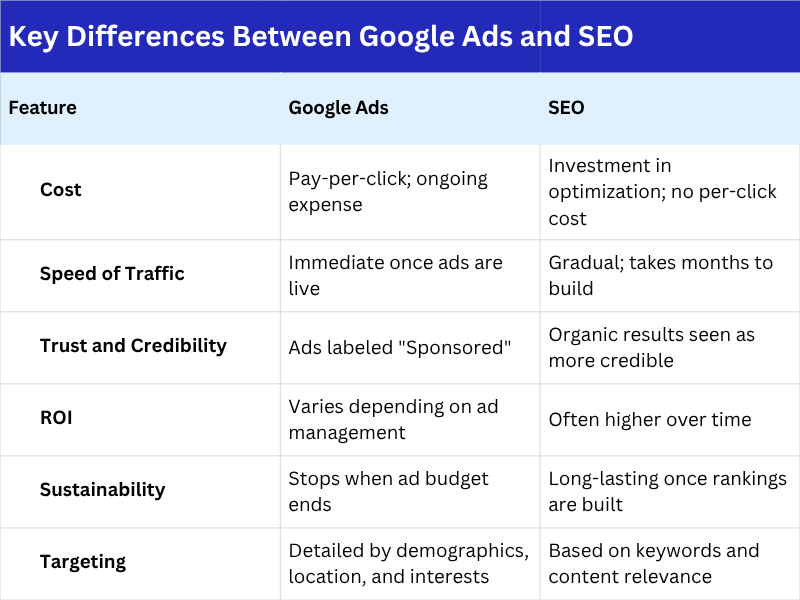
This section examines the financial implications of Google Ads and SEO, focusing on initial investments, ongoing costs, and return on investment (ROI). Understanding these factors is crucial for businesses to determine which strategy aligns with their financial goals.
Initial Investment and Ongoing Costs
Google Ads requires a direct financial commitment from the outset. Advertisers must allocate a budget for each campaign, with costs determined by keywords, competition, and bid strategies. The average cost per click (CPC) can range from $1 to over $50, depending on the industry, making it essential to plan budgets carefully.
In contrast, SEO involves a different cost structure. While initial investments may include website optimization, content creation, and backlink development, ongoing costs typically involve maintenance, updates, and potential hiring of SEO specialists. A comprehensive SEO strategy can cost between $500 to $5,000 monthly, depending on the scope and expertise required.
Long-Term Versus Short-Term ROI
google ads can generate immediate traffic, translating to quick returns on investment. However, this traffic ceases once funding stops. In 2024, businesses reported an average ROI of approximately 200% from Google Ads, but this is contingent on effective management and optimization.
SEO, on the other hand, is a long-term strategy. While it may take 3 to 6 months to see significant organic traffic gains, the benefits are often more sustainable. According to recent studies, businesses experience an average ROI of 122% from SEO investments within the first year. This cumulative advantage arises from consistent organic search visibility.
Budgeting for Seasonal Campaigns
Seasonal trends can significantly impact budgeting for both google ads and SEO. Businesses utilizing Google Ads can adjust their budgets dynamically based on seasonal demand, allowing for targeted campaigns during peak periods. This flexibility is vital for maximizing ROI during critical sales events.
For SEO, seasonal campaigns require upfront planning. Content must be created and optimized well before peak seasons, and ongoing optimization may be necessary to adapt to changing trends. This can lead to higher initial costs, but the potential for organic reach during peak times can yield substantial returns.
Hidden Costs of SEO and PPC Management
Both strategies come with hidden costs that can impact overall effectiveness. For Google Ads, these may include costs associated with A/B testing, landing page optimization, and the time invested in campaign management. In 2025, businesses reported that nearly 30% of their PPC budgets were spent on ineffective ads due to poor targeting or keyword selection.
For SEO, hidden costs can arise from algorithm updates, which may necessitate ongoing adjustments to strategies. Additionally, the need for quality content and link-building can lead to unforeseen expenses. Approximately 60% of businesses reported that maintaining SEO efforts required more resources than initially anticipated.
Common misconceptions suggest that SEO is always cheaper than Google Ads. While SEO can have lower direct costs in the long run, the time investment and potential for fluctuating results can lead to higher overall expenditures over time. Conversely, Google Ads can provide immediate visibility but requires continuous funding for sustained results.
Businesses should analyze their goals and resources when choosing between Google Ads and SEO. A hybrid approach, leveraging both strategies, can often yield the best results. Consider allocating budgets based on specific campaign goals and performance data, and regularly review metrics to optimize spending.
The Impact of Industry and Competition on Strategy Choice
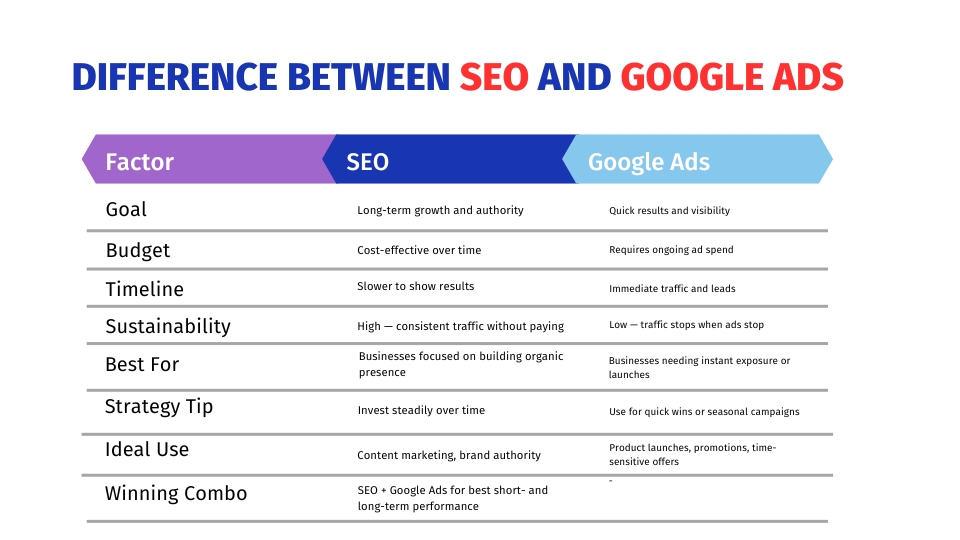
This section explores how varying industry dynamics and levels of competition shape the effectiveness of Google Ads and SEO strategies. Understanding these nuances is essential for businesses aiming to optimize their digital marketing efforts.
High Competition Industries Favor PPC
Industries characterized by intense competition often see better results from Pay-Per-Click (PPC) advertising, such as Google Ads. In sectors like finance, insurance, and legal services, where numerous businesses vie for the same audience, immediate visibility becomes critical. For instance, a report from SEMrush indicates that in 2025, the average Cost Per Click (CPC) in the finance sector reached $3.50, highlighting the premium placed on visibility in competitive fields.
- Instant Results: PPC campaigns can generate traffic and leads rapidly, which is vital in high-stakes industries.
- Targeting Precision: Advertisers can leverage advanced targeting options to reach specific demographics, maximizing ROI.
- Brand Visibility: Competing for top ad positions reinforces brand recognition, which can influence consumer trust.
Niche Markets Benefit from SEO
Conversely, businesses operating within niche markets often find greater success through SEO strategies. Lower competition allows for organic search efforts to yield significant returns over time. For example, a study by Ahrefs found that websites targeting long-tail keywords in niche markets could achieve a 20% increase in organic traffic within six months.
- Cost-Effectiveness: SEO typically requires lower ongoing investment compared to PPC, especially in less competitive fields.
- Sustained Visibility: Well-optimized content can continue to attract traffic long after publication.
- Authority Building: High-quality content enhances credibility and positions the brand as a thought leader.
Case Studies of Successful Strategies
Analyzing successful campaigns illustrates how strategy choice can be optimized based on industry context. For instance, a legal firm specializing in personal injury cases invested heavily in Google Ads, achieving a 35% increase in client inquiries within three months. In contrast, a small organic skincare brand focused on SEO, resulting in a 150% growth in organic traffic over a year due to effective keyword targeting and content marketing.
Adapting to Market Changes and Trends
Market dynamics are continually shifting, necessitating an adaptive approach to marketing strategies. Businesses must monitor trends, consumer behavior, and technological advancements to determine when to pivot between PPC and SEO. For example, the rise of voice search has altered keyword strategies, making long-tail keywords increasingly valuable for SEO efforts.
Staying informed about industry shifts can facilitate timely adjustments. A survey conducted by HubSpot in 2026 revealed that 60% of marketers planned to increase their investment in SEO due to the growing importance of organic search in driving traffic.
Incorporating a flexible strategy allows businesses to leverage the strengths of both PPC and SEO as market conditions evolve. Recognizing which approach to prioritize can lead to sustained growth and competitive advantage.
To effectively utilize this information, businesses should conduct a competitive analysis to determine their industry’s landscape. Establish whether your market is high competition or niche, then tailor your strategy accordingly. For high competition industries, invest in PPC for immediate visibility, while focusing on SEO for niche markets to build long-term traffic. Regularly assess your strategy’s performance and adapt as needed to stay ahead in the digital marketing landscape.
Real-World Case Studies: Success Stories of Google Ads and SEO
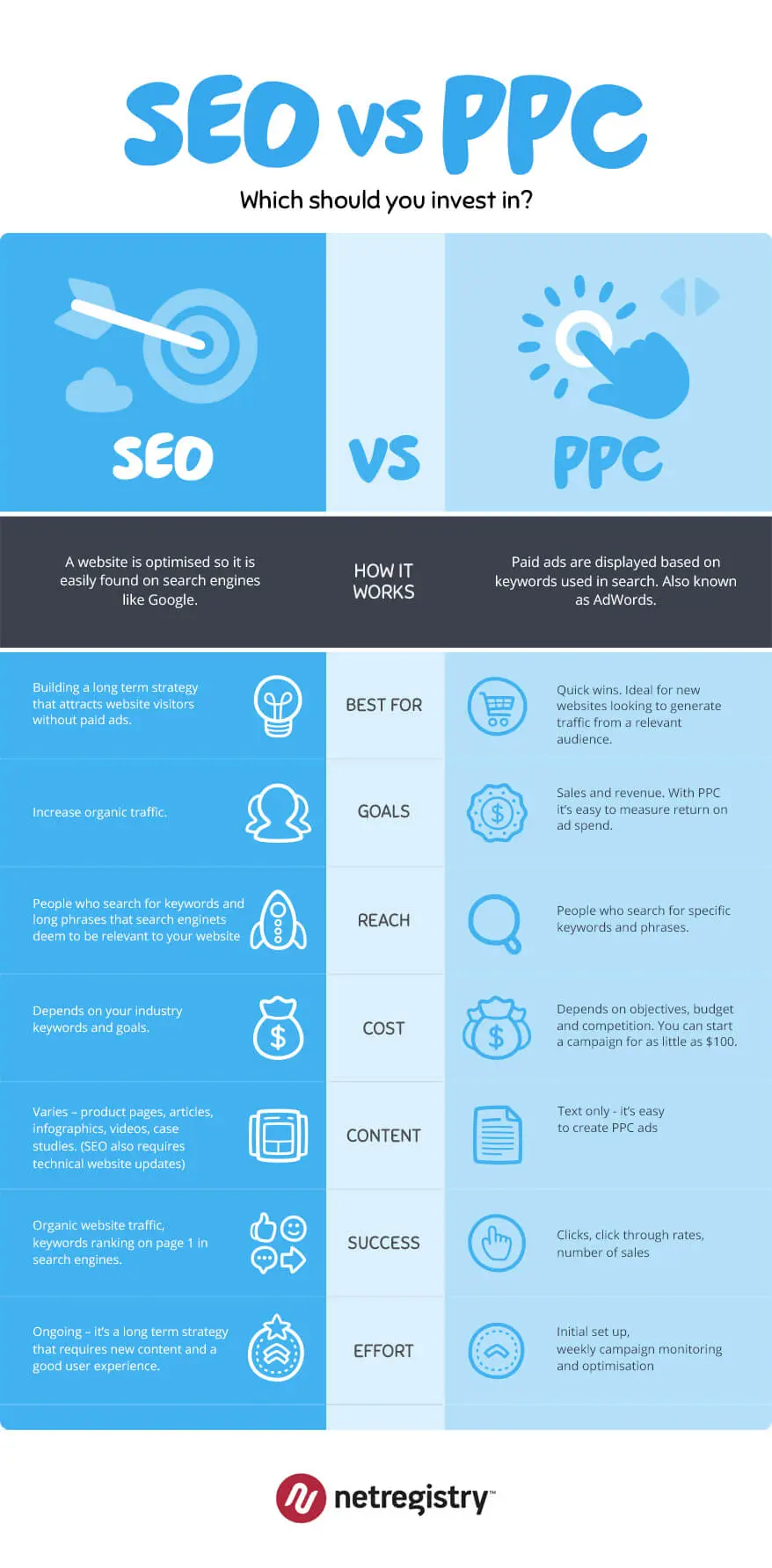
This section explores practical examples of businesses that have effectively leveraged Google Ads and SEO, illustrating their successes and challenges. These case studies provide valuable insights into the efficacy of each strategy and highlight best practices for implementation.
Case Study: Local Business Utilizing SEO
A local bakery, Sweet Treats, focused on optimizing its website for SEO to attract nearby customers. By targeting long-tail keywords such as “best cupcakes in [City]” and creating localized content, Sweet Treats improved its organic search rankings. Within six months, the bakery saw a 50% increase in website traffic and a 30% rise in foot traffic, correlating with their enhanced online visibility. The bakery’s SEO strategy included:
- Optimizing Google My Business listing with accurate information.
- Creating blog posts about local events and baking tips.
- Utilizing customer reviews to build credibility and improve rankings.
Case Study: E-commerce Site Leveraging Google Ads
An online retailer, Trendy Apparel, focused on Google Ads to drive traffic to its website. By investing in pay-per-click (PPC) campaigns targeting specific demographics and seasonal trends, Trendy Apparel achieved remarkable results. Their campaigns produced a 200% return on ad spend (ROAS) within the first quarter, with a conversion rate of 5%. Key components of their Google Ads strategy included:
- Utilizing dynamic remarketing ads to re-engage previous visitors.
- Employing A/B testing for ad copy and landing pages.
- Targeting specific interests and behaviors to narrow down the audience.
Lessons Learned from Failures
Several businesses have faced challenges in both SEO and Google Ads. For example, a local service provider invested heavily in Google Ads without optimizing their landing pages, resulting in low conversion rates. Similarly, an e-commerce site focused solely on SEO without a mobile-friendly design experienced a decline in user engagement. Key lessons include:
- Ensure landing pages align with ad content for Google Ads.
- Prioritize website usability and mobile optimization for SEO.
- Monitor performance metrics regularly to identify areas for improvement.
Best Practices Derived from Successful Campaigns
Both Sweet Treats and Trendy Apparel demonstrate effective strategies that can be applied broadly. For SEO, best practices include:
- Regularly updating content to keep it relevant.
- Building backlinks through guest blogging and partnerships.
- Engaging with customers on social media to enhance brand presence.
For Google Ads, best practices include:
- Setting clear goals and KPIs to measure campaign success.
- Utilizing negative keywords to filter out irrelevant traffic.
- Regularly analyzing competitor strategies to identify new opportunities.
While both Google Ads and SEO offer unique advantages, understanding their intricacies leads to more effective marketing strategies. Businesses should assess their goals and resources to determine whether Google Ads or SEO—or a combination of both—best serves their needs.
To implement these insights, businesses should conduct a thorough analysis of their target audience and market landscape. Develop a clear strategy that incorporates both SEO and Google Ads, ensuring that resources are allocated efficiently. Regularly review performance metrics to optimize campaigns and adapt to market changes.
Common Mistakes to Avoid in Google Ads and SEO
Effective strategies in Google Ads and SEO require precision and attention to detail. This section outlines common pitfalls that can undermine success in both channels, emphasizing the need for thorough planning and execution.
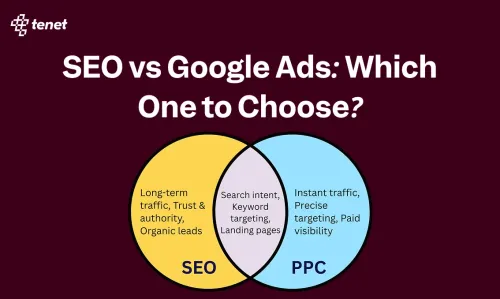
Ignoring Keyword Research
Keyword research serves as the foundation for both Google Ads and SEO. Inadequate keyword analysis can lead to targeting irrelevant terms, resulting in wasted budget and missed opportunities. Studies show that campaigns utilizing targeted keywords can achieve up to 60% higher click-through rates (CTR). Tools like Google Keyword Planner and SEMrush provide insights into search volume and competition, essential for optimizing ad campaigns and content strategies.
Neglecting Ad Targeting Options
Google Ads offers a plethora of targeting options, including demographics, interests, and geographical locations. Ignoring these features can lead to ads reaching an audience that is unlikely to convert. For instance, specific targeting can increase conversion rates by up to 50%, demonstrating the importance of reaching the right audience. Advertisers should regularly refine their targeting settings based on performance data to enhance campaign effectiveness.
Underestimating the Importance of Landing Pages
Landing pages play a critical role in both Google Ads and SEO. A poorly designed landing page can drastically reduce conversion rates, negating the benefits of effective ad spend or organic traffic. Research indicates that optimizing landing pages can improve conversion rates by as much as 30%. Elements such as loading speed, clear calls to action, and mobile responsiveness are essential factors that should not be overlooked.
Failing to Track Performance Metrics
Performance tracking is essential for both Google Ads and SEO. Without analyzing key metrics, businesses cannot gauge the effectiveness of their strategies. Common metrics include CTR, conversion rates, and return on ad spend (ROAS). Only 25% of marketers utilize advanced analytics tools, which can lead to missed insights and opportunities for optimization. Regularly monitoring these metrics enables data-driven decisions that enhance overall performance.
Nuance in Strategy
Many businesses mistakenly view Google Ads and SEO as mutually exclusive. However, integrating both strategies can yield superior results. For example, using data from Google Ads can inform SEO keyword strategies, while high-ranking SEO content can improve Quality Scores in Google Ads. Additionally, seasonal trends and shifts in consumer behavior can impact both channels, necessitating an adaptive approach to marketing strategies.
Practical Applications
- Conduct thorough keyword research using reliable tools to identify high-value search terms.
- Utilize Google Ads targeting options to refine audience reach and improve conversion rates.
- Design and optimize landing pages with a focus on user experience and conversion elements.
- Implement performance tracking and analytics to evaluate and adjust strategies based on real-time data.
Evaluating the Best Is Google Ads Better Than Seo
In the rapidly evolving digital marketing landscape, understanding the strengths and weaknesses of various advertising and SEO options is crucial for businesses aiming to maximize their online presence. The digital advertising market is projected to reach $786.2 billion by 2026, underscoring the importance of selecting the right provider to achieve desired outcomes. Evaluating providers based on traffic generation speed, cost-effectiveness, and targeting capabilities is essential for informed decision-making.
| Provider / Option | Best For | Pricing | Key Feature |
|---|---|---|---|
| Google Ads | Immediate traffic and visibility | $1 to $2 per click on average | Highly targeted ad placements |
| Bing Ads | Cost-effective for niche markets | $0.50 to $1.50 per click | Lower competition than Google |
| Facebook Ads | Visual engagement and targeting | $0.50 to $3 per click | Extensive audience targeting options |
| SEMrush | SEO insights and keyword research | $119.95 per month | Comprehensive competitive analysis |
| Ahrefs | Backlink analysis and SEO tools | $99 per month | Robust site audit features |
| Moz | SEO tracking and optimization | $99 per month | User-friendly interface for beginners |
| WordStream | Ad management and optimization | $300 per month minimum | Multi-platform ad management |
| HubSpot | Integrated marketing solutions | $50 to $3,200 per month | All-in-one marketing platform |
Criteria for Evaluating Program Quality
- Traffic Generation Speed: Google Ads typically offers immediate visibility, making it ideal for businesses seeking quick traffic. In contrast, SEO strategies may take time to yield results, depending on competition and content quality.
- Cost-Effectiveness: Evaluate the pricing per click or monthly fee in relation to the expected return on investment. For example, Bing Ads can be more cost-effective for niche markets compared to Google Ads.
- Targeting Capabilities: Consider the level of audience targeting each provider offers. Facebook Ads provide extensive targeting options based on user behavior and demographics, which can enhance engagement.
- Analytical Tools: Utilize platforms like SEMrush, Ahrefs, and Moz for SEO insights and performance tracking. These tools can help refine strategies and improve overall effectiveness.
How to Assess the Reputation and Reliability of Providers
- Research Customer Reviews: Look for feedback on platforms like Trustpilot or G2 to gauge user satisfaction and experiences with each provider.
- Check Case Studies: Review case studies or success stories provided by the providers to understand their effectiveness in real-world applications.
- Evaluate Industry Recognition: Consider any awards or recognitions the provider has received, which can indicate credibility and expertise in their field.
- Test Customer Support: Reach out to customer support with inquiries to assess responsiveness and helpfulness, as this is crucial for ongoing partnership success.
Which Is Google Ads Better Than SEO Is Right for You?
The choice between Google Ads and SEO hinges on your specific business needs, budget, and goals. This guide offers tailored recommendations for various audience segments, enabling you to make an informed decision that aligns with your objectives.
Small Local Business
For small local businesses, investing in local SEO is paramount. Focus on optimizing your Google My Business profile and gathering customer reviews to drive foot traffic and strengthen community ties. Budgeting around $300 to $500 per month for local SEO services can yield significant returns by increasing visibility in local search results.
E-commerce Store
E-commerce stores benefit greatly from Google Ads, which can create immediate sales opportunities. Implement shopping ads to showcase new products, with a budget starting at $500 per month to effectively compete in your niche. This approach ensures rapid visibility and can drive conversions quickly, particularly during peak shopping seasons.
Startups
Startups should consider a blended strategy of both Google Ads and SEO to build brand presence and attract early users. Allocate roughly $400 to $600 monthly for Google Ads while investing in SEO strategies like content marketing and backlink building. This dual approach can create a balanced foundation for growth and visibility.
Content Creators
For content creators, SEO is the ideal strategy for cultivating a loyal audience over time. Focus on keyword-rich blog posts and consistent content updates, which can be executed on a budget of $200 to $400 per month for SEO tools and services. This approach minimizes ongoing costs while maximizing organic reach and engagement.
Established Businesses
Established businesses should leverage a combination of SEO and Google Ads to optimize their marketing efforts. Invest around $1,000 to $1,500 monthly in SEO for organic growth, while allocating an additional $500 to $1,000 for targeted Google Ads campaigns to promote specific products or services. This strategy expands reach and enhances overall marketing effectiveness.
| If You Are… | Best Approach |
|---|---|
| Small Local Business | Local SEO with a focus on Google My Business |
| E-commerce Store | Google Ads for immediate sales |
| Startups | A mix of Google Ads and SEO |
| Content Creators | SEO for long-term audience growth |
| Established Businesses | Combine SEO with Google Ads for promotions |
Local Insights: Is Google Ads Better Than SEO for Your Business?
Understanding the local market is crucial when evaluating whether Google Ads or SEO is more effective. With 46% of all Google searches seeking local information, businesses must tailor their strategies to their geographic context for maximum impact. Local intent not only influences search behavior but also significantly affects conversion rates, with local SEO yielding up to a 14% higher conversion rate compared to traditional methods.
Geographic Market Differences
In larger metropolitan areas like New York City or Los Angeles, competition for visibility is fierce, making Google Ads a potentially quicker solution for immediate visibility. Conversely, in less competitive markets, SEO can provide a more sustainable long-term strategy. Businesses should assess their local competition and market size to determine the most effective approach—competitive markets may benefit from a hybrid strategy, while smaller towns could rely more heavily on SEO.
Local Business Applications
Local businesses can leverage both Google Ads and SEO in distinct ways:
- Restaurants can use Google Ads for targeted promotions, attracting nearby diners during peak hours.
- Local service providers, such as plumbers or electricians, can benefit from SEO by optimizing for “near me” searches, ensuring they appear in local packs.
- Retail stores can utilize Google Ads to showcase sales or events, driving foot traffic on weekends.
- Health and wellness businesses can use SEO to rank for local health-related queries, positioning themselves as community experts.
Local Search and Visibility Impact
The connection between Google Ads, SEO, and local search rankings is vital. A strong Google Business Profile (GBP) can enhance visibility in local search results. To improve local search performance, businesses should:
- Optimize their Google Business Profile with accurate information and engaging visuals.
- Incorporate local keywords into website content and meta descriptions.
- Encourage customer reviews to enhance credibility and local rankings.
- Utilize local backlinks from community websites to boost authority.
Pricing and Cost in Local Markets
Costs for Google Ads can vary significantly based on geographic location. In competitive areas, businesses might spend between $2 to $5 per click, while in smaller markets, costs can drop to $1 to $3 per click. SEO typically requires a budget of $500 to $2,500 per month depending on the complexity of the local market and the services provided. Local businesses should be prepared to invest strategically based on their specific market dynamics.
Local Implementation Checklist:
- Conduct a local keyword analysis to identify relevant search terms.
- Optimize your Google Business Profile with updated information.
- Set up Google Ads campaigns targeting local demographics.
- Encourage and respond to customer reviews to enhance local credibility.
- Monitor local search rankings and adjust strategies accordingly.
- Engage with local community events to build backlinks and visibility.
- Analyze competitor strategies in your area to refine your approach.
For Is Google Ads Better Than Seo businesses looking to generate local leads through Google Ads or Local SEO, GMB Ranger LLC offers hands-on campaign management. Specialist Md Tangeer Mehedi personally handles campaign setup and ongoing optimization — with no payment required until the first lead comes in.
Frequently Asked Questions
What are the advantages of Google Ads over SEO?
Google Ads provides immediate visibility and traffic, allowing businesses to reach potential customers quickly. It offers precise targeting options and the ability to control budget and ad placements effectively.
How long does it take to see results from SEO?
Typically, SEO efforts take three to six months to yield noticeable results, as it requires time for search engines to index and rank content. Factors such as competition and content quality can influence this timeline.
What is the cost difference between Google Ads and SEO?
Google Ads operates on a pay-per-click model, meaning costs can accumulate quickly based on ad performance. In contrast, SEO involves upfront costs for content creation and optimization, but can yield long-term organic traffic without ongoing payments.
Is it better to use Google Ads or SEO for a new website?
For a new website, Google Ads can provide immediate traffic and visibility, which is beneficial for brand awareness. However, integrating SEO strategies early can build a foundation for sustainable organic growth over time.
Can you use Google Ads and SEO together?
Yes, using Google Ads and SEO together can be a powerful strategy. This approach allows for immediate traffic through ads while building long-term organic rankings through SEO efforts.
Final Thoughts on is google ads better than seo
The choice between Google Ads and SEO ultimately hinges on specific business objectives, timeframes, and budget constraints. Google Ads offers immediate visibility and results, making it ideal for time-sensitive campaigns, while SEO provides long-term, sustainable traffic growth but requires patience and consistent effort.
For businesses seeking rapid growth or to test new markets, investing in Google Ads may be the most effective strategy. However, for those with a longer horizon and a focus on brand authority, a robust SEO strategy is indispensable.
To find out which approach suits your business best, consider consulting a google ads agency for expert insights and tailored strategies.
Understanding the nuances of both approaches is essential, as leveraging the strengths of each can significantly enhance overall digital marketing efficacy.
Leave a Reply