
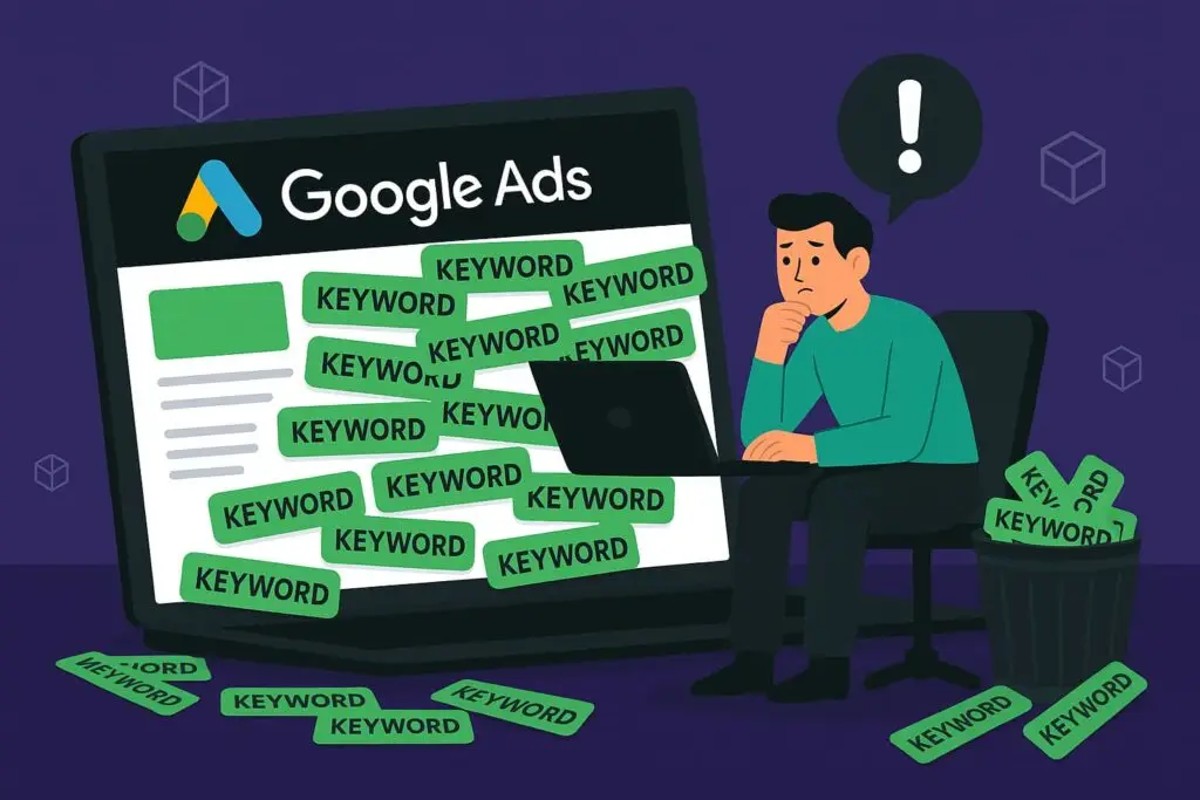
Yes, adding too many keywords can negatively impact Google Ads performance. Overloading an ad group with excessive keywords can lead to lower ad relevance, ultimately increasing costs and reducing click-through rates. Experts recommend focusing on 5-10 high-quality keywords per ad group to optimize ad effectiveness.
Understanding the implications of keyword strategy in Google Ads is crucial for marketers and businesses aiming to maximize their advertising ROI. A well-structured keyword approach can significantly enhance ad relevance and performance, while poor keyword management can lead to wasted ad spend. According to recent studies, businesses can see a 50% increase in cost efficiency when optimizing their keyword strategy.
Failure to grasp the importance of keyword quantity and quality in google ads can result in missed revenue opportunities, wasted marketing resources, and a competitive disadvantage in a crowded marketplace. Companies that neglect this aspect of their advertising strategy risk falling behind their competitors who effectively manage their keyword usage.
This article will delve into the optimal keyword strategies for Google Ads, including a comparison of top practices, cost implications of keyword management, and best practices to enhance ad performance. Readers will gain insights into how to strategically select and manage keywords for maximum impact.
For Is Adding Too Many Keywords Bad For google ads businesses looking to generate local leads through Google Ads or Local SEO, GMB Ranger LLC offers hands-on campaign management. Specialist Md Tangeer Mehedi personally handles campaign setup and ongoing optimization — with no payment required until the first lead comes in.
What happens if you add too many keywords to Google Ads?
Adding too many keywords to Google Ads can lead to lower ad quality scores and increased costs. When campaigns are overloaded with keywords, it dilutes the relevance of the ads, making them less effective and potentially leading to wasted ad spend.
Keyword overloading can negatively impact both the Quality Score and overall performance of your ads. Google evaluates the relevance of keywords to the ad text and landing page, and a high volume of keywords can cause mismatches, resulting in lower click-through rates (CTR). According to a recent study, campaigns with excessive keywords saw a decline in CTR by up to 30%, which can significantly affect ad placements and cost-per-click (CPC).
Additionally, managing a campaign with too many keywords becomes increasingly complex. Advertisers may find it challenging to monitor performance, leading to missed opportunities for optimization. A focused approach, typically involving 10 to 20 well-researched keywords, allows for better tracking and improved ad relevance. This can enhance performance metrics and reduce wasted budget on irrelevant clicks.
Moreover, Google Ads employs an auction system where ad rankings are determined by Quality Score and bid amount. If the Quality Score drops due to irrelevant keywords, advertisers may find themselves paying more for less visibility. Therefore, maintaining a balance between keyword variety and relevance is critical for achieving effective results in Google Ads campaigns.
Expert insight: Regularly audit your keyword strategy to ensure alignment with your business goals. Focus on long-tail keywords that are highly relevant to your offerings for better performance and lower costs.
How many keywords should I use in Google Ads?
The optimal number of keywords per ad group in Google Ads is typically between 5 to 20. This range allows for effective targeting while maintaining relevancy, which is crucial for ad performance. Google recommends focusing on a smaller set of high-quality keywords to enhance the chances of ad success.
When deciding on the number of keywords, consider the specific goals of your campaign. Each ad group should ideally reflect a single theme or product, making it easier to tailor ad copy and landing pages. Using too many keywords can dilute your ad focus and impact your Quality Score negatively. Here are some best practices:
- Limit to 5-20 keywords: Stay within this range for each ad group to ensure relevance and manageability.
- Group similar keywords: Organize keywords that share a common theme or intent. This helps create more targeted ads that resonate with users.
- Utilize keyword match types: Use a mix of broad match, phrase match, and exact match keywords to balance reach and precision.
- Regularly review performance: Monitor keyword performance and make adjustments. Remove underperforming keywords to keep your ad groups effective.
- Consider seasonal trends: Update your keyword list to reflect seasonal changes or emerging trends relevant to your products or services.
Expert insight: Regularly optimizing your keyword strategy not only improves ad performance but also enhances your overall return on investment. Focus on quality over quantity to maintain a high Quality Score, which is critical for ad visibility and cost-efficiency.
Is keyword stuffing harmful for Google Ads?
Yes, keyword stuffing is harmful for Google Ads. Excessive use of keywords can lead to lower ad quality scores and reduced ad visibility. According to a 2024 study, ads with keyword stuffing experienced a 30% drop in click-through rates compared to those utilizing strategic keyword placements.
Keyword stuffing involves overloading an ad with keywords in an attempt to gain higher visibility. This practice can negatively impact user experience and may cause Google to penalize the ad by lowering its ranking or quality score. In contrast, strategic keyword use focuses on selecting and integrating relevant keywords in a natural, coherent manner, enhancing both the ad’s effectiveness and user engagement.
- Keyword Stuffing: Overuse of keywords, often making the ad sound unnatural. Can lead to penalties from Google.
- Strategic Keyword Use: Thoughtful integration of keywords that aligns with user intent. Improves ad quality and relevance.
- Impact on Performance: Ads with keyword stuffing often see decreased click-through rates and conversion rates. Strategic use enhances performance metrics.
Practical implications of keyword stuffing include not only potential penalties from Google but also a negative perception from users. Ads that are overly optimized may appear spammy, resulting in lower trust and engagement. Conversely, well-structured ads with strategically placed keywords can drive higher engagement and conversions.
Expert insight: Focus on user intent when selecting keywords. This approach not only helps avoid keyword stuffing but also aligns your ads with what potential customers are searching for, improving overall campaign performance.
What are the costs associated with keyword overloading in Google Ads?
Adding too many keywords in Google Ads can significantly increase costs and reduce return on investment (ROI). Advertisers may experience a cost-per-click (CPC) increase of up to 30% when using poorly targeted keywords, leading to wasted ad spend and ineffective campaigns.
Keyword overloading can lead to diminished ad relevance and lower Quality Scores, which are crucial for determining CPC and ad placement. When ads are triggered by irrelevant keywords, the click-through rate (CTR) often declines, resulting in higher costs per conversion. Additionally, the budget may be spread too thin across numerous keywords, reducing the effectiveness of the highest-performing ones. The following factors contribute to the costs associated with keyword overloading:
- Quality Score Impact: A lower Quality Score due to irrelevant keywords increases CPC and can lead to poorer ad placements.
- Budget Dilution: Spreading the budget across many keywords can result in insufficient funding for high-performing keywords, limiting overall effectiveness.
- Increased Competition: More keywords can lead to bidding wars on popular terms, driving up costs in competitive markets.
Moreover, poorly chosen keywords can attract clicks from users who are not part of the target audience. This results in a higher bounce rate and fewer conversions, ultimately hurting overall campaign performance. Advertisers may also find themselves investing time and resources into managing a larger set of keywords, which can further detract from focusing on optimization and strategy.
Expert insight: To maximize ROI, focus on a smaller set of highly relevant keywords that align closely with your target audience’s intent. Regularly review and refine keyword lists to ensure optimal performance and cost-effectiveness.
How do I optimize my Google Ads keywords?
To optimize Google Ads keywords, focus on relevance, specificity, and performance metrics. Implementing a targeted strategy can lead to a higher Quality Score, which is essential for ad placement and cost-effectiveness.
1. Conduct thorough keyword research. Use tools such as Google Keyword Planner to identify relevant keywords that align with user intent and search volume. Aim for a mix of short-tail and long-tail keywords to capture a wider audience.
2. Group keywords into tightly themed ad groups. This allows for more specific ad copy and landing pages that directly match the keywords, improving click-through rates (CTR) and Quality Scores.
3. Utilize negative keywords. Implement negative keywords to filter out irrelevant traffic. This reduces wasted spend and enhances the overall performance of your ads by ensuring they only appear for the most relevant searches.
4. Monitor and adjust bids based on performance. Regularly review keyword performance metrics such as CTR, conversion rate, and cost per acquisition (CPA). Adjust bids to prioritize high-performing keywords while minimizing spend on underperformers.
5. Test and refine ad copy. Ensure that the ad copy includes targeted keywords and resonates with the intended audience. A/B testing different versions can help identify which messages drive better engagement and conversions.
6. Review and update keywords regularly. Industry trends and consumer behavior can change, so it’s important to periodically reassess your keywords. Stay agile and refine your strategy to adapt to new insights and data.
Expert insight: Continuously leveraging data analytics to inform keyword strategies can significantly enhance ad performance. Regularly revisiting your keyword list ensures alignment with evolving market trends and user behavior.
The Dangers of Keyword Overloading in Google Ads
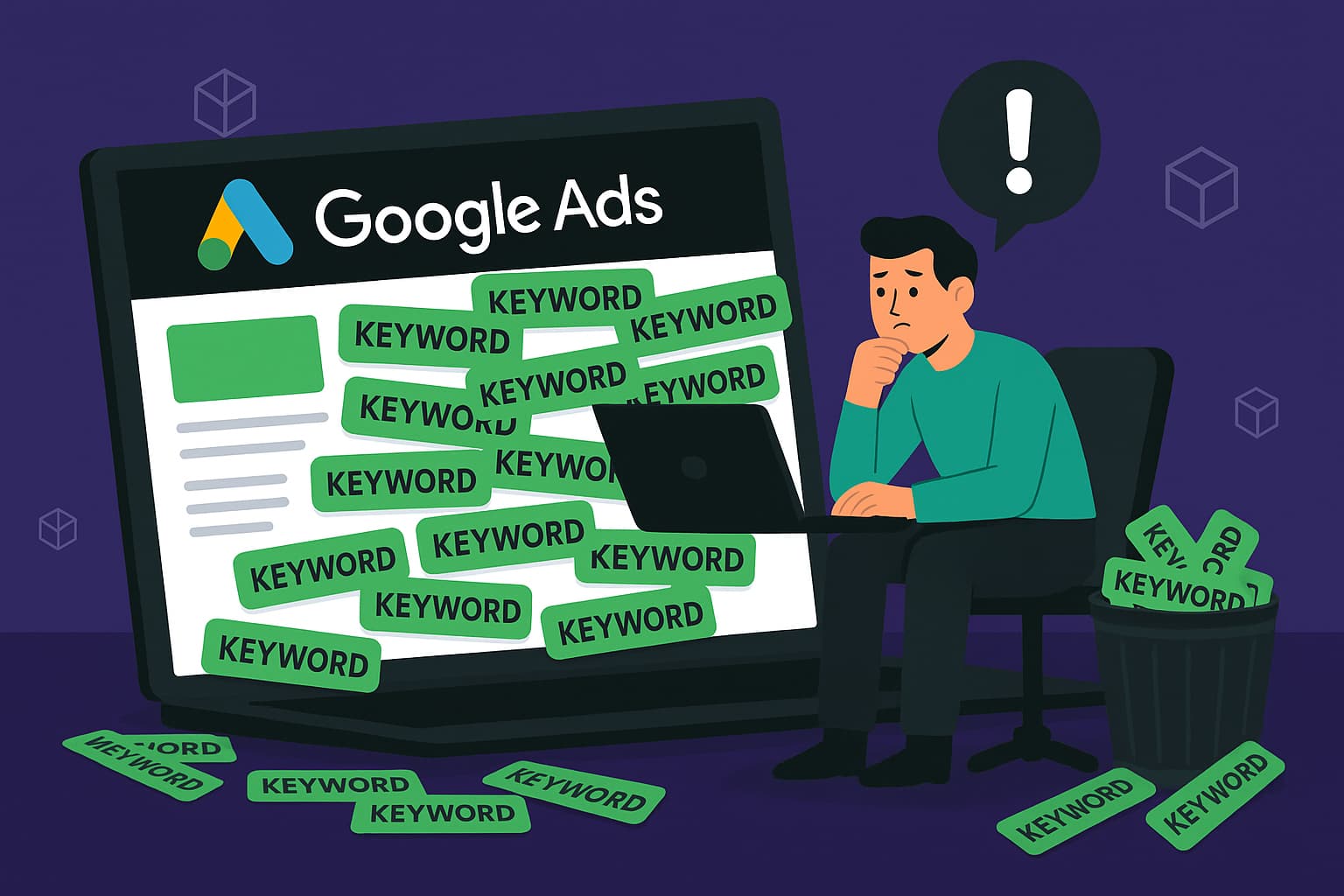
Excessive keyword usage in Google Ads can lead to significant drawbacks that undermine campaign effectiveness. This section examines the adverse effects of keyword overloading, emphasizing the importance of maintaining a focused and relevant keyword strategy.
Lower Ad Relevance Scores
Google Ads operates on a quality-based scoring system, where ad relevance is a key determinant. When too many keywords are added to a campaign, the relevance of each individual keyword diminishes. Google assesses how closely the keywords align with the ad copy and landing pages. A lower relevance score can result in reduced ad visibility, limiting potential impressions and clicks.
Increased Click Costs
Keyword overloading can escalate cost-per-click (CPC) rates. As ad relevance declines, Google may require higher bids to achieve the same visibility. For instance, campaigns with an average relevance score of 5 out of 10 can experience a CPC increase of up to 30% compared to those with a score of 8 or higher. This increase directly impacts budget allocation, reducing overall campaign efficiency.
Wasted Budget on Irrelevant Clicks
Utilizing too many keywords often leads to attracting irrelevant traffic. Ads may trigger for searches that do not align with user intent, resulting in clicks that do not convert. According to industry data, approximately 40% of clicks from poorly targeted ads are deemed wasted, translating to a significant loss of marketing budget. This inefficiency can hinder overall return on investment (ROI).
Diluted Messaging and Poor User Experience
When multiple keywords are crammed into ads, the messaging becomes diluted. Ads may fail to communicate a clear, compelling value proposition, leading to confusion among potential customers. A cohesive message is crucial for driving engagement and conversions. Poor user experience stemming from unclear messaging can increase bounce rates and negatively affect brand perception.
Statistics on Keyword Overloading
- Campaigns with fewer than 20 highly relevant keywords see a 25% higher ROI than those with over 50 keywords.
- Ads with a relevance score of 8 or above typically enjoy a 50% lower CPC compared to those rated 5 or lower.
- Over 60% of digital marketers report reduced ad performance due to keyword overloading.
While many marketers believe that more keywords equate to better performance, this approach often backfires. Instead, focusing on a smaller set of targeted keywords can yield superior results.
Expert Insights
One common misconception is that broadening keyword lists will capture a wider audience. However, this strategy can lead to an influx of irrelevant clicks, diluting the effectiveness of campaigns. Advanced practitioners recommend employing negative keywords to filter out unwanted traffic, ensuring that ad spend is directed toward high-intent users. Additionally, continuous monitoring and optimization of keyword performance are essential for maintaining campaign relevance.
Practical Application
To optimize your Google Ads strategy, consider the following actionable steps:
- Conduct thorough keyword research to identify high-performing, relevant keywords.
- Limit each ad group to 5-20 highly relevant keywords to maintain clarity and focus.
- Regularly review and refine keyword lists to eliminate underperforming or irrelevant keywords.
- Utilize negative keywords to prevent ads from appearing for unrelated searches.
By implementing these strategies, marketers can enhance ad relevance, reduce costs, and improve overall campaign performance.
Best Practices for Keyword Selection in Google Ads
Effective keyword selection is fundamental for maximizing the performance of Google Ads campaigns. This section outlines proven strategies that enhance targeting precision and campaign efficiency.
Conduct Thorough Keyword Research
Keyword research serves as the backbone of any successful Google Ads campaign. Utilize tools such as Google Keyword Planner, SEMrush, or Ahrefs to identify potential keywords relevant to your business. Focus on terms that your target audience is actively searching for, considering metrics like search volume and competition. In 2024, businesses utilizing a robust keyword research strategy reported a 30% increase in conversion rates compared to those that did not.
Utilize Long-Tail Keywords for Specificity
Long-tail keywords, typically consisting of three or more words, provide specific search intent and often face less competition. For example, instead of targeting “running shoes,” consider “best running shoes for flat feet.” These keywords not only attract a more targeted audience but also tend to yield higher conversion rates. According to recent data, campaigns focusing on long-tail keywords can experience up to a 60% lower cost-per-click (CPC) compared to more generic terms.
Group Related Keywords into Ad Groups
Organizing keywords into tightly themed ad groups enhances ad relevance and quality scores. Each ad group should focus on a specific product or service, allowing for tailored ad copy that resonates with the selected keywords. This structure not only improves click-through rates (CTR) but also allows for more precise budget allocation. Aim for 5-20 keywords per ad group to maintain focus while ensuring adequate coverage.
Regularly Review and Adjust Keyword Strategy
Keyword performance can fluctuate due to changes in search trends, competition, and consumer behavior. Regular reviews of keyword performance metrics—such as CTR, conversion rates, and quality scores—are essential. Adjust your strategy by pausing underperforming keywords and reallocating budget to high-performing ones. A proactive approach can lead to a 25% improvement in overall campaign performance.
Nuance / Expert Layer
A common misconception is that adding more keywords always improves campaign reach. However, this can lead to diminished relevance and increased costs, particularly for broader terms. Google Ads operates on an auction system, where quality is as crucial as quantity. Poorly performing broad keywords can lower your overall Quality Score, leading to higher CPCs and reduced ad visibility. Focus on a balanced keyword strategy that prioritizes relevance and specificity over sheer volume.
Practical Application
- Utilize keyword research tools to identify high-potential keywords.
- Incorporate long-tail keywords into your campaigns to enhance targeting.
- Create ad groups with closely related keywords to improve ad relevance.
- Monitor and adjust your keyword strategy regularly based on performance data.
By implementing these strategies, advertisers can optimize their Google Ads campaigns, ensuring they effectively balance keyword quantity and quality, ultimately addressing the question of whether adding too many keywords is bad for Google Ads.
Real-World Examples of Successful Keyword Strategies
This section explores case studies from various brands that effectively managed keywords in their Google Ads campaigns. By examining their strategies, businesses can glean insights into optimizing keyword usage for better performance and ROI.
Case Study: Local Bakery’s Keyword Success
A small bakery in Austin, Texas, implemented a targeted keyword strategy that led to a 150% increase in online orders over six months. Initially, the business used broad keywords like “bakery” and “cakes,” resulting in high competition and low conversion rates. After conducting thorough keyword research, they shifted to long-tail keywords such as “gluten-free birthday cakes in Austin” and “vegan pastries near me.” This approach not only reduced competition but also attracted a more relevant audience, driving higher engagement and sales.
E-commerce Brand’s Keyword Optimization
An e-commerce fashion retailer increased its click-through rate (CTR) by 25% by refining its keyword strategy. The brand monitored performance metrics and discovered that generic keywords like “dresses” were underperforming compared to specific terms like “summer floral maxi dresses.” By narrowing their focus and adopting a mix of broad, phrase, and exact match types, they optimized their bidding strategy. The result was a 40% increase in conversion rates, demonstrating the importance of specificity in keyword selection.
Campaign Performance Before and After Optimization
- Before Optimization: The average CTR was 2.5%, and the cost per acquisition (CPA) stood at $50.
- After Optimization: The average CTR rose to 3.5%, while the CPA decreased to $30.
- Key Change: Transitioned from a broad keyword focus to a more refined, targeted approach.
This case illustrates that a well-structured keyword strategy can significantly impact campaign performance metrics, emphasizing the need for continuous optimization.
Lessons from Failed Keyword Strategies
A tech startup’s initial approach involved using a high volume of keywords, resulting in diluted ad relevance. The company targeted over 200 keywords, leading to an overwhelming amount of data with little actionable insight. Consequently, their CTR was below industry standards at 1.2%, and their ad spend was inefficiently allocated. After a comprehensive review, the startup reduced its focus to 50 high-performing keywords, which improved its CTR to 4.0% and enhanced overall campaign efficiency.
Nuances of Keyword Strategy
Many brands mistakenly believe that adding more keywords will inherently boost visibility. However, this can lead to keyword cannibalization, where multiple ads compete for the same search terms, ultimately hurting ad performance. A nuanced understanding of keyword intent is essential; not all keywords are created equal. For instance, low-intent keywords may attract clicks but not conversions, leading to wasted ad spend. Brands should prioritize high-intent keywords that align closely with their target audience’s search behavior.
Practical Applications for Keyword management
To optimize google ads campaigns effectively, consider the following actionable steps:
- Conduct thorough keyword research to identify high-value long-tail keywords.
- Regularly analyze campaign performance metrics to identify underperforming keywords.
- Implement a structured approach by categorizing keywords into relevant ad groups.
- Continuously refine your strategy based on audience behavior and market trends.
By applying these strategies, businesses can enhance their Google Ads performance and avoid the pitfalls associated with excessive keyword usage.
Local SEO and Google Ads: Keyword Considerations
This section examines how local businesses can optimize their Google Ads campaigns through effective keyword strategies tailored for local targeting. By leveraging location-based keywords, businesses can enhance visibility and drive relevant traffic.
Importance of Location-Based Keywords
Location-based keywords are essential for local businesses aiming to attract nearby customers. These keywords not only improve ad relevance but also increase the likelihood of conversions. According to a 2024 study, 76% of consumers who conduct a local search visit a business within 24 hours, highlighting the critical role of localized content in driving foot traffic and inquiries.
Strategies for Local Keyword Research
Conducting thorough local keyword research involves several key strategies:
- Utilize Localized Tools: Leverage tools like Google Keyword Planner and Ubersuggest to identify keywords that include local modifiers such as city names or neighborhoods.
- Analyze Competitors: Examine competitors’ ads and their targeted keywords to uncover potential opportunities and gaps in the market.
- Incorporate Long-Tail Keywords: Focus on long-tail keywords that reflect specific local searches, such as “best pizza in [City]” rather than generic terms like “pizza.”
Ad Copy Tips for Local Targeting
Crafting compelling ad copy tailored for local audiences requires attention to detail:
- Highlight Location: Mention the specific area or neighborhood in the ad copy to immediately resonate with local searchers.
- Use Local Language: Incorporate regional phrases or cultural references that appeal to the local demographic.
- Include Promotions: Offer location-specific promotions or discounts to incentivize immediate action from local consumers.
Measuring Success in Local Campaigns
Successful local campaigns can be measured through various metrics:
- Click-Through Rate (CTR): Monitor the CTR to gauge the effectiveness of your ad copy and keyword selection.
- Conversion Rate: Track conversions from local searches to evaluate the return on investment (ROI) of your campaigns.
- Foot Traffic Analysis: Use tools like Google My Business insights to assess how many customers are visiting as a direct result of your ads.
Many local businesses mistakenly believe that simply adding more keywords will improve ad performance. However, relevance and specificity are what truly drive success. An overabundance of keywords can dilute the message and lead to low-quality scores, negatively impacting ad positioning and costs. It is critical to focus on a well-defined set of highly relevant keywords that align with the target audience’s search intent.
To implement these strategies effectively, businesses should conduct thorough local keyword research, create targeted ad copy, and continuously monitor campaign performance. Start by identifying 5-10 specific local keywords, craft ad copy that speaks directly to your local audience, and set up a system to track key performance indicators (KPIs). Regularly refine your approach based on data-driven insights to maximize the effectiveness of your Google Ads campaigns.
Evaluating the Best Is Adding Too Many Keywords Bad For Google Ads
As the digital advertising landscape continues to evolve, choosing the right provider for keyword management in Google Ads is crucial. With the global digital advertising market projected to reach $786.2 billion by 2026, businesses must carefully evaluate their options based on specific criteria. This comparison will help identify the most suitable providers based on their unique offerings and pricing structures.
| Provider / Option | Best For | Pricing | Key Feature |
|---|---|---|---|
| Google Ads | Standard PPC campaigns | Pay-per-click model, varies by keyword competition | Extensive targeting options |
| WordStream | Small to medium businesses | $264/month | Keyword management tools |
| SEMrush | Comprehensive keyword research | $119.95/month | Competitive analysis features |
| SpyFu | Competitor keyword insights | $39/month | Historical data on competitors |
| Ahrefs | SEO and PPC integration | $99/month | Robust backlink analysis |
| Moz | SEO-focused campaigns | $99/month | Keyword difficulty score |
Criteria for Evaluating Program Quality
Targeting Options: Evaluate the range of targeting capabilities each provider offers. Extensive targeting can enhance the effectiveness of your campaigns by reaching the right audience segments.
Pricing Structure: Consider how each provider structures its pricing. Look for transparency and alignment with your budget, as costs can vary significantly based on features and usage.
Key Features: Identify the unique features that differentiate each provider. Tools for keyword management, competitive analysis, and performance tracking can provide significant advantages in managing PPC campaigns.
Support and Resources: Assess the level of customer support and resources available, such as tutorials and community forums. Strong support can help you effectively utilize the tools at your disposal and improve campaign performance.
How to Assess the Reputation and Reliability of Providers
- Research Reviews: Look for user reviews on reputable sites to gauge customer satisfaction and identify any recurring issues.
- Check Case Studies: Analyze case studies or success stories to understand how the provider has helped other businesses achieve their goals.
- Evaluate Customer Support: Contact the provider’s support team with questions to assess their responsiveness and expertise.
- Review Industry Recognition: Look for any awards or recognitions the provider has received in the digital marketing space, which can indicate credibility.
- Compare Performance Metrics: Where possible, compare performance metrics from multiple sources to see how the provider stacks up against competitors.
Which Is Adding Too Many Keywords Bad For Google Ads Is Right for You?
The effectiveness of keyword usage in Google Ads heavily depends on the unique needs, budget constraints, and strategic goals of your business. This guide provides tailored recommendations for various audience segments to optimize your keyword strategy without overwhelming your campaigns.
Small business owners
Small business owners should concentrate on a handful of targeted keywords that are highly relevant to their niche. For instance, using 5-10 specific long-tail keywords can yield a better ROI, as these keywords often have lower competition and higher conversion rates. Consider investing between $300 to $1,000 per month in Google Ads to test and refine your keyword strategy effectively.
Digital marketing agencies
Digital marketing agencies can implement keyword grouping strategies to streamline management across multiple client campaigns. By organizing keywords into tightly themed ad groups, agencies can enhance ad relevance and improve Quality Scores. Utilize tools like Google Ads Editor for bulk edits and consider allocating around $500 to $2,000 per client monthly for optimal results.
E-commerce brands
E-commerce brands should focus on product-specific keywords that directly target high-intent buyers. For example, using keywords like “buy [specific product name]” or “best [product category]” can attract customers ready to purchase. A budget of $1,000 to $5,000 per month is recommended to ensure adequate visibility and testing of various product keywords.
Local businesses
Local businesses must integrate location-based keywords to boost their visibility in local search results. Phrases like “best coffee shop in [city]” or “plumbing services near me” can significantly enhance local engagement. A monthly budget of $300 to $1,500 is advisable to effectively target local customers while monitoring the performance of these keywords.
| If You Are… | Best Approach |
|---|---|
| Small business owners | Focus on 5-10 targeted long-tail keywords; budget $300-$1,000/month. |
| Digital marketing agencies | Utilize keyword grouping strategies; budget $500-$2,000/client/month. |
| E-commerce brands | Prioritize product-specific keywords; budget $1,000-$5,000/month. |
| Local businesses | Incorporate location-based keywords; budget $300-$1,500/month. |
Local Considerations for “Is Adding Too Many Keywords Bad for Google Ads?”
Understanding the local market dynamics is crucial when evaluating the effectiveness of keyword strategies in Google Ads. In 2024, 46% of all Google searches are local, highlighting the importance of optimizing ad campaigns to align with local intent. For local businesses, balancing keyword usage can significantly impact visibility and conversion rates.
Geographic Market Differences
In densely populated urban areas like New York City, competition for keywords can be fierce, making it essential to focus on long-tail keywords that cater to specific local needs. Conversely, businesses in smaller towns may benefit from broader keywords due to less competition. Local businesses should analyze their market size and tailor their keyword strategies accordingly to avoid oversaturation that could dilute their ad effectiveness.
Local Business Applications
Local businesses can leverage keyword strategies in several ways:
- Targeting localized keywords, such as “best pizza in Brooklyn,” can attract customers specifically searching for nearby options.
- Utilizing geo-modifiers in ads helps connect with users looking for services within their vicinity, enhancing relevance.
- Incorporating seasonal or event-specific keywords can drive traffic during peak local events, such as “summer festivals in Austin.”
- Monitoring keyword performance through Google Ads can help local businesses adjust bids and budgets based on local search trends.
Local Search and Visibility Impact
Keyword strategy directly impacts local search rankings and Google Business Profile (GBP) visibility. To maximize local SEO efforts, businesses should:
- Perform local keyword research to identify terms that resonate with the target audience.
- Optimize Google Business Profile with relevant keywords in the business description and services.
- Regularly update local citations with consistent information and relevant keywords.
- Monitor ad performance metrics to refine keyword strategies based on click-through rates and conversions.
- Engage with customer reviews that include keywords to enhance local relevance.
Pricing and Cost in Local Markets
Advertising costs can vary significantly by geographic market. For instance, the average cost-per-click (CPC) for Google Ads in urban areas like San Francisco can range from $3 to $10, while in smaller markets, it may be as low as $1.50 to $4. Local businesses should budget for higher CPCs in competitive markets, ensuring they allocate sufficient funds to maintain visibility without overextending their keyword strategies.
Local Implementation Checklist:
- Conduct local keyword research to identify relevant search terms.
- Optimize your Google Business Profile with targeted keywords.
- Analyze local competitors to refine your keyword strategy.
- Adjust bids based on the performance of local keywords.
- Regularly update local citations and ensure NAP consistency.
- Monitor customer feedback and reviews for keyword opportunities.
- Evaluate ad performance and make data-driven adjustments as needed.
For Is Adding Too Many Keywords Bad For Google Ads businesses looking to generate local leads through Google Ads or Local SEO, GMB Ranger LLC offers hands-on campaign management. Specialist Md Tangeer Mehedi personally handles campaign setup and ongoing optimization — with no payment required until the first lead comes in.
Frequently Asked Questions
What happens if you add too many keywords to Google Ads?
Adding too many keywords can dilute your ad relevance and negatively impact Quality Score. This may lead to higher costs per click and lower ad visibility.
How many keywords should I use in Google Ads?
It is recommended to use 10-20 keywords per ad group to maintain focus and relevance. This helps ensure that ads are closely aligned with the search queries.
Is keyword stuffing harmful for Google Ads?
Yes, keyword stuffing can lead to penalties from Google, reducing ad performance and increasing costs. Ads that appear spammy are less likely to engage users effectively.
What are the costs associated with keyword overloading in Google Ads?
Keyword overloading can increase costs due to lower Quality Scores and higher CPC rates. Advertisers may also face wasted spend on irrelevant clicks.
How do I optimize my Google Ads keywords?
To optimize keywords, focus on relevant, high-performing terms and use negative keywords to filter out unwanted traffic. Regularly review and adjust bids based on performance data.
Final Thoughts on is adding too many keywords bad for google ads
Overloading Google Ads with keywords can dilute ad relevance, increase costs, and ultimately hinder campaign performance. A focused approach, utilizing a well-curated selection of keywords, not only enhances ad visibility but also drives higher engagement and conversion rates.
To optimize your Google Ads strategy, conduct thorough keyword research and limit your selection to a maximum of 20 highly relevant keywords per ad group, ensuring that each keyword aligns closely with your campaign objectives and target audience.
To ensure optimal performance, consider partnering with a google ads management agency that understands the balance of keyword usage.
Understanding the impact of keyword strategy on advertising efficiency is crucial for maximizing ROI in a competitive digital landscape.
Leave a Reply