
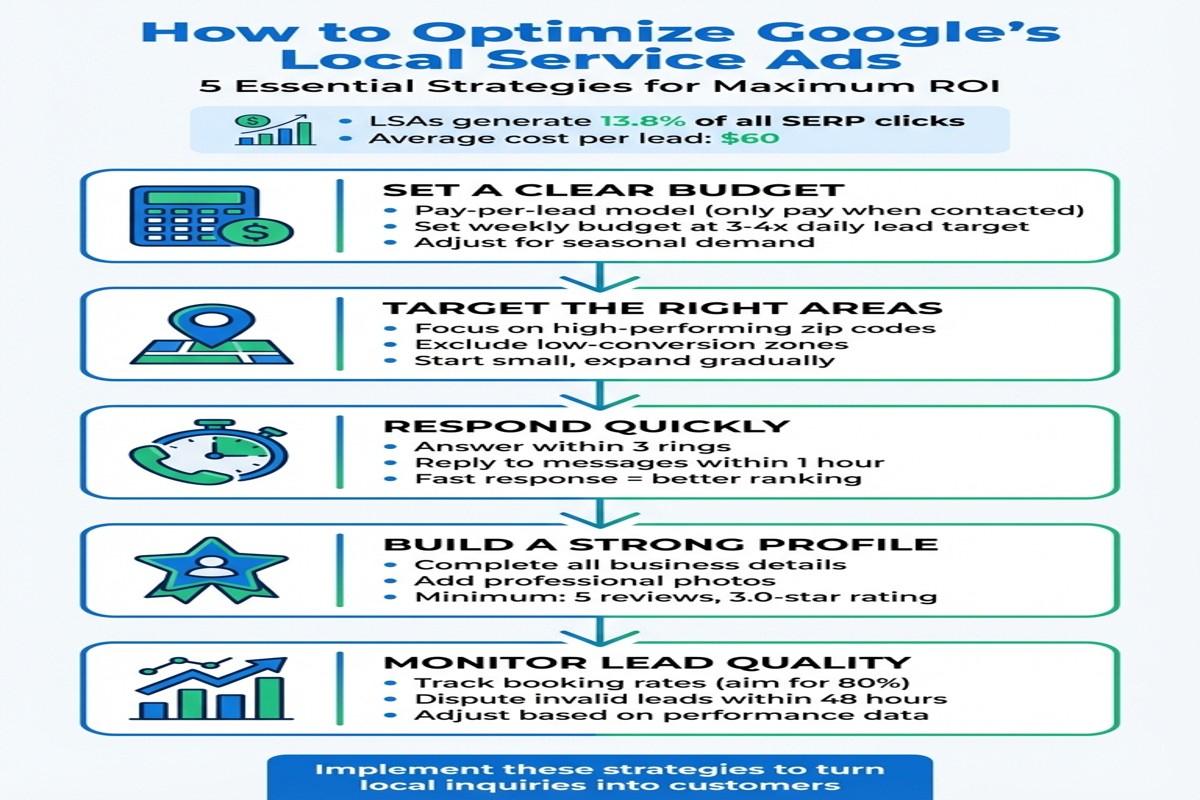
To optimize Google Local Service Ads, ensure your business profile is complete, use high-quality images, gather positive reviews, and adjust your budget based on performance. These steps enhance visibility and engagement, driving more qualified leads to your business.
Understanding how to optimize Google Local Service Ads is crucial for businesses aiming to increase local visibility and attract customers. Failure to implement effective strategies can result in wasted ad spend and missed opportunities in a competitive market.
This article details essential techniques for optimizing Google Local Service Ads, including profile completion, image selection, review management, and budget adjustments based on ad performance.
For How To Optimize Google Local Service Ads businesses looking to generate local leads through Google Ads or Local SEO, GMB Ranger LLC offers hands-on campaign management. Specialist Md Tangeer Mehedi personally handles campaign setup and ongoing optimization — with no payment required until the first lead comes in.
What are Google Local Service Ads?
Google Local Service Ads (LSAs) are paid advertisements that help local businesses connect with customers in their area who are searching for specific services. These ads appear at the top of Google search results and feature a business’s name, ratings, and a call-to-action button, such as “Call” or “Get a Quote.” The primary purpose of LSAs is to facilitate local customer engagement and generate leads for service-based businesses.
Local Service Ads are distinct from traditional Google Ads as they focus specifically on local service providers, such as plumbers, electricians, and cleaners. They give businesses the ability to showcase their services to potential customers actively searching for those services in their vicinity. Furthermore, LSAs operate on a pay-per-lead model, meaning businesses only pay when a customer contacts them through the ad.
- Verification: Businesses must complete a verification process, which includes background checks and license verification, to ensure credibility.
- Ratings and Reviews: LSAs prominently display customer ratings and reviews, influencing potential customers’ decisions.
- Service Area: Businesses can define the geographical area they serve, ensuring that ads are shown to relevant local searches.
To maximize the effectiveness of Local Service Ads, businesses should continuously monitor their performance and adjust their service offerings based on customer feedback and inquiries. Engaging with customers through prompt responses and maintaining high service quality will enhance ratings and lead to more conversions over time.
Expert Tip: Regularly update your business profile with accurate service descriptions and competitive pricing to improve visibility and attract a larger customer base.
How can I improve my Google Local Service Ads ranking?
Improving your Google Local Service Ads ranking involves optimizing your business profile and actively managing customer reviews. A higher ranking increases visibility, leading to more potential customers discovering your services.
To enhance your ad ranking, follow these actionable steps:
- Complete Your Business Profile: Ensure all sections of your profile are filled out, including business name, address, phone number, and service areas. A complete profile helps Google accurately match your services with local searches.
- Use Relevant Keywords: Integrate relevant keywords that potential customers might use when searching for your services. This will help Google understand what services you offer and improve your ad’s relevance.
- Optimize Service Offerings: Clearly outline the specific services you provide. The more detailed and relevant your offerings, the better the chances of appearing in related searches.
- Maintain a High Rating: Customer ratings significantly impact your ranking. Strive to maintain a rating of at least 4 stars by providing quality service and following up for feedback.
- Encourage Customer Reviews: Actively request reviews from satisfied customers. A higher volume of positive reviews not only boosts your ranking but also builds trust with potential clients.
- Respond to Reviews: Engage with customers by responding to reviews, both positive and negative. This shows potential clients that you value feedback and are committed to customer satisfaction.
Regularly monitor your profile and performance metrics to identify areas for improvement. Adjust your strategies based on what works best for your business and customer feedback.
Expert Tip: Utilize Google’s Insights tool to analyze your ad performance and customer interactions. This data can guide your optimization efforts and help pinpoint what resonates most with your target audience.
What is the cost of Google Local Service Ads?
The cost of Google Local Service Ads varies based on the type of service and location, with average weekly budgets ranging from $100 to $1,000. Businesses are charged on a pay-per-lead basis, meaning they pay only when potential customers contact them through the ad. This pricing structure provides control over advertising expenses while targeting local customers effectively.
Several factors influence the overall cost of Google Local Service Ads, including:
- Service Type: Different services have distinct lead costs. For example, plumbing leads may be more expensive than cleaning service leads due to demand and competition.
- Geographic Location: Costs can vary significantly based on the local market. Urban areas generally have higher lead costs compared to rural locations.
- Competition Level: In highly competitive industries or markets, businesses may face higher costs for leads as they compete for visibility against other service providers.
- Ad Quality and Ratings: Higher ratings and positive customer feedback can lead to better placement and potentially lower costs per lead, as Google rewards reputable businesses.
Understanding these factors can help businesses allocate their advertising budgets more efficiently and refine their strategies to maximize return on investment. Monitoring performance metrics will provide insights into lead quality and conversion rates, allowing for adjustments in ad spending.
Expert Tip: Regularly updating your Google My Business profile and maintaining high customer ratings can lower your costs over time, as these factors enhance your ad visibility and attract more leads.
How long does it take to see results from Google Local Service Ads?
Results from Google Local Service Ads can typically be seen within one to three weeks after the ads go live. However, the exact timing can vary based on several factors, including your industry, location, and the level of competition in your service area.
Several factors influence the speed at which results are generated. First, the competitiveness of the market plays a significant role. In highly competitive industries, it may take longer to achieve visibility and traction, as more businesses vie for the same audience. Additionally, the quality of the ad setup, including the completeness of your profile and the relevance of your service offerings, can expedite or delay the results. Ads that are well-optimized tend to perform better and attract leads more quickly.
Another key factor is the budget allocated for the ads. Higher budgets can lead to increased visibility and a faster accumulation of leads, while lower budgets may result in slower performance. Additionally, user engagement metrics, such as click-through rates and conversion rates, can also affect how quickly results materialize. Regularly monitoring and adjusting ad parameters based on performance data can further enhance effectiveness and speed up lead generation.
Expert Tip: Continuously refine your ads based on performance insights and local search trends. Take the time to respond to customer inquiries promptly, as this can improve your ad rankings and visibility over time.
What are the best practices for Google Local Service Ads?
To maximize the effectiveness of Google Local Service Ads, businesses should implement several best practices. These strategies enhance visibility, improve lead quality, and increase overall performance. Adopting these practices can lead to higher customer engagement and better return on investment.
First, ensure that your business profile is complete and accurate. This includes providing up-to-date information such as business hours, service areas, and contact details. A comprehensive profile builds trust and makes it easier for potential customers to choose your services. Additionally, maintaining a consistent brand image across all platforms strengthens recognition.
- Utilize customer reviews: Encourage satisfied clients to leave positive reviews. High ratings can enhance your ad’s visibility and improve your ranking in local search results. Responding to reviews also demonstrates customer engagement and builds credibility.
- Optimize your budget: Set a competitive budget that aligns with your industry standards and local competition. Regularly review your ad spend and adjust as necessary to ensure you are maximizing lead generation without overspending.
- Target specific services: Focus your ads on the services that generate the most leads or have the highest profit margins. Tailoring your ads to highlight these offerings can attract more relevant customers.
- Monitor and adjust performance: Regularly analyze key performance metrics such as lead volume, conversion rates, and cost per lead. Use this data to make informed adjustments to your ad strategy, targeting, and budget allocation.
Implementing these best practices can significantly enhance the performance of Google Local Service Ads. Businesses that remain proactive in managing their ads and responding to customer feedback will likely see improved engagement and conversion rates.
Expert Tip: Regularly test different ad variations, including headlines and service descriptions, to identify which messages resonate best with your audience. Continuous optimization based on performance data can lead to sustained success in local advertising.
How do Google Local Service Ads compare to Google Ads?
Google Local Service Ads (LSAs) and traditional Google Ads serve different purposes and target audiences. LSAs are designed specifically for local service providers, allowing businesses to connect with customers in their vicinity who are actively searching for services. In contrast, Google Ads encompasses a broader range of advertising options that can target various audience segments across different platforms.
One of the key differences between LSAs and Google Ads is the payment structure. LSAs operate on a pay-per-lead basis, meaning businesses only pay when a potential customer contacts them directly through the ad. Conversely, Google Ads typically operates on a pay-per-click (PPC) model, where businesses pay for each click on their ad, regardless of whether the click results in a lead. This distinction can significantly impact budgeting and return on investment for advertisers.
Additionally, LSAs feature a verification process that ensures only licensed and insured professionals appear in the listings, enhancing trust for consumers. Google Ads does not have such stringent requirements, which can lead to a wider but potentially less reliable array of advertisers. Furthermore, LSAs prominently display user ratings and reviews, which can influence consumer decisions, while Google Ads primarily focus on ad copy and landing page optimization.
- Target Audience: LSAs focus on local service providers; Google Ads target a broader audience.
- Payment Structure: LSAs use a pay-per-lead model; Google Ads typically use pay-per-click.
- Verification Process: LSAs require business verification; Google Ads do not.
For businesses aiming to attract local customers quickly, LSAs provide a streamlined and effective solution. However, leveraging Google Ads can offer greater flexibility for broader marketing strategies. Businesses should evaluate their specific objectives to determine the most suitable approach.
Expert Tip: To maximize the benefits of Google Local Service Ads, ensure your business profile is fully optimized with accurate information and actively manage customer reviews, as they directly impact your visibility and lead quality.
Can I manage Google Local Service Ads myself?
Yes, managing Google Local Service Ads (LSAs) independently is feasible for many businesses. However, the effectiveness of DIY management largely depends on the complexity of the ad strategy and the business owner’s familiarity with digital marketing practices. While some small businesses may successfully handle LSAs, others may benefit from professional assistance.
For example, consider a plumbing business that decides to manage its LSAs. The owner creates an account, sets a budget, and selects relevant keywords. Initially, the ads perform well, generating leads. However, as competition increases, the owner struggles to keep track of performance metrics, customer reviews, and response times. The lack of ongoing optimization leads to increased costs and lower ad visibility over time. In this scenario, the owner might find that hiring a digital marketing agency with expertise in LSAs could yield better results by continuously refining the ad strategy and optimizing bids based on real-time data.
On the other hand, a tech-savvy business owner with experience in online advertising may feel confident managing LSAs. They can analyze performance metrics, adjust budgets, and respond promptly to customer inquiries. In such cases, self-management can be effective, especially if the owner dedicates sufficient time to understand the intricacies of the platform. Ultimately, the decision to manage LSAs independently or hire professionals hinges on the individual’s expertise and the specific demands of the business.
Expert Tip: Regularly monitoring and responding to customer reviews can significantly impact your ad performance. Engaging with customers not only enhances your reputation but also improves your ad ranking within Google’s algorithm, leading to better visibility and lower costs per lead.
What common mistakes should I avoid with Google Local Service Ads?
Common mistakes in managing Google Local Service Ads can significantly hinder performance and lead to wasted resources. Avoiding these pitfalls will enhance visibility and improve lead generation. Focus on strategic adjustments to optimize your ad campaigns effectively.
One frequent error is neglecting to maintain an accurate business profile. Ensure that your business information, including hours of operation, services offered, and contact details, is consistently updated. Inaccurate information can lead to missed opportunities and frustrated potential customers. Additionally, failing to respond promptly to customer inquiries can damage your reputation. Timely responses not only improve customer satisfaction but also enhance your ad rankings.
- Overlooking customer reviews: Customer feedback plays a crucial role in Local Service Ads performance. Regularly monitor and respond to reviews to build trust and credibility. Encourage satisfied customers to leave positive reviews to improve your overall rating.
- Ignoring budget limits: Set realistic budget caps that align with your business goals. Avoid overspending by closely monitoring ad performance and adjusting your budget based on successful lead generation. This ensures you maximize your return on investment.
- Not utilizing ad extensions: Ad extensions enhance visibility and provide additional information to potential customers. Implement features such as call tracking or location extensions to increase engagement and improve click-through rates.
Expert Tip: Regularly analyze your ad performance metrics to identify trends and make data-driven adjustments. Tailoring your approach based on performance insights can lead to sustained improvements in lead acquisition.
Advanced Strategies for Maximizing Local Service Ads
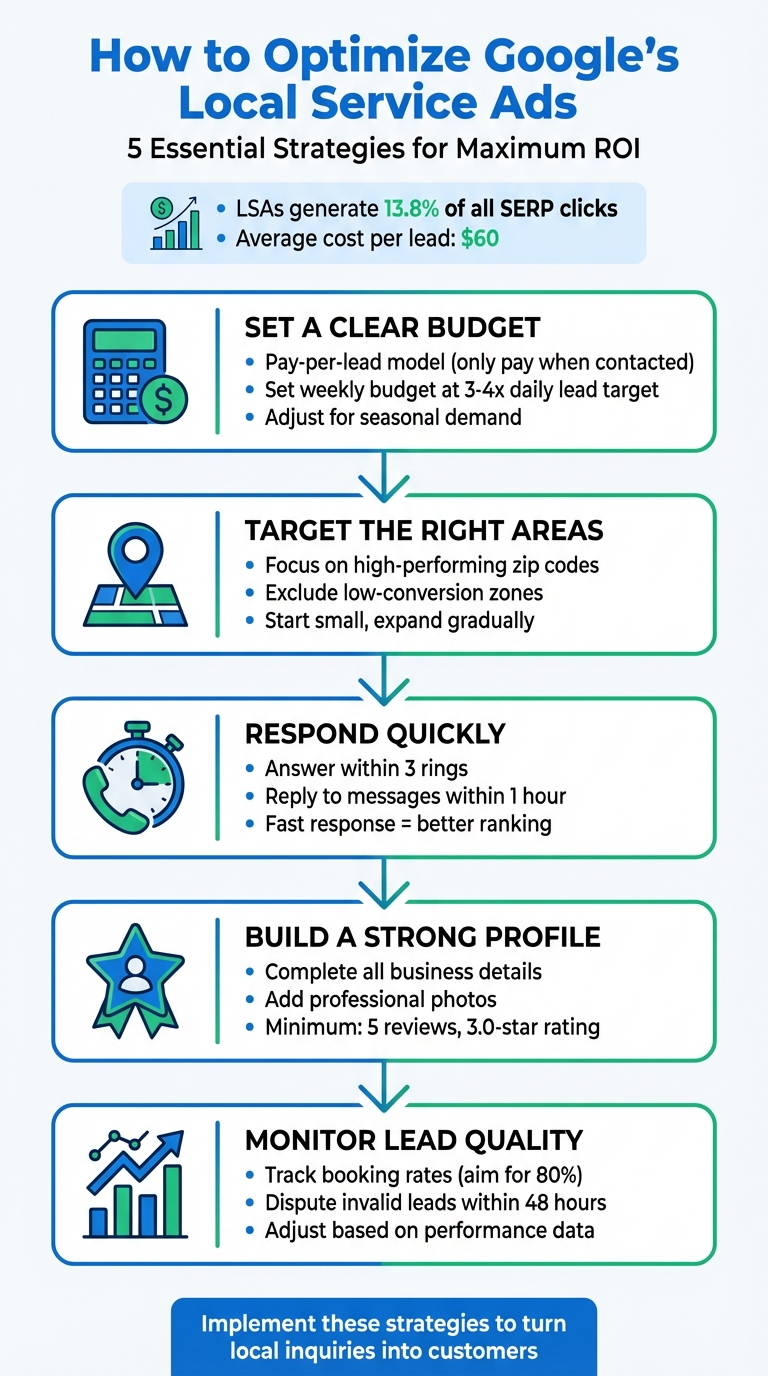
This section delves into advanced techniques for optimizing Google Local Service Ads, emphasizing data-driven strategies and integration with broader marketing efforts. These methods can significantly enhance ad performance and ROI.
Utilizing A/B Testing for Ad Variations
A/B testing, or split testing, involves creating two or more variations of your ad to determine which performs better. This method allows marketers to test different elements, such as ad copy, images, and call-to-action buttons. Key steps include:
- Identify specific variables to test, such as headlines or service descriptions.
- Run each version for a defined period, ensuring identical conditions.
- Analyze performance metrics, including click-through rates and conversion rates, to determine the most effective ad.
Consistent A/B testing can lead to improved engagement and higher lead generation, ultimately optimizing Google Local Service Ads.
Leveraging Customer Insights for Targeted Ads
Understanding customer preferences is crucial for tailoring ads effectively. Utilize customer data from previous interactions, reviews, and surveys to create ads that resonate with your target audience. Consider these approaches:
- Segment your audience based on demographics, geographic location, and service needs.
- Incorporate customer testimonials and feedback into ad content.
- Adjust targeting parameters based on peak engagement times and customer behavior patterns.
By leveraging insights, businesses can craft messages that address specific customer pain points, increasing the likelihood of conversions.
Integrating with Other Local SEO Strategies
Optimizing Google Local Service Ads should not occur in isolation. A holistic approach that aligns these ads with local SEO efforts enhances visibility and effectiveness. Key integration tactics include:
- Ensure consistency in NAP (Name, Address, Phone Number) across all platforms, including your website and local listings.
- Optimize Google Business Profile by adding relevant service categories and accurate business descriptions.
- Engage in local link-building strategies to improve domain authority and search rankings.
This synergy amplifies the reach and impact of ads, driving more qualified leads.
Using Analytics to Refine Ad Performance
Data analytics plays a pivotal role in refining ad strategy. Utilize Google Ads and Google Analytics to track key performance indicators (KPIs) such as:
- Click-through rates (CTR)
- Cost per lead (CPL)
- Conversion rates
Regularly review this data to identify trends, optimize ad spend, and adjust targeting strategies. Implementing changes based on analytics ensures ads remain effective and aligned with business goals.
Many marketers overlook the value of continuous improvement through analytics. A common misconception is that once an ad is live, minimal adjustments are needed. In reality, ongoing analysis and adaptation are essential for maintaining ad performance and relevance.
To apply these advanced strategies, initiate A/B testing on your current ads to identify high-performing variations. Utilize customer insights to refine your messaging and ensure your ads align with local SEO efforts. Regularly analyze performance metrics to inform adjustments, thereby enhancing your overall approach to how to optimize Google Local Service Ads.
Real-World Case Studies of Successful Local Service Ads
This section examines real-world examples of businesses that effectively optimized their Google Local Service Ads. By analyzing these case studies, valuable insights and strategies emerge that can be applied to enhance ad performance.

Case Study: Home Service Provider
A plumbing company in Austin, Texas, significantly increased its lead generation by optimizing its Local Service Ads. Initially, the company struggled with low visibility and high competition. To address this, they focused on three key areas:
- Profile Completeness: They ensured their profile was fully completed with accurate business information, including operating hours and service areas.
- Ad Budget Adjustment: The provider increased its weekly budget by 30%, allowing for greater visibility during peak times.
- Call Tracking: Implementing call tracking helped them analyze which ads generated the most inquiries, leading to data-driven adjustments.
As a result, the company reported a 50% increase in leads over three months, demonstrating the significant impact of a well-optimized ad strategy.
Lessons from a Local Restaurant’s Ad Campaign
A family-owned Italian restaurant in San Diego utilized Local Service Ads to attract more customers. They experimented with various ad formats and found success through the following methods:
- Highlighting Unique Offerings: They emphasized signature dishes and special promotions, making the ad more appealing.
- Call-to-Action Optimization: Strong CTAs like “Order Now” and “Reserve a Table” led to increased click-through rates.
- Geo-targeting: By focusing on local neighborhoods, they maximized relevance and engagement.
This restaurant experienced a 35% rise in online reservations and a 20% increase in takeout orders, underscoring the effectiveness of targeted messaging.
Impact of Customer Reviews on Ad Performance
Customer reviews play a crucial role in the performance of Local Service Ads. Businesses with higher ratings and more reviews generally see improved rankings and customer trust. A landscaping company in Florida enhanced its ad performance by actively soliciting feedback from satisfied customers. Their strategies included:
- Incentivizing Reviews: They offered discounts on future services for customers who left positive reviews.
- Responding to Feedback: Engaging with both positive and negative reviews showcased their commitment to customer satisfaction.
- Showcasing Reviews in Ads: Including positive customer testimonials in their ads increased click-through rates.
This approach led to a noticeable increase in leads, with a reported 60% boost in inquiries linked to improved ratings.
Analysis of Budget Allocation and Its Effects
Effective budget allocation is essential for maximizing ad performance. A local HVAC company analyzed its spending and adjusted its budget based on seasonal demand. Key actions included:
- Seasonal Adjustments: Increasing the budget during peak summer and winter months when HVAC services are in high demand.
- Performance-Based Spending: Redirecting funds from underperforming ad campaigns to those with higher conversion rates.
- Testing New Strategies: Allocating a portion of the budget for A/B testing different ad copies and visuals.
Through these adjustments, the HVAC company achieved a 45% increase in customer inquiries, demonstrating the importance of strategic budget management.
To apply these insights effectively, businesses should focus on the following actions:
- Ensure complete and accurate business profiles.
- Experiment with ad formats and messaging to find what resonates with the target audience.
- Actively manage customer reviews and integrate feedback into ad strategies.
- Regularly analyze and adjust budget allocations based on performance metrics.
Implementing these strategies can lead to enhanced visibility and improved lead generation through Google Local Service Ads.
Common Pitfalls in Google Local Service Ads Management
Effective management of Google Local Service Ads is essential for maximizing visibility and generating leads. This section identifies common mistakes businesses make and offers solutions to enhance ad performance.
Neglecting to Update Business Information
Outdated business information, including your address, phone number, and service offerings, can significantly hinder your ad’s effectiveness. Google prioritizes accurate and current information, and discrepancies can lead to reduced visibility or disqualification from ad placements. Regularly review and update your business information to ensure it reflects any changes in services or contact details.
Underestimating the Importance of Reviews
Reviews play a critical role in local service ads, influencing both your ad ranking and consumer trust. A common mistake is neglecting to actively solicit and respond to customer reviews. Positive reviews not only enhance credibility but also improve your position in search results. Aim for a minimum of 10 reviews to establish a solid reputation, and respond to all reviews—positive or negative—to show engagement and commitment to customer satisfaction.
Failing to Monitor Ad Performance Regularly
Many businesses overlook the necessity of tracking ad performance metrics, leading to missed opportunities for optimization. Key performance indicators (KPIs) include click-through rates, call volume, and conversion rates. Set a schedule to review these metrics weekly or bi-weekly, allowing for timely adjustments to your bidding strategy and ad content based on performance trends.
Ignoring Local Competition Analysis
Understanding the competitive landscape is crucial for optimizing Google Local Service Ads. Failing to analyze competitors can result in missed insights regarding their strengths, weaknesses, and ad strategies. Conduct a thorough competitor analysis by evaluating their ad placements, customer reviews, and service offerings. This information can inform your own strategy and help you identify gaps in the market to exploit.
Nuanced Approaches to Common Pitfalls
While the aforementioned pitfalls are prevalent, businesses often overlook the impact of seasonal trends and local events on ad performance. For instance, service demand can fluctuate based on weather conditions or local festivals. Adjusting ad content and budget during peak seasons can yield higher returns. Furthermore, many assume that simply having a high quantity of reviews is enough; however, the quality of reviews is equally important. Encourage detailed feedback that highlights specific strengths of your service to enhance credibility further.
Practical Steps for Optimization
- Regularly audit and update your business information every month.
- Implement a review strategy that includes follow-up emails to customers post-service.
- Establish a routine for monitoring ad performance metrics weekly.
- Conduct a competitive analysis quarterly to stay informed about local market dynamics.
By addressing these common pitfalls, businesses can significantly improve their Google Local Service Ads performance, ensuring they capture the attention of potential customers effectively.
Future Trends in Google Local Service Ads
This section examines emerging trends shaping Google Local Service Ads and their implications for businesses. By understanding these developments, companies can effectively position themselves for future success in local advertising.
The Role of AI in Ad Optimization
Artificial intelligence (AI) is increasingly influencing the optimization of Google Local Service Ads. Machine learning algorithms analyze vast amounts of data to identify patterns in consumer behavior and ad performance. This capability allows for real-time adjustments to bidding strategies, targeting parameters, and ad placements, enhancing overall ad effectiveness.
AI-driven tools can automate processes such as keyword selection and audience targeting, enabling businesses to focus on strategic planning and creative execution. As AI technology evolves, its role in optimizing local service ads will likely expand, offering even more sophisticated solutions for advertisers.
Changes in Consumer Behavior Affecting Local Searches
Recent studies indicate significant shifts in consumer behavior regarding local searches. Mobile usage has surged, with over 60% of local searches conducted on smartphones. This trend necessitates that businesses optimize their ads for mobile experiences, ensuring fast loading times and mobile-friendly layouts.
- Increased reliance on voice search, with predictions suggesting that 50% of all searches will be voice-based by 2025.
- A growing emphasis on online reviews, as 84% of consumers trust online reviews as much as personal recommendations.
- Heightened sensitivity to local context, with consumers seeking services within a specific distance from their location.
Businesses must adapt their strategies to align with these behavioral changes, prioritizing local relevance and user experience.
Potential New Features from Google
Google continuously evolves its advertising products, and Local Service Ads are no exception. Upcoming features may include enhanced analytics tools that provide deeper insights into ad performance, allowing businesses to make data-driven decisions. Additionally, the introduction of new ad formats could offer more engaging ways to showcase services.
Google may also expand integration with other platforms, enabling seamless cross-channel marketing strategies that enhance visibility and customer engagement. Staying informed about these developments is paramount for businesses aiming to leverage the full potential of Local Service Ads.
The Evolution of Local Marketing Strategies
The marketing landscape is shifting towards a more integrated approach, where local service ads play a key role. Companies are increasingly combining traditional marketing efforts with digital strategies to reach local audiences effectively. This includes leveraging social media, local SEO, and community engagement initiatives alongside Google Local Service Ads.
Furthermore, personalizing marketing messages based on local demographics and preferences can significantly improve engagement rates. As competition intensifies, businesses must innovate their marketing strategies to stand out in local searches.
Common misconceptions about Local Service Ads often revolve around the belief that a basic setup suffices. In reality, continuous optimization and adaptation to emerging trends are essential for maximizing impact. For example, businesses may underestimate the importance of maintaining an active online review presence or the impact of AI on ad performance.
To effectively prepare for the future of Google Local Service Ads, businesses should:
- Invest in AI-driven tools to enhance ad optimization processes.
- Regularly analyze consumer behavior trends to inform advertising strategies.
- Stay updated on new features and capabilities offered by Google.
- Adopt a multi-channel marketing approach that integrates local service ads with broader marketing efforts.
Implementing these strategies will help businesses remain competitive as they navigate the evolving landscape of local advertising.
For How To Optimize Google Local Service Ads businesses looking to generate local leads through Google Ads or Local SEO, GMB Ranger LLC offers hands-on campaign management. Specialist Md Tangeer Mehedi personally handles campaign setup and ongoing optimization — with no payment required until the first lead comes in.
Frequently Asked Questions
What are Google Local Service Ads?
Google Local Service Ads are pay-per-lead advertisements that help local businesses connect with potential customers in their area. These ads appear at the top of Google search results, showcasing services offered and customer ratings.
How can I improve my Google Local Service Ads ranking?
To improve your Google Local Service Ads ranking, focus on obtaining positive customer reviews, maintaining a complete and accurate business profile, and responding promptly to inquiries. Higher ratings and responsiveness can significantly enhance your visibility.
What is the cost of Google Local Service Ads?
The cost of Google Local Service Ads varies based on the industry and location, with businesses paying for each lead generated rather than per click. Pricing typically ranges from $6 to $30 per lead, depending on competition and demand.
How long does it take to see results from Google Local Service Ads?
Results from Google Local Service Ads can be seen almost immediately after launching the campaign, as ads typically appear in search results quickly. However, optimizing performance may take several weeks as you gather data and adjust your strategy.
What are the best practices for Google Local Service Ads?
Best practices for Google Local Service Ads include ensuring your business profile is complete, gathering and managing customer reviews, and using high-quality images. Regularly monitoring performance and adjusting your budget can also enhance results.
How do Google Local Service Ads compare to Google Ads?
Google Local Service Ads focus on generating leads for local services, charging businesses per lead, while Google Ads operates on a pay-per-click model for a broader range of advertising. Local Service Ads are designed specifically for service-based businesses and emphasize trust through reviews and verification.
Can I manage Google Local Service Ads myself?
Yes, businesses can manage Google Local Service Ads themselves through the Google Local Services platform. The user-friendly interface allows for easy updates, budget adjustments, and performance tracking.
What common mistakes should I avoid with Google Local Service Ads?
Common mistakes to avoid include neglecting to respond to customer inquiries, failing to update your business information, and not actively managing your reviews. These oversights can negatively impact your ad performance and customer trust.
Final Thoughts on how to optimize google local service ads
Maximizing the effectiveness of Google Local Service Ads requires a strategic approach that blends optimization techniques with a deep understanding of local market dynamics. By focusing on factors such as ad quality, customer engagement, and ongoing performance analysis, businesses can significantly enhance their visibility and conversion rates.
To achieve immediate results, businesses should prioritize obtaining and managing customer reviews, as these directly influence ad rankings and consumer trust. Implement a system to actively solicit feedback from satisfied clients while promptly addressing any negative comments to maintain a positive online reputation.
Effective management of Google Local Service Ads is essential for gaining a competitive edge in today’s digital landscape, where visibility translates directly into business growth.
Leave a Reply