
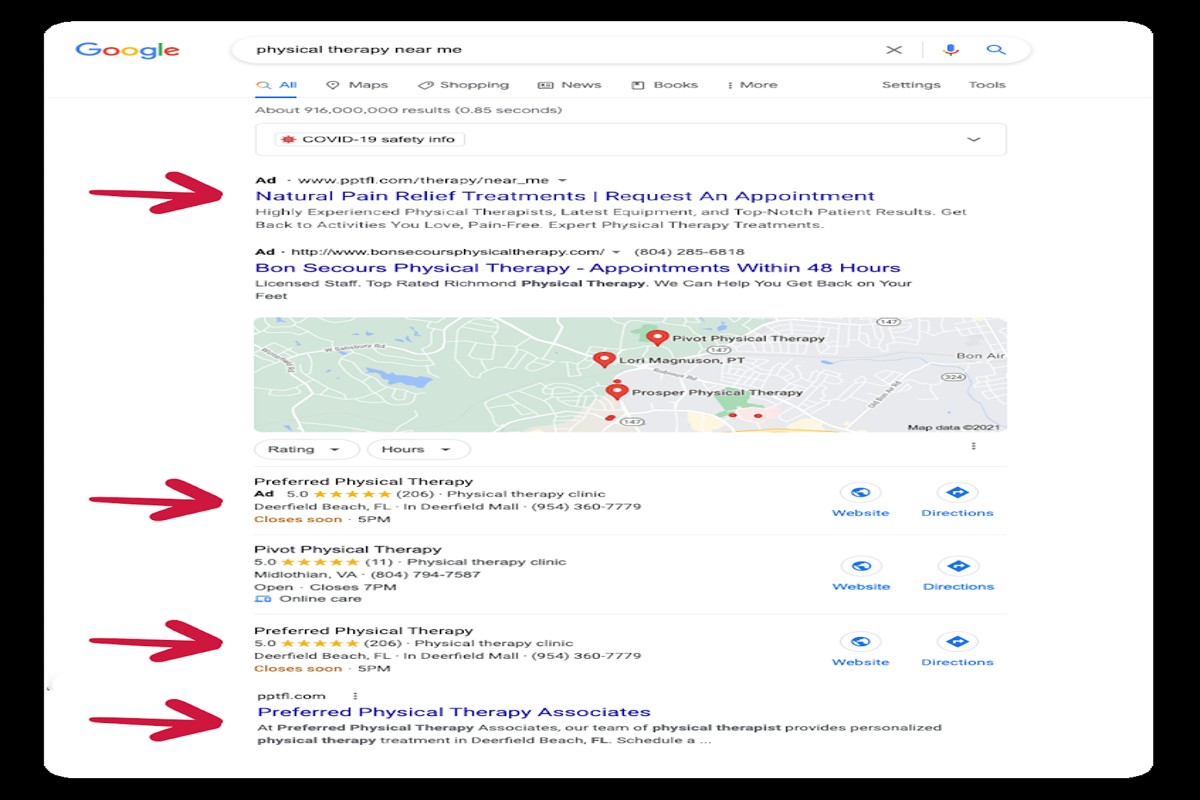
What are google ads for physiotherapists?
Google Ads for physiotherapists is a targeted advertising strategy that allows clinics to promote their services directly to potential patients through search engines. By leveraging specific targeting options, physiotherapists can achieve a return on investment (ROI) of up to 200% on their advertising spend, making it an essential tool for enhancing clinic visibility and driving patient acquisition.
Understanding Google Ads for physiotherapists is crucial in today’s digital landscape, where the competition for patient attention is fierce. As more individuals turn to online searches for healthcare services, clinics must effectively utilize paid advertising to ensure they are visible to prospective patients. The healthcare advertising market is projected to reach $200 billion by 2026, underscoring the importance of strategic online marketing.
Failure to effectively implement Google Ads can result in significant missed revenue opportunities, wasted marketing budgets, and a competitive disadvantage in attracting new patients. Clinics that neglect this vital advertising channel risk falling behind more proactive competitors.
This article will explore the benefits of Google Ads for physiotherapists, including a comparison of top advertising providers, a detailed cost breakdown, best practices for campaign optimization, and insights into integrating local SEO strategies for maximum impact.
For therapy practices looking to generate local leads through Google Ads or Local SEO, GMB Ranger LLC offers hands-on campaign management. Specialist Md Tangeer Mehedi personally handles campaign setup and ongoing optimization — with no payment required until the first lead comes in.
What are Google Ads for physiotherapists?
Google Ads for physiotherapists are online advertising solutions that allow clinics to promote their services through targeted search engine advertisements. By utilizing a pay-per-click (PPC) model, physiotherapists can reach potential patients actively searching for related services, increasing visibility and patient acquisition. In 2024, businesses that use Google Ads see an average return of $8 for every $1 spent, highlighting its effectiveness.
Google Ads operates on a bidding system where advertisers select specific keywords relevant to their practice, such as “physiotherapy near me” or “sports injury rehabilitation.” When potential clients search these terms, the ads appear at the top of the search results, making them highly visible. The effectiveness of these ads can be influenced by several factors, including ad quality, budget, and keyword selection.
- Keyword Targeting: Selecting the right keywords is crucial. For physiotherapists, this could include local keywords to target patients in specific geographic areas.
- Ad Formats: Google Ads offers various formats, including text ads, display ads, and video ads, allowing physiotherapy practices to choose the best fit for their marketing strategy.
- Performance Tracking: Google Ads provides detailed analytics, enabling physiotherapists to assess the effectiveness of their campaigns and make data-driven adjustments.
Implementing Google Ads can significantly enhance a physiotherapy clinic’s online presence. However, success requires ongoing optimization and monitoring to ensure the ads remain relevant and cost-effective. Ad campaigns should be regularly reviewed to identify high-performing keywords and adjust budgets accordingly.
Expert insight: To maximize the effectiveness of Google Ads, consider using location-based targeting combined with specific service offerings to attract local patients actively seeking physiotherapy solutions.
How do physiotherapists set up Google Ads?
Physiotherapists can set up Google Ads by creating an account, selecting campaign goals, and designing targeted advertisements. This process typically takes a few hours to a few days, depending on the complexity of the campaign.
- Create a Google Ads Account: Visit the Google Ads website and sign up for an account. Provide basic information about your clinic and billing details to get started.
- Define Your Campaign Goals: Choose your objectives, such as increasing website traffic, generating leads, or promoting specific services like sports physiotherapy or rehabilitation.
- Select Your Target Audience: Use demographic targeting to focus on specific groups, such as age, gender, and location. This ensures that your ads reach potential patients in your service area.
- Choose Keywords: Conduct keyword research to identify relevant terms that potential patients might use when searching for physiotherapy services. Use Google’s Keyword Planner tool for assistance.
- Design Your Ad: Create compelling ad copy that highlights your services, qualifications, and unique selling points. Include a clear call to action, such as “Book an Appointment Today.”
- Set Your Budget: Determine your daily or monthly budget for the campaign. Google Ads operates on a pay-per-click (PPC) basis, so allocate funds based on your marketing goals.
- Launch Your Campaign: Review all settings and launch your campaign. Monitor performance regularly to make adjustments based on what is working and what is not.
Expert insight: Regularly analyze your ad performance metrics, such as click-through rates and conversion rates, to optimize your campaigns for better results over time. Consider A/B testing different ad copies and keywords to refine your strategy further.
What is the cost of Google Ads for physiotherapists?
The cost of Google Ads for physiotherapists typically ranges from $1 to $10 per click, depending on various factors. On average, clinics may spend between $500 to $2,000 monthly, influenced by their advertising goals and local market competition.
Several factors affect the cost of Google Ads for physiotherapists:
- Cost-per-click (CPC): This is the amount paid each time a user clicks on an ad. CPC can vary significantly based on the competitiveness of the keywords targeted. Physiotherapy-related keywords may have higher CPCs in urban areas compared to rural settings.
- Geographic targeting: Costs can differ based on the location being targeted. Advertising in metropolitan regions generally incurs higher costs due to increased competition among clinics.
- Ad quality and relevance: Google uses a quality score to assess how relevant your ads and keywords are to users. Higher quality scores can lower CPC, enabling more efficient budget use.
- Budget settings: Advertisers can set daily or monthly budgets that control overall spending. A higher budget allows for more clicks and potentially greater visibility, while a lower budget may limit exposure.
Understanding these factors can help physiotherapists tailor their Google Ads campaigns for maximum impact. Effective keyword research and ad optimization can lead to better ROI, enhancing overall clinic visibility.
Expert insight: Regularly reviewing and adjusting your ad strategy based on performance metrics is crucial for optimizing costs and improving campaign effectiveness.
How long does it take to see results from Google Ads?
Physiotherapists can typically expect to see noticeable results from Google Ads campaigns within 30 to 90 days. Initial data may highlight trends and performance, while significant patient inquiries usually materialize after about three months of consistent ad management.
The timeline for seeing results from Google Ads can vary based on several factors. First, the competitiveness of the local market plays a significant role. In areas with many physiotherapy clinics, it may take longer to establish a foothold. Conversely, a less competitive market can yield faster results. Additionally, the effectiveness of the ad copy and targeting strategies directly influences performance. Well-crafted ads that speak directly to the needs of potential patients can accelerate engagement.
Another critical aspect is the budget allocated for the campaign. A higher budget allows for more visibility and testing of different ad variations, leading to quicker insights and adjustments. Furthermore, the quality of the landing page impacts conversion rates. If the landing page is optimized for user experience and clearly communicates services, it is more likely to convert clicks into appointments. Lastly, ongoing optimization and data analysis can refine campaigns over time, ensuring that results improve steadily.
Expert insight: Regularly reviewing campaign performance metrics and making adjustments can significantly enhance the speed at which results are realized. Focus on A/B testing different ad copies and targeting demographics to identify what resonates best with your audience.
What are the best practices for Google Ads targeting physiotherapy clients?
To effectively target physiotherapy clients using Google Ads, focus on specific audience segmentation, keyword optimization, and location-based targeting. Statistics indicate that targeted ads can increase conversion rates by up to 50%, making these strategies essential for physiotherapy practices.
Implementing effective targeting strategies is crucial for maximizing the impact of Google Ads. Here are several best practices:
- Utilize Specific Keywords: Identify and incorporate keywords that potential clients are likely to search for, such as “physiotherapy for back pain” or “sports injury rehabilitation.” Use tools like Google Keyword Planner to discover high-volume, relevant terms.
- Leverage Demographic Targeting: Take advantage of Google Ads’ demographic targeting features. Focus on age, gender, and interests that align with your ideal client profile to ensure your ads reach the right audience.
- Implement Location Targeting: Since physiotherapy services are location-dependent, use geo-targeting to restrict your ads to specific areas. This ensures that your ads are seen by individuals seeking services within a manageable distance from your clinic.
- Use Ad Extensions: Enhance your ads with extensions such as call buttons, location information, and patient testimonials. These features can improve click-through rates and provide potential clients with more context about your services.
- Monitor and Adjust Campaigns: Regularly review campaign performance metrics. Analyze which keywords and demographics yield the best results, and adjust your strategy accordingly to optimize ROI.
Expert insight: Regular A/B testing of ad copy and landing pages can reveal what resonates most with your audience, allowing for continuous improvement and higher conversion rates in your Google Ads campaigns.
How do Google Ads compare to SEO for physiotherapists?
Google Ads and SEO offer distinct strategies for attracting patients to physiotherapy clinics. Google Ads provides immediate visibility through paid advertisements, while SEO focuses on organic search results, which can take longer to achieve. According to recent data, businesses that utilize Google Ads can see a return on investment of up to 200% within the first six months.
Google Ads allows physiotherapists to target specific demographics and geographic locations, ensuring that ads reach potential patients actively searching for services. This method can generate quick traffic and leads. However, it requires a continuous financial investment, with costs varying based on competition and keywords. The average cost-per-click for healthcare-related keywords can range from $1 to $5, impacting budgets significantly.
On the other hand, SEO is a long-term strategy that enhances a clinic’s online presence through organic search rankings. This approach involves optimizing website content, improving site speed, and building backlinks. While it may take several months to see results, the traffic generated is often more sustainable and cost-effective over time. Research indicates that 70-80% of users ignore paid ads in favor of organic results, emphasizing the importance of a robust SEO strategy.
- Cost: Google Ads incurs ongoing costs, while SEO is generally a one-time investment with long-term benefits.
- Speed: Google Ads provides immediate visibility; SEO requires time to build rankings.
- Longevity: SEO efforts can yield lasting results; Google Ads cease generating traffic once the budget is exhausted.
Expert insight: A balanced marketing strategy that combines Google Ads for immediate visibility and SEO for long-term growth can optimize patient acquisition for physiotherapy clinics.
Maximizing ROI: Advanced Strategies for Google Ads
This section delves into advanced strategies for optimizing Google Ads campaigns specifically for physiotherapists, focusing on actionable techniques that enhance visibility and drive patient engagement.
Utilizing A/B Testing for Ad Copy
A/B testing, or split testing, is a powerful method for refining ad copy. By creating two versions of an ad with slight variations—such as different headlines or calls to action—physiotherapists can determine which resonates more with their target audience. According to recent data, businesses that employ A/B testing see an average conversion rate increase of 49%. This method not only enhances ad performance but also provides valuable insights into patient preferences.
Implementing Remarketing Strategies
Remarketing allows physiotherapists to re-engage potential patients who have previously interacted with their website. By displaying tailored ads across the Google Display Network, clinics can remind these users of their services, encouraging them to book an appointment. Remarketing campaigns can yield conversion rates as high as 10%, significantly outperforming standard display ads, which average around 0.77%.
Leveraging Geo-Targeting for Local Clients
Geo-targeting is essential for physiotherapists aiming to attract local clientele. By setting specific geographic parameters, clinics can ensure their ads are shown to potential patients within a defined radius. This strategy not only maximizes ad spend efficiency but also increases the likelihood of converting local searches into actual visits. Research indicates that 72% of consumers who perform a local search visit a store within 5 miles, underscoring the importance of precise geo-targeting.
Analyzing Performance Metrics for Continuous Improvement
Regular analysis of performance metrics is vital for optimizing Google Ads campaigns. Key performance indicators (KPIs) such as click-through rates (CTR), conversion rates, and cost-per-click (CPC) should be monitored consistently. For instance, a CTR of 2% is considered average for healthcare ads, while a conversion rate above 5% is indicative of effective targeting and messaging. By identifying trends and anomalies in these metrics, physiotherapists can make informed adjustments to their campaigns, increasing overall ROI.
One common misconception is that higher ad spend guarantees better results. In reality, the effectiveness of campaigns hinges on strategy and optimization rather than budget alone. Many clinics neglect to refine their ads based on performance data, leading to wasted expenditure. Expert-level distinctions involve understanding the nuances of audience behavior and continuously adapting campaigns to meet evolving patient needs.
Practical Application
- Implement A/B testing on ad copy every quarter to refine messaging based on performance.
- Set up remarketing campaigns targeting users who visited your site but did not book an appointment.
- Utilize geo-targeting features to focus on local areas, adjusting radius based on patient demographics.
- Establish a monthly review process for performance metrics to identify areas for improvement.
Common Mistakes Physiotherapists Make with Google Ads
Effective use of Google Ads can significantly enhance a physiotherapy clinic’s visibility and client acquisition. However, several common mistakes can undermine these efforts, leading to wasted budgets and missed opportunities for growth.

Ignoring Negative Keywords
Many physiotherapists overlook the importance of negative keywords, which prevent ads from appearing in irrelevant searches. For instance, if a clinic specializes in sports rehabilitation, adding “cosmetic” as a negative keyword will help filter out users not seeking relevant services. Failing to implement this strategy can lead to low click-through rates (CTR) and increased costs, as ads may be shown to users with no interest in physiotherapy treatments. In fact, studies show that targeted negative keyword usage can improve campaign performance by up to 30%.
Failing to Set Appropriate Budgets
Setting a budget that aligns with clinic goals is vital. Many physiotherapists either underfund their campaigns or set unrealistic spending limits. A well-researched budget should consider factors such as local competition and average cost-per-click (CPC) in the physiotherapy sector, which can range from $1 to $10 depending on the area. Without a reasonable budget, ads may not reach their full potential, leading to missed opportunities to capture new clients.
Not Using Ad Extensions Effectively
Ad extensions enhance the visibility and effectiveness of Google Ads. Physiotherapists frequently neglect to utilize features like call extensions and location extensions, which provide additional information about the clinic. According to Google, ads with extensions can receive up to 30% more clicks than those without. Ad extensions help potential clients easily contact the clinic or find its physical location, increasing the likelihood of conversion.
Neglecting to Track Conversions and Results
Tracking conversions is essential for understanding the effectiveness of Google Ads. Many physiotherapists do not implement conversion tracking, leading to an inability to measure return on investment (ROI). Without proper tracking, clinics miss insights into which ads drive new patient bookings. In 2023, clinics that actively tracked conversions reported an average increase in patient acquisition rates of 25%. Utilizing tools like Google Analytics can provide valuable data to refine advertising strategies.
Common misconceptions include the belief that all clicks are valuable or that high spending guarantees results. In reality, a focused approach that prioritizes relevant keywords and effective tracking often yields superior outcomes.
To avoid these mistakes, physiotherapists should take the following actions:
- Conduct thorough keyword research to identify and implement negative keywords.
- Establish a realistic budget based on local market analysis and service offerings.
- Incorporate ad extensions to provide potential clients with essential information.
- Set up conversion tracking to measure campaign performance accurately.
By addressing these common pitfalls, physiotherapists can optimize their Google Ads campaigns, enhancing visibility and ultimately attracting more clients to their clinics.
Real-World Case Studies: Successful Google Ads for Physiotherapists
This section examines effective Google Ads campaigns implemented by physiotherapy clinics, illustrating how targeted advertising strategies led to measurable growth and patient acquisition. Understanding these case studies provides actionable insights for optimizing online advertising efforts in the physiotherapy sector.

Case Study: Local Clinic Growth
A physiotherapy clinic in Melbourne, Australia, implemented a Google Ads campaign focused on keywords such as “sports injury physiotherapy” and “post-operative rehabilitation.” Over six months, the clinic saw a 150% increase in website traffic and a 50% rise in new patient appointments. The campaign budget was approximately AUD 2,000 per month, with a cost per acquisition (CPA) of AUD 20 per new patient.
Successful Ad Strategies
- Targeted Keywords: Focused on specific services rather than general terms, enhancing relevance and click-through rates.
- Geographic Targeting: Ads were localized to the clinic’s service area, ensuring visibility among potential patients in proximity.
- Ad Extensions: Utilized call and location extensions, which increased engagement and made it easier for patients to contact the clinic directly.
Lessons from Failed Campaigns
Not all campaigns yield positive results. A different clinic attempted a broad approach with generic keywords like “physiotherapy” and “rehab.” This resulted in low click-through rates and high costs, leading to a CPA of AUD 60. The clinic learned the importance of specificity and targeted messaging for better engagement and conversion.
Statistics on Patient Acquisition
According to a 2024 report by the Australian Physiotherapy Association, clinics that effectively used Google Ads reported an average patient acquisition cost of AUD 30, significantly lower than traditional marketing methods. Additionally, 70% of clinics reported that targeted online advertising led to at least a 25% increase in new patients over a six-month period.
Expert Insights
Many clinics underestimate the power of remarketing strategies within Google Ads. By targeting individuals who previously visited their website but did not convert, clinics can increase their chances of patient acquisition. Additionally, misconceptions surrounding ad spend suggest that higher budgets always yield better results; however, effective ad copy and strategic targeting often deliver superior outcomes with lower investment.
Practical Applications
To leverage this information effectively, physiotherapy clinics should:
- Conduct keyword research to identify specific, high-intent terms relevant to their services.
- Implement geographic targeting to reach local patients effectively.
- Experiment with ad extensions to enhance visibility and engagement.
- Monitor and adjust campaigns based on performance data, focusing on cost per acquisition and conversion rates.
By applying these strategies, clinics can harness the power of Google Ads for physiotherapists to enhance their visibility and drive patient growth.
Integrating Google Ads with Local SEO for Physiotherapy Clinics
This section examines the synergy between Google Ads and local SEO strategies for physiotherapy clinics. By leveraging both tools, clinics can enhance their online visibility and attract more local patients.

The Importance of Local Keywords
Incorporating local keywords into Google Ads campaigns is essential for physiotherapy clinics targeting nearby patients. Research indicates that 78% of mobile local searches lead to an offline purchase, highlighting the need for clinics to optimize their ads with terms that reflect local intent. Keywords such as “physiotherapist near me” or “sports injury clinic in [City]” should be prioritized to ensure ads appear when potential patients search for relevant services in their vicinity.
Combining Google My Business with Ads
Google My Business (GMB) serves as a critical tool for local visibility. Integrating GMB with Google Ads can significantly enhance a clinic’s online presence. Clinics should ensure their GMB profile is fully optimized with accurate information, including address, phone number, hours of operation, and services offered. When running Google Ads, including a location extension allows the clinic’s address to appear alongside ad text, driving higher click-through rates and local engagement.
Creating Location-Specific Landing Pages
Developing location-specific landing pages is an effective strategy for converting ad clicks into appointments. Each page should be tailored to the local area, incorporating relevant keywords, community information, and localized content. For example, a physiotherapy clinic in Boston could create a landing page that addresses common sports injuries among local athletes, enhancing relevance and improving search rankings. Studies show that targeted landing pages can increase conversion rates by up to 300% when compared to generic pages.
Encouraging Patient Reviews to Boost Credibility
Online reviews significantly impact patient decision-making. Clinics should actively encourage satisfied patients to leave positive reviews on both Google My Business and their website. According to recent data, 85% of consumers trust online reviews as much as personal recommendations. Positive reviews not only enhance credibility but also improve local SEO rankings, as Google considers review quantity and quality when determining local search results.
While many clinics focus solely on ads or SEO, the most successful practices integrate the two. A common misconception is that Google Ads can replace organic search efforts; however, they should be viewed as complementary. Google Ads can provide immediate visibility, while local SEO builds sustainable, long-term traffic. Furthermore, using analytics to track the performance of both strategies can yield insights into which keywords and ad placements are most effective, allowing for data-driven adjustments.
To effectively integrate Google Ads with local SEO, physiotherapy clinics should take the following actionable steps:
- Research and implement local keywords into ad campaigns.
- Optimize the Google My Business profile and utilize location extensions in ads.
- Create dedicated landing pages for each service and location.
- Encourage and manage patient reviews actively.
- Monitor performance metrics to continuously refine strategies.
Evaluating the Best Google Ads For Physiotherapists
Choosing the right advertising platform is crucial for physiotherapists looking to enhance their online presence. With the digital advertising market projected to reach $786 billion by 2026, understanding the nuances of each provider can significantly impact patient acquisition efforts. Key criteria include targeting capabilities, pricing structures, and unique features that cater specifically to healthcare professionals.
| Provider / Option | Best For | Pricing | Key Feature |
|---|---|---|---|
| Google Ads | Comprehensive ad targeting | Pay-per-click, varies by bid | Extensive reach and targeting options |
| Facebook Ads | Social media engagement | Pay-per-click or pay-per-impression | Visual ad formats and targeting |
| Bing Ads | Less competition | Pay-per-click, generally lower than Google | Access to a different audience |
| Yelp Ads | Local business exposure | Monthly subscription plus cost-per-click | Highly targeted local visibility |
| LinkedIn Ads | Professional targeting | Pay-per-click or pay-per-impression | Target professionals and businesses |
| AdRoll | Retargeting campaigns | Varies based on campaign | Cross-platform retargeting |
Criteria for Evaluating Program Quality
Targeting Capabilities: Evaluate how well each platform allows you to target specific demographics, locations, and interests. This is vital for connecting with potential patients effectively.
Pricing Structure: Understand the pricing models of each provider, including pay-per-click and subscription fees. This will help in budgeting and understanding the return on investment.
Ad Formats and Features: Different platforms offer various ad formats and unique features. Assess which formats (text, image, video) resonate best with your target audience and align with your marketing goals.
Analytics and Reporting: Look for providers that offer robust analytics tools to track ad performance. This data is essential for optimizing campaigns and making informed decisions moving forward.
How to Assess the Reputation and Reliability of Providers
- Check Online Reviews: Look for feedback on platforms like Google, Yelp, and industry-specific forums to gauge user satisfaction.
- Request Case Studies: Ask potential providers for case studies or examples of previous work with physiotherapy practices to assess their effectiveness.
- Evaluate Customer Support: Test the responsiveness and quality of customer support through inquiries to ensure assistance is readily available.
- Examine Transparency: Ensure the provider is clear about their pricing, terms, and conditions without hidden fees or complicated contracts.
- Assess Industry Experience: Look for providers with experience in healthcare or specifically physiotherapy to ensure they understand the unique challenges in this field.
Which Google Ads For Physiotherapists Is Right for You?
Selecting the appropriate Google Ads strategy hinges on your specific business needs, budget, and goals. This guide provides tailored recommendations for various segments within the physiotherapy field, helping you make an informed decision to maximize your online visibility.
Solo practitioners
Solo practitioners should prioritize Google Ads focused on local SEO strategies, such as targeting keywords like “physiotherapist near me” or “local physiotherapy services.” Budgeting around $300 to $500 monthly can help secure visibility in local search results and Google Maps, which is essential for attracting nearby patients.
Small clinics
Small clinics can enhance their outreach by combining Google Ads with Facebook Ads. Employing a Google Ads budget of $500 to $800 per month allows for targeted local campaigns, while an additional $200 to $300 on Facebook Ads can help engage local audiences through demographic and interest-based targeting, driving traffic to your clinic.
Large physiotherapy chains
Large chains should implement comprehensive Google Ads strategies that include location-based targeting and remarketing campaigns. Allocating $1,000 to $3,000 monthly across multiple locations can help maintain brand presence and consistency, ensuring that each facility is visible to potential patients in its area.
Sports physiotherapists
Sports physiotherapists should utilize Google Ads to target athletes and fitness enthusiasts by focusing on specific injury solutions and recovery programs. A budget of $400 to $700 per month can effectively reach this niche audience through tailored ad copy and targeted keywords such as “sports injury recovery” and “athletic physiotherapy.”
Physiotherapy educators
Educators in the physiotherapy field can benefit from LinkedIn Ads to promote their courses and workshops to professionals. A monthly budget of $300 to $600 allows for targeted outreach to specific job titles and industries, helping to attract an audience that is already engaged in professional development within physiotherapy.
| If You Are… | Best Approach |
|---|---|
| Solo practitioners | Targeted local Google Ads ($300-$500/month) |
| Small clinics | Google Ads & Facebook Ads ($500-$800 + $200-$300/month) |
| Large physiotherapy chains | Comprehensive Google Ads ($1,000-$3,000/month) |
| Sports physiotherapists | Targeted Google Ads ($400-$700/month) |
| Physiotherapy educators | LinkedIn Ads ($300-$600/month) |
Local Strategies for Google Ads Targeting Physiotherapists
Understanding geographic and local market factors is crucial for physiotherapists leveraging Google Ads. According to a 2023 survey, 76% of people who search for something nearby visit a business within a day, underscoring the importance of local intent in advertising strategies.
Geographic Market Differences
In larger metropolitan areas like New York City or Los Angeles, competition for Google Ads can be intense, requiring physiotherapists to adopt more aggressive bidding strategies and localized keywords. Conversely, in smaller towns or rural areas, practitioners may find less competition, allowing for lower bids and more effective ad placements with targeted local content.
Local Business Applications
Local physiotherapy practices can significantly benefit from tailored Google Ads strategies. Key applications include:
- Targeting specific local demographics, such as athletes or seniors, with customized ad copy.
- Utilizing location-based keywords to capture searches like “physiotherapist near me” or “sports rehab in [City].”
- Promoting seasonal services or local events, such as community health fairs, to engage the local audience.
- Offering localized promotions or discounts to attract first-time visitors from nearby neighborhoods.
Local Search and Visibility Impact
Google Ads for physiotherapists directly influences local search rankings and visibility, especially when integrated with a well-optimized Google Business Profile (GBP). To enhance local search performance, practitioners should:
- Ensure their GBP is fully optimized with accurate address, phone number, and service descriptions.
- Incorporate local keywords into both Google Ads and their website content.
- Encourage satisfied patients to leave positive reviews on their GBP to boost local credibility.
- Regularly update their ads and GBP with any changes in services or special offers.
Pricing and Cost in Local Markets
Costs for Google Ads vary significantly by geographic market. For example, physiotherapists in high-demand urban areas might spend between $2.50 to $6.50 per click, while those in smaller markets may see costs as low as $1.00 to $3.00 per click. Local practices should budget approximately $500 to $1,500 per month for effective campaigns, while national chains might allocate upwards of $10,000 monthly to dominate the market.
Local Implementation Checklist:
- Optimize your Google Business Profile with accurate and up-to-date information.
- Research and incorporate local keywords into your ad campaigns.
- Set a budget based on local competition and market size.
- Engage with local events and include them in your ads.
- Monitor and respond to patient reviews to enhance your local reputation.
- Track ad performance and adjust bids based on local demand.
- Utilize location targeting in your Google Ads settings to reach nearby patients.
For therapy practices looking to generate local leads through Google Ads or Local SEO, GMB Ranger LLC offers hands-on campaign management. Specialist Md Tangeer Mehedi personally handles campaign setup and ongoing optimization — with no payment required until the first lead comes in.
Frequently Asked Questions
What are Google Ads for physiotherapists?
Google Ads for physiotherapists are paid online advertisements that help promote physiotherapy services to potential clients. These ads appear in Google search results and can drive targeted traffic to a physiotherapy practice’s website.
How do physiotherapists set up Google Ads?
Physiotherapists can set up Google Ads by creating a Google Ads account and selecting campaign objectives that align with their goals. They then define their target audience, set a budget, and create ad content tailored to attract potential clients.
What is the cost of Google Ads for physiotherapists?
The cost of Google Ads for physiotherapists varies based on factors like competition, keywords, and budget settings. Typically, physiotherapists can set a daily budget, paying only when someone clicks on their ad.
How long does it take to see results from Google Ads?
Results from Google Ads can often be seen within a few days, as ads can go live almost immediately. However, optimizing for better performance may take several weeks of monitoring and adjustments.
What are the best practices for Google Ads targeting physiotherapy clients?
Best practices for targeting physiotherapy clients include using specific keywords related to physiotherapy services, utilizing location targeting, and crafting compelling ad copy that addresses client needs. Regularly reviewing and adjusting campaigns can also enhance effectiveness.
How do Google Ads compare to SEO for physiotherapists?
Google Ads provide immediate visibility and traffic, while SEO focuses on long-term organic search rankings. Both strategies can be effective, but Google Ads typically yield quicker results, whereas SEO builds credibility and sustainability over time.
Final Thoughts on Google Ads for Physiotherapists
Leveraging Google Ads can significantly enhance a physiotherapist’s ability to attract new patients and establish a stronger online presence. By implementing advanced strategies, avoiding common pitfalls, and learning from successful case studies, clinics can optimize their advertising efforts for maximum return on investment.
To capitalize on these insights, physiotherapists should immediately conduct a comprehensive keyword analysis to identify the most effective terms for their target audience, ensuring that their campaigns resonate and drive conversions.
Ready to elevate your clinic’s presence? Consider partnering with a google ads agency that understands the unique needs of physiotherapists.
In an increasingly competitive healthcare landscape, mastering google ads is not just beneficial; it is essential for sustaining and growing a thriving physiotherapy practice.
Leave a Reply