

Google Ads for law firm marketing involves utilizing paid advertisements on Google’s platform to attract potential clients. This marketing strategy can yield an impressive 200% return on investment (ROI) when ads are targeted effectively, significantly enhancing a firm’s visibility and driving traffic to its website.
Understanding Google Ads for law firm marketing is crucial for legal professionals aiming to expand their client base in a competitive landscape. As digital marketing continues to evolve, law firms that leverage this tool can capitalize on the growing online search behavior of potential clients. With over 60% of consumers starting their search for legal services online, failing to implement effective Google Ads can result in lost opportunities.
Without a solid grasp of Google Ads, law firms risk incurring wasted marketing budgets and falling behind competitors who effectively utilize this platform, ultimately leading to missed revenue and diminished market presence.
This article will provide a comprehensive overview of Google Ads for law firm marketing, including a comparison of top providers, a detailed cost breakdown, best practices for ad creation, and insights into optimizing local SEO to enhance ad performance.
For law firms looking to generate local leads through Google Ads or Local SEO, GMB Ranger LLC offers hands-on campaign management. Specialist Md Tangeer Mehedi personally handles campaign setup and ongoing optimization — with no payment required until the first lead comes in.
What are Google Ads and how do they work for law firms?
Google Ads are an online advertising platform that allows businesses, including law firms, to display ads on Google’s search results and other websites. These ads operate on a pay-per-click (PPC) model, meaning firms only pay when a user clicks on their ad, making it a cost-effective way to attract potential clients actively searching for legal services.
Google Ads work by targeting specific keywords relevant to a law firm’s practice area. When a user searches for these keywords, relevant ads appear at the top of the search results. Law firms can leverage this platform to enhance visibility, drive traffic to their websites, and generate leads. In 2024, approximately 66% of clicks on Google search ads occurred in the top four positions, emphasizing the importance of appearing prominently in search results.
- Keyword Targeting: Law firms can choose specific keywords that potential clients are likely to use when searching for legal assistance. This targeting increases the likelihood of reaching the right audience.
- Ad Formats: Google Ads offer various formats, including text ads, display ads, and video ads. Each format can be tailored to showcase the firm’s unique value proposition effectively.
- Geographic Targeting: Law firms can target ads to specific locations, ensuring they reach clients in their service areas. This is particularly useful for firms focused on local clientele.
Budget management is also crucial in Google Ads. Law firms can set daily or monthly budgets to control spending. Analytics tools provided by Google enable firms to track ad performance and adjust strategies based on real-time data. This flexibility allows law firms to optimize campaigns for better results continuously.
Expert insight: To maximize the effectiveness of Google Ads, law firms should conduct thorough keyword research and continuously refine their campaigns based on performance metrics. Utilizing A/B testing for ad copy can also help identify the most compelling messages for potential clients.
How much do Google Ads cost for law firms?
Google Ads for law firms typically cost between $2 and $20 per click, depending on various factors specific to the legal industry. On average, law firms can expect to spend around $6 to $10 per click for competitive keywords.
The cost of Google Ads is influenced by several factors that vary within the legal sector. These factors include:
- Keyword competition: High-demand keywords, such as “personal injury attorney,” can command higher costs due to increased competition among law firms bidding for the same terms.
- Geographic targeting: Advertising in urban areas with a higher concentration of legal cases generally results in higher costs compared to rural regions.
- Quality Score: Google assigns a Quality Score to each ad based on relevance and performance. A higher Quality Score can lower costs, as Google rewards well-optimized ads with lower CPC rates.
Additionally, the type of legal service offered can impact costs. For example, family law and personal injury often have higher CPC rates compared to less competitive niches like estate planning. Law firms should also consider their overall budget and bidding strategy, as these elements play a crucial role in determining the effectiveness of their campaigns.
Expert insight: To optimize spending, law firms should focus on long-tail keywords that are specific to their practice areas. This approach can reduce competition and improve conversion rates, ultimately leading to a more cost-effective Google Ads campaign.
What are the best practices for using Google Ads in law firm marketing?
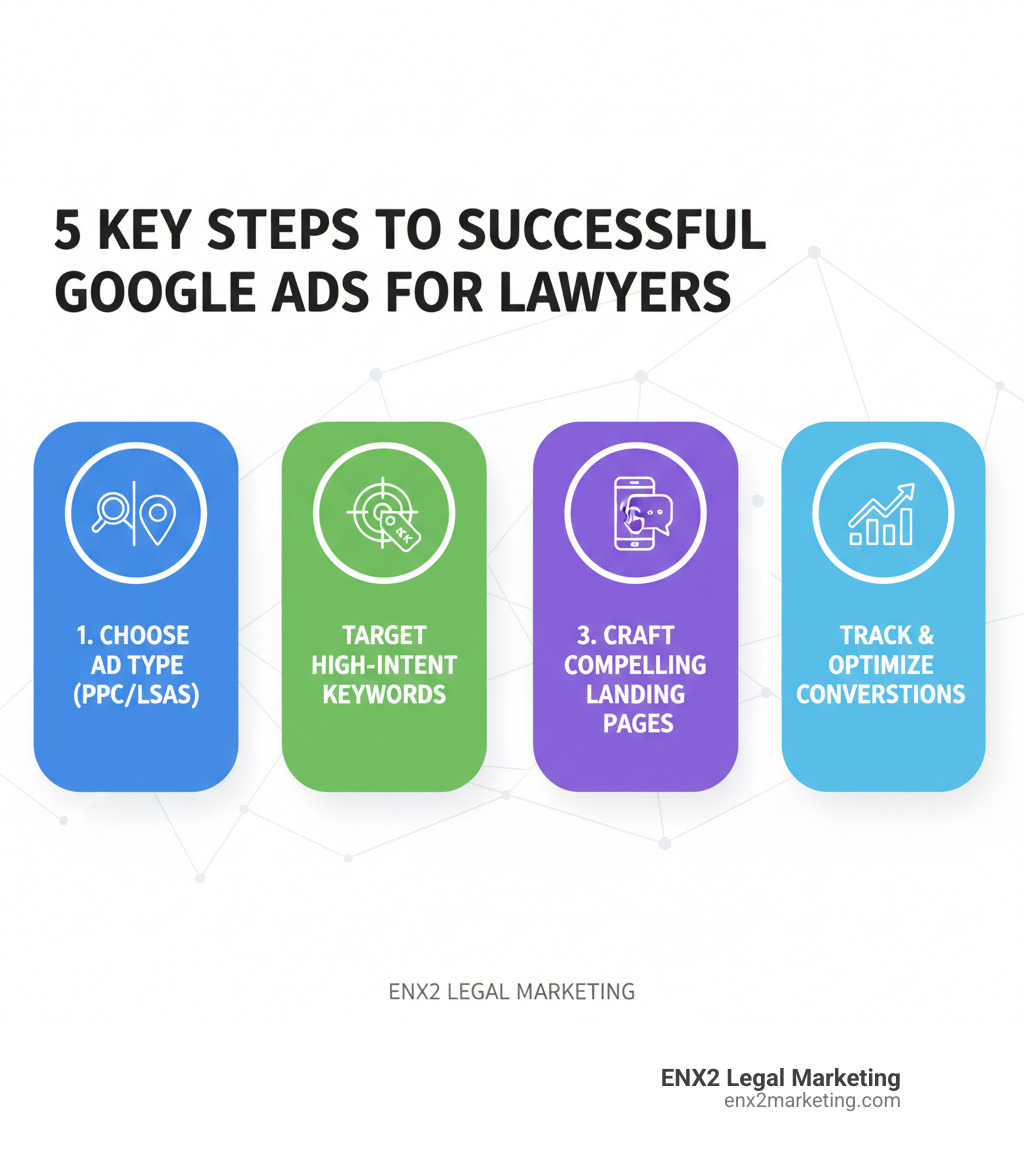
Effective use of Google Ads for law firm marketing requires a strategic approach to maximize visibility and conversion rates. Implementing best practices can lead to higher click-through rates (CTR) and lower cost-per-click (CPC), thereby enhancing return on investment (ROI). Research indicates that well-optimized campaigns can yield a 50% increase in lead generation.
To optimize Google Ads campaigns specifically for law firms, consider the following best practices:
- Target Specific Keywords: Focus on long-tail keywords that reflect the specific legal services offered. For example, instead of just “personal injury lawyer,” use “best personal injury lawyer in [city].” This attracts more qualified leads.
- Utilize Location Targeting: Since legal services are often region-specific, enable geo-targeting to focus on potential clients within your practice area. This can increase relevance and improve conversion rates.
- Craft Compelling Ad Copy: Use clear, concise language that addresses the needs of potential clients. Highlight unique selling propositions (USPs), such as free consultations or specific outcomes, to entice clicks.
- Optimize Landing Pages: Ensure that the landing page aligns with the ad copy and provides a seamless user experience. Quick load times and mobile optimization are essential, as over 60% of searches occur on mobile devices.
- Monitor and Adjust Bids: Regularly review and adjust bids based on performance metrics. Utilize automated bidding strategies to optimize for conversions and ensure budget efficiency.
Expert insight: Regularly A/B test ad variations and landing pages to identify the most effective elements. Continuous optimization leads to sustained improvements in campaign performance.
How long does it take to see results from Google Ads for law firms?
Law firms can typically expect to see tangible results from Google Ads campaigns within 1 to 3 months. Initial data, such as click-through rates and conversion metrics, may become available within the first few weeks, but substantial lead generation often requires a longer timeframe.
Several factors influence the speed at which results materialize. The competitive landscape of the legal market plays a significant role; firms in high-demand areas, such as personal injury or family law, may experience a longer wait due to competition for keywords. Additionally, the effectiveness of ad copy, landing pages, and targeting strategies can greatly affect performance. Law firms that optimize their campaigns based on initial data will likely see improved results sooner.
Another critical factor is budget allocation. A higher budget allows for broader reach and more aggressive bidding, which can accelerate lead generation. Conversely, a limited budget may slow down the process, as ads might not be displayed frequently enough to attract significant traffic. Furthermore, the quality of the website and its ability to convert visitors into clients will also impact how quickly leads are generated. A well-optimized site can improve conversion rates, leading to faster results.
Expert insight: Regularly monitoring and adjusting campaigns based on performance data is essential for law firms to accelerate results from their Google Ads efforts. Implementing A/B testing on ad copy and landing pages can yield valuable insights that enhance overall campaign effectiveness.
What is the difference between Google Ads and Facebook Ads for law firm marketing?
Google Ads and Facebook Ads are two distinct online advertising platforms that law firms can use for marketing. Google Ads primarily targets users actively searching for legal services, while Facebook Ads focus on demographic and interest-based targeting to reach potential clients. In 2024, Google Ads has a click-through rate (CTR) of around 8% for legal services, compared to Facebook’s average CTR of 0.9%.
Google Ads operates on a pay-per-click (PPC) model, meaning that law firms pay only when a user clicks on their ad. This model is particularly effective for law firms because it allows them to capture leads at the moment they are searching for legal help. The intent behind Google searches is often high, leading to better conversion rates. On the other hand, Facebook Ads utilize a pay-per-impression model, where ads are shown to targeted users based on their interests, behaviors, and demographics. This method can be useful for brand awareness but may lack the immediate intent that Google users exhibit.
- Targeting: Google Ads targets users based on search queries, while Facebook Ads target users based on interests and demographics.
- Intent: Google Ads captures high-intent leads actively seeking legal services, whereas Facebook Ads can generate awareness for users who may not yet be considering legal help.
- Cost Structure: Google Ads typically incurs higher costs per click but may yield better leads, while Facebook Ads can be more cost-effective for reach and engagement.
Expert insight: For law firms with a defined service area, combining both Google Ads and Facebook Ads can create a robust marketing strategy, leveraging the strengths of each platform to maximize reach and conversion potential.
Advanced Targeting Strategies for Law Firms
Effective targeting is essential for law firms looking to maximize the impact of their Google Ads campaigns. By leveraging advanced targeting strategies, firms can connect with potential clients more efficiently and enhance their return on investment.
Utilizing Geo-targeting for Local Clients
Geo-targeting allows law firms to reach potential clients within specific geographical areas. By focusing on local clients, firms can ensure that their ads appear to individuals most likely to require their services. For instance, a personal injury law firm can target ads to specific neighborhoods or cities where they practice, increasing the likelihood of attracting relevant inquiries.
- Define target areas using zip codes or city names.
- Adjust bids based on the performance of different locations.
- Use location-based ad extensions to display contact information and directions.
Implementing Demographic Targeting to Reach Specific Audiences
Demographic targeting enables law firms to tailor their campaigns to specific age groups, genders, and household incomes. This can be particularly effective for practice areas that appeal to certain demographics. For example, family law services may target individuals aged 30-50, while estate planning services may focus on older adults.
According to recent data, targeted ads can increase conversion rates by up to 50%. By analyzing client data, firms can refine their demographic targeting to align with their ideal client profiles.
Using Remarketing Strategies to Re-engage Past Visitors
Remarketing is an effective strategy for law firms to reconnect with individuals who have previously visited their website. By displaying tailored ads to these users as they browse other sites, firms can keep their services top-of-mind. This is particularly beneficial, as studies show that 70% of consumers do not convert on their first visit to a website.
- Create segmented lists based on user behavior on the firm’s website.
- Personalize ad content to reflect the specific services the user viewed.
- Use different ad formats, such as display ads or video ads, to capture attention.
A/B Testing Ad Copy for Optimized Performance
A/B testing is a critical component of any successful Google Ads strategy. By testing different versions of ad copy, law firms can identify which messages resonate most with their audience. This process involves creating two or more variations of an ad, each differing slightly in wording, call-to-action, or visuals.
Effective A/B testing can lead to a significant increase in click-through rates. For example, firms that implemented A/B testing reported a 20-30% improvement in ad performance within six months.
Common misconceptions about A/B testing include the belief that it requires extensive resources. In reality, even small changes can lead to significant insights. Testing should be an ongoing process, focusing on one element at a time for accurate results.
To apply these advanced targeting strategies, law firms should start by defining their target audience and geographical focus. Implement demographic targeting in Google Ads settings to refine who sees the ads. Establish remarketing campaigns to re-engage past visitors and regularly conduct A/B testing on ad copy to optimize performance. By embracing these strategies, law firms can enhance their Google Ads for law firm marketing efforts and achieve measurable results.
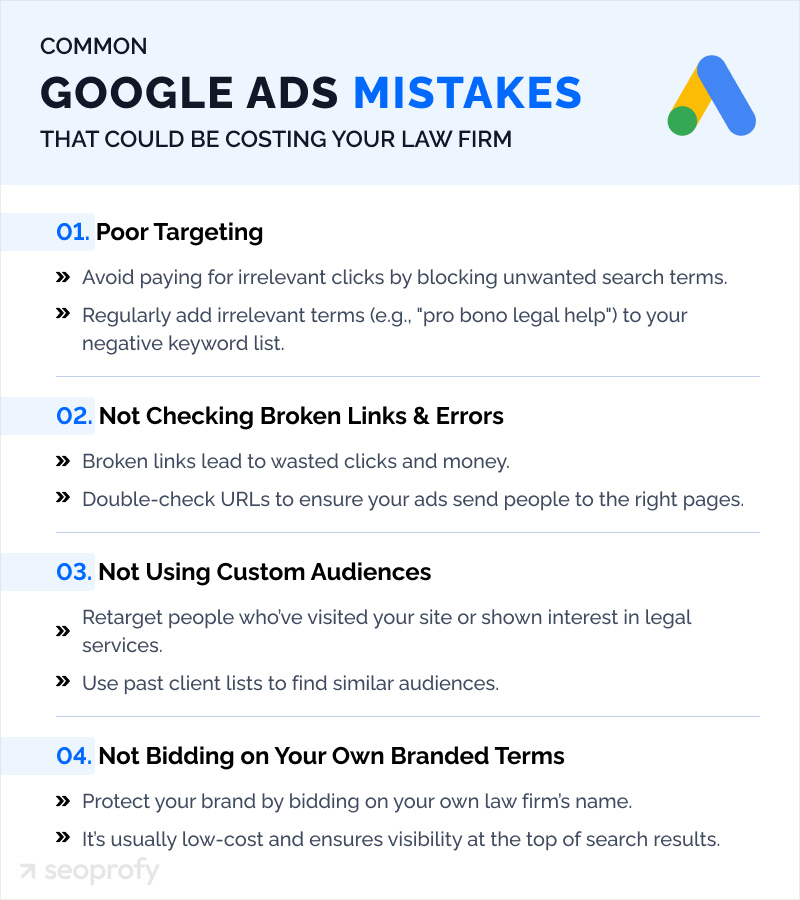
Common Mistakes to Avoid in Google Ads for Law Firms
Effective Google Ads campaigns for law firms require strategic planning and execution. This section identifies common pitfalls that can lead to wasted budgets and missed opportunities, ensuring law firms can optimize their advertising efforts.
Failing to Set a Clear Campaign Objective
Without a defined campaign objective, law firms risk misallocating resources and failing to achieve desired outcomes. Objectives should be specific, measurable, achievable, relevant, and time-bound (SMART). Common objectives include increasing website traffic, generating leads, or boosting brand awareness. For instance, a firm may aim to acquire 50 new client inquiries within three months. Setting clear objectives allows for better performance tracking and resource allocation.
Neglecting Keyword Research and Negative Keywords
Effective keyword research is vital for targeting the right audience. Law firms often overlook the importance of identifying both primary and secondary keywords that potential clients might use in search queries. Incorporating negative keywords—terms that should trigger the exclusion of ads—can prevent budget waste on irrelevant clicks. For example, a personal injury law firm might use negative keywords like “free” or “pro bono” to filter out non-paying inquiries. According to recent studies, campaigns that utilize comprehensive keyword strategies can see a 30% improvement in click-through rates.
Not Tracking Conversions Effectively
Tracking conversions is essential for evaluating the success of Google Ads campaigns. Law firms frequently neglect to implement conversion tracking tools or misconfigure them. This oversight can lead to an inability to assess which ads or keywords are driving client inquiries. Utilizing tools like Google Analytics enables firms to gain insights into user interactions, allowing for data-driven adjustments. Reports indicate that businesses that track conversions are 12 times more likely to see a positive return on investment.
Overlooking the Importance of Ad Copy and Landing Page Alignment
Ad copy must resonate with the intended audience and align with the landing page content. Many law firms create compelling ads but fail to deliver a consistent message on their landing pages. This disconnection can lead to higher bounce rates and lower conversion rates. Best practices include ensuring that the ad’s headline matches the landing page title and that the content addresses the user’s needs. A study revealed that aligned ad copy and landing pages can increase conversion rates by up to 50%.
Common misconceptions suggest that simply increasing ad spend will yield better results. However, strategic adjustments to targeting, keyword selection, and ad copy often provide more significant gains. Additionally, many firms underestimate the role of A/B testing in refining ads and landing pages, which can lead to more effective campaigns.
To leverage these insights, law firms should:
- Establish clear campaign objectives before launching ads.
- Conduct thorough keyword research, including the use of negative keywords.
- Implement robust conversion tracking to monitor performance accurately.
- Ensure that ad copy and landing pages are aligned in messaging and purpose.
By focusing on these key areas, law firms can enhance their Google Ads for law firm marketing, driving better engagement and ultimately, higher client acquisition rates.
Real-World Case Studies of Successful Law Firm Campaigns
This section explores practical examples of law firms that have leveraged Google Ads effectively. Highlighting their strategies and results provides valuable insights for legal practitioners looking to enhance their marketing efforts.

Case Study: Personal Injury Law Firm Achieves 300% ROI
A personal injury law firm based in California implemented a targeted Google Ads campaign that resulted in a remarkable 300% return on investment (ROI). The firm focused on high-conversion keywords such as “car accident lawyer” and “personal injury attorney,” optimizing their ad copy for local relevance. By allocating a budget of $10,000 over three months, they generated $30,000 in new client fees.
- Keyword Strategy: Focused on long-tail keywords that indicated intent, such as “best car accident lawyer near me.”
- Ad Extensions: Used location and call extensions to increase visibility and encourage immediate contact.
- Landing Page Optimization: Created dedicated landing pages tailored to specific services, enhancing user experience and conversion rates.
Example: Family Law Practice Increases Leads by 150%
A family law practice in Texas achieved a 150% increase in leads within six months by utilizing Google Ads. The firm targeted keywords related to divorce and child custody, coupled with compelling ad copy that addressed common client concerns.
- Ad Scheduling: Ads were scheduled to run during peak search times, maximizing visibility when potential clients were most active.
- Geo-Targeting: Focused on specific zip codes to reach a more relevant audience, reducing wasted ad spend.
- A/B Testing: Conducted A/B tests on ad variations to determine which messages resonated best with the audience.
Analysis: Criminal Defense Attorney’s Successful Ad Strategy
A criminal defense attorney in Florida utilized a comprehensive Google Ads strategy that included a mix of search ads and display ads. By analyzing user behavior and adjusting bids accordingly, the attorney saw a significant uptick in inquiries. Their approach included:
- Remarketing Campaigns: Targeted users who previously visited the website, keeping the firm top-of-mind.
- Quality Score Improvement: Focused on improving ad relevance and landing page experience, leading to lower costs per click.
- Dynamic Keyword Insertion: Customized ads to include search terms, increasing click-through rates significantly.
Lessons from Failed Campaigns and How to Pivot
Not all campaigns yield positive results. A law firm that invested heavily in generic keywords without local targeting saw high costs and low conversions. Key lessons learned include:
- Focus on Local Keywords: Generic terms often attract irrelevant traffic. Localizing keyword strategies enhances relevance.
- Monitor and Adjust Budgets: Regularly review ad performance and reallocate budgets to high-performing campaigns.
- Utilize Analytics: Employ tools like Google Analytics to track user behavior and adjust campaigns based on data insights.
Many firms overlook the importance of ongoing optimization. Regularly reviewing campaign metrics, adjusting bids, and refining ad copy can lead to sustained success.
Legal practitioners can apply these insights by:
- Conducting thorough keyword research tailored to their practice area.
- Implementing A/B testing for ad variations to identify the most effective messaging.
- Regularly analyzing campaign performance to make data-driven adjustments.
Evaluating the Best Google Ads For Law Firm Marketing
In the rapidly evolving landscape of digital marketing, law firms must carefully evaluate their advertising options to maximize their reach and effectiveness. A projected market growth of 10% annually from 2024 to 2026 highlights the increasing importance of strategic online advertising for legal services. Key criteria to consider include pricing, targeting capabilities, and unique features that cater specifically to law firms.
| Provider / Option | Best For | Pricing | Key Feature |
|---|---|---|---|
| Google Ads | Most comprehensive advertising solution | Pay-per-click, average $1-$2 per click | Extensive targeting options |
| Bing Ads | Cost-effective alternative for reach | Pay-per-click, average $0.50-$1 per click | Less competition than Google |
| Facebook Ads | Engaging local audiences visually | Pay-per-click, average $0.50-$3 per click | Highly targeted audience segmentation |
| LinkedIn Ads | Professional targeting for law firms | Pay-per-click, average $2-$5 per click | Access to business professionals |
| AdRoll | Retargeting potential clients effectively | Subscription model, starting at $300/month | Cross-platform retargeting |
| WordStream | Campaign management and optimization | Starts at $264/month | Automated optimization tools |
Criteria for Evaluating Program Quality
Pricing: Analyze the cost structure of each platform, including both average pay-per-click rates and any subscription fees. This will help in budgeting effectively for advertising campaigns.
Targeting Capabilities: Evaluate the ability of each provider to reach specific demographics and geographic areas. Effective targeting is crucial for law firms aiming to connect with potential clients in their locality.
Key Features: Consider unique features offered by each platform, such as retargeting options or audience segmentation. These tools can enhance campaign effectiveness and improve return on investment.
Campaign Management: Assess the level of support and tools available for managing and optimizing campaigns. Platforms that provide automated optimization or detailed analytics can significantly reduce management time and increase performance.
How to Assess the Reputation and Reliability of Providers
- Review Client Testimonials: Look for feedback from current or past users on the provider’s website or third-party review sites to gauge satisfaction levels.
- Check Industry Awards: Investigate if the provider has received any industry recognition or awards that validate its effectiveness and reliability.
- Analyze Case Studies: Examine case studies published by the provider to understand their success rates and the results they have achieved for similar businesses.
- Evaluate Customer Support: Reach out to the provider’s customer support with inquiries to assess responsiveness and the quality of assistance offered.
-
Research Online Presence: Analyze the provider’s online presence through social media and forums to gather insights about their reputation and user experiences.
Which google ads For Law Firm Marketing Is Right for You?
The optimal Google Ads strategy for law firms hinges on specific business needs, budget constraints, and marketing goals. This guide provides tailored recommendations for various types of law practices, ensuring that each firm can effectively leverage online advertising to enhance visibility and attract clients.
Solo Law Practitioners
Solo practitioners should prioritize google ads for its broad reach and cost-effective pay-per-click (PPC) model. By focusing on localized keywords and utilizing ad extensions, practitioners can target potential clients in their area. A budget of $500 to $1,500 per month can yield significant results, especially when optimizing for specific practice areas.
Small Law Firms
Small law firms can enhance local engagement and brand awareness by implementing a combination of Google Ads and Facebook Ads. Google Ads can capture intent-driven traffic, while Facebook Ads can build community presence through targeted demographics. A typical budget of $1,000 to $3,000 per month allows for effective ad placement and audience targeting.
Mid-Sized Law Practices
Mid-sized law practices should focus on LinkedIn Ads to leverage professional networking and targeted outreach. This platform is ideal for B2B connections and allows firms to promote content to decision-makers. Allocating $1,500 to $4,000 per month can help establish authority and attract high-value clients in specialized practice areas.
Large Law Firms
Large law firms require a comprehensive marketing strategy that combines Google Ads with retargeting efforts through platforms like AdRoll. This dual approach maximizes conversions by capturing leads and re-engaging visitors who did not convert initially. A robust budget of $5,000 to $15,000 per month is recommended to support extensive campaigns and sophisticated targeting.
| If You Are… | Best Approach |
|---|---|
| Solo Law Practitioners | Focus on Google Ads with a budget of $500 to $1,500/month. |
| Small Law Firms | Use a mix of Google and Facebook Ads with a budget of $1,000 to $3,000/month. |
| Mid-Sized Law Practices | Utilize LinkedIn Ads with a budget of $1,500 to $4,000/month. |
| Large Law Firms | Implement Google Ads and AdRoll retargeting with a budget of $5,000 to $15,000/month. |
Local Insights for Google Ads in Law Firm Marketing
Understanding geographic and local market factors is crucial for law firms utilizing Google Ads, as 46% of all Google searches are seeking local information. A targeted approach can significantly improve conversion rates, with local SEO strategies yielding a 7.8x higher conversion rate compared to non-local searches.
Geographic Market Differences
In competitive urban markets like Los Angeles or New York, law firms face intense competition for Google Ads visibility, necessitating higher bids and more refined targeting. Conversely, in smaller markets such as Boise or Springfield, firms may find lower competition and cost-effective advertising opportunities. Local firms should assess their unique market dynamics to tailor their campaigns effectively.
Local Business Applications
Local law firms can leverage Google Ads in several impactful ways:
- Targeted Location Campaigns: Firms can create ads that only appear to users within specific zip codes, maximizing relevance.
- Service Area Ads: Highlighting particular legal services (e.g., family law, personal injury) can attract clients searching for local expertise.
- Call-Only Ads: Encouraging immediate contact, these ads can drive potential clients directly to the phone, which is vital in urgent legal situations.
- Remarketing Strategies: Re-engaging visitors who previously interacted with the firm’s website can improve conversion chances significantly.
Local Search and Visibility Impact
Implementing Google Ads effectively can enhance a law firm’s local search rankings and visibility on platforms like Google Business Profile. To capitalize on this, firms should:
- Ensure their Google Business Profile is fully optimized with accurate NAP (Name, Address, Phone) information.
- Incorporate local keywords in their ads to improve relevance and targeting.
- Utilize location extensions in ads to showcase the firm’s address and encourage visits.
- Monitor and respond to reviews on their Google Business Profile to boost local trust and engagement.
Pricing and Cost in Local Markets
Costs for Google Ads in law firm marketing can vary significantly. In high-demand areas like San Francisco, law firms may pay upwards of $15-$25 per click, while in less competitive regions, the cost can be as low as $5-$10 per click. Local businesses should budget accordingly, potentially allocating around $1,000 to $3,000 monthly for effective campaigns, while national firms may need to invest $10,000 or more to achieve similar visibility.
Local Implementation Checklist:
- Identify target geographic areas for ads.
- Optimize Google Business Profile with accurate information.
- Use location and service-specific keywords in ad copy.
- Implement call-only ads to encourage immediate client contact.
- Engage with customer reviews to enhance local reputation.
- Set a monthly budget based on local market costs.
- Track and analyze ad performance for continuous improvement.
For law firms looking to generate local leads through Google Ads or Local SEO, GMB Ranger LLC offers hands-on campaign management. Specialist Md Tangeer Mehedi personally handles campaign setup and ongoing optimization — with no payment required until the first lead comes in.
Frequently Asked Questions
What are Google Ads and how do they work for law firms?
Google Ads are paid advertisements that appear on Google search results and partner sites. For law firms, they target specific keywords to attract potential clients actively searching for legal services.
How much do Google Ads cost for law firms?
The cost of Google Ads for law firms varies widely based on competition, location, and targeted keywords. Law firms often experience higher costs per click due to the competitive nature of legal services.
What are the best practices for using Google Ads in law firm marketing?
Best practices include targeting specific keywords, using location-based targeting, and creating compelling ad copy. Regularly monitoring and optimizing campaigns based on performance data is also essential for success.
How long does it take to see results from Google Ads for law firms?
Results from Google Ads can typically be seen within a few days to weeks, depending on the campaign setup and budget. However, optimizing campaigns for better performance may take longer to achieve maximum effectiveness.
What is the difference between Google Ads and Facebook Ads for law firm marketing?
Google Ads target users actively searching for legal services, making them highly intent-driven. In contrast, Facebook Ads focus on demographic targeting and can create brand awareness among users who may not be actively seeking legal help.
Final Thoughts on Google Ads for Law Firm Marketing
Harnessing the power of Google Ads is essential for law firms aiming to enhance their visibility and attract potential clients in a highly competitive landscape. The strategic application of advanced targeting, adherence to best practices, and learning from successful case studies can significantly elevate a firm’s marketing efforts and deliver measurable results.
Law firms should conduct a comprehensive audit of their current Google Ads campaigns, focusing on optimizing keywords and ad copy to align with the specific needs of their target audience. This proactive approach will set the foundation for sustained growth and improved ROI.
Ready to take your law firm’s marketing to the next level? Discover how a google ads agency can help you reach your target clients effectively.
In an era where digital presence dictates client engagement, mastering Google Ads is not just beneficial—it’s imperative for law firms that aspire to thrive in today’s market.
Leave a Reply