
Google Ads for construction companies refers to paid search advertising that enables businesses in the construction sector to specifically target potential clients. This advertising strategy can yield an average return on investment (ROI) of $2 for every $1 spent, significantly enhancing visibility and client acquisition.
Understanding Google Ads for construction companies is crucial for industry professionals seeking to expand their client base and improve their online presence. As the construction market continues to grow, with an estimated worth of over $1.3 trillion in the U.S. by 2025, leveraging effective digital marketing strategies becomes essential to remain competitive and capitalize on emerging opportunities.
Failure to effectively utilize google ads can result in missed revenue opportunities, wasted marketing budgets, and a significant competitive disadvantage in a crowded marketplace. Construction companies that neglect this advertising channel may find it challenging to attract new clients and retain existing ones.
This article will provide a comprehensive overview of Google Ads for construction companies, including a comparison of top providers, detailed cost breakdowns, best practices for campaign management, and the integration of local SEO strategies to maximize reach and effectiveness.
For Construction Companies businesses looking to generate local leads through Google Ads or Local SEO, GMB Ranger LLC offers hands-on campaign management. Specialist Md Tangeer Mehedi personally handles campaign setup and ongoing optimization — with no payment required until the first lead comes in.
What are Google Ads for construction companies?
Google Ads for construction companies are paid advertising solutions offered by Google that allow construction businesses to promote their services on search results and partner websites. These ads are designed to target potential clients actively searching for construction-related services, with a potential return on investment of up to 200% for every dollar spent.
Google Ads operates on a pay-per-click (PPC) model, where businesses only pay when a user clicks on their ad. This model is highly relevant for the construction industry, as it allows companies to reach specific demographics and geographical areas where their services are needed. The ability to tailor ads based on keywords, location, and user behavior makes Google Ads a powerful tool for construction firms aiming to increase visibility and attract new clients.
- Search Ads: Text-based ads that appear at the top of Google search results when users search for relevant keywords.
- Display Ads: Visual banner ads displayed on websites within the Google Display Network, targeting users based on their interests and browsing behavior.
- Video Ads: Ads that play before or during YouTube videos, allowing construction companies to showcase their projects and services through engaging visual content.
Effective Google Ads campaigns for construction companies require ongoing management, including keyword optimization, ad performance tracking, and budget adjustments. Analyzing metrics such as click-through rates (CTR) and conversion rates helps in refining strategies to maximize ad effectiveness. As of 2024, nearly 80% of consumers conduct online research before making purchasing decisions, underscoring the importance of a strong online presence through Google Ads.
Expert insight: To enhance the performance of Google Ads, construction companies should focus on local SEO strategies, ensuring that their ads target specific geographic areas where they operate, thereby attracting the right clientele efficiently.
How can construction companies use Google Ads effectively?
Construction companies can effectively use Google Ads by implementing targeted strategies, creating compelling ads, and managing their budgets wisely. In 2024, 75% of businesses reported improved lead generation through targeted Google Ads campaigns.
To maximize the effectiveness of Google Ads, construction companies should focus on the following steps:
- Identify Target Audience: Clearly define your target market, including demographics, location, and specific needs. Utilize Google Ads’ audience targeting features to reach homeowners, property developers, or businesses in need of construction services.
- Conduct Keyword Research: Utilize tools like Google Keyword Planner to identify relevant keywords related to construction services. Focus on long-tail keywords that capture specific services, such as “commercial roofing installation” or “residential remodeling.”
- Create Compelling Ad Copy: Develop engaging ad text that highlights your unique selling propositions, such as certifications or customer testimonials. Use clear calls to action, like “Get a Free Estimate,” to encourage clicks.
- Utilize Ad Extensions: Enhance your ads with extensions, such as site links or call buttons, to provide potential customers with additional options. This increases visibility and can lead to higher click-through rates.
- Set a Realistic Budget: Establish a budget that aligns with your business goals and the competitive landscape. Monitor your spending regularly to ensure you are maximizing ROI while staying within your budget constraints.
- Analyze and Optimize: Regularly review campaign performance metrics, such as click-through rates and conversion rates. Use this data to make informed adjustments to keywords, ad text, and targeting strategies.
Expert insight: Implementing remarketing strategies can significantly enhance lead conversion by keeping your brand top-of-mind for potential clients who previously interacted with your ads.
What is the cost of Google Ads for construction companies?
The cost of Google Ads for construction companies typically ranges from $2 to $10 per click. Factors such as location, competition, and ad quality significantly influence overall ad spend, which can vary widely based on individual business needs.
Several elements affect the cost of Google Ads for construction companies. The primary factor is the keyword competition in specific regions. High-demand areas with numerous construction firms will generally have higher click costs. Additionally, the quality score of the ads, which is determined by relevance and user experience, can lower costs if optimized effectively. Companies with well-structured campaigns often see better performance and reduced expenses.
- Geographic location: Costs can vary dramatically depending on the market. Urban areas often have higher costs due to increased competition.
- Ad relevance: Google rewards ads that are closely aligned with user search intent, impacting the cost-per-click (CPC).
- Seasonality: Certain times of the year may see spikes in demand for construction services, leading to increased ad costs.
Expert insight: To maximize ROI, construction companies should continuously monitor their ad performance and adjust bids based on the most effective keywords and demographics. Testing different ad formats and landing pages can also lead to improved engagement and lower costs over time.
How long does it take to see results from Google Ads?
Typically, construction companies can expect to see initial results from Google Ads within 1 to 3 months. However, achieving optimal performance may take longer, often around 6 months or more, depending on various factors.
Several factors influence the timeline for seeing results from Google Ads. First, the competitiveness of the construction industry in the targeted geographic area plays a significant role. Highly competitive markets may require more time and budget to achieve visibility and traction. Additionally, the quality and relevance of the ads directly impact performance; well-crafted ads that resonate with the audience can generate faster results.
Another critical aspect is the optimization process. Google Ads campaigns require continuous monitoring and adjustments to improve performance. Factors such as keyword selection, ad copy, landing page experience, and bidding strategies all contribute to the effectiveness of the campaign. Companies that invest time in A/B testing and refining their strategies are likely to see results more quickly.
Expert insight: For construction companies, allocating a sufficient budget for the initial phase can expedite results. A recommended starting budget is between $1,000 and $3,000 per month, which allows for data collection and adjustments that enhance campaign efficiency.
What are the best practices for Google Ads in the construction sector?
Effective Google Ads strategies for construction companies focus on targeted messaging, keyword optimization, and continuous performance analysis. Businesses can expect an average click-through rate (CTR) of 3.17% in the construction industry, which emphasizes the need for precise ad campaigns that resonate with potential clients.
To maximize the effectiveness of Google Ads, construction companies should implement the following best practices:
- Utilize Local Targeting: Focus on geographic locations relevant to your services. Use location extensions to show your business address and ensure ads reach clients in your operational areas.
- Optimize Keywords: Conduct thorough keyword research to identify terms that potential clients use. Incorporate long-tail keywords like “commercial construction services in [city]” to capture specific search intent.
- Create Compelling Ad Copy: Highlight unique selling propositions and include strong calls to action. Use language that conveys trust and professionalism, such as “Licensed and Insured” or “Free Estimates.”
- Leverage Ad Extensions: Employ ad extensions to provide additional information, such as phone numbers, site links, and customer reviews. These can improve visibility and click rates.
- Monitor and Adjust Campaigns: Regularly analyze campaign performance using Google Ads metrics. Adjust bids, refine keywords, and update ad copy based on data to enhance results.
Expert insight: Invest in A/B testing for ad copy and landing pages to determine which variations yield the best conversion rates. Continuous testing can lead to significant improvements in ad performance over time.
How do Google Ads compare to other advertising methods for construction companies?
Google Ads offer a targeted, measurable approach to advertising that can outperform traditional methods and social media for construction companies. With a return on investment (ROI) that can reach up to 200% when optimized correctly, Google Ads provide immediate visibility and lead generation compared to other platforms.
Google Ads operate on a pay-per-click model, allowing construction companies to bid for keywords relevant to their services. This ensures that ads appear when potential clients actively search for construction-related terms. In contrast, social media advertising, while effective for brand awareness, often targets a broader audience and may not reach users actively seeking construction services. Traditional advertising methods, such as print or billboard ads, require a significant upfront investment with uncertain returns and lack the ability to track performance accurately.
- Google Ads: Targeted, measurable, and immediate lead generation through specific keyword searches.
- Social Media Advertising: Focuses on brand engagement and awareness, but may not directly convert users into leads.
- Traditional Advertising: High upfront costs, limited tracking capabilities, and often less effective in reaching immediate customer needs.
Another key difference lies in audience targeting. Google Ads allow for specific geographic targeting, which is vital for local construction companies. Social media platforms can segment audiences based on interests and demographics, but these methods may not align with the immediate needs of potential construction clients. Furthermore, traditional media lacks the precision of digital methods, often casting a wide net without ensuring the audience is relevant.
Expert insight: For construction companies, integrating Google Ads with a robust website and landing pages can amplify lead generation efforts, converting clicks into actionable inquiries effectively.
Can Google Ads help with local visibility for construction companies?
Yes, Google Ads can significantly enhance local visibility for construction companies. By utilizing location targeting features, businesses can reach potential customers in specific geographic areas, leading to increased inquiries and project opportunities. In 2024, 46% of all Google searches are expected to be local, underscoring the importance of local advertising.
For instance, consider a mid-sized construction company based in Austin, Texas. By setting up a Google Ads campaign with a focus on local keywords such as “home renovation Austin” or “commercial construction Austin,” the company can ensure that its ads appear prominently for users searching for these services within the city. This targeted approach allows the company to connect with homeowners and businesses actively seeking construction services, maximizing the chances of converting clicks into leads.
Moreover, Google Ads provides tools like location extensions, which display the company’s address and phone number directly in the ad. This feature not only boosts visibility but also builds trust with potential clients. Furthermore, by analyzing performance metrics, the company can refine its strategy, adjusting bids and targeting to focus on high-converting areas within Austin. With effective local targeting, construction companies can establish a strong presence in their communities and attract more clientele.
Expert insight: Utilize local ad scheduling to display ads during peak hours when potential clients are most likely to search for construction services, maximizing engagement and inquiries.
Advanced Targeting Techniques for Construction Ads
Implementing advanced targeting techniques in Google Ads can significantly enhance the effectiveness of advertising campaigns for construction companies. These strategies focus on reaching the right audience while minimizing wasted ad spend.

Utilizing Geo-Targeting to Reach Local Clients
Geo-targeting allows construction companies to focus their advertising efforts on specific geographic areas where potential clients are located. This method is particularly effective for local businesses seeking to attract nearby customers.
- Radius Targeting: Set a radius around your business location to target users within a certain distance.
- Location-Based Keywords: Incorporate local keywords in your ad copy and landing pages to improve relevance.
- Location Extensions: Use Google Ads location extensions to display your business address and phone number directly in the ads.
Statistics indicate that 76% of people who conduct a local search visit a business within a day, underscoring the importance of geo-targeting for construction companies.
Implementing Negative Keywords to Filter Unwanted Traffic
Negative keywords prevent ads from appearing in irrelevant searches, enhancing the quality of traffic directed to your site. This strategy reduces costs associated with clicks that are unlikely to convert.
- Identify Common Missearches: Analyze search queries to find terms that lead to clicks but do not result in conversions.
- Regularly Update Your List: Continuously refine your negative keyword list based on performance data to ensure optimal targeting.
- Utilize Google’s Suggestions: Use Google’s suggestions for negative keywords to cover a broad range of irrelevant searches.
Leveraging Audience Insights for Better Targeting
Utilizing audience insights provides valuable data on the demographics and behaviors of potential clients. Tools such as Google Analytics and audience reports enable construction companies to tailor their campaigns effectively.
- Custom Audiences: Create custom audiences based on previous interactions with your website or ads.
- In-Market Audiences: Target users actively searching for construction services or related products.
- Remarketing Strategies: Implement remarketing to re-engage users who have previously visited your site.
According to recent data, targeted advertising can lead to a 50% increase in conversion rates, demonstrating the power of audience insights.
Creating Custom Landing Pages for Specific Services
Directing traffic to custom landing pages tailored to specific services enhances user experience and improves conversion rates. Each landing page should reflect the unique selling points of the service offered.
- Service-Specific Content: Provide detailed information relevant to the service, including images, testimonials, and case studies.
- Clear Call-to-Action: Incorporate strong calls-to-action that guide users toward the desired action, such as requesting a quote.
- Mobile Optimization: Ensure that landing pages are optimized for mobile devices, as many users search for construction services on their phones.
Advanced targeting techniques in Google Ads for construction companies can lead to more efficient ad spending and higher conversion rates. To apply these strategies effectively:
- Set up geo-targeting parameters based on your service area.
- Create a comprehensive list of negative keywords and update it regularly.
- Utilize audience insights to refine your targeting and create custom audiences.
- Design landing pages for each specific service, incorporating tailored content and strong calls-to-action.
Common Mistakes to Avoid in Google Ads for Construction
Effective Google Ads campaigns require careful planning and execution. Common mistakes can lead to wasted budgets and diminished returns on investment, ultimately hindering growth for construction companies.
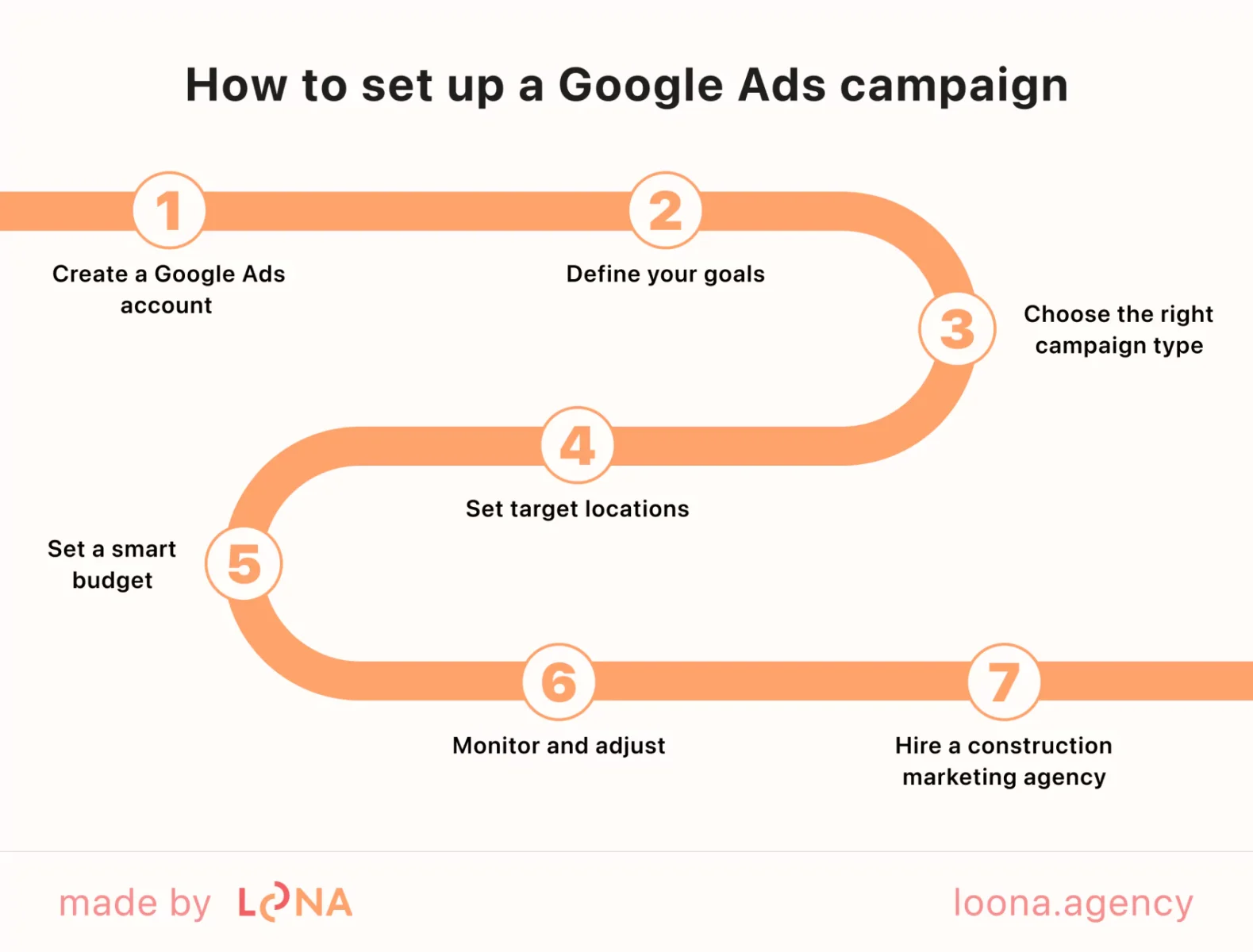
Not Optimizing Ad Copy for Conversions
Ad copy must be tailored to drive conversions. Effective headlines and descriptions should clearly communicate value propositions and calls to action. A study showed that businesses with optimized ad copy experience a conversion rate increase of up to 30%. Construction companies should emphasize unique selling points, such as specialized services or warranties, to distinguish themselves from competitors.
Ignoring Mobile Optimization
With over 60% of search queries originating from mobile devices, neglecting mobile optimization is a critical error. Ads and landing pages must be designed for mobile users, featuring fast load times and responsive layouts. Failure to address mobile users can lead to high bounce rates and lost opportunities, as potential clients may abandon sites that are difficult to navigate on their devices.
Failing to Track and Analyze Performance Metrics
Data-driven decision-making is essential for Google Ads success. Many construction companies overlook the importance of tracking key performance indicators (KPIs) such as click-through rates, conversion rates, and cost per acquisition. Regular analysis of these metrics can reveal underperforming ads and inform adjustments. According to recent data, businesses that actively monitor and refine their campaigns can reduce costs by up to 20% while enhancing overall performance.
Underutilizing Ad Extensions
Ad extensions enhance visibility and provide additional information to potential clients. Common types include site link extensions, call extensions, and location extensions. Using all relevant extensions can improve click-through rates by as much as 10-15%. For construction companies, highlighting specific services, customer testimonials, or direct contact options can significantly improve engagement.
Common Misconceptions About Google Ads
Many construction companies mistakenly believe that simply creating ads guarantees visibility and clicks. However, competition in this sector is fierce, and without strategic targeting and continuous optimization, ads may not reach the desired audience. Another misconception is that higher bids always lead to better ad placements. In reality, ad quality and relevance play a critical role in determining position, often yielding better results with lower bids when combined with high-quality content.
Practical Application
- Regularly review and optimize ad copy to enhance conversion rates, focusing on clear calls to action.
- Implement mobile-friendly designs for ads and landing pages to accommodate the growing mobile user base.
- Establish a routine for tracking and analyzing performance metrics, adjusting campaigns based on data insights.
- Utilize all available ad extensions to provide comprehensive information and improve click-through rates.
Real-World Case Studies of Successful Google Ads Campaigns
This section presents practical examples of effective Google Ads strategies employed by construction companies, illustrating both successes and failures. By analyzing these case studies, businesses can glean insights into optimizing their own campaigns for better results.
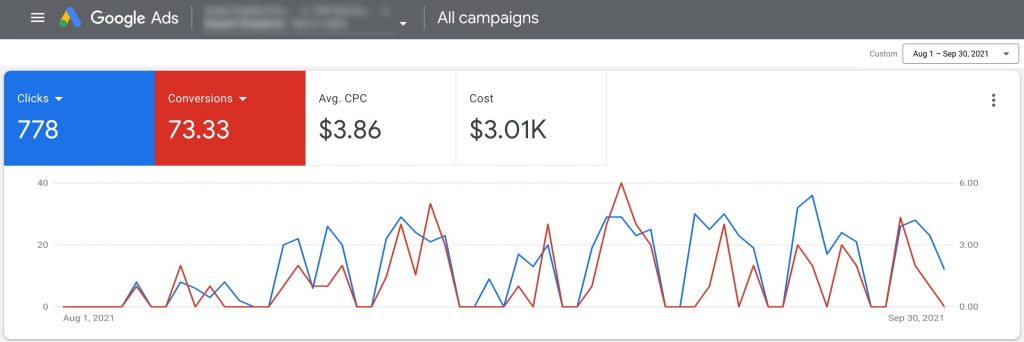
High ROI for a Small Contractor
A small contractor specializing in residential renovations achieved an impressive 300% return on investment (ROI) through a targeted Google Ads campaign. The contractor focused on local keywords, such as “kitchen remodeling near me” and “bathroom renovation services,” ensuring that ads were shown to users within a specific geographic radius. The campaign utilized ad extensions to highlight customer reviews and before-and-after project images, which significantly enhanced click-through rates.
Multi-Channel Approach by a Large Firm
A large construction firm successfully integrated Google Ads with other digital marketing channels, resulting in a 40% increase in lead generation over six months. The firm ran Google Ads campaigns alongside LinkedIn Ads and email marketing, sharing consistent messaging across platforms. This cohesive strategy not only increased brand visibility but also nurtured leads through targeted follow-up emails based on user interactions with the ads.
- Google Ads: Focused on high-intent keywords related to commercial construction.
- LinkedIn Ads: Targeted industry professionals and decision-makers with sponsored content.
- Email Marketing: Engaged leads with personalized content based on their ad interactions.
B2B Supplier’s Success with LinkedIn Ads
A B2B supplier of construction materials shifted focus from Google Ads to LinkedIn Ads, resulting in a 50% increase in qualified leads. By targeting decision-makers in the construction industry, the supplier effectively generated interest in their product offerings. This transition demonstrated the importance of selecting the right channel based on the target audience’s behavior and preferences.
Lessons from Failed Campaigns
Several construction companies faced challenges with their Google Ads campaigns due to common pitfalls. One notable example involved a contractor who relied heavily on broad match keywords without negative keyword exclusions. This led to irrelevant clicks and wasted ad spend, resulting in a 60% drop in ROI. Another firm failed to optimize landing pages, leading to high bounce rates and low conversion rates. These examples underscore the necessity for targeted keyword strategies and optimized landing pages to enhance campaign performance.
Key lessons learned include:
- Utilize specific, long-tail keywords to attract relevant traffic.
- Implement negative keywords to filter out irrelevant searches.
- Continuously optimize landing pages for better user experience and conversion rates.
In the realm of Google Ads for construction companies, understanding what works and what does not is crucial. Many campaigns falter due to poor targeting or ineffective ad copy, leading to wasted budgets. Moreover, the misconception that high ad spend guarantees success can lead to disappointment if strategic planning is lacking.
To apply these insights, construction companies should:
- Conduct thorough keyword research to identify high-intent phrases that resonate with their target audience.
- Test different ad formats and messages to determine what generates the best response.
- Regularly analyze campaign performance metrics to refine strategies and improve ROI.
Integrating Google Ads with Local SEO Strategies
This section examines how Google Ads can enhance local SEO initiatives for construction companies. By aligning advertising campaigns with local search strategies, businesses can maximize visibility and drive targeted traffic.

Aligning Ad Campaigns with Local SEO Keywords
To effectively integrate Google Ads with local SEO, it is essential to identify and use relevant local keywords in ad campaigns. This involves conducting keyword research to discover terms that potential clients use when searching for construction services in specific geographical areas. For instance, phrases like “general contractor in [city]” or “home renovation services near me” should be prioritized.
Using these keywords in both ad copy and landing pages enhances the relevance of the ads, which can lead to higher Quality Scores in Google Ads. A study by WordStream indicates that ads with a keyword relevance can achieve a click-through rate (CTR) increase of up to 50%.
Using Google My Business for Enhanced Visibility
Integrating Google My Business (GMB) with Google Ads significantly boosts local visibility. By optimizing GMB profiles, construction companies can appear in local search results and Google Maps. Key elements to focus on include:
- Accurate business information (name, address, phone number)
- High-quality images of projects
- Regular updates and posts about services or promotions
Furthermore, linking GMB to Google Ads allows companies to utilize location extensions, which display business addresses, enhancing the likelihood of attracting local customers. According to a 2024 survey, 76% of consumers who find local information in search results visit a business within a day.
Encouraging Online Reviews to boost Ad Performance
Online reviews play a critical role in influencing customer decisions. Encouraging satisfied clients to leave positive reviews can enhance both local SEO and Google Ads performance. Reviews not only improve GMB rankings but also establish credibility.
Construction companies should implement strategies to solicit reviews, such as:
- Following up with clients post-project completion
- Providing direct links to review platforms
- Incentivizing feedback through discounts on future services
Research shows that businesses with positive reviews can see a 25% higher conversion rate on ads compared to those without.
Tracking Local Conversions Effectively
To measure the success of integrated google ads and local SEO efforts, tracking local conversions is paramount. Implementing conversion tracking enables construction companies to identify which ads and keywords drive actual business outcomes, such as phone calls or completed contact forms.
Setting up tracking involves:
- Creating specific goals in Google Analytics.
- Linking Google Ads with Google Analytics for comprehensive data.
- Regularly analyzing performance metrics to optimize campaigns.
This data-driven approach allows for continuous improvement of marketing strategies, ensuring that resources are allocated effectively.
Successful integration of Google Ads with local SEO requires a strategic approach. Construction companies should prioritize local keywords, optimize GMB profiles, encourage positive reviews, and rigorously track conversions. By doing so, they can achieve a competitive edge in the local market and drive meaningful engagement with potential clients.
Evaluating the Best Google Ads For Construction Companies
As the construction industry increasingly turns to digital marketing, understanding the various advertising platforms is crucial for effective outreach. The global digital advertising market is projected to reach $786.2 billion by 2026, highlighting the importance of selecting the right provider. Evaluating options based on specific criteria such as pricing, targeting capabilities, and key features can significantly impact the success of advertising campaigns.
| Provider / Option | Best For | Pricing | Key Feature |
|---|---|---|---|
| Google Ads | Comprehensive advertising solutions | Pay-per-click model, average $1-$2 per click | Extensive targeting options |
| Bing Ads | Cost-effective alternative | Pay-per-click model, average $0.50-$1 per click | Less competition than Google |
| Facebook Ads | Visual engagement and branding | Pay-per-click model, average $0.50-$3 per click | Target specific demographics |
| LinkedIn Ads | B2B targeting in construction | Pay-per-click model, average $2-$7 per click | Professional audience targeting |
| AdRoll | Retargeting visitors effectively | Varies, average $1-$5 per click | Cross-platform retargeting |
| WordStream | Optimizing ad campaigns | Starts at $264/month | AI-driven optimization tools |
| SEMrush Ads Builder | Ad creation and management | Starts at $119.95/month | Comprehensive ad management tools |
Criteria for Evaluating Program Quality
Pricing: Evaluate the cost-effectiveness of each advertising platform based on its pricing model. Understanding the average cost per click (CPC) can help determine the budget required for effective campaigns.
Targeting Capabilities: Assess the targeting options available with each provider. Platforms like Google Ads offer extensive targeting, while others may focus on specific demographics or professional audiences, crucial for construction companies.
Key Features: Examine the unique features offered by each provider, such as retargeting capabilities or AI-driven tools. These features can enhance the effectiveness of ad campaigns and improve return on investment.
Optimization Tools: Look for platforms that provide optimization tools to enhance campaign performance. Providers like WordStream offer AI-driven optimization that can help maximize the effectiveness of ad spend through data-driven insights.
How to Assess the Reputation and Reliability of Providers
- Research Reviews: Check online reviews and testimonials from current and past users to gauge satisfaction and effectiveness.
- Evaluate Case Studies: Look for case studies that demonstrate successful ad campaigns, particularly in the construction sector.
- Check Industry Recognition: Investigate any industry awards or recognition received by the provider, indicating credibility and reliability.
- Request References: Ask the provider for references or examples of past work with similar businesses to assess their experience and success rate.
Which Google Ads For Construction Companies Is Right for You?
Selecting the right advertising platform for construction companies depends on specific business needs, budget, and goals. This guide provides tailored recommendations for various segments in the construction industry, ensuring that your advertising efforts align with your objectives for maximum impact.
Small construction firms
For small construction firms, Google Ads is an ideal choice to enhance local visibility and attract new clients quickly. Utilizing location targeting and relevant keywords can help you reach potential customers in your area. A budget of $500 to $1,500 per month can yield significant results, especially when focusing on specific services like home renovations or landscaping.
Large construction companies
Large construction companies might find Bing Ads to be a cost-effective alternative, particularly in less competitive markets. Bing Ads often have lower CPC rates compared to Google Ads, making it feasible to maintain a strong online presence. Allocating a monthly budget of $1,000 to $3,000 can help capture leads effectively while optimizing for specific project types or regions.
B2B construction suppliers
B2B construction suppliers should leverage LinkedIn Ads to connect with contractors and developers directly. By using Sponsored Content and InMail, suppliers can promote their products and services to a targeted audience. A budget of $1,000 to $2,500 per month is recommended for effective outreach and engagement within the construction sector.
Construction freelancers
For construction freelancers, Facebook Ads provide an excellent platform to visually showcase work and connect with potential clients. Utilizing photo and video ads can help highlight completed projects, attracting attention from homeowners and businesses alike. A monthly budget of $300 to $1,000 can effectively increase visibility and inquiries.
| If You Are… | Best Approach |
|---|---|
| Small construction firms | Google Ads (Budget: $500-$1,500) |
| Large construction companies | Bing Ads (Budget: $1,000-$3,000) |
| B2B construction suppliers | LinkedIn Ads (Budget: $1,000-$2,500) |
| Construction freelancers | Facebook Ads (Budget: $300-$1,000) |
Local Insights for Google Ads Targeting Construction Companies
Geographic and local market factors play a crucial role in the effectiveness of Google Ads for construction companies. In fact, 76% of consumers who conduct a local search visit a business within a day, highlighting the importance of targeting local audiences effectively. Understanding local market dynamics can significantly enhance ad performance and conversion rates.
Geographic Market Differences
In larger metropolitan areas like Los Angeles or New York City, competition for construction services is intense, necessitating a more aggressive and targeted ad strategy. Conversely, in smaller towns or rural regions, construction companies may find less competition, allowing for broader targeting. Businesses in competitive markets should prioritize niche services or unique selling propositions to stand out.
Local Business Applications
Local construction companies can leverage Google Ads in several impactful ways:
- Targeted Location Ads: Focus ads on specific neighborhoods or zip codes to reach homeowners planning renovations.
- Seasonal Promotions: Use ads to promote seasonal services such as snow removal or landscaping in specific regions.
- Local Partnerships: Collaborate with local real estate agents to run co-branded ads targeting potential homebuyers.
- Event-Based Advertising: Advertise during local community events or home shows to attract immediate interest.
Local Search and Visibility Impact
Google Ads directly impacts local search visibility by enhancing Google Business Profile (GBP) rankings. To maximize visibility, construction companies should:
- Optimize their Google Business Profile with up-to-date information and local keywords.
- Use location-specific keywords in ad campaigns to improve relevance.
- Encourage customer reviews on GBP to enhance credibility and visibility.
- Monitor and adjust ad spend based on local competition and seasonal trends.
Pricing and Cost in Local Markets
Costs for Google Ads can vary significantly across different geographic markets. In high-demand areas like San Francisco, average costs per click (CPC) for construction-related keywords can range from $5 to $15. Conversely, in less competitive markets, CPC may range from $1 to $3. Local businesses should budget between $500 to $2,000 monthly for effective campaigns, while national players might invest substantially more due to their broader reach.
Local Implementation Checklist:
- Conduct market research to identify local competitors and their ad strategies.
- Set up targeted Google Ads campaigns focusing on specific service areas.
- Regularly update your Google Business Profile with new offers and project images.
- Utilize local keywords in ad copy to increase relevance.
- Track and analyze ad performance to refine targeting and budget allocation.
- Engage with customers through reviews and local community events.
- Adjust bids based on performance metrics and local seasonality trends.
For Construction Companies businesses looking to generate local leads through Google Ads or Local SEO, GMB Ranger LLC offers hands-on campaign management. Specialist Md Tangeer Mehedi personally handles campaign setup and ongoing optimization — with no payment required until the first lead comes in.
Frequently Asked Questions
What are Google Ads for construction companies?
Google Ads for construction companies are online advertising solutions that allow businesses to promote their services through targeted ads on Google search results and partner sites. These ads help reach potential customers actively searching for construction-related services.
How can construction companies use Google Ads effectively?
Construction companies can use Google Ads effectively by targeting specific keywords related to their services, utilizing location targeting, and creating compelling ad copy. Regularly analyzing performance metrics allows for ongoing optimization of campaigns.
What is the cost of Google Ads for construction companies?
The cost of Google Ads for construction companies varies based on factors like keyword competition and geographic targeting. Companies typically pay on a pay-per-click (PPC) basis, which means they only pay when someone clicks on their ad.
How long does it take to see results from Google Ads?
Results from Google Ads can often be seen within a few days to weeks, depending on the campaign setup and budget. However, achieving optimal performance may take several weeks of data collection and adjustments.
What are the best practices for Google Ads in the construction sector?
Best practices for Google Ads in the construction sector include using specific and relevant keywords, creating targeted ad groups, and employing ad extensions to provide additional information. Regularly monitoring and adjusting campaigns based on performance data is also essential.
How do Google Ads compare to other advertising methods for construction companies?
Google Ads offer immediate visibility and targeted reach compared to traditional advertising methods like print or radio. They allow construction companies to connect with potential customers actively searching for their services, making them a highly effective option.
Can Google Ads help with local visibility for construction companies?
Yes, Google Ads can significantly enhance local visibility for construction companies by targeting specific geographic areas. Local targeting ensures that ads reach potential clients in the vicinity of the business, increasing the likelihood of conversions.
Final Thoughts on Google Ads for Construction Companies
Implementing Google Ads effectively can significantly enhance a construction company’s visibility and lead generation capabilities. The strategic use of advanced targeting techniques and a clear understanding of costs and timelines can lead to measurable success, as evidenced by real-world case studies.
To maximize your Google Ads investment, conduct a thorough analysis of your target audience and create tailored ad campaigns that speak directly to their needs, leveraging location-based targeting and relevant keywords to improve engagement and conversion rates.
Ready to elevate your construction business? Partner with a google ads management agency that understands your industry’s unique needs and can drive results.
Harnessing the power of Google Ads is not just an option; it is essential for construction companies seeking to thrive in a competitive market landscape.
Leave a Reply