
What are google ads for photographers?
Google Ads for photographers is a targeted advertising platform designed to help photographers connect with potential clients online. By utilizing this tool, photographers can enhance their visibility, attract new clientele, and achieve a return on investment of up to 200%.
Understanding Google Ads is essential for photographers looking to expand their business in an increasingly competitive marketplace. With the photography industry valued at over $10 billion in the U.S. alone, leveraging effective advertising strategies can significantly influence a photographer’s ability to secure clients. Failure to grasp these concepts could result in missed opportunities and diminished market presence.
Not comprehending the nuances of Google Ads can lead to substantial financial losses, wasted marketing budgets, and a competitive edge for others in the field who effectively engage with this platform.
This article will provide an in-depth exploration of Google Ads for photographers, including a comparison of top ad providers, cost breakdowns, best practices for ad creation, and insights into local SEO strategies to enhance your online presence.
For Photographers businesses looking to generate local leads through Google Ads or Local SEO, GMB Ranger LLC offers hands-on campaign management. Specialist Md Tangeer Mehedi personally handles campaign setup and ongoing optimization — with no payment required until the first lead comes in.
What are Google Ads for photographers?
Google Ads for photographers are online advertising campaigns specifically designed to help photographers promote their services and attract new clients through Google’s search engine and display network. These ads allow photographers to target specific audiences, with the potential for a return on investment (ROI) that can exceed 200% when optimized correctly.
Photographers can utilize various ad formats, such as text ads, display ads, and video ads, to showcase their work and services. Key components of Google Ads include targeting options, budget control, and performance tracking. By using relevant keywords and location targeting, photographers can reach potential clients actively searching for photography services in their area.
- Text Ads: Simple ads that appear on Google search results, typically featuring a headline, description, and link to the photographer’s website.
- Display Ads: Visual banner ads that appear on websites within Google’s Display Network, allowing photographers to visually showcase their portfolios.
- Video Ads: Ads that can be displayed on platforms like YouTube, providing an opportunity for photographers to present their work in a dynamic format.
Effective Google Ads campaigns require careful keyword selection and ad copy that resonates with the target audience. Regular analysis and optimization of campaigns can significantly enhance visibility and engagement. Photographers should also consider seasonal trends and local events that may influence demand for their services.
Expert insight: Utilize A/B testing to determine the most effective ad copy and visuals. This approach can lead to improved click-through rates and conversion rates, maximizing the impact of your advertising spend.
How can photographers use Google Ads effectively?
Photographers can use Google Ads effectively by implementing targeted strategies that maximize visibility and engagement. With nearly 80% of consumers conducting online searches before making a purchase, an optimized Google Ads campaign can significantly increase client inquiries and bookings.
- Define Your Target Audience: Identify specific demographics, such as age, location, and interests, to tailor your ads for potential clients. Focus on niches like weddings, portraits, or commercial photography to enhance relevance.
- Utilize Keyword Research: Conduct thorough keyword research to find terms potential clients are searching for. Use tools like Google Keyword Planner to identify high-traffic keywords related to photography services.
- Create Compelling Ad Copy: Write clear, engaging ad copy that highlights your unique selling points. Use strong calls-to-action (CTAs) and emphasize special offers or packages to entice clicks.
- Leverage Ad Extensions: Implement ad extensions, such as location and call extensions, to provide additional information. These can increase click-through rates by up to 20% by making your ad more informative.
- Optimize Landing Pages: Ensure that the landing pages linked to your ads are relevant and user-friendly. A well-designed landing page can improve conversion rates by providing a seamless experience from ad click to inquiry.
- Monitor and Adjust Campaigns: Regularly review campaign performance metrics like click-through rates (CTR) and conversion rates. Use this data to tweak keywords, ad copy, and budgets for optimal results.
Expert insight: Invest in remarketing strategies to re-engage visitors who did not convert initially. This can significantly increase conversion rates, as these users have already shown interest in your services.
What is the cost of Google Ads for photographers?
The cost of Google Ads for photographers typically ranges from $1 to $3 per click, though this can vary widely based on several factors. On average, photographers might spend anywhere from $300 to $1,500 per month depending on their advertising strategy and target audience.
Several factors influence the cost of Google Ads for photographers. These include:
- Competition: The more photographers targeting the same keywords in a specific area, the higher the cost per click (CPC) will be. Competitive markets can drive CPCs significantly higher.
- Targeting Options: The use of geographical targeting, demographic filters, and audience interests can affect costs. More granular targeting can lead to higher CPCs.
- Ad Quality: Google uses a quality score to determine ad placement and cost. Higher quality ads, which engage users effectively, can lower costs and improve visibility.
Additionally, the type of photography services offered can impact costs. Niche services may have lower competition and, consequently, lower CPCs. Conversely, popular services such as weddings or corporate events may incur higher costs due to increased competition.
Expert insight: To optimize spending on Google Ads, photographers should focus on long-tail keywords specific to their services. This approach often results in lower CPCs while attracting more targeted traffic, ultimately leading to a better return on investment.
How long does it take to see results from Google Ads?
Photographers can typically start seeing results from Google Ads campaigns within 4 to 6 weeks. However, the exact timeline can vary based on several factors, including budget, targeting settings, and competition in the local market.
The timing for results primarily hinges on how quickly Google can gather data about your ads’ performance. Once a campaign is launched, it may take a few days to a week for the algorithm to optimize ad placements. Consequently, initial impressions and clicks may not translate into immediate inquiries or bookings. A well-structured campaign can yield significant visibility and lead generation within a month, but ongoing adjustments and optimizations are usually necessary for sustained results.
Another crucial factor is the competitive landscape. In markets with high competition, it may take longer to achieve desired outcomes. Photographers in niche markets or with specialized services might see quicker results due to lower competition. Additionally, the effectiveness of your ad copy and visuals can influence how quickly potential clients engage with your ads. High-quality images and compelling messaging are essential for attracting clicks and conversions.
Expert insight: To maximize the effectiveness of Google Ads, continuously monitor and refine your campaigns based on performance metrics. This iterative process will help in achieving faster and more impactful results.
What are the best practices for Google Ads targeting photographers?
Effective Google Ads for photographers require strategic targeting to reach potential clients. Implementing best practices can significantly enhance ad performance, leading to higher engagement and conversion rates. According to recent studies, businesses utilizing targeted ads can experience up to a 50% increase in ROI.
Photographers can optimize their Google Ads campaigns through the following best practices:
- Utilize Local Targeting: Focus on geographic locations where potential clients are likely to seek photography services. Use location targeting to narrow your audience to specific cities or neighborhoods.
- Leverage Keyword Research: Conduct thorough keyword research to identify terms potential clients use when searching for photography services. Use tools like Google Keyword Planner to find high-traffic, relevant keywords.
- Create Compelling Ad Copy: Write clear and engaging ad copy that highlights unique selling points, such as specializations (e.g., weddings, portraits) and offers. Include strong calls to action to encourage clicks.
- Implement Ad Extensions: Use ad extensions to provide additional information such as location, contact details, and links to specific services. This increases ad visibility and improves click-through rates.
- Monitor and Adjust Campaigns: Regularly review performance metrics such as click-through rates (CTR) and conversion rates. Adjust bids, keywords, and ad copy based on performance data to optimize results.
Expert insight: Continuously testing different ad variations can reveal which elements resonate most with your target audience, allowing you to refine your approach for maximum effectiveness.
How do Google Ads compare to Facebook Ads for photographers?
Google Ads and Facebook Ads offer distinct advantages for photographers, depending on their marketing goals. Google Ads typically targets users actively searching for photography services, while Facebook Ads leverage demographic and interest-based targeting to reach potential clients. Approximately 63% of marketers report that Google Ads deliver higher conversion rates compared to social media platforms.
Google Ads function primarily on a pay-per-click basis, displaying ads to users who input relevant keywords. This ensures that ads are shown to individuals already interested in photography services, leading to higher intent and potentially better conversion rates. In contrast, Facebook Ads allow photographers to create visually engaging ads that can reach a broader audience based on interests, behaviors, and demographics. This can be particularly effective for brand awareness, especially for photographers looking to showcase their portfolio.
- Targeting: Google Ads focus on intent-driven searches; Facebook Ads utilize demographic and interest-based targeting.
- Ad Format: Google Ads primarily use text and image formats; Facebook Ads emphasize visual content, including videos and carousels.
- Cost Structure: Google Ads often have a higher cost-per-click, while Facebook Ads can be more budget-friendly with varied pricing options.
Each platform has its own strengths. For photographers aiming to capture immediate leads, Google Ads may be more effective due to its search-focused nature. On the other hand, Facebook Ads are valuable for building brand awareness and showcasing a portfolio to a broader audience.
Expert insight: Combining both platforms can yield synergistic results. Use Google Ads for immediate lead generation and Facebook Ads for long-term brand building and engagement. This dual approach can maximize visibility and client acquisition in the competitive photography market.
Advanced Google Ads Strategies for Photographers
This section delves into sophisticated strategies for optimizing Google Ads campaigns tailored specifically for photographers. Implementing these tactics can significantly enhance visibility, engagement, and overall campaign effectiveness.
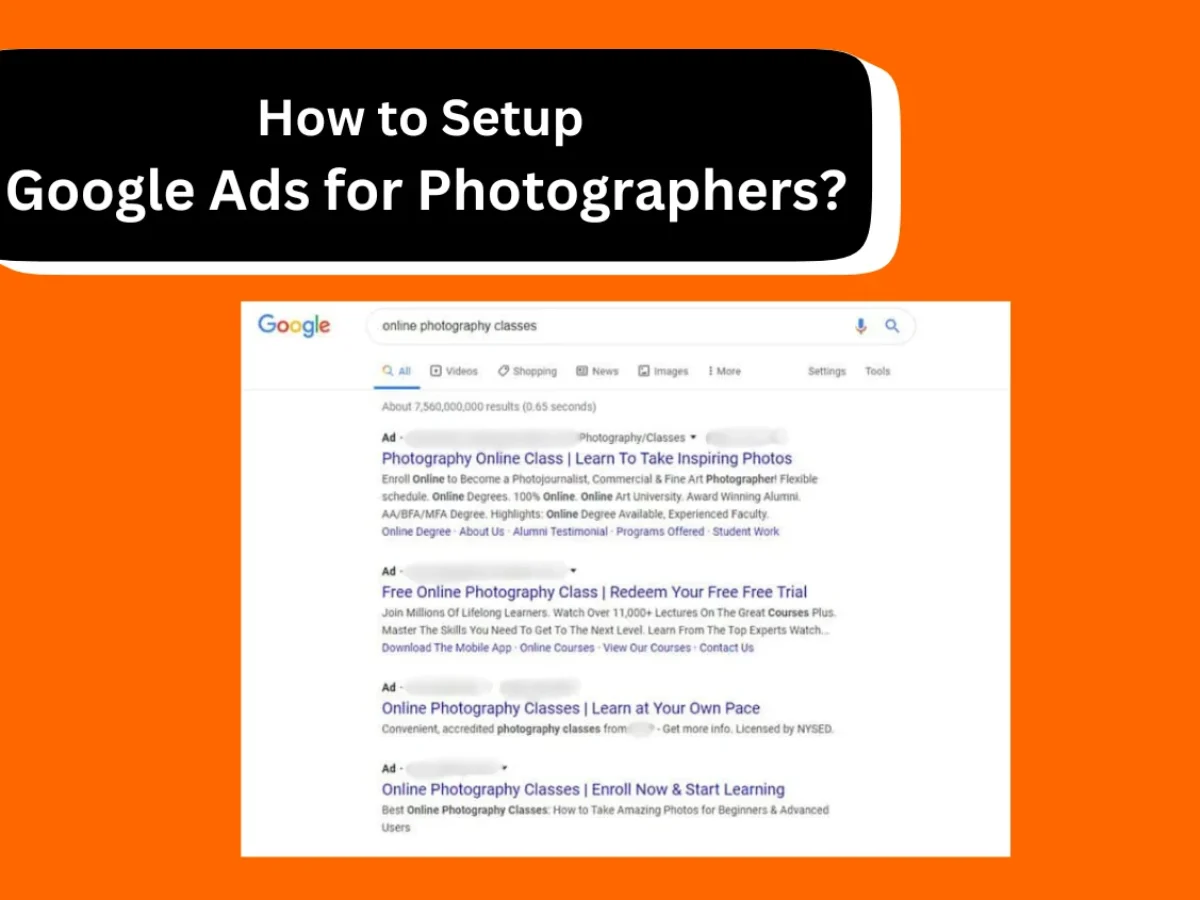
Utilizing Ad Extensions to Enhance Visibility
Ad extensions are essential tools that increase the visibility and effectiveness of Google Ads. Photographers can utilize various ad extensions to provide potential clients with more information and drive higher click-through rates. Consider the following types of ad extensions:
- Location Extensions: Showcase your studio’s address to attract local clients.
- Call Extensions: Enable potential clients to call directly from the ad, improving lead generation.
- Site Link Extensions: Direct users to specific pages such as portfolios, services, or pricing.
According to recent data, ads with at least one extension can see up to a 30% increase in click-through rates.
Segmenting Campaigns Based on Photography Niche
Segmenting campaigns allows for more targeted messaging, which resonates better with specific audiences. Photographers often specialize in niches such as weddings, portraits, or commercial photography. Create separate campaigns for each specialty to tailor ad copy, keywords, and landing pages effectively. This approach not only improves relevance but also enhances Quality Scores, leading to lower costs per click.
For example, a wedding photographer should focus on keywords related to wedding photography packages, tips for couples, and seasonal promotions, while a portrait photographer might target family portraits, senior photos, or corporate headshots.
Leveraging Remarketing Strategies to Re-Engage Visitors
Remarketing is a powerful strategy for photographers aiming to reconnect with visitors who did not convert initially. By displaying targeted ads to previous website visitors, photographers can remind potential clients of their services and encourage bookings. Implementing dynamic remarketing ads allows you to show tailored content based on user behavior, such as specific photography styles viewed on your site.
Statistics reveal that remarketing can increase conversion rates by 10-20%, making it a vital component of a comprehensive advertising strategy.
Analyzing Performance Metrics for Continuous Improvement
Regularly analyzing performance metrics is crucial for optimizing Google Ads campaigns. Key metrics to monitor include:
- Click-Through Rate (CTR): Indicates the effectiveness of your ad copy.
- Conversion Rate: Measures how many clicks lead to bookings.
- Quality Score: Affects the cost and positioning of ads based on relevance and performance.
Utilizing Google Ads tools, such as the Keyword Planner and Performance Planner, can help photographers refine their strategy based on data-driven insights.
While many photographers may focus solely on increasing ad spend for better results, a more nuanced approach emphasizes the importance of optimizing ad relevance and targeting. Misconceptions often lead to overspending without the necessary adjustments in strategy. For example, photographers should not solely rely on broad match keywords; instead, incorporating long-tail keywords can yield higher intent traffic, ultimately improving conversion rates.
To effectively implement these strategies, photographers should take the following actionable steps:
- Set up ad extensions relevant to your services.
- Segment campaigns by photography niche for targeted messaging.
- Implement remarketing campaigns to re-engage previous visitors.
- Regularly analyze performance metrics to adjust bids and ad copy accordingly.
By adopting these advanced strategies, photographers can maximize their Google Ads for photographers campaigns, ensuring better visibility and increased client engagement.
Common Mistakes Photographers Make with Google Ads
Many photographers struggle to optimize their Google Ads campaigns, often falling prey to common pitfalls that hinder their success. Recognizing these mistakes is essential to maximizing the effectiveness of advertising efforts.

Neglecting Keyword Research and Selection
Effective keyword research is foundational for successful Google Ads campaigns. Photographers frequently overlook this step, leading to poorly targeted ads that fail to reach potential clients. Utilizing tools like Google Keyword Planner can help identify relevant keywords that align with specific photography services, such as “wedding photography” or “portrait sessions.” In 2024, businesses that engaged in comprehensive keyword research reported up to a 40% increase in click-through rates (CTR).
Failing to Create Compelling Ad Copy
The ad copy serves as the first impression potential clients have of a photography business. Many photographers create bland or generic text that does not effectively convey their unique style or services. Compelling ad copy should highlight special offers, showcase unique selling points, and include a clear call-to-action (CTA). For example, instead of simply stating “photography services,” a more engaging approach would be “Capture your special moments with award-winning wedding photography—book now for 10% off your first session!”
Underestimating the Importance of Landing Pages
After clicking on an ad, users are directed to a landing page, making this element critical for conversion. Photographers often link ads to their homepage, which can dilute the message and confuse potential clients. A dedicated landing page tailored to the specific ad’s theme can significantly enhance user experience and conversion rates. Research indicates that personalized landing pages can improve conversion rates by as much as 300%.
Ignoring Analytics and Performance Tracking
Analytics provide valuable insights into the performance of Google Ads campaigns. Many photographers fail to monitor key metrics such as CTR, conversion rates, and return on ad spend (ROAS). Regularly reviewing these metrics can uncover trends, allowing for data-driven adjustments to improve campaign effectiveness. In 2025, advertisers who actively tracked and optimized their campaigns reported a 50% higher success rate in achieving their advertising goals.
Nuance and Expert Layer
One common misconception is that once a campaign is launched, minimal attention is required. In reality, Google Ads campaigns demand ongoing management and adjustment. Seasonal trends, market shifts, and changes in consumer behavior necessitate continuous keyword refinement and ad copy updates. Additionally, photographers should be aware of the distinction between broad match and exact match keywords, as the former can lead to irrelevant traffic, while the latter ensures ads are shown only for specific search queries.
Practical Application
To avoid these common pitfalls, photographers should take the following actionable steps:
- Conduct thorough keyword research using tools like Google Keyword Planner.
- Craft compelling ad copy that highlights unique offerings and includes a strong CTA.
- Create dedicated landing pages for each ad campaign to enhance user experience.
- Regularly analyze campaign performance metrics and adjust strategies accordingly.
Implementing these strategies will significantly improve the effectiveness of Google Ads for photographers, leading to increased visibility and client engagement.
Real-World Success Stories: Photographers Using Google Ads
This section highlights real-world examples of photographers who successfully leveraged Google Ads to enhance their businesses. These case studies demonstrate the potential impact of targeted advertising in the photography industry.

Case Study: A Wedding Photographer’s Growth
A wedding photographer based in San Diego implemented Google Ads with a focus on local keywords such as “San Diego wedding photography” and “beach wedding photographer.” Within six months, they reported a 40% increase in inquiries and a 30% boost in bookings. By using ad extensions to showcase client testimonials and portfolio images, the photographer enhanced their ad visibility and engagement, ultimately leading to a higher conversion rate.
Increasing Bookings for a Portrait Photographer
A portrait photographer in Austin, Texas, utilized Google Ads to target family photography sessions during peak seasons. They created specific campaigns for different demographics, including families, seniors, and newborns. As a result, they experienced a 50% increase in bookings in just three months. The photographer optimized their ads by including seasonal promotions and utilizing remarketing to capture potential clients who previously visited their website.
Commercial Photographer’s Success in Niche Markets
A commercial photographer specializing in food photography adopted Google Ads to penetrate niche markets within the restaurant industry. By using targeted keywords like “restaurant food photography” and “menu photography,” they reached a specific audience. Their investment yielded a 60% return on ad spend in the first quarter, leading to multiple contracts with local restaurants and catering companies. The photographer emphasized the importance of tailoring ad copy to resonate with the target audience, highlighting their unique style and experience.
Lessons Learned from Failed Campaigns
Several photographers have encountered challenges when using Google Ads, leading to less-than-ideal outcomes. Common pitfalls include:
- Failure to target the right keywords, resulting in low-quality leads.
- Neglecting ad copy optimization, leading to poor click-through rates.
- Not utilizing negative keywords, which caused budget waste on irrelevant searches.
For instance, a fashion photographer initially focused on broad keywords, such as “photography,” which attracted a wide audience but failed to convert. After reassessing their strategy and narrowing down to specific phrases, they saw significant improvement in lead quality.
In the realm of Google Ads for photographers, understanding the importance of precise targeting and continuous optimization is vital. Many photographers underestimate the value of data analysis in refining their campaigns. Analyzing performance metrics, adjusting bids, and experimenting with ad formats can lead to improved results.
To effectively apply these insights:
- Identify and utilize specific keywords relevant to your photography niche.
- Optimize ad copy to highlight unique selling points and special offers.
- Regularly analyze campaign performance to make data-driven adjustments.
By implementing these strategies, photographers can maximize their return on investment and drive measurable growth through Google Ads.
Integrating Google Ads with Local SEO for Photographers
Combining Google Ads with local SEO strategies can significantly enhance visibility for photographers, driving targeted traffic to their services. This section will detail effective methods to leverage both platforms for maximum reach and engagement.
Importance of Local Targeting in Google Ads
Local targeting in Google Ads allows photographers to reach potential clients within their geographic area. By focusing on specific locations, photographers can optimize their ad spend and ensure their services are visible to users searching for photography in their vicinity. According to a 2024 survey, 76% of consumers who perform a local search visit a business within a day, highlighting the urgency and effectiveness of local advertising strategies.
Combining Google My Business with Ads
Integrating Google My Business (GMB) with Google Ads enhances local visibility. By linking GMB listings to ad campaigns, photographers can display vital information such as location, business hours, and customer reviews directly in search results. This connection not only improves click-through rates but also builds trust with potential clients. Photographers should ensure their GMB profile is fully optimized, including high-quality images that showcase their work, as listings with images receive 42% more requests for directions.
Utilizing Local Keywords for Better Reach
Incorporating local keywords into ad campaigns is essential for maximizing reach. Photographers should conduct keyword research to identify terms that potential clients are using to find local services. Relevant keywords may include specific locations (e.g., “wedding photographer in [City]”) or niche services (e.g., “family portrait photography near me”). Using tools like Google Keyword Planner can help identify popular search terms and their search volumes, which can guide ad copy and targeting.
Strategies for Boosting Local Visibility and Engagement
- Geo-targeted Ads: Set up geo-targeting in Google Ads to focus on specific neighborhoods or regions where potential clients reside.
- Ad Extensions: Utilize ad extensions such as location and call extensions to provide users with additional information and encourage direct engagement.
- Seasonal Promotions: Tailor ad campaigns to coincide with local events or holidays, offering promotions that resonate with the community.
Data from 2025 indicates that businesses utilizing both Google Ads and local SEO strategies see a 50% increase in local engagement compared to those relying on one method alone. This synergy is crucial for photographers aiming to establish themselves within their local market.
Many photographers mistakenly believe that Google Ads alone can drive significant business without the support of local SEO. However, while ads can generate immediate leads, the long-term benefits of a well-optimized GMB profile and local search presence are indispensable. Effective integration of both strategies maximizes exposure and builds a sustainable client base.
To implement these insights, photographers should start by optimizing their Google My Business profile, ensuring it reflects accurate information and showcases their portfolio. Next, conduct keyword research to inform ad copy and targeting. Finally, develop geo-targeted ad campaigns that align with local events and trends. This structured approach will enhance visibility, drive engagement, and ultimately grow the photography business.
Evaluating the Best Google Ads For Photographers
As the photography market continues to grow, projected to reach $110 billion by 2026, photographers must carefully evaluate advertising options to maximize visibility and client engagement. Choosing the right platform involves considering factors such as target audience, pricing, and unique features offered by each provider. A data-driven comparison can help photographers make informed decisions tailored to their specific needs.
| Provider / Option | Best For | Pricing | Key Feature |
|---|---|---|---|
| Google Ads | All photographers seeking visibility | $1 – $2 per click on average | Extensive reach and targeting options |
| Facebook Ads | Social media-savvy photographers | $0.50 – $2 per click | Visual ad formats and targeting |
| Instagram Ads | Visual-centric photographers | $0.70 – $3 per click | High engagement with visual content |
| Bing Ads | Photographers targeting niche markets | $1 – $3 per click | Lower competition than Google Ads |
| Snapchat Ads | Younger demographic photographers | $0.10 – $0.50 per click | Engaging, ephemeral content |
Criteria for Evaluating Program Quality
- Target Audience: Understanding who your ideal clients are is crucial. Different platforms cater to varying demographics, so choose one that aligns with your target audience.
- Cost-Effectiveness: Analyze the pricing structure of each provider. Consider not just the cost per click, but also the potential return on investment based on your specific photography services.
- Ad Formats: Evaluate the types of ad formats available. Visual platforms may offer more engaging options for photographers, enhancing the likelihood of capturing attention.
- Performance Metrics: Look for platforms that provide detailed analytics. Understanding engagement rates and conversion metrics can help refine future advertising strategies.
How to Assess the Reputation and Reliability of Providers
- Research Reviews: Check online reviews and testimonials from other photographers who have used the service. This can provide insights into user experiences and overall satisfaction.
- Evaluate Case Studies: Look for case studies or success stories that demonstrate the effectiveness of the advertising platform for photographers.
- Check Industry Recognition: Investigate if the provider has received any awards or recognition within the photography or advertising industry, which can indicate a reliable service.
- Test with a Small Budget: Start with a small advertising budget to gauge performance before committing to larger investment amounts.
Which Google Ads For Photographers Is Right for You?
Choosing the right advertising platform for photographers hinges on specific business needs, budget, and marketing goals. This guide helps pinpoint the most effective strategies tailored to various photography niches, ensuring targeted outreach to potential clients.
Wedding photographers
Google Ads is particularly advantageous for wedding photographers seeking to connect with engaged couples. Utilizing targeted keywords such as “wedding photographer [your city]” can be effective. A typical campaign might cost between $500 to $1,500 per month, depending on competition in your area, but can yield high returns during peak wedding seasons.
Portrait photographers
For portrait photographers, leveraging Facebook Ads can effectively reach local clients interested in portrait sessions. Utilizing demographic targeting, you can focus on specific age groups and interests. Budgeting around $200 to $600 per month allows for effective ad placement that can drive inquiries and bookings.
Commercial photographers
Bing Ads may be a suitable alternative for commercial photographers targeting business clients in niche industries. With generally lower competition and costs, a monthly budget of $300 to $800 can help capture leads from companies actively searching for commercial photography services, particularly in B2B sectors.
Real estate photographers
Google Ads allows real estate photographers to connect with agents and homeowners who are actively looking for photography services. Using location-based keywords like “real estate photography [your city]” can enhance visibility. A monthly budget of $400 to $1,200 is recommended to ensure competitive positioning in local searches.
Event photographers
Instagram Ads can significantly benefit event photographers by showcasing their work visually to attract potential clients. Utilizing carousel ads to display a portfolio can be effective, with a recommended budget of $250 to $700 per month to engage users who are planning events like parties, corporate gatherings, or festivals.
| If You Are… | Best Approach |
|---|---|
| Wedding photographers | Google Ads targeting engaged couples |
| Portrait photographers | Facebook Ads targeting local clients |
| Commercial photographers | Bing Ads targeting specific industries |
| Real estate photographers | Google Ads for agents and homeowners |
| Event photographers | Instagram Ads for visual showcase |
Local Insights for Google Ads Targeting Photographers
Understanding local market dynamics is crucial for photographers looking to leverage Google Ads effectively. According to a recent study, 78% of mobile local searches result in an offline purchase, underscoring the importance of geo-targeted advertising. This suggests that photographers who optimize their ads for local clientele can significantly increase their chances of conversion.
Geographic Market Differences
Photographers in densely populated urban areas, like New York City and Los Angeles, face intense competition, necessitating more refined targeting strategies and budget allocations. In contrast, those in smaller towns or rural areas may benefit from less competition but should focus on local community engagement to attract clients. Understanding these market nuances can dictate the success of Google Ads campaigns.
Local Business Applications
Local photographers can maximize their Google Ads by tailoring their campaigns to highlight specific services and local relevance. Benefits include:
- Targeting local events or seasonal photography needs, such as weddings and graduations, to capture timely demand.
- Utilizing location-based keywords to ensure ads appear in searches from nearby potential clients.
- Promoting special offers or packages that appeal to local customers, such as family portraits or school pictures.
- Leveraging customer testimonials from local clients to build credibility and trust in ads.
Local Search and Visibility Impact
Effective use of Google Ads for photographers directly impacts local search visibility and Google Business Profile rankings. To improve local SEO outcomes, consider the following actions:
- Ensure your Google Business Profile is fully optimized with accurate location details, service offerings, and high-quality images.
- Incorporate local keywords in ad copy and landing pages to enhance relevance in local search results.
- Encourage satisfied clients to leave reviews, which can boost both ad performance and organic visibility.
- Utilize location targeting features in Google Ads to reach potential clients in specific neighborhoods or surrounding areas.
Pricing and Cost in Local Markets
Advertising costs for photographers can vary significantly by geographic market. In major metropolitan areas like San Francisco, the average cost-per-click (CPC) for photography-related keywords can range from $2 to $5, while in smaller cities, CPCs may be more manageable, averaging between $1 to $3. Local businesses should budget approximately $500 to $2,000 monthly on Google Ads, compared to national players who may spend upwards of $10,000.
Local Implementation Checklist:
- Optimize your Google Business Profile with current contact information and service details.
- Identify and use local keywords in your Google Ads campaigns.
- Monitor ad performance and adjust targeting based on local search trends.
- Engage with local community events to enhance brand visibility.
- Solicit reviews from local clients to build trust and credibility.
- Analyze competitors’ ads in your area to identify gaps and opportunities.
- Regularly update ad content to reflect seasonal or local promotions.
For Photographers businesses looking to generate local leads through Google Ads or Local SEO, GMB Ranger LLC offers hands-on campaign management. Specialist Md Tangeer Mehedi personally handles campaign setup and ongoing optimization — with no payment required until the first lead comes in.
Frequently Asked Questions
What are Google Ads for photographers?
Google Ads for photographers are online advertising solutions that allow photographers to promote their services on Google’s search results and display networks. These ads can help attract potential clients actively searching for photography services.
How can photographers use Google Ads effectively?
Photographers can use Google Ads effectively by targeting specific keywords related to their niche, creating compelling ad copy, and utilizing location targeting to reach local clients. Regularly analyzing campaign performance and adjusting strategies is also essential for optimization.
What is the cost of Google Ads for photographers?
The cost of Google Ads for photographers varies based on factors like competition for keywords and budget settings. Photographers can set daily budgets and pay-per-click rates, making it flexible to manage advertising expenses.
How long does it take to see results from Google Ads?
Results from Google Ads can typically be seen within a few days to weeks, depending on the campaign setup and budget. However, optimizing the ads may take longer to achieve desired performance and return on investment.
What are the best practices for Google Ads targeting photographers?
Best practices for Google Ads targeting photographers include using relevant keywords, creating ad groups based on specific services, and utilizing negative keywords to filter out irrelevant traffic. Additionally, focusing on compelling visuals and clear calls to action can enhance ad effectiveness.
How do Google Ads compare to Facebook Ads for photographers?
Google Ads typically target users actively searching for photography services, while Facebook Ads focus on demographic and interest-based targeting. Each platform has its strengths, and photographers may find success using a combination of both to reach a wider audience.
Final Thoughts on Google Ads for Photographers
Harnessing the power of Google Ads can transform a photography business, driving targeted traffic and increasing client bookings. By implementing advanced strategies and avoiding common pitfalls, photographers can achieve measurable results and elevate their brand visibility in a competitive market.
To capitalize on these advantages, photographers should create a focused campaign targeting specific niches or local markets, utilizing tailored ad copy and high-quality visuals that showcase their unique style.
Ready to elevate your photography business? Partner with a google ads agency that understands your needs and can help you reach new clients today!
Mastering Google Ads is not just a marketing strategy; it’s an essential investment in the growth and sustainability of a photography business in today’s digital landscape.
Leave a Reply