
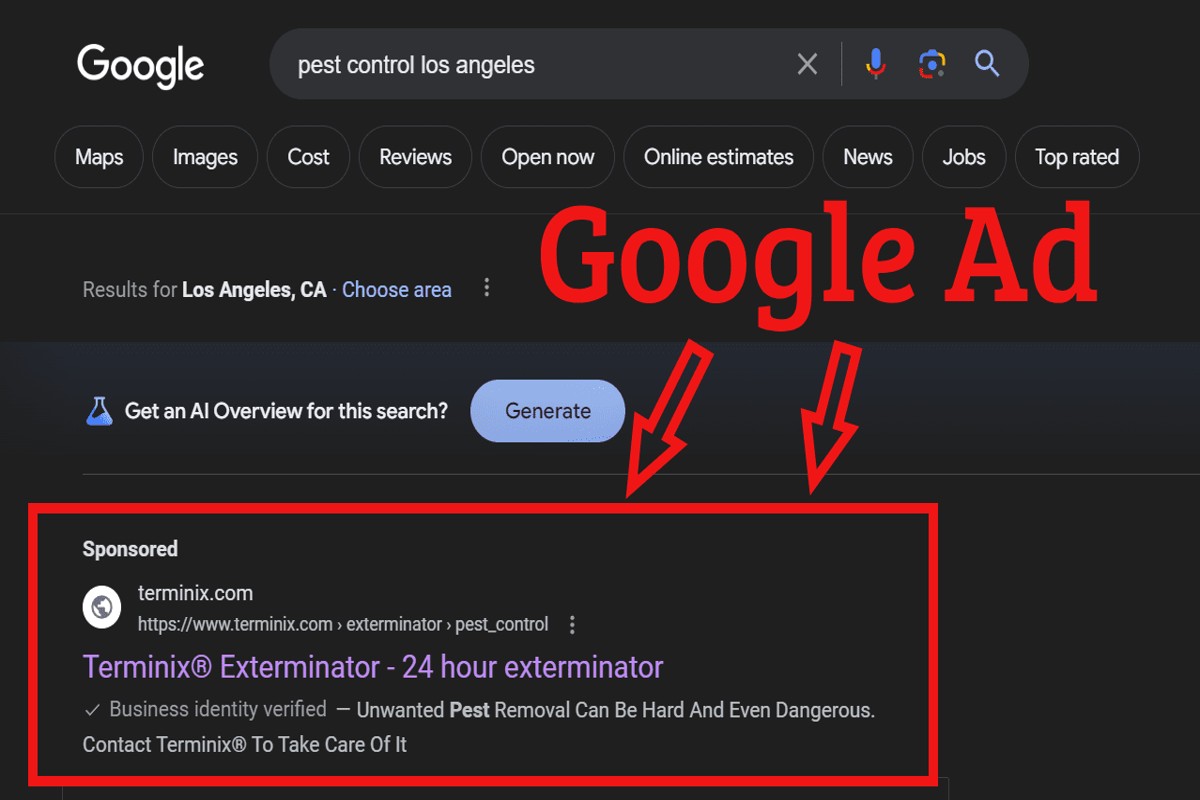
What are google ads for pest control?
Google Ads for pest control enables businesses to strategically target local customers who are actively searching for pest control services. With over 3.5 billion searches conducted daily, well-optimized ad campaigns can dramatically enhance visibility and drive customer acquisition.
Understanding google ads for pest control is crucial for pest control companies aiming to maximize their marketing effectiveness. As digital advertising continues to grow, with the global online advertising market projected to reach $500 billion by 2024, businesses that fail to leverage this channel may miss out on significant opportunities to connect with prospective clients.
Failure to grasp the nuances of Google Ads can lead to wasted advertising budgets, missed revenue opportunities, and an inability to compete effectively in a crowded marketplace. Without a solid strategy, businesses risk falling behind competitors who successfully harness these tools.
This article will cover essential aspects of Google Ads for pest control, including a comparison of top providers, cost breakdowns, best practices for campaign optimization, and the integration of local SEO strategies to enhance your advertising efforts.
For pest control companies looking to generate local leads through Google Ads or Local SEO, GMB Ranger LLC offers hands-on campaign management. Specialist Md Tangeer Mehedi personally handles campaign setup and ongoing optimization — with no payment required until the first lead comes in.
What are Google Ads for pest control?
google ads for pest control are online advertising campaigns specifically designed for businesses that provide pest management services. These ads appear on Google search results pages and can target potential customers actively seeking pest control solutions.
Businesses in this sector can utilize Google Ads to increase visibility and attract local customers. In 2023, the average cost per click (CPC) for pest control keywords was approximately $4.50, demonstrating the competitive nature of this advertising space. Properly managed campaigns can lead to a higher return on investment (ROI) by converting clicks into appointments and service calls.
- Search Ads: Text-based ads that appear at the top of search results when users enter relevant keywords.
- Display Ads: Visual ads that can be shown on websites within Google’s Display Network, targeting users based on their browsing behavior.
- Local Service Ads: Ads that allow pest control companies to connect with local customers, showcasing their services and customer ratings directly in search results.
Effective Google Ads campaigns for pest control services involve keyword research, ad copy optimization, and continuous performance monitoring. Businesses must identify high-performing keywords related to pest control, such as “termite treatment” or “bed bug extermination,” and create compelling ad copy that encourages potential customers to click. Additionally, utilizing geo-targeting ensures that ads reach local audiences, which is crucial for service-based businesses.
Expert insight: Regularly analyze ad performance metrics and adjust bids accordingly to maintain competitiveness in the market. Leveraging seasonal trends can also enhance campaign effectiveness, as pest activity often varies throughout the year.
How do I set up Google Ads for my pest control business?
Setting up Google Ads for a pest control business involves creating a campaign that targets specific keywords, setting a budget, and designing ads that appeal to your target audience. Approximately 63% of clicks on Google Ads come from mobile devices, making it essential to optimize your ads for mobile users.
- Create a Google Ads Account: Visit the Google Ads website and sign up for an account using your business email. Fill in your business details and set up billing information to start advertising.
- Define Your Goals: Determine what you want to achieve, such as increasing website traffic, generating leads, or boosting brand awareness. Clear goals help in crafting targeted campaigns.
- Conduct Keyword Research: Use tools like Google Keyword Planner to identify relevant keywords for pest control services. Focus on terms that potential customers are likely to search for, such as “termite control” or “pest removal services.”
- Set Your Budget: Choose a daily budget that fits your marketing plan. Google Ads operates on a pay-per-click basis, so set a cost-per-click (CPC) that aligns with your financial objectives.
- Create Compelling Ads: Develop ad copy that highlights your pest control services, includes a strong call to action, and utilizes ad extensions to provide additional information. Ensure the ads are relevant to the keywords chosen.
- Target Your Audience: Use demographic targeting options to reach specific audiences based on location, age, and interests. This will help ensure your ads reach those most likely to need pest control services.
- Launch Your Campaign: Review your settings and launch the campaign. Monitor its performance regularly, adjusting bids and ad copy as necessary to improve results.
- Analyze Performance: Utilize Google Ads analytics to track metrics such as click-through rates (CTR), conversion rates, and overall ROI. This data will inform future campaign adjustments.
Expert insight: Regularly testing different ad copy and keywords can significantly improve your campaign performance. A/B testing allows for data-driven decisions, optimizing your ads for better engagement and conversion rates.
What is the average cost of Google Ads for pest control?
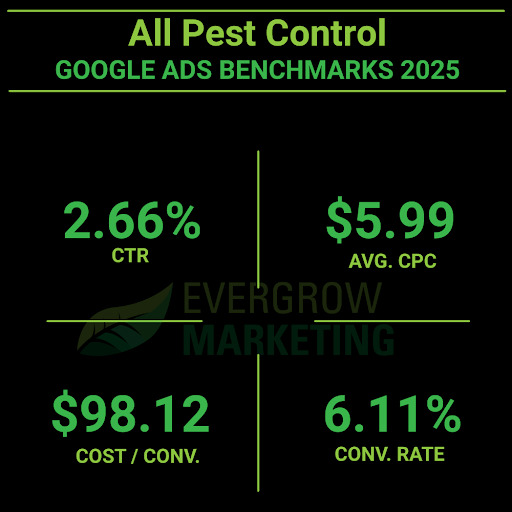
The average cost-per-click (CPC) for Google Ads in the pest control industry typically ranges from $5 to $10. However, these costs can vary significantly based on various factors such as location, competition, and target audience.
Several factors influence the cost of Google Ads for pest control businesses:
- Geographic Location: Costs can vary widely by region. Urban areas with higher competition may have higher CPCs compared to rural locations.
- Competition: Areas with many pest control companies will likely see higher bid amounts, driving up the cost per click.
- Keyword Selection: Specific keywords, especially those related to urgent pest issues, can have higher CPCs. Long-tail keywords may be less expensive but could attract less traffic.
- Ad Quality Score: Google rates ads based on relevance and performance. Higher quality ads can lead to lower CPCs and better placement.
Businesses should consider their budget carefully. A monthly budget of $500 to $2,000
is common for many pest control companies. This budget allows for sufficient visibility while balancing costs. Expected ROI can be substantial, especially if the ads target high-intent customers. Effective campaign management can lead to a conversion rate of 5% or higher, translating to a favorable return on investment.
Expert insight:
Focus on optimizing your ad campaigns continuously. Regularly analyze performance metrics, adjust keyword bids, and refine ad copy to maximize both visibility and cost efficiency.
What are the best practices for google ads in pest control?
Effective Google Ads campaigns for pest control require a combination of targeted strategies and precise execution. Implementing best practices can significantly improve click-through rates and conversion rates, with studies indicating a potential increase in ROI by up to 30% when optimized correctly.
To achieve optimal results, consider these best practices:
- Target Local Keywords: Focus on geo-specific keywords that potential customers in your service area are likely to search for, such as “pest control in [city name]” or “exterminator near me.” This increases relevance and improves your ad’s visibility.
- Utilize Ad Extensions: Enhance your ads with extensions such as call extensions, location extensions, and site link extensions. These tools can provide additional information and increase your ad’s real estate on the search results page, making it more compelling.
- Implement Negative Keywords: Regularly update your negative keyword list to exclude irrelevant searches that may waste your budget. This tactic helps to ensure that your ads are only shown to users who are more likely to convert.
- Optimize Landing Pages: Ensure that your landing pages are directly relevant to your ads and provide a seamless user experience. Fast loading times, clear calls to action, and mobile optimization are critical for improving conversions.
- Monitor and Adjust Bids: Continuously analyze the performance of your keywords and adjust your bids accordingly. Allocate more budget to high-performing keywords while reducing spend on underperforming ones to maximize ROI.
By incorporating these strategies, pest control businesses can enhance their Google Ads campaigns and achieve better results.
Expert insight: Regularly analyze your campaign metrics and adjust your strategies based on performance data. This iterative approach ensures that your Google Ads for pest control remain competitive and effective over time.
How long does it take to see results from Google Ads for pest control?
Typically, businesses in the pest control industry can expect to see initial results from Google Ads campaigns within 4 to 6 weeks. However, achieving optimal performance and return on investment (ROI) may take up to 3 to 6 months, depending on various factors.
Several elements influence the timeline for seeing results. First, the complexity of the campaigns matters. A well-structured campaign with targeted keywords, ad groups, and effective ad copy can yield faster results. In contrast, a campaign that lacks focus may struggle to generate leads. Additionally, the regional competition in the pest control market can significantly impact the speed of results. In highly competitive areas, businesses may need to refine their strategies and budgets more frequently to stay relevant.
The quality of the landing pages also plays a crucial role. If the landing pages are optimized for conversions, the likelihood of turning clicks into leads increases. This optimization process can take time as businesses assess user behavior and make necessary adjustments. Furthermore, ongoing data analysis is essential for continuous improvement. Campaigns that are monitored and adjusted regularly tend to perform better over time, leading to quicker results.
Expert insight: To enhance the speed of achieving results, allocate a sufficient budget for testing various ad formats and strategies, and focus on continuous optimization based on performance data. This proactive approach can significantly shorten the timeline to successful outcomes in Google Ads for pest control.
What are the benefits of using Google Ads for pest control?
Using Google Ads for pest control provides significant advantages, including enhanced visibility and improved customer acquisition. Businesses can achieve up to a 200% return on ad spend (ROAS) by targeting specific keywords that potential customers are actively searching for.
For example, a pest control company in a metropolitan area decides to launch a Google Ads campaign focusing on keywords such as “termite control” and “pest extermination.” Within the first month, the company notices a spike in website traffic, with a 40% increase in inquiries compared to the previous month. This targeted approach enables the business to reach individuals who are actively seeking pest control services, leading to higher conversion rates and increased sales.
Moreover, Google Ads allows for precise targeting based on location, demographics, and even the time of day. A pest control service can tailor its ads to appear only in specific geographical areas where they operate, ensuring that marketing efforts are focused on potential customers. This level of targeting reduces wasted ad spend and maximizes the effectiveness of the campaign, ultimately leading to a better ROI.
Expert insight: Regularly analyzing campaign performance and adjusting keywords based on seasonal trends can further enhance the effectiveness of Google Ads, ensuring continued growth and customer acquisition in the pest control sector.
Advanced Targeting Techniques for Pest Control Ads
Effective targeting techniques are essential for pest control businesses seeking to optimize their Google Ads campaigns. By employing advanced strategies, companies can significantly enhance their ad performance and ROI.
Utilizing Geo-Targeting to Reach Local Customers
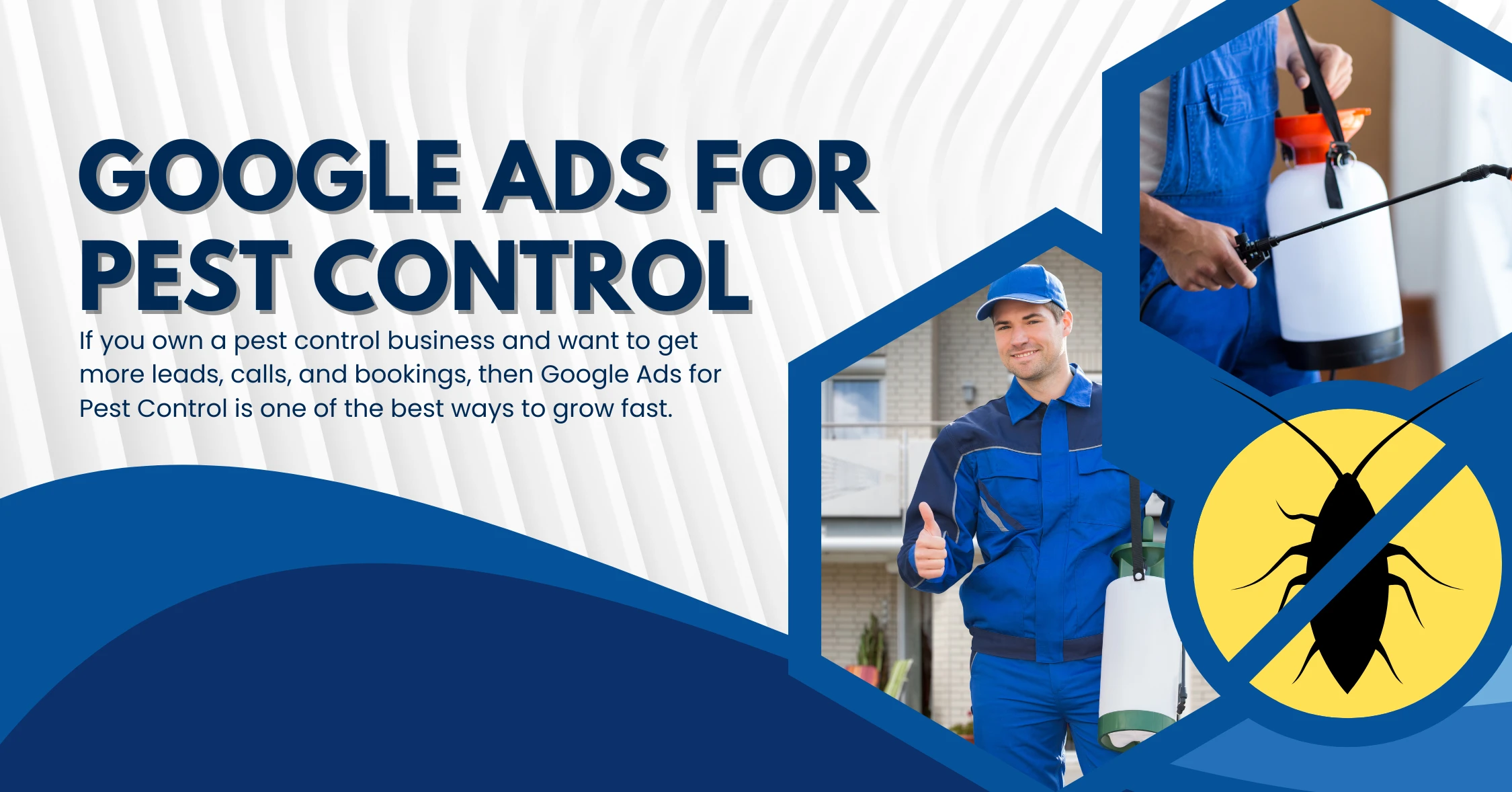
Geo-targeting allows pest control businesses to focus their advertising efforts on specific geographic areas. This is particularly beneficial for local service providers, as the majority of pest control inquiries come from nearby customers. According to recent data, 73% of consumers prefer to work with local businesses, making geo-targeting a crucial strategy.
- Radius Targeting: Set a radius around your business location to capture local customers actively seeking pest control services.
- Location Bid Adjustments: Increase bids for high-performing locations and decrease for underperforming areas to optimize budget allocation.
- Localized Ad Copy: Tailor ad content to reflect local pest issues and seasonal challenges, enhancing relevance.
Incorporating Keyword Match Types for Precision
Keyword match types play a vital role in controlling which queries trigger your ads. By utilizing various match types, pest control advertisers can refine their targeting. The three primary match types include:
- Broad Match: Captures a wide range of related searches but may lead to irrelevant clicks.
- Phrase Match: Ensures ads appear for specific phrases, improving relevance while maintaining a broader reach.
- Exact Match: Limits ad visibility to exact search terms, maximizing precision and minimizing wasted spend.
In 2024, campaigns utilizing a combination of match types reported a 35% increase in click-through rates compared to those using a single match type.
Leveraging Audience Insights for Tailored Messaging
Audience insights enable pest control businesses to create customized ad experiences based on user behavior and demographics. By analyzing data from Google Ads and Google Analytics, advertisers can identify key segments, such as:
- In-Market Audiences: Target users actively searching for pest control solutions.
- Remarketing Lists: Re-engage past visitors who did not convert.
- Demographic Targeting: Focus on age, gender, and household income to reach the most relevant customers.
This targeted approach can lead to a 25% improvement in conversion rates, as ads resonate more with specific audience needs.
Implementing Negative Keywords to Filter Out Irrelevant Traffic
Negative keywords are essential for filtering out unwanted traffic that can drain budgets without generating leads. By identifying terms that do not align with your services, pest control advertisers can prevent wasted clicks. Examples of negative keywords include:
- DIY pest control
- free pest control
- pest control jobs
Incorporating negative keywords can reduce irrelevant clicks by as much as 30%, ensuring that ad spend is directed towards potential customers who are more likely to convert.
Advanced targeting techniques in Google Ads for pest control require a strategic approach. To maximize effectiveness, pest control companies should implement geo-targeting to hone in on local customers, utilize a mix of keyword match types, analyze audience insights for tailored messaging, and actively manage negative keywords. This multifaceted strategy can significantly enhance ad performance and return on investment.
Common Mistakes in Google Ads for Pest Control
Many pest control businesses face significant challenges when utilizing Google Ads effectively. Identifying and rectifying common mistakes can lead to improved campaign performance and higher returns on investment.
Ignoring Mobile Optimization for Ads
With over 60% of searches conducted on mobile devices, failing to optimize ads for mobile can severely limit reach and engagement. Ads that do not display correctly on smaller screens may lead to poor user experience and decreased click-through rates. Ensure that mobile ads are visually appealing, concise, and include clear calls to action that are easy to interact with on a smartphone.
Failing to Track Conversions Accurately
Accurate conversion tracking is essential for assessing the effectiveness of Google Ads for pest control. Without proper tracking, businesses cannot measure the success of their campaigns or allocate budgets effectively. Implementing conversion tracking through Google Analytics allows businesses to identify which keywords and ads are driving leads, enabling informed decisions about future investments.
Setting Unrealistic Budgets and Expectations
Many pest control businesses set budgets based on industry averages without considering their unique circumstances. This approach can result in overspending or underperformance. According to recent data, companies that allocate their budgets based on historical performance and market trends see up to a 30% increase in ROI. Develop a budget that reflects your business goals, local competition, and the cost per lead in your area.
Neglecting Ad Copy Testing and Optimization
Static ad copy leads to stagnation in campaign performance. Regularly testing different variations of ad copy allows pest control businesses to identify which messages resonate most with their target audience. A/B testing can reveal critical insights; for instance, ads emphasizing seasonal promotions may yield higher engagement during peak pest activity periods. Aim to test at least three variations of ad copy to determine the most effective messaging strategy.
Expert Insights on Common Misconceptions
One common misconception among pest control businesses is that higher spending on Google Ads guarantees better results. In reality, effective targeting and ad relevance play a more significant role in campaign success. Businesses often overlook the importance of negative keywords, leading to wasted ad spend on irrelevant searches. Implementing a comprehensive keyword strategy, including both positive and negative keywords, can optimize ad performance and improve cost efficiency.
Practical Steps for Improvement
- Ensure all ads are mobile-optimized with clear, concise messaging.
- Set up accurate conversion tracking through Google Analytics.
- Develop a budget based on historical data and local market analysis.
- Regularly test and optimize ad copy to identify high-performing messages.
- Incorporate negative keywords to reduce irrelevant ad exposure.
By addressing these common mistakes, pest control businesses can enhance their Google Ads campaigns, leading to improved engagement, higher conversion rates, and ultimately, greater profitability.
Real-World Case Studies of Successful Pest Control Google Ads Campaigns
This section presents concrete examples of pest control companies that have successfully utilized Google Ads to enhance their business performance. By analyzing these case studies, readers can gain insights into effective strategies and tactics that yield measurable results.
Local Pest Control Firm Increases Leads by 200%
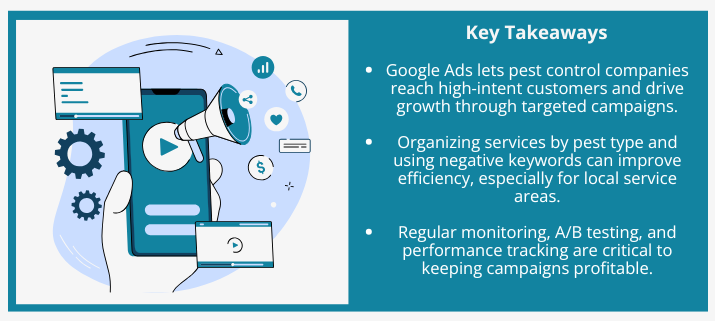
A regional pest control company implemented a targeted Google Ads campaign focused on local search terms. By optimizing their ad copy and employing geo-targeting, they attracted more clients within their service area. Over six months, this approach led to a remarkable 200% increase in leads.
- Keyword optimization based on localized search trends.
- Utilization of ad extensions to provide additional information and contact options.
- Regular A/B testing of ad copy to refine messaging and improve click-through rates.
Franchise’s Multi-Channel Approach
A national pest control franchise integrated Google Ads with their other marketing channels, including social media and email marketing. This multi-channel strategy allowed them to create a cohesive brand message across platforms, enhancing overall visibility and engagement. In 2024, they reported a 30% increase in customer acquisition attributed to their combined efforts.
- Coordinated promotions across Google Ads and social media platforms.
- Used remarketing campaigns to re-engage previous website visitors.
- Analyzed customer data to personalize ad content and improve targeting.
Startup Leveraging Retargeting Effectively
A new pest control startup employed a retargeting strategy through Google Ads to capture potential customers who had visited their website but did not convert. By displaying tailored ads to these users, they increased conversion rates significantly. Their efforts resulted in a 45% improvement in lead generation within three months.
The startup focused on creating visually appealing ads that highlighted unique selling propositions, such as eco-friendly pest control solutions. This approach resonated with their target market, driving higher engagement and conversions.
Insights from a Seasonal Campaign
One pest control company designed a seasonal Google Ads campaign targeting common pest issues during specific months. By aligning their advertising with peak pest activity, they significantly boosted visibility. During their campaign, they saw a 50% increase in website traffic and a corresponding rise in service calls.
- Developed seasonal ad creative focused on pest-related problems relevant to the time of year.
- Incorporated urgency in messaging to encourage immediate action from potential customers.
- Utilized Google Trends data to time ads for maximum impact.
While these case studies illustrate successful strategies, it is essential to recognize common misconceptions. Many businesses underestimate the value of ongoing optimization and testing in their Google Ads campaigns. Success in digital advertising often requires continuous adjustments based on performance data. Relying solely on initial settings can lead to stagnation and missed opportunities for growth.
To apply these insights, pest control companies should consider the following actions:
- Conduct thorough keyword research tailored to local markets.
- Implement multi-channel marketing strategies for cohesive messaging.
- Utilize retargeting campaigns to re-engage potential customers.
- Monitor seasonal trends and adjust campaigns accordingly for maximum visibility.
Integrating Google Ads with Local SEO Strategies for Pest Control
This section examines how integrating Google Ads with local SEO efforts can enhance visibility and drive conversions for pest control businesses. Leveraging both paid and organic search strategies is vital for maximizing return on investment (ROI).
Combining Paid and Organic Search Strategies
Utilizing both Google Ads and local SEO can create a robust online presence for pest control companies. While Google Ads provides immediate visibility through paid placements, local SEO builds long-term organic traffic. According to a 2024 report, businesses that combined paid and organic strategies saw a 30% increase in overall web traffic. This dual approach allows businesses to capture customers at various stages of the decision-making process.
Optimizing Google My Business for Better Ad Performance
Optimizing a Google My Business (GMB) profile directly influences the effectiveness of Google Ads for pest control. A well-maintained GMB listing enhances local search visibility and improves ad relevance. Key optimization strategies include:
- Ensuring accurate business information, including address and phone number
- Regularly updating business hours and services offered
- Encouraging customer reviews and responding promptly
Businesses that actively manage their GMB profiles report up to a 50% increase in ad click-through rates.
Using Local Keywords in Ad Campaigns
Incorporating local keywords into Google Ads campaigns is essential for targeting the right audience. For pest control businesses, this means focusing on terms that reflect specific geographic areas and services. Examples include:
- “pest control in [City Name]”
- “termite removal near me”
- “exterminator services [Neighborhood Name]”
Research indicates that ads featuring local keywords can increase conversion rates by 20% compared to generic keywords, making this approach critical for effective targeting.
Measuring the Impact of Ads on Local Search Rankings
Evaluating how Google Ads influence local search rankings is crucial for understanding the overall effectiveness of integrated strategies. Key metrics to monitor include:
- Changes in local search visibility
- Improvements in organic traffic
- Conversion rates from both paid and organic sources
By analyzing these metrics, pest control businesses can refine their strategies and achieve higher ROI from both paid and organic channels.
Many believe that Google Ads can solely drive traffic without influencing organic rankings. However, this misconception overlooks the synergistic effect of a comprehensive digital marketing strategy. Research indicates that businesses utilizing both channels can achieve a 40% improvement in brand awareness and customer trust, ultimately leading to increased sales.
To effectively integrate Google Ads with local SEO, pest control businesses should take the following actionable steps:
- Audit and optimize your Google My Business profile.
- Research and select relevant local keywords for your ad campaigns.
- Monitor the performance of your ads in relation to organic search metrics.
- Adjust strategies based on data to maximize the impact of both channels.
By implementing these strategies, pest control businesses can enhance their online visibility and drive higher conversion rates, ensuring a more substantial return on investment.
Evaluating the Best Google Ads For Pest Control
As the pest control advertising market is projected to reach $4.5 billion by 2026, comparing different advertising options is crucial for maximizing return on investment. Evaluating providers based on specific criteria such as cost, targeting capabilities, and unique features can help businesses make informed decisions that align with their marketing goals.
| Provider / Option | Best For | Pricing | Key Feature |
|---|---|---|---|
| Google Ads | Comprehensive ad solutions | $1 – $10 per click | Advanced targeting options |
| Bing Ads | Cost-effective campaigns | $0.50 – $5 per click | Less competition |
| Facebook Ads | Visual engagement | $0.10 – $3 per click | Highly targeted demographics |
| Yelp Ads | Local service promotion | $2 – $10 per click | Local business focus |
| AdRoll | Retargeting campaigns | $1 – $5 per click | Cross-platform retargeting |
Criteria for Evaluating Program Quality
Cost Efficiency: Analyze the pricing structure of each provider to ensure it fits within your marketing budget. Consider not only the cost per click but also the expected return on investment based on your industry benchmarks.
Targeting Capabilities: Evaluate the targeting options available, as this will significantly affect the effectiveness of your campaigns. Advanced targeting features, such as geographic and demographic targeting, can enhance your reach and engagement with potential customers.
Unique Features: Each provider offers distinct features that can influence your choice. For example, Google Ads provides advanced targeting options, while Facebook Ads excels in demographic targeting. Identify which features align with your advertising goals.
Local Focus: If your pest control service operates in a specific area, prioritize platforms that emphasize local advertising. Providers like Yelp Ads are tailored for local businesses, making them a strong choice for regional campaigns.
How to Assess the Reputation and Reliability of Providers
- Research Reviews: Look for customer reviews and testimonials on independent review sites to gauge the satisfaction levels of current users.
- Check Case Studies: Review case studies or success stories provided by the provider to understand their effectiveness in similar industries.
- Evaluate Customer Support: Assess the quality of customer support by reaching out with questions and noting response times and helpfulness.
- Analyze Transparency: Ensure the provider is transparent about pricing, policies, and reporting metrics, which is crucial for trust and accountability.
- Seek Recommendations: Ask for referrals from industry peers who have experience with the providers to gain insights into their reliability.
Which Google Ads For Pest Control Is Right for You?
The best Google Ads strategy for pest control businesses hinges on specific needs, budget constraints, and growth objectives. This guide provides tailored recommendations to help you make informed decisions based on your business type.
Small pest control businesses
Small pest control businesses should prioritize Google Ads to enhance local visibility, especially in competitive markets. Utilizing location-based targeting, businesses can invest as little as $500 to $2,000 per month to effectively reach customers within their service areas, ensuring they stand out against larger competitors.
Franchise pest control operations
Franchise pest control operations benefit from a dual approach by integrating Google Ads with Facebook Ads. This combination fosters brand consistency while engaging local audiences. Allocating around $1,000 to $3,000 monthly across both platforms can enhance brand awareness and drive local customer interaction.
Pest control startups
Pest control startups should consider cost-effective platforms like Bing Ads to establish their initial customer base with less competition. Investing approximately $300 to $1,000 per month can yield valuable leads while maintaining budget control, allowing startups to grow without the pressure of saturated markets.
Established pest control companies
Established pest control companies should leverage advanced Google Ads features such as retargeting and audience segmentation to maximize ROI. A budget of $2,000 to $5,000 per month can facilitate sophisticated campaigns that re-engage previous visitors and target specific demographics, leading to higher conversion rates.
| If You Are… | Best Approach |
|---|---|
| Small pest control businesses | Focus on Google Ads with $500-$2,000/month for local targeting. |
| Franchise pest control operations | Combine Google Ads and Facebook Ads with $1,000-$3,000/month. |
| Pest control startups | Utilize Bing Ads with $300-$1,000/month for initial exposure. |
| Established pest control companies | Use advanced Google Ads features with $2,000-$5,000/month for retargeting. |
Local Insights for Google Ads Targeting Pest Control Services
Understanding geographic and local market factors is crucial for optimizing Google Ads for pest control services. With 46% of all Google searches seeking local information, businesses must tailor their ad strategies to effectively reach potential customers in their specific areas. Furthermore, local SEO can lead to a 14% increase in conversion rates when combined with targeted advertising efforts.
Geographic Market Differences
In competitive urban markets like Los Angeles or New York City, pest control companies face intense competition, which necessitates a robust advertising strategy that includes local keywords and ad extensions. Conversely, in less populated areas, businesses can capitalize on a narrower focus, targeting specific pest control needs unique to the region, such as termite treatments in warmer climates or rodent control in urban settings.
Local Business Applications
Local pest control businesses can leverage Google Ads in several impactful ways:
- Geo-targeted Campaigns: Focus ads on neighborhoods with higher pest activity reports, ensuring maximum relevance.
- Seasonal Promotions: Run ads promoting pest control services during peak infestation seasons, such as spring and summer.
- Local Reviews Integration: Highlight positive customer reviews in ads to build trust and attract more local clients.
- Referral Programs: Use Google Ads to promote referral discounts, encouraging satisfied customers to recommend services to their neighbors.
Local Search and Visibility Impact
Optimizing Google Ads for pest control services directly influences local search rankings and visibility. Businesses should undertake the following actions:
- Ensure Google Business Profile (GBP) is fully optimized with accurate business hours, services offered, and local keywords.
- Incorporate location-specific keywords in ad copy and landing pages to enhance local relevance.
- Utilize local citations to improve search visibility, ensuring consistent NAP (Name, Address, Phone number) information across platforms.
- Monitor and respond to reviews on GBP to enhance reputation and customer engagement.
Pricing and Cost in Local Markets
The costs of Google Ads for pest control can significantly vary by geographic location. In competitive markets, businesses might spend anywhere from $2.50 to $6.00 per click, while in less competitive areas, costs could range from $1.00 to $3.00 per click. Local businesses should budget approximately $500 to $2,000 monthly for effective campaigns, whereas national players might invest significantly more, often exceeding $5,000 monthly to maintain visibility across multiple regions.
Local Implementation Checklist:
- Optimize Google Business Profile with current information and local keywords.
- Develop geo-targeted ad campaigns based on local pest activity.
- Utilize seasonal keywords relevant to pest control services.
- Encourage and showcase customer reviews in ads.
- Implement referral programs to leverage existing customer bases.
- Monitor ad performance regularly to adjust strategies as needed.
- Ensure consistent NAP information across all online platforms.
For pest control companies looking to generate local leads through Google Ads or Local SEO, GMB Ranger LLC offers hands-on campaign management. Specialist Md Tangeer Mehedi personally handles campaign setup and ongoing optimization — with no payment required until the first lead comes in.
Frequently Asked Questions
What are Google Ads for pest control?
Google Ads for pest control are online advertising campaigns that allow pest control businesses to promote their services on Google’s search results and display networks. These ads target specific keywords related to pest management, reaching potential customers actively searching for pest control solutions.
How do I set up Google Ads for my pest control business?
To set up Google Ads for a pest control business, create a Google Ads account, define your campaign goals, and select targeted keywords. Additionally, design engaging ad copy and set a budget to manage your advertising spend effectively.
What is the average cost of Google Ads for pest control?
The average cost of Google Ads for pest control varies based on competition and location, typically ranging from $1 to $10 per click. Businesses should prepare for a monthly budget that aligns with their advertising goals and desired reach.
What are the best practices for Google Ads in pest control?
Best practices for Google Ads in pest control include using targeted keywords, creating compelling ad copy, and implementing location targeting. Regularly monitoring and optimizing campaigns based on performance metrics will also enhance effectiveness.
How long does it take to see results from Google Ads for pest control?
Results from Google Ads for pest control can typically be seen within a few days to a couple of weeks. However, achieving optimal performance and return on investment may take several weeks of ongoing adjustments and refinements.
What are the benefits of using Google Ads for pest control?
Using Google Ads for pest control provides immediate visibility to potential customers actively seeking services, leading to increased website traffic and inquiries. Additionally, it allows for precise targeting and budget control, making it a cost-effective advertising solution.
Final Thoughts on Google Ads for Pest Control
Implementing Google Ads effectively can dramatically enhance visibility and profitability for pest control businesses. By leveraging advanced targeting techniques and avoiding common pitfalls, companies can maximize their return on investment and attract a steady stream of high-quality leads.
To capitalize on these insights, conduct a thorough analysis of your current Google Ads campaigns and identify areas for optimization, focusing on ad copy, targeting options, and budget allocation to ensure maximum impact.
Ready to boost your pest control business? Partner with a google ads management agency that knows how to maximize your ROI today!
In a competitive market, mastering Google Ads is not just an option; it is a necessity for sustained growth and success in the pest control industry.
Leave a Reply