
FREE Google Ads Audit
Google Ads Audit
Google Ads not bringing leads? I’ll audit your account for free and identify the real issues that are holding your campaigns back. You’ll get a clear breakdown of what’s working, what’s wasting budget, and what needs improvement. After the audit, I’ll share actionable recommendations to help you improve targeting, reduce ad spend waste, and increase conversions.
What You Get:
- Actionable optimization recommendations
- Campaign structure review
- Keyword performance analysis
- Search terms optimization check
- Ad copy effectiveness review
- Quality Score improvement tips
- Conversion tracking audit
- Budget and bidding analysis
- Competitor strategy insights
- Landing page alignment check

Google Ads Audit
A Google Ads audit is a comprehensive review of your advertising account to identify areas for improvement. It involves analyzing campaign performance, keyword effectiveness, and ad copy quality to optimize return on investment.
Understanding the intricacies of a Google Ads audit is crucial for businesses aiming to maximize their advertising spend. Without a thorough audit, organizations risk wasting resources on ineffective campaigns, ultimately impacting their bottom line and market competitiveness.
This guide will provide a step-by-step approach to conducting a Google Ads audit, covering key aspects such as campaign structure, keyword analysis, ad copy evaluation, and performance metrics to enhance overall effectiveness.
For businesses looking to generate local leads through Google Ads or Local SEO, GMB Ranger LLC offers hands-on campaign management. Specialist Md Tangeer Mehedi personally handles campaign setup and ongoing optimization — with no payment required until the first lead comes in.
What is a Google Ads audit?
A Google Ads audit is a systematic evaluation of an organization’s Google Ads account to assess its performance and identify areas for improvement. This process involves analyzing various components such as ad campaigns, keywords, targeting, and bidding strategies. The goal is to optimize the account for better return on investment (ROI) and overall effectiveness in reaching target audiences.
Conducting a Google Ads audit typically includes examining the account structure, ad copy, landing pages, and conversion tracking. By identifying inefficiencies and missed opportunities, businesses can refine their advertising strategies and allocate budgets more effectively. Regular audits help ensure that campaigns align with changing market conditions and business objectives.
- Account Structure: Review how campaigns and ad groups are organized for optimal performance.
- Keyword Analysis: Evaluate keyword relevance, match types, and search terms to enhance targeting.
- Ad Copy Review: Assess the effectiveness of ad messaging and calls-to-action to improve click-through rates.
- Landing Page Performance: Analyze landing page relevance and user experience to boost conversion rates.
- Tracking and Analytics: Ensure that conversion tracking is set up correctly to measure campaign success.
Each component of the audit plays a critical role in determining the overall health of the Google Ads account. A thorough analysis not only highlights current weaknesses but also uncovers new opportunities for growth. The insights gained from this evaluation can lead to actionable strategies that enhance ad performance over time.
Expert Tip: Focus on A/B testing different ad variations and landing pages during your audit process. This allows for continuous optimization based on real-time data, ensuring that the campaigns remain competitive and relevant to the target audience.
How do you perform a Google Ads audit?
A Google Ads audit involves a thorough review of your advertising account to identify areas for improvement. This structured process examines campaign settings, ad performance, and overall strategy to enhance effectiveness. Follow these steps to conduct an effective audit.
- Define Your Goals: Start by clarifying what you want to achieve with your Google Ads campaigns. This could be increasing conversions, improving ROI, or expanding brand awareness.
- Review Account Structure: Evaluate the organization of your campaigns and ad groups. Ensure that they are logically structured and aligned with your business goals, allowing for easier management and optimization.
- Analyze Keywords: Examine your keyword selection for relevance and performance. Remove underperforming keywords and consider adding new ones that align with your target audience and objectives.
- Assess Ads and Extensions: Review the ad copy and extensions for clarity and effectiveness. Test different variations to determine which ones resonate best with your audience.
- Evaluate Targeting Settings: Check your targeting options, including demographics, locations, and devices. Ensure they align with your target market to maximize ad visibility and engagement.
- Review Bids and Budget: Analyze your bidding strategy and budget allocation. Ensure that your bids are competitive and that your budget is effectively distributed across campaigns.
- Examine Performance Metrics: Look at key performance indicators (KPIs) like click-through rates, conversion rates, and cost per conversion. Identify trends and areas that require adjustments.
- Implement Changes: Based on your findings, implement necessary changes to campaigns, ads, and keywords. Monitor performance after adjustments to gauge impact.
- Document Findings: Keep a record of your audit findings and the changes made. This documentation will be useful for future audits and strategy refinements.
Regular audits are essential for maintaining the health of your Google Ads campaigns. They allow for continuous improvement and adaptation to changing market conditions.
Expert Tip: Leverage tools like Google Ads Editor and third-party analytics software to streamline your audit process and gain deeper insights into campaign performance.
What are common mistakes in a Google Ads audit?
Common mistakes during a Google Ads audit can lead to ineffective campaign performance and wasted ad spend. These errors often stem from overlooking critical account details, failing to analyze data comprehensively, and neglecting optimization opportunities. Identifying and avoiding these pitfalls is essential for a successful audit process.
First, many auditors overlook the importance of account structure. A disorganized structure can lead to inefficient budget allocation and poor targeting. Ensure that campaigns are segmented logically, with ad groups tightly focused on specific themes or products. This allows for better performance tracking and optimization.
- Ignoring negative keywords: Failing to utilize negative keywords can result in ads being shown for irrelevant queries. Regularly review and update your negative keyword list to refine targeting and reduce wasted spend.
- Overlooking ad copy and extensions: Audit the effectiveness of ad copy and extensions. Ads should be compelling and relevant to the keywords they target. Ensure that all available ad extensions are used to enhance visibility and click-through rates.
- Not analyzing conversion tracking: Inadequate conversion tracking can obscure the true performance of campaigns. Verify that conversion actions are set up correctly and analyze the data to understand which campaigns drive actual results.
- Neglecting budget and bid strategies: It’s crucial to evaluate budget allocations and bidding strategies. Ensure that budgets are aligned with performance goals and adjust bids based on the value of conversions to maximize return on investment.
By addressing these common mistakes, the effectiveness of a Google Ads audit can greatly improve. Regularly revisiting these areas will help maintain campaign performance and adapt to changing market conditions.
Expert Tip: Utilize automated rules and scripts to streamline routine checks within your audit process. This can save time and ensure that critical areas are consistently monitored for optimization opportunities.
How much does a Google Ads audit cost?
A Google Ads audit typically costs between $300 and $2,000, depending on various factors. The price can vary significantly based on the complexity of the account and the service provider’s expertise. Smaller audits may be more economical, while comprehensive evaluations will command higher fees.
Several factors influence the cost of a Google Ads audit:
- Scope of the Audit: A basic audit focusing on key metrics will cost less than a thorough review that includes competitive analysis, keyword research, and recommendations for improvement.
- Experience of the Service Provider: Established agencies with a proven track record may charge premium rates. Freelancers or less experienced consultants may offer lower prices but can vary in quality.
- Account Size and Complexity: Larger accounts with multiple campaigns, ad groups, and diverse targeting options require more time and effort to audit, leading to higher costs.
- Geographic Location: Rates can vary by region; for example, service providers in major cities may charge more than those in smaller markets.
When selecting a provider, consider the value they offer beyond just the audit cost. A higher initial investment can lead to significant long-term savings through improved campaign performance.
Expert Tip: Always request a detailed proposal outlining the audit process, deliverables, and expected outcomes. This ensures clarity and helps in evaluating the potential return on investment.
How long does a Google Ads audit take?
A thorough Google Ads audit typically takes between 4 to 10 hours, depending on the complexity and size of the account. Smaller accounts may require less time, while larger or more intricate accounts can take significantly longer to analyze effectively.
The duration of an audit is influenced by several factors. First, the number of campaigns and ad groups within the account plays a critical role; a more extensive setup necessitates additional time for detailed examination. Second, the complexity of the campaigns, including the variety of targeting options, ad formats, and bidding strategies, can extend the audit process. Lastly, the quality and structure of existing data can either streamline or complicate the review, as poorly organized accounts may require extra effort to decipher.
Moreover, the goals of the audit affect its length. A standard performance review may require less time than an in-depth analysis focused on identifying specific issues or opportunities for improvement. When preparing for a Google Ads audit, it is essential to allocate sufficient time to ensure a comprehensive evaluation that covers all critical aspects of the account.
Expert Tip: Prioritize the identification of key performance indicators (KPIs) before the audit begins. This focus will streamline the process and provide clearer insights into areas needing improvement.
What should I include in my Google Ads audit report?
A comprehensive Google Ads audit report should include an analysis of account structure, keyword performance, ad copy effectiveness, and landing page quality. These elements provide a clear picture of the campaign’s current state and highlight areas for improvement. Additionally, including insights on budget allocation and conversion tracking can enhance the report’s value.
For instance, consider a scenario where an e-commerce company is evaluating its Google Ads performance. The audit report should begin with a detailed examination of the account structure, ensuring that campaigns are organized logically and aligned with business objectives. Next, a keyword performance analysis should identify high-performing keywords and those that are underperforming, allowing for strategic adjustments. This includes metrics like click-through rates (CTR), cost per click (CPC), and conversion rates.
Moreover, evaluating ad copy effectiveness is crucial. The report should assess which ads generate the most engagement and conversions, offering recommendations for A/B testing new variations. Additionally, the audit should analyze landing page quality. This involves checking page load times, mobile responsiveness, and relevance to ad content. Lastly, insights into budget allocation can pinpoint areas where spend is yielding returns and where cuts may be necessary.
Expert Tip: Always include actionable recommendations in the audit report. Specific strategies for optimizing underperforming campaigns can significantly enhance the effectiveness of the audit, providing a roadmap for future improvements.
How does a Google Ads audit improve ROI?
A Google Ads audit enhances return on investment (ROI) by identifying inefficiencies and optimizing ad performance. Through systematic evaluation, advertisers can uncover issues that may be draining budgets and hindering effectiveness. This leads to more targeted spending and improved campaign outcomes.
There are several key differences between running Google Ads without an audit and implementing an audit to refine strategies. An audit typically focuses on the following areas:
- Keyword Optimization: An audit reveals underperforming keywords, allowing for the removal or adjustment of bids on low-converting terms. Without this, ads may target irrelevant searches, wasting resources.
- Ad Copy Effectiveness: Through analysis, an audit can highlight which ad copies resonate with the target audience. This insight leads to better messaging and higher click-through rates (CTR), whereas ads without review may not be compelling.
- Conversion Tracking: Audits assess the accuracy of conversion tracking setups. Proper tracking ensures that the data used for decision-making accurately reflects performance, unlike campaigns lacking robust tracking, which may mislead budget allocation.
Moreover, an audit can identify discrepancies in audience targeting. By refining targeting parameters based on actual performance data, advertisers can focus their budgets on high-value segments, leading to increased conversion rates and a more favorable ROI.
Implementing a Google Ads audit not only streamlines ad spend but also fosters a culture of continuous improvement in advertising strategies. Regular audits ensure that campaigns adapt to changing market conditions and consumer behavior.
Expert Tip: Schedule audits quarterly to stay ahead of market trends and competitor strategies, ensuring your campaigns remain optimized and effective at all times.
Advanced Techniques for Google Ads Auditing
This section explores sophisticated strategies for optimizing Google Ads campaigns through advanced analytics, A/B testing, audience segmentation, and competitive analysis. Implementing these techniques can significantly enhance campaign performance and ROI.
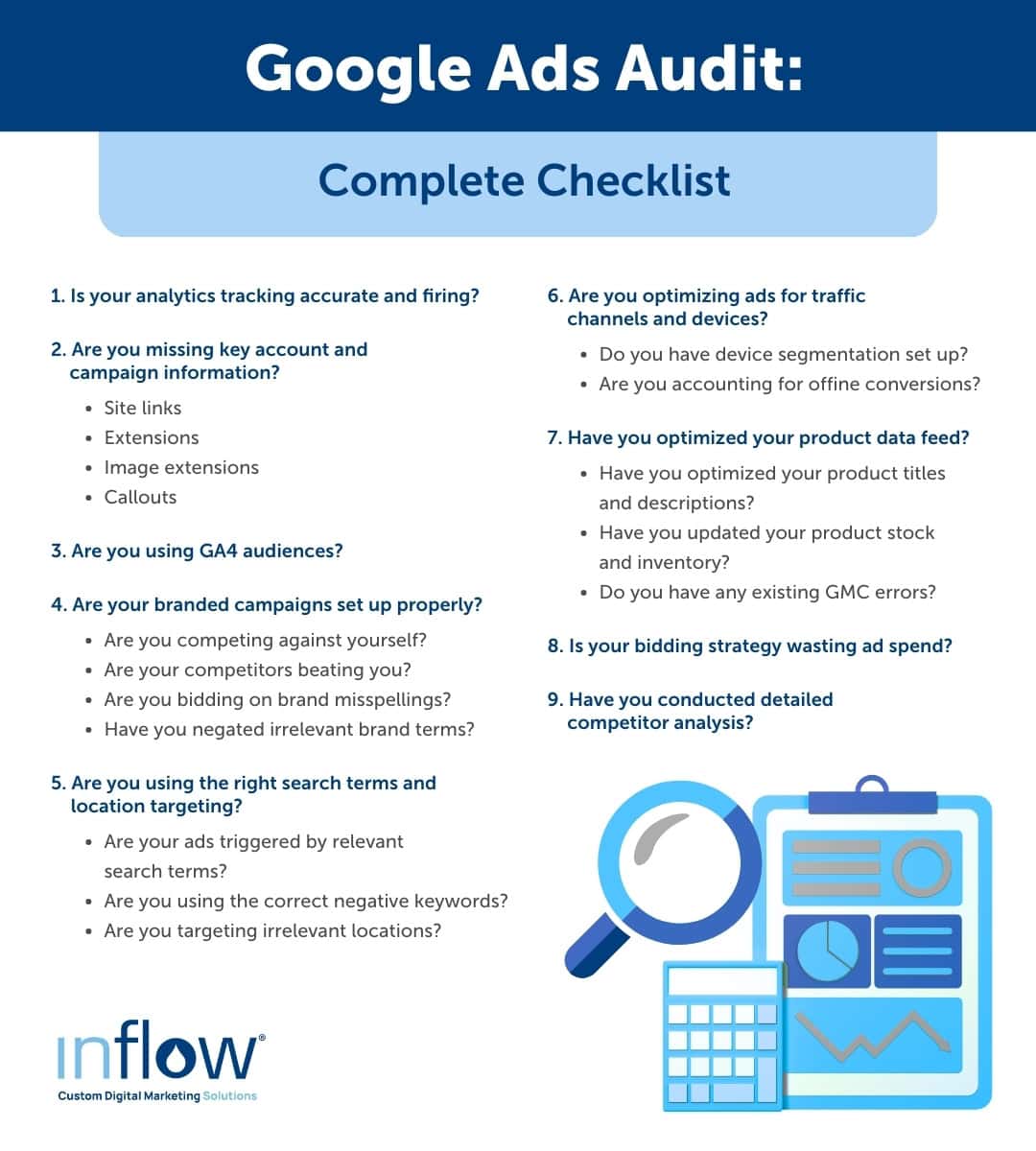
Utilizing Advanced Analytics Tools for Deeper Insights
Advanced analytics tools provide insights that standard Google Ads metrics cannot. Tools like Google Analytics, SEMrush, or Tableau allow for comprehensive data visualization and deeper analysis of user behavior. By integrating these tools with Google Ads, advertisers can track user interactions across multiple touchpoints.
- Multi-Channel Attribution: Evaluate how different channels influence conversions.
- Custom Dashboards: Create tailored dashboards to visualize crucial KPIs.
- Event Tracking: Monitor specific user actions on landing pages to refine targeting.
Implementing A/B Testing for Ad Variations
A/B testing is critical for optimizing ad performance. By systematically varying ad copy, visuals, or calls to action, advertisers can identify what resonates best with their audience. A robust A/B testing framework involves:
- Identifying a single variable to test (e.g., headline).
- Running tests simultaneously to mitigate external factors.
- Analyzing results through statistical significance to determine winners.
Continuous A/B testing can lead to incremental improvements in click-through rates (CTR) and conversion rates.
Leveraging Audience Segmentation for Targeted Campaigns
Audience segmentation allows for more precise targeting, enhancing relevancy and engagement. By dividing audiences based on demographics, interests, or behaviors, campaigns can be tailored to specific needs. Effective segmentation strategies include:
- Remarketing Lists: Target users who have previously interacted with your ads.
- Demographic Targeting: Customize ads for age, gender, and location.
- Custom Audiences: Create audiences based on email lists or website visitors.
Analyzing Competitor Performance for Benchmarking
Understanding competitor performance provides valuable context for campaign effectiveness. Tools like SpyFu or Ahrefs can reveal competitors’ ad strategies, keywords, and performance metrics. Key areas to analyze include:
- Keyword Strategies: Identify high-performing keywords competitors are targeting.
- Ad Copy Analysis: Evaluate messaging and offers to find gaps in your approach.
- Landing Page Performance: Assess competitors’ landing page effectiveness for potential improvements.
Many advertisers overlook the importance of cross-channel data integration during a Google Ads audit. For instance, combining Google Ads data with social media metrics can reveal comprehensive insights into customer journeys. Additionally, common misconceptions include assuming that a high CTR guarantees conversions; analyzing post-click behavior is essential for understanding true ad performance.
To implement these advanced techniques, begin by integrating a robust analytics tool that aligns with your business goals. Schedule regular A/B tests for critical ad elements, segment your audience based on detailed criteria, and conduct competitor analysis every quarter to stay ahead. These actions will create a dynamic auditing process that continually optimizes campaign performance.
Real-World Case Studies: Successful Google Ads Audits
This section explores three real-world case studies where businesses achieved significant improvements through effective Google Ads audits. These examples highlight the tangible benefits of optimizing advertising strategies to enhance performance metrics.
Case Study 1: E-commerce Brand Improving Conversion Rates
An e-commerce retailer specializing in outdoor gear conducted a comprehensive Google Ads audit to address declining conversion rates. The audit revealed that their ad copy lacked clear calls to action and that their landing pages were not optimized for mobile devices.
- Ad Copy Revision: Improved messaging focused on benefits tailored to target demographics.
- Landing Page Optimization: Enhanced mobile responsiveness and streamlined checkout process.
- Keyword Refinement: Shifted focus to long-tail keywords that matched user intent more closely.
As a result, the brand saw a 35% increase in conversion rates within three months, directly correlating to the changes made during the audit process.
Case Study 2: Local Service Provider Reducing Cost-Per-Click
A local plumbing service aimed to lower its cost-per-click (CPC) while maintaining lead volume. Their Google Ads audit indicated that they were bidding on overly broad keywords, leading to high competition and inflated costs.
- Keyword Strategy Adjustment: Focused on geographically-targeted keywords to attract local clients.
- Ad Scheduling: Implemented ads during peak hours when potential customers were most active.
- Negative Keywords: Added negative keywords to filter out irrelevant traffic.
These adjustments resulted in a 50% reduction in CPC, allowing the plumbing service to allocate budget more effectively across campaigns.
Case Study 3: SaaS Company Increasing Lead Quality
A Software as a Service (SaaS) company specializing in project management tools utilized a Google Ads audit to enhance lead quality. The audit identified that their target audience was not clearly defined, leading to a high volume of unqualified leads.
- Audience Segmentation: Created tailored ads for specific user personas, including project managers and team leaders.
- Value Proposition Enhancement: Highlighted unique features that addressed specific pain points of target users.
- Landing Page Customization: Developed dedicated landing pages for each audience segment with relevant content and offers.
This focused approach resulted in a 60% increase in qualified leads, significantly enhancing the sales funnel’s efficiency.
Lessons Learned and Key Takeaways
Each case study illustrates critical insights that can be applied broadly:
- Regular Audits: Conducting regular Google Ads audits is essential for identifying performance gaps.
- Data-Driven Decisions: Relying on data to inform changes leads to measurable improvements.
- Continuous Optimization: Ongoing adjustments based on performance metrics ensure sustained success.
While these case studies provide valuable insights, it is essential to recognize that every business has unique challenges. Misconceptions often arise regarding the complexity of audits; however, a methodical approach can simplify the process significantly.
To leverage the insights from these case studies, businesses should initiate their own Google Ads audits by first identifying performance metrics, evaluating keyword strategies, and analyzing ad copy effectiveness. Implementing these steps can lead to substantial improvements in advertising outcomes.
The Role of Keywords in Google Ads Audits
This section explores the critical function of keyword analysis within Google Ads audits, emphasizing its influence on the overall success of advertising campaigns.
Identifying High-Performing vs. Underperforming Keywords
Efficient keyword analysis begins with identifying high-performing keywords that drive conversions and engagement. High-performing keywords often exhibit lower Cost-per-Click (CPC) and higher Click-Through Rates (CTR). In contrast, underperforming keywords drain budgets without delivering results. Regular audits should track performance metrics such as:
- Conversion Rate
- CPC
- Impressions
- CTR
By focusing on these key performance indicators (KPIs), advertisers can refine their keyword lists, eliminating those that do not contribute meaningfully to campaign goals.
Keyword Match Types and Their Effects on Targeting
Keyword match types play a significant role in determining how closely search queries must match the keywords for ads to appear. Understanding the four primary match types can optimize targeting:
- Broad Match: Ads may appear for searches that include misspellings, synonyms, or related searches.
- Phrase Match: Ads show for searches that include the exact phrase or close variations.
- Exact Match: Ads trigger only for searches that exactly match the keyword.
- Negative Keywords: Prevent ads from showing for specific terms, filtering irrelevant traffic.
Effective use of match types can enhance ad relevance and reduce wastage on non-converting clicks.
Using Negative Keywords to Filter Irrelevant Traffic
Incorporating negative keywords is essential for optimizing campaigns and improving return on investment (ROI). By identifying terms that do not align with the target audience, advertisers can exclude them from their campaigns. This practice minimizes irrelevant clicks, which can inflate costs without contributing to conversion goals. Regularly reviewing search term reports can help identify new negative keywords to add, streamlining campaign performance.
Tools for Keyword Research and Performance Tracking
Several tools facilitate keyword research and performance tracking, enhancing the effectiveness of Google Ads audits. Some of the most reliable include:
- Google Keyword Planner: Offers insights into keyword volume, competition, and forecasts.
- SEMrush: Provides competitive analysis and keyword suggestions.
- Ahrefs: Focuses on organic keyword performance, aiding in identifying potential gaps.
Utilizing these tools enables advertisers to make data-driven decisions, ultimately enhancing campaign efficacy.
Many advertisers overlook the significance of ongoing keyword audits. Regularly revisiting keyword performance not only identifies trends but also allows for timely adjustments. For example, seasonal changes may necessitate keyword updates to align with consumer behavior. Furthermore, misconceptions often arise regarding the assumption that high search volume automatically translates to high performance; this is not always the case, as relevance is paramount.
To leverage this information effectively, implement a structured keyword audit process:
1. Extract performance data for all keywords.
2. Identify high and low performers based on defined KPIs.
3. Adjust match types based on targeting needs.
4. Add negative keywords to refine targeting.
5. Regularly use tools for ongoing keyword research and performance monitoring.
Following these steps will ensure a more focused and productive Google Ads strategy.
Post-Audit Strategies: Implementing Changes Effectively
This section outlines actionable strategies for implementing changes based on Google Ads audit findings. Effective execution of these strategies can lead to enhanced campaign performance and improved ROI.
Prioritizing Changes Based on Audit Results
Begin by categorizing audit findings into three priority levels: high, medium, and low. Focus on high-priority issues that have the most significant impact on campaign performance. These may include:
- Underperforming Keywords: Identify keywords with low click-through rates (CTR) or high costs per conversion.
- Ad Copy Optimization: Revise ads that do not align with best practices or fail to resonate with the target audience.
- Budget Allocation: Reassess budget distribution, shifting funds from low-performing campaigns to those with higher potential.
Setting Up a Testing Schedule for New Strategies
Implement a structured testing schedule to evaluate new strategies and changes. This should include:
- Define Objectives: Clearly outline what success looks like for each change.
- Choose Testing Methods: Utilize A/B testing for ad variations and multivariate testing for landing pages.
- Set Timeframes: Allocate sufficient time for each test to gather meaningful data, typically 2-4 weeks.
Monitoring Performance Post-Implementation
Consistent monitoring is vital to assess the effectiveness of implemented changes. Key performance indicators (KPIs) to track include:
- Conversion Rate: Measure the percentage of users completing desired actions.
- Cost Per Acquisition (CPA): Monitor changes in the cost associated with acquiring new customers.
- Return on Ad Spend (ROAS): Evaluate revenue generated for every dollar spent on advertising.
Creating a Feedback Loop for Continuous Improvement
Establish a feedback loop by regularly reviewing performance data and adjusting strategies accordingly. This involves:
- Weekly Reviews: Conduct weekly performance assessments to identify trends.
- Team Collaboration: Engage team members in discussions about insights and potential adjustments.
- Documentation: Keep detailed records of changes made and their outcomes to inform future decisions.
Many advertisers mistakenly believe that once changes are implemented, no further action is needed. In reality, a dynamic approach is essential for long-term success. Continuous analysis and adaptation ensure that campaigns remain aligned with market trends and consumer behavior.
To effectively implement these strategies, create a prioritized action plan that outlines specific changes, testing schedules, and performance metrics. Regularly revisit and refine this plan based on ongoing performance insights to optimize your Google Ads campaigns.
For Google Ads Audit businesses looking to generate local leads through Google Ads or Local SEO, GMB Ranger LLC offers hands-on campaign management. Specialist Md Tangeer Mehedi personally handles campaign setup and ongoing optimization — with no payment required until the first lead comes in.
Frequently Asked Questions
What is a Google Ads audit?
A Google Ads audit is a comprehensive evaluation of an advertising account to assess its performance, structure, and compliance with best practices. The goal is to identify areas for improvement and optimize ad spend efficiency.
How do you perform a Google Ads audit?
To perform a Google Ads audit, analyze account settings, campaign structure, keyword performance, ad copy, and conversion tracking. Use data insights to identify strengths and weaknesses in the advertising strategy.
What are common mistakes in a Google Ads audit?
Common mistakes include overlooking negative keywords, failing to analyze ad performance metrics, and neglecting to assess landing page relevance. These oversights can lead to ineffective campaigns and wasted budget.
How much does a Google Ads audit cost?
The cost of a Google Ads audit varies widely, typically ranging from $300 to $2,000 depending on the complexity of the account and the services provided. Pricing may also reflect the expertise of the agency or consultant conducting the audit.
How long does a Google Ads audit take?
A Google Ads audit can take anywhere from a few hours to several days, depending on the size of the account and the depth of analysis required. A thorough audit ensures all aspects of the account are evaluated effectively.
What should I include in my Google Ads audit report?
A Google Ads audit report should include findings on account structure, keyword analysis, ad performance, budget allocation, and recommendations for optimization. Clear visuals and actionable insights enhance the report’s effectiveness.
How does a Google Ads audit improve ROI?
A Google Ads audit improves ROI by identifying inefficiencies and optimizing campaign strategies to enhance ad performance. By reallocating budget to high-performing areas and eliminating waste, businesses can achieve better returns on their advertising investment.
Final Thoughts on Google Ads audit
A comprehensive Google Ads audit is essential for optimizing campaign performance and ensuring that advertising budgets yield maximum returns. By leveraging advanced techniques and understanding the pivotal role of keywords, marketers can identify inefficiencies and capitalize on opportunities that drive growth.
Conduct a thorough analysis of your current Google Ads settings, focusing on underperforming keywords and ad groups, to identify immediate areas for improvement and reallocate resources effectively.
Mastering the art of Google Ads audits is not just beneficial; it is crucial for sustaining competitive advantage in a rapidly evolving digital marketplace.
Contact GMB Ranger LLC
Let’s Talk Growth
Get in touch today and let’s discuss how we can help you generate more leads, calls, and bookings through AI SEO, Google Ads, Meta Ads, and high-converting landing pages.