
Why Google Ads might not be working for you can be attributed to several factors such as ineffective targeting, subpar ad content, and inadequate budgeting. Research indicates that 76% of marketers assert that reaching the correct audience is crucial for optimizing ad performance.
Understanding why Google Ads might not be working for you is essential for businesses aiming to leverage digital marketing effectively. With global spending on digital advertising projected to surpass $500 billion, optimizing ad campaigns is critical for maximizing return on investment. Marketers and business owners must grasp these nuances to ensure their advertising efforts yield the intended results.
Failure to address the reasons behind ineffective google ads can result in significant missed revenue opportunities, wasted marketing budgets, and a competitive edge lost to more savvy advertisers. Businesses that overlook these factors risk falling behind in an increasingly competitive digital landscape.
This article will explore the common pitfalls associated with Google Ads, including targeting strategies, content quality, and budget allocation. Readers will gain insights into best practices, actionable tips, and industry benchmarks that can enhance their advertising effectiveness.
For Why Google Ads Might Not Be Working For You businesses looking to generate local leads through Google Ads or Local SEO, GMB Ranger LLC offers hands-on campaign management. Specialist Md Tangeer Mehedi personally handles campaign setup and ongoing optimization — with no payment required until the first lead comes in.
What are common reasons Google Ads fail?
Common reasons Google Ads fail include poor targeting, irrelevant keywords, and low-quality ads. Research indicates that over 60% of Google Ads campaigns do not meet their objectives due to these factors.
One primary reason for failure is poor targeting. If ads are not directed at the right audience, even the most compelling ad copy will not convert. Advertisers must utilize demographic, geographic, and behavioral targeting to reach potential customers effectively. Ignoring these parameters can lead to wasted budget and minimal engagement.
Irrelevant keywords also contribute significantly to campaign underperformance. Ads that are not aligned with user search intent can lead to low click-through rates (CTR) and high bounce rates. Conducting thorough keyword research is essential to identify terms that resonate with the target audience. Regularly updating and optimizing keyword lists based on performance data can mitigate this issue.
Additionally, low-quality ads can deter potential customers. Ads must be visually appealing, succinct, and provide clear calls to action. Google uses a Quality Score metric that evaluates ad relevance, landing page experience, and expected CTR. A low Quality Score can increase costs and reduce ad visibility.
Expert insight: Regularly analyze campaign performance metrics and adjust targeting strategies and ad quality accordingly to enhance the effectiveness of Google Ads campaigns.
How can I improve my Google Ads performance?
Improving Google Ads performance requires a strategic approach that focuses on targeting, ad copy, and bidding strategies. Studies show that advertisers who refine their targeting can see up to a 30% increase in conversion rates. Implementing focused changes can significantly enhance your campaign’s effectiveness.
- Refine Your Targeting: Review your audience settings to ensure you are reaching the right demographics, interests, and behaviors. Utilize tools like Google Analytics to analyze past performance and adjust your targeting accordingly.
- Optimize Your Ad Copy: Craft compelling ad copy that highlights unique selling points and includes clear calls to action. A/B testing different headlines and descriptions can help identify which messages resonate best with your audience.
- Adjust Your Bidding Strategy: Experiment with different bidding strategies such as Target CPA or Maximize Conversions to find what works best for your goals. Regularly monitor and adjust bids based on performance data to maximize return on investment.
- Utilize Ad Extensions: Take advantage of ad extensions to provide additional information and increase visibility. Extensions such as site links, callouts, and structured snippets can enhance your ads and improve click-through rates.
- Monitor Performance Regularly: Continuously analyze campaign metrics to identify trends and areas for improvement. Use Google Ads reports to track performance and make data-driven decisions.
Expert insight: Regularly refreshing ad copy and targeting settings can lead to sustained engagement and improved performance. Consider implementing seasonal promotions or thematic campaigns to keep your ads relevant and appealing to users.
What is the average cost of Google Ads?
The average cost of Google Ads typically ranges from $1 to $2 per click, though this figure can vary significantly based on industry and competition. In highly competitive sectors, costs can escalate to over $50 per click, particularly for lucrative keywords.
Several factors influence the cost of Google Ads, which can help advertisers understand their potential expenses better. The primary factors include:
- Industry Competition: Industries such as finance, legal services, and insurance often see higher click costs due to intense competition for limited ad space.
- Target Audience: The geographic targeting and demographics can affect costs. Ads targeting high-income areas or specific age groups may incur higher prices.
- Quality Score: Google assigns a Quality Score based on ad relevance, landing page experience, and expected click-through rates. A higher Quality Score can lower costs by improving ad placement.
Additionally, the bidding strategy employed by advertisers plays a crucial role. For example, using automated bidding strategies can yield varying costs based on real-time auction dynamics. Advertisers must also consider the overall budget and daily limits set, as these can impact the frequency and visibility of the ads.
Expert insight: Regularly monitoring and optimizing your Google Ads campaigns can lead to better performance and lower costs over time. Focus on improving your Quality Score and refining your targeting to maximize your return on investment.
How long does it take for Google Ads to show results?
Typically, it can take anywhere from a few days to a couple of weeks to see significant results from Google Ads campaigns. Initial data may appear within 24 hours, but optimizing for performance often requires at least 7 to 14 days.
Several factors influence the timeline for results. First, the campaign type impacts visibility. Search campaigns may show quicker responses due to immediate keyword targeting, while display campaigns may take longer to generate impressions and clicks. Additionally, the competitiveness of the chosen keywords plays a role; highly competitive keywords may require more time to establish a foothold in search results.
The quality of the ad copy and landing pages also affects performance. Well-optimized ads that resonate with the target audience can lead to faster results. On the other hand, poor ad quality can delay success. Google’s machine learning algorithms require time to gather data and optimize ad delivery, further influencing the timeline for noticeable outcomes. New campaigns may also take longer to gain traction compared to established campaigns with historical data.
Expert insight: Adjusting bids and refining targeting parameters can expedite results, but patience is essential. Allow Google’s algorithms time to optimize for the best performance, typically within the first two weeks of a campaign.
What are best practices for Google Ads?
Effective Google Ads campaigns require adherence to best practices that enhance visibility and conversions. Key strategies include setting clear goals, conducting thorough keyword research, and continuously analyzing campaign performance. According to recent data, businesses implementing these strategies see up to a 30% improvement in their return on ad spend (ROAS).
First, establishing clear and measurable goals is fundamental. Goals should align with overall business objectives, whether they involve increasing website traffic, generating leads, or boosting sales. Each goal should be specific, measurable, achievable, relevant, and time-bound (SMART). This clarity helps in tailoring ad campaigns effectively and evaluating success based on relevant metrics.
- Conduct Comprehensive Keyword Research: Utilize tools like Google Keyword Planner to identify high-volume, relevant keywords that your target audience is searching for. Focus on long-tail keywords, which often yield higher conversion rates due to their specificity.
- Optimize Ad Copy and Landing Pages: Ensure that ad copy is compelling and aligned with user intent. A/B test different headlines and descriptions. Additionally, landing pages must be optimized for both user experience and conversion, featuring clear calls to action (CTAs) and relevant content.
- Leverage Negative Keywords: Implementing negative keywords helps prevent ads from appearing for irrelevant searches, thus saving budget and improving click-through rates (CTR). Regularly review search term reports to refine this list.
- Monitor and Adjust Campaigns Regularly: Continuous analysis of campaign performance is essential. Use Google Ads’ analytics to track key performance indicators (KPIs) such as CTR, conversion rate, and cost per acquisition (CPA). Make data-driven adjustments to optimize ad spend and performance.
Expert insight: Regularly reviewing and updating your Google Ads strategy based on performance data not only enhances effectiveness but can also lead to significant cost savings over time by reallocating budgets to high-performing ads.
How do Google Ads compare to Facebook Ads?
Google Ads primarily target users based on their search intent, while Facebook Ads focus on social engagement and audience interests. This fundamental difference makes each platform suitable for distinct marketing objectives. In 2024, Google Ads accounted for approximately 29% of global digital advertising spending, while Facebook Ads represented around 21%.
Google Ads operate on a pay-per-click (PPC) model, allowing advertisers to bid on keywords relevant to their products or services. This model ensures that ads are shown to users actively seeking particular information, which can lead to higher conversion rates. In contrast, Facebook Ads utilize a cost-per-impression (CPM) or cost-per-click (CPC) model, targeting users based on their demographics, interests, and online behavior. This approach is effective for brand awareness and generating engagement but may yield lower immediate conversion rates compared to Google Ads.
- Targeting: Google Ads focus on keywords and search queries, while Facebook Ads leverage user interests and behaviors.
- Intent: Google Ads capture users with high intent to purchase, whereas Facebook Ads engage users at various stages of the buyer’s journey.
- Ad Formats: Google Ads primarily feature text-based search ads, while Facebook Ads offer diverse formats, including images, videos, and carousel ads.
Expert insight: For effective marketing strategies, businesses should consider their goals. Utilize Google Ads for immediate sales and Facebook Ads to build brand loyalty and engagement over time.
What metrics should I track for Google Ads?
To effectively evaluate your Google Ads campaigns, focus on key metrics such as click-through rate (CTR), conversion rate, and cost per acquisition (CPA). Monitoring these metrics will provide insights into your campaign’s performance and areas needing improvement.
For instance, imagine a business that runs a Google Ads campaign with a CTR of 1.5%. This metric indicates the percentage of users who clicked on the ad after seeing it. A low CTR, typically below 2%, may suggest that the ad copy or targeting needs refinement. If the campaign’s conversion rate is only 2%, meaning that only 2% of clicks lead to a sale or desired action, further analysis is necessary to understand user behavior and optimize the landing page experience.
Cost per acquisition (CPA) is another critical metric to track. If a company spends $1,000 to acquire 50 customers, the CPA would be $20. If this cost exceeds the profit margin for each customer, the campaign may not be sustainable. Adjusting bids, refining target audiences, or enhancing ad relevance can help improve these metrics, ultimately leading to a more successful advertising strategy.
Expert insight: Regularly auditing these metrics allows for timely adjustments, ensuring the campaign aligns with business objectives and maximizing return on investment.
Understanding Targeting Issues in Google Ads
Effective targeting is fundamental to Google Ads success. Misalignment in audience targeting can lead to wasted budgets and poor campaign performance, emphasizing the need for precise strategies.

Importance of Keyword Relevance
Keyword relevance is a cornerstone of Google Ads targeting. Selecting keywords that closely match user intent ensures your ads appear in relevant search results. According to a 2024 report, campaigns with closely aligned keywords achieve up to 70% higher click-through rates (CTR) compared to those with generic terms. Utilize tools like Google’s Keyword Planner to identify high-performing keywords specific to your niche.
Utilizing Audience Segmentation
Audience segmentation allows advertisers to target specific groups based on demographics, interests, or behaviors. By creating tailored ads for distinct segments, businesses can improve engagement and conversion rates. For instance, a campaign targeting frequent travelers with tailored offers can significantly outperform a generic travel ad. Implementing remarketing strategies can also recapture interest from previous site visitors, enhancing overall ad effectiveness.
Impact of Location Targeting
Location targeting plays a crucial role in determining ad performance. Ads shown to users in specific geographical areas are more likely to convert due to localized relevance. For example, a 2025 study revealed that businesses utilizing precise location targeting observed a 50% increase in conversions compared to those using broader targeting methods. Advertisers should analyze location data to refine their strategies and enhance local market penetration.
Adjusting Demographics for Better Results
Demographic targeting involves adjusting ad settings based on age, gender, and household income. This ensures ads reach users whose profiles align with the product or service being promoted. For instance, if a product appeals primarily to women aged 25-34, focusing ad spend on that demographic can yield better returns. A recent analysis indicated that campaigns optimized for demographics can experience a 40% boost in ROI.
Many advertisers overlook the nuances of demographic targeting, leading to suboptimal results. Misconceptions about the effectiveness of broad targeting often lead to wasted spend. Expert marketers suggest regularly reviewing demographic reports to adjust targeting based on performance data, ensuring that campaigns remain relevant and effective.
Practical Application
- Conduct keyword research using tools like Google’s Keyword Planner to identify relevant terms.
- Segment your audience to create tailored ads for different groups.
- Utilize location targeting to enhance local relevance and improve conversion rates.
- Regularly analyze demographic data to refine targeting strategies.
Implementing these strategies can significantly enhance the effectiveness of your Google Ads campaigns, addressing common issues that may explain why Google Ads might not be working for you.
Crafting High-Quality Ad Content
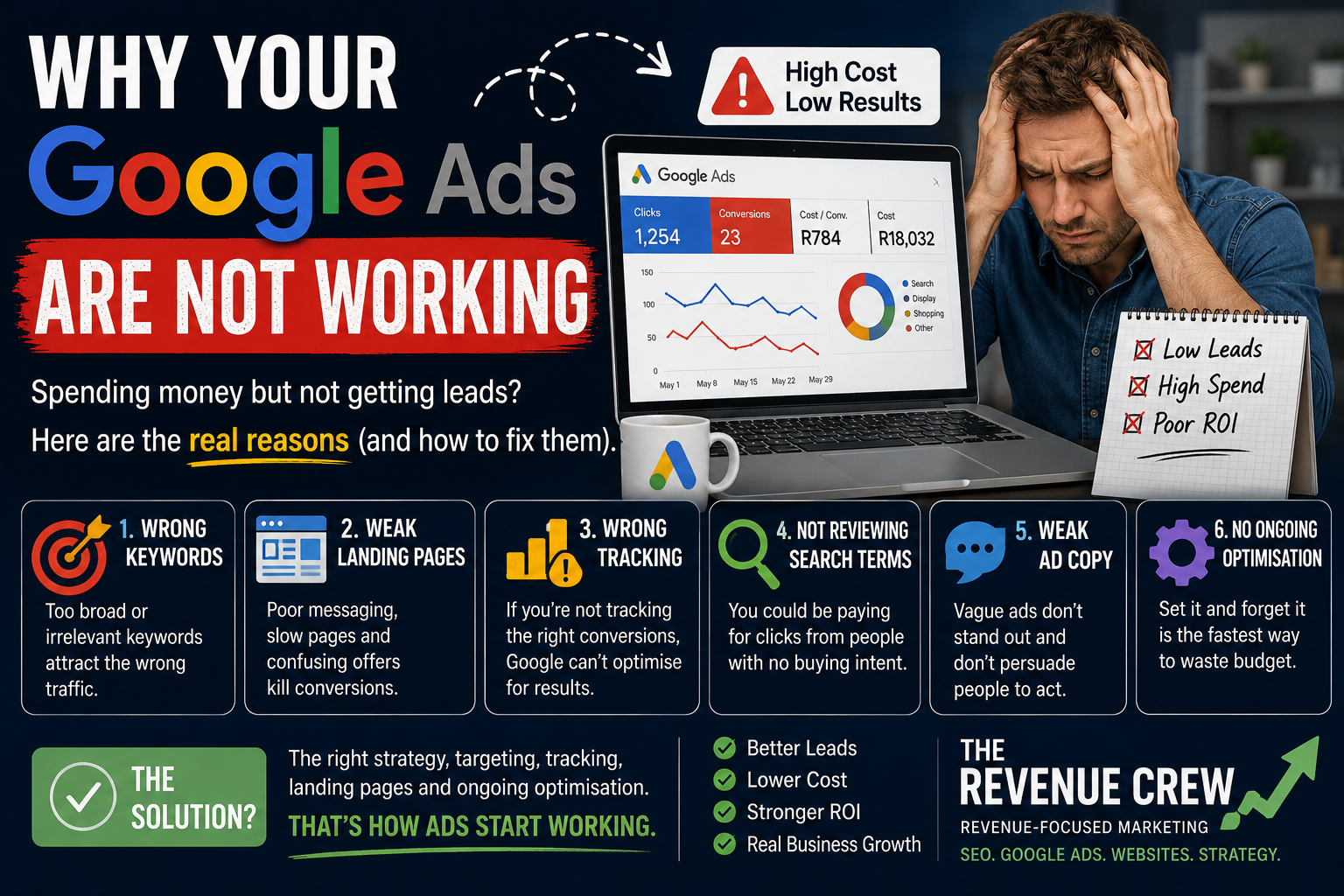
Effective ad content is pivotal in determining the success of Google Ads campaigns. High-quality ad copy and visuals directly influence click-through rates (CTR) and conversions, making it essential to focus on these elements.
Elements of Effective Ad Copy
Compelling ad copy communicates value and resonates with the target audience. Key elements of effective ad copy include:
- Clear Headlines: Headlines should be attention-grabbing and directly address the audience’s needs or pain points.
- Concise Messaging: Limit the character count to ensure the message is straightforward and easily digestible.
- Strong Call-to-Action (CTA): A well-crafted CTA encourages immediate action, such as “Shop Now” or “Get a Free Quote.”
According to recent data, ads with a clear and compelling CTA can improve conversion rates by up to 38%.
Role of Visuals in Ad Appeal
Visual elements significantly enhance the attractiveness of ads. They serve to capture attention and convey messages quickly. Key considerations include:
- Quality Imagery: High-resolution images that align with the brand and product can improve engagement.
- Brand Consistency: Visuals should be consistent with overall branding to build recognition and trust.
- Use of Colors: Colors evoke emotions and influence decisions; selecting the right palette can enhance ad performance.
Studies indicate that ads featuring images can increase CTR by as much as 50%, underscoring the importance of visuals in ad strategy.
A/B Testing for Ad Variations
A/B testing allows advertisers to compare different versions of ad content to determine which performs better. This process involves:
- Creating two variations of the same ad, altering one element (e.g., headline, image, or CTA).
- Running both ads simultaneously to a similar audience segment.
- Analyzing performance metrics such as CTR and conversion rates to identify the superior ad.
A/B testing can lead to a 20-30% increase in ad performance by optimizing elements based on real user data.
Aligning Ad Content with Landing Pages
Consistency between ad content and landing pages is crucial. Misalignment can result in high bounce rates and low conversions. Effective strategies include:
- Matching Messaging: Ensure the ad copy aligns with the content on the landing page.
- Consistent Visuals: Use similar images and branding elements to provide a cohesive experience.
- Reinforcing CTAs: The CTA on the landing page should mirror the ad’s CTA to streamline user action.
Research shows that maintaining consistency can boost conversion rates by up to 40%, highlighting the importance of alignment.
A common misconception is that ad content can be generic and still perform well. In reality, tailored content that speaks directly to the audience’s needs is far more effective. Many advertisers overlook the testing phase, assuming their initial ad will suffice. However, continuous optimization through A/B testing and alignment with landing pages is essential for sustained success.
To enhance ad performance, begin by auditing your current ad copy and visuals. Identify elements that lack clarity or appeal. Implement A/B testing for different variations of headlines and CTAs. Ensure that landing pages are closely aligned with ad content to provide a seamless user experience. By focusing on these areas, advertisers can rectify reasons why Google Ads might not be working for you.
Budgeting and Bidding Strategies for Success
This section explores the critical role of budget management and bidding strategies in enhancing Google Ads performance. Understanding these elements is essential for maximizing ad visibility and achieving desired outcomes.
Understanding Bidding Options
Google Ads offers several bidding strategies, each tailored to different campaign objectives:
- CPC (Cost Per Click): This model charges advertisers each time a user clicks on their ad. It is suitable for driving traffic to websites.
- CPM (Cost Per Mille): Advertisers pay for every thousand impressions of their ad. This strategy is ideal for brand awareness campaigns.
- CPA (Cost Per Acquisition): This model focuses on optimizing for conversions, charging advertisers only when a user completes a desired action, such as making a purchase.
Selecting the right bidding strategy directly impacts the effectiveness of ad campaigns, influencing both visibility and overall ROI.
Setting Realistic Budgets Based on Goals
Establishing a budget that aligns with specific marketing goals is crucial. Advertisers should consider the following:
- Define clear objectives: Identify what success looks like, whether it’s increased traffic, leads, or sales.
- Analyze historical performance: Review past campaigns to gauge average costs and adjust budgets accordingly.
- Allocate funds strategically: Distribute the budget across campaigns, focusing on high-performing keywords and ads.
Research indicates that businesses that set realistic budgets based on performance data can achieve up to 25% higher conversion rates.
Ad Scheduling for Maximum Impact
Ad scheduling allows advertisers to display ads at specific times, optimizing visibility when target audiences are most active. Key strategies include:
- Utilizing performance data to identify peak engagement times.
- Adjusting bids for different times of day or days of the week based on historical performance.
- Testing different schedules to refine timing for maximum impact.
Effective ad scheduling can improve click-through rates (CTR) by as much as 30%, significantly enhancing campaign performance.
Monitoring and Adjusting Bids for Optimization
Continuous monitoring and adjustment of bids are essential for maintaining competitive positioning in the auction landscape. Advertisers should:
- Regularly review bid performance metrics to identify underperforming keywords.
- Utilize automated bidding strategies when appropriate to optimize for conversions.
- Experiment with bid adjustments based on device performance, location, and audience segments.
Data from 2024 shows that advertisers who actively manage bids can reduce costs by up to 20% while increasing overall ad effectiveness.
Many advertisers mistakenly believe that simply setting a budget and bidding strategy will guarantee success. However, the reality is that constant vigilance and adaptation are required to navigate the complexities of Google Ads effectively. For instance, a common misconception is that higher bids always lead to better ad placement; however, relevance and quality score play equally significant roles.
To leverage these insights effectively, advertisers should implement the following actionable steps:
- Review current bidding strategies and assess alignment with campaign goals.
- Conduct a budget analysis to ensure it reflects realistic expectations based on historical performance.
- Set up ad scheduling to align with peak user engagement times.
- Establish a routine for bid monitoring and adjustments, utilizing automated tools where beneficial.
By refining these strategies, advertisers can significantly enhance the effectiveness of their Google Ads campaigns, addressing the reasons why Google Ads might not be working for you.
Analyzing and Adjusting Your Campaigns
This section emphasizes the critical need for ongoing analysis and adjustments in Google Ads campaigns. Regular evaluation not only identifies issues but also optimizes performance to achieve desired outcomes.
Utilizing Google Analytics for Insights
Google Analytics serves as a powerful tool for understanding user behavior and campaign effectiveness. By linking Google Ads and Google Analytics, advertisers can track metrics such as click-through rates (CTR), conversion rates, and bounce rates. These insights reveal how visitors interact with the website post-click, allowing for targeted improvements.
For example, a study from 2024 indicated that businesses leveraging Google Analytics alongside their advertising efforts experienced a 25% increase in conversion rates compared to those relying solely on Google Ads data.
Identifying Underperforming Keywords
Keyword performance is a cornerstone of any successful Google Ads campaign. Regularly analyze keyword metrics to identify those that are underperforming. Focus on the following aspects:
- Low CTR: Keywords that receive clicks but have low engagement may indicate irrelevant targeting.
- High Cost-Per-Click (CPC): Keywords that are expensive yet deliver few conversions can drain budgets without yielding results.
- High Bounce Rates: If users leave the landing page quickly, the keyword may not align with their expectations.
Adjusting bids or pausing such keywords can significantly enhance overall campaign performance.
Implementing Changes Based on Data
Data-driven decisions are essential for effective campaign management. When performance metrics highlight areas for improvement, immediate action is required. Steps to implement changes include:
- Review performance reports weekly to identify trends and anomalies.
- Test new ad copy and landing pages based on user behavior insights.
- Adjust targeting settings, including demographics and geographic locations, to reach the most relevant audience.
According to recent data, campaigns that adapted based on real-time insights saw a 30% improvement in ROI within the first quarter of adjustments.
The Role of Remarketing in Recovery
Remarketing offers a valuable strategy for re-engaging users who have interacted with your site but did not convert. This approach allows businesses to serve tailored ads to previous visitors, increasing the chances of conversion. Remarketing can be particularly effective when combined with targeted messaging that addresses specific user pain points or highlights special offers.
Statistics indicate that remarketing campaigns can boost conversion rates by up to 150%, emphasizing its importance in recovering potential lost leads.
Many advertisers mistakenly believe that once a campaign is launched, minimal adjustments are needed. However, continuous analysis and adaptation are essential to maintain relevance and effectiveness in a dynamic digital landscape. Regularly auditing campaigns can reveal hidden opportunities and areas for optimization that are often overlooked.
To leverage these insights, advertisers should take the following actions:
- Set up weekly reviews of Google Analytics data and Google Ads reports.
- Identify and pause underperforming keywords while testing new variations.
- Implement remarketing strategies to re-engage previous visitors.
By committing to systematic analysis and adaptive strategies, businesses can address the reasons why Google Ads might not be working for you and foster sustainable growth in their advertising efforts.
Evaluating the Best Why Google Ads Might Not Be Working For You
As digital advertising continues to evolve, evaluating various options is crucial for optimizing marketing strategies. According to a recent report, the global digital advertising market is projected to reach $786.2 billion by 2026, indicating a growing number of providers and competitive strategies. Understanding the strengths and weaknesses of different platforms can help businesses make informed decisions and enhance their advertising effectiveness.
| Provider / Option | Best For | Pricing | Key Feature |
|---|---|---|---|
| Google Ads | Comprehensive advertising solutions | $1 – $2 per click on average | Extensive reach and targeting options |
| Facebook Ads | Social media engagement | $0.50 – $3 per click | Visual ad formats and audience targeting |
| Bing Ads | Cost-effective search ads | $1 – $2 per click | Lower competition than Google |
| LinkedIn Ads | B2B targeting | $2 – $7 per click | Professional audience targeting |
| Amazon Ads | E-commerce product promotion | Varies based on product category | Direct purchase intent from users |
| YouTube Ads | Video marketing | $0.10 – $0.30 per view | Engaging video formats |
| AdRoll | Retargeting campaigns | $0.50 – $2 per click | Cross-channel retargeting |
Criteria for Evaluating Program Quality
- Target Audience Reach: Evaluate how effectively each platform can reach your specific target audience. Consider demographics, interests, and user behavior to ensure alignment with your marketing goals.
- Cost-Effectiveness: Analyze the pricing models of each provider, including cost per click and potential ROI. A lower cost may not always equate to better results; assess the overall value based on your budget.
- Ad Formats and Features: Consider the variety of ad formats available, such as video, display, or text ads. The right format can significantly impact engagement and conversion rates.
- Performance Metrics: Look for platforms that provide robust analytics and reporting tools. Understanding performance metrics is essential for optimizing campaigns and improving overall effectiveness.
How to Assess the Reputation and Reliability of Providers
- Research Online Reviews: Check reputable review sites and forums for feedback from current and former users to gauge satisfaction and effectiveness.
- Evaluate Case Studies: Look for documented success stories that illustrate how businesses have benefited from using the provider’s services in similar industries.
- Check Industry Recognition: Investigate any awards or recognitions the provider has received, which can indicate credibility and performance in the market.
- Request References: Ask the provider for case studies or references from clients to gain insights into their experiences and results.
Which Why Google Ads Might Not Be Working For You Is Right for You?
Choosing the right advertising platform is crucial and should align with your specific business needs, budget, and goals. This decision guide will help you identify the most effective alternatives to Google Ads based on your audience type.
Small Business Owners
For small business owners, focusing on local targeting through Google Ads can yield better results. However, if you find it ineffective, consider optimizing your campaigns for budget-friendly local advertising on platforms like Nextdoor or Yelp. These platforms typically allow you to set daily budgets as low as $10, maximizing visibility within your community.
E-commerce Brands
E-commerce brands often face challenges with Google Ads due to high competition. Instead, leverage Amazon Ads to tap into high purchase intent customers. Sponsored Products start at around $0.20 per click, allowing for significant product visibility and conversion opportunities among ready-to-buy consumers.
B2B Companies
B2B companies should consider LinkedIn Ads to effectively reach a professional audience. Sponsored Content and InMail campaigns can be tailored to specific industries and job titles, with costs ranging from $2 to $7 per click, providing targeted engagement and lead generation opportunities.
Digital Marketers
Digital marketers should experiment with multi-channel strategies to diversify their advertising efforts. Combining Google Ads with Facebook Ads and utilizing retargeting options can enhance overall performance. A budget of $500 to $1,000 per month across these platforms can yield valuable insights into audience behavior and conversion rates.
Content Creators
Content creators can significantly benefit from YouTube Ads to promote their video content and increase engagement. Utilizing TrueView ads allows you to pay only when viewers watch your ad for at least 30 seconds, with costs averaging around $0.10 to $0.30 per view, making it a cost-effective way to reach a large audience.
| If You Are… | Best Approach |
|---|---|
| Small Business Owners | Local targeting on Nextdoor or Yelp |
| E-commerce Brands | Amazon Ads for high purchase intent |
| B2B Companies | LinkedIn Ads for targeted professional outreach |
| Digital Marketers | Multi-channel strategies with retargeting |
| Content Creators | YouTube Ads for video promotion |
Local Factors That May Explain Why Google Ads Might Not Be Working For You
Understanding geographic and local market factors is crucial for businesses investing in Google Ads. In fact, 46% of all Google searches are seeking local information, highlighting the importance of tailoring advertising strategies to local consumer behavior. If your ads aren’t resonating, it may be due to a misalignment with local market dynamics.
Geographic Market Differences
In metropolitan areas like New York City or Los Angeles, competition for Google Ads can be fierce, with multiple businesses vying for the same local keywords. Conversely, businesses in smaller towns may find less competition but also a smaller audience. For example, a local coffee shop in a suburban area may face fewer competitors than a similar establishment in a downtown district, necessitating different advertising strategies to attract customers effectively.
Local Business Applications
Local businesses often have unique advantages and challenges when using Google Ads. Specific applications include:
- Targeting local events or festivals to attract foot traffic.
- Utilizing location-based keywords to drive relevant traffic to their websites.
- Promoting limited-time offers or discounts specifically for local customers.
- Leveraging customer reviews in ads to build trust within the community.
Local Search and Visibility Impact
The effectiveness of Google Ads is closely tied to local search visibility and optimization of Google Business Profile (GBP). Businesses should consider the following actions to enhance their performance:
- Ensure consistent NAP (Name, Address, Phone Number) information across all online platforms.
- Optimize GBP by adding high-quality images, business hours, and responding to customer reviews.
- Incorporate local keywords into ad copy and landing pages to improve relevance.
- Utilize geotargeting features in Google Ads to focus on specific neighborhoods or zip codes.
- Regularly update ads and GBP with seasonal promotions or community involvement efforts.
Pricing and Cost in Local Markets
Costs for Google Ads can vary significantly by geographic market. In densely populated urban areas, the average cost-per-click (CPC) can range from $2.50 to $5.00, while in smaller towns, it may be as low as $1.00 to $2.00. Local businesses should budget accordingly, often requiring a minimum monthly spend of $500 to $1,500, while national players may invest significantly more to compete at scale.
Local Implementation Checklist:
- Analyze local competition and adjust bidding strategies accordingly.
- Ensure your Google Business Profile is fully optimized and regularly updated.
- Incorporate local keywords into your ad campaigns.
- Monitor ad performance metrics specific to local engagement.
- Test different ad formats, such as local service ads or shopping ads.
- Engage with community events and highlight them in your ads.
- Regularly review and adjust your budget based on local market response.
For Why Google Ads Might Not Be Working For You businesses looking to generate local leads through Google Ads or Local SEO, GMB Ranger LLC offers hands-on campaign management. Specialist Md Tangeer Mehedi personally handles campaign setup and ongoing optimization — with no payment required until the first lead comes in.
Frequently Asked Questions
What are common reasons Google Ads fail?
Common reasons for Google Ads failure include poor targeting, low-quality ad copy, and inadequate budget allocation. Additionally, lack of optimization and failure to track performance metrics can hinder success.
How can I improve my Google Ads performance?
Improving Google Ads performance involves refining targeting options, enhancing ad copy, and utilizing A/B testing. Regularly analyzing campaign metrics and adjusting bids can also lead to better results.
What is the average cost of Google Ads?
The average cost of Google Ads varies widely based on industry and competition, typically ranging from $1 to $2 per click. However, costs can escalate significantly in highly competitive markets.
How long does it take for Google Ads to show results?
Google Ads can show initial results within a few days, but significant performance improvements usually take several weeks. Consistent monitoring and optimization are essential for achieving desired outcomes.
What are best practices for Google Ads?
Best practices for Google Ads include using relevant keywords, creating compelling ad copy, and optimizing landing pages. Regularly reviewing and adjusting campaigns based on performance data is also crucial.
How do Google Ads compare to Facebook Ads?
Google Ads primarily target users based on search intent, while Facebook Ads focus on user demographics and interests. Each platform has unique strengths, making them suitable for different marketing objectives.
What metrics should I track for Google Ads?
Key metrics to track for Google Ads include click-through rate (CTR), conversion rate, cost per acquisition (CPA), and return on ad spend (ROAS). Monitoring these metrics helps assess campaign effectiveness and make informed adjustments.
Final Thoughts on why google ads might not be working for you
Success in Google Ads hinges on precise targeting, compelling ad content, and strategic budgeting. Neglecting any of these critical components can lead to underperformance, wasting both time and resources.
To enhance your Google Ads effectiveness, conduct a thorough audit of your current campaigns, focusing on targeting parameters and ad copy quality. Identify the segments that are underperforming and refine your approach based on data-driven insights.
To get the most out of your campaigns, consider partnering with a google ads management agency that can tailor strategies to your unique business needs.
Understanding and optimizing your Google Ads strategy is essential in a competitive digital landscape, where every click and conversion can significantly impact your bottom line.
Leave a Reply