
What are google ads for tourism?
Google Ads for tourism refers to the strategic use of Google Ads to promote travel-related services and destinations. By leveraging targeted advertising, businesses can significantly enhance their visibility, resulting in increased bookings. On average, businesses experience a return of $2 for every $1 spent on Google Ads.
Understanding Google Ads for tourism is crucial for travel businesses aiming to thrive in a highly competitive market. With the travel industry projected to reach $11.4 trillion by 2025, effective online advertising strategies can make a substantial difference in attracting potential customers. Failing to implement these strategies could result in lost opportunities and diminished market share.
If businesses overlook the importance of Google Ads, they risk incurring missed revenue, wasted marketing resources, and a competitive disadvantage against more savvy competitors. In a landscape where online visibility is paramount, neglecting this tool can lead to significant financial setbacks.
This article will cover essential aspects of Google Ads for tourism, including a comparison of leading advertising platforms, detailed cost breakdowns, best practices for campaign management, and insights into optimizing local SEO for travel services.
For Tourism businesses looking to generate local leads through Google Ads or Local SEO, GMB Ranger LLC offers hands-on campaign management. Specialist Md Tangeer Mehedi personally handles campaign setup and ongoing optimization — with no payment required until the first lead comes in.
What are Google Ads for tourism?
Google Ads for tourism are online advertising campaigns specifically designed to promote travel-related businesses, such as hotels, tour operators, and travel agencies, through Google’s advertising platform. In 2024, the global digital advertising spend in the travel sector is projected to reach $36 billion, highlighting the importance of effective online marketing strategies.
These ads can take various forms, including text ads that appear in Google search results, display ads on websites, and video ads on platforms like YouTube. The primary goal is to reach potential travelers at the right time, encouraging them to book services or visit destinations. Key components of Google Ads for tourism include:
- Search Ads: Text-based ads that appear when users search for travel-related keywords.
- Display Ads: Visual banner ads shown on websites within Google’s Display Network.
- Remarketing: Ads targeted at users who have previously visited a travel website.
Implementing Google Ads for tourism requires a solid understanding of the target audience and effective keyword research. Factors such as seasonality, geographic targeting, and ad copy quality significantly influence the performance of these campaigns. For instance, targeting specific demographics or interests can enhance ad relevance, leading to higher click-through rates and conversions.
Expert insight: To maximize the effectiveness of Google Ads for tourism, continuously monitor and optimize campaigns by analyzing performance data, adjusting bids, and testing different ad creatives. This iterative approach can lead to improved ROI and a stronger online presence in the competitive travel market.
How to create a Google Ads campaign for a travel business?
Creating a Google Ads campaign for a travel business involves a series of strategic steps to effectively reach potential customers. In 2024, travel-related searches account for over 30% of all online searches, highlighting the importance of a well-structured campaign. Follow these steps to set up your campaign.
- Define your goals: Start by identifying what you want to achieve with your campaign, such as increasing bookings, website traffic, or brand awareness.
- Research keywords: Use tools like Google Keyword Planner to find relevant keywords that potential customers might use when searching for travel services.
- Set your budget: Determine a daily budget based on your overall marketing strategy. Consider that the average cost-per-click in the travel industry is around $2.83.
- Create compelling ad copy: Write engaging ad text that highlights unique selling points, such as exclusive offers or destination highlights, ensuring to include relevant keywords.
- Choose your targeting options: Select geographic and demographic targeting to reach your ideal audience. Refine your audience based on interests and behaviors related to travel.
- Set up ad extensions:
Utilize ad extensions like site links, callouts, and location extensions to provide additional information and enhance visibility.
- Launch your campaign: Review all settings and launch your campaign. Monitor its performance closely to evaluate effectiveness.
- Optimize continuously: Regularly analyze performance data and adjust keywords, ad copy, and targeting as needed to improve results.
Successful Google Ads campaigns require ongoing adjustments based on data insights. Regular monitoring of campaign performance is essential to ensure optimal results and return on investment.
Expert insight: Utilize A/B testing on ad copy and landing pages to determine what resonates best with your audience, allowing for data-driven decisions that enhance engagement and conversion rates.
What is the average cost of Google Ads for tourism?
The average cost of Google Ads for tourism typically ranges from $1 to $2 per click, though it can vary significantly based on several factors. In competitive markets, costs can escalate to $5 or more per click, especially during peak travel seasons.
Several factors influence the cost of Google Ads in the tourism sector. The following elements can significantly affect pricing:
- Competition: Areas with higher competition among tourism businesses, such as popular destinations, usually result in higher click costs.
- Keywords: Bidding on highly searched keywords related to travel and tourism can increase costs. Long-tail keywords may offer lower costs with targeted traffic.
- Ad Quality: Google rewards high-quality ads with lower costs per click. A well-optimized ad campaign can reduce expenses significantly.
- Audience Targeting: Specific targeting options, such as geographic locations or demographics, can affect costs. More refined targeting often leads to higher costs.
- Seasonality: Costs can fluctuate based on seasonal demand. For instance, ads for summer vacations may cost more during peak travel months.
The overall budget for Google Ads can also vary depending on the desired reach and campaign objectives. Businesses should monitor their campaigns closely to adjust bids and maximize return on investment.
Expert insight: Regularly reviewing and optimizing ad performance can help tourism businesses control costs while improving visibility in a highly competitive market.
How long does it take to see results from Google Ads for tourism?
Typically, businesses can expect to see initial results from Google Ads campaigns within 1 to 3 months. However, achieving optimal performance may take 3 to 6 months or longer, depending on various factors.
Several factors affect the timeline for seeing results from Google Ads in the tourism sector. First, the competition level within the tourism niche can significantly influence how quickly a campaign gains traction. Highly competitive regions or services may require more time and budget to establish a prominent presence in search results. Second, the quality of the ad campaign itself plays a critical role. Well-structured campaigns with targeted keywords, compelling ad copy, and optimized landing pages can lead to faster conversions. Additionally, ongoing adjustments based on performance data can accelerate results.
Another important aspect is the seasonality of tourism. For instance, campaigns targeting summer vacations may see quicker results if launched in late spring, whereas campaigns for winter holidays might take longer to ramp up. Understanding the seasonal trends in the tourism industry can help businesses time their campaigns for maximum impact. Finally, ad spend and budget allocation also contribute to the speed of results; a larger budget can lead to more impressions and clicks, potentially shortening the time frame for visible outcomes.
Expert insight: Regularly analyze campaign performance metrics and adjust strategies accordingly. This practice ensures that your Google Ads for tourism campaigns remain effective and aligned with changing market conditions.
What are the best practices for Google Ads in tourism?
Effective Google Ads strategies for tourism can significantly increase visibility and bookings. According to industry reports, businesses that optimize their Google Ads see up to a 30% increase in click-through rates. Implementing best practices is essential for maximizing ad performance and return on investment.
To optimize Google Ads for tourism, focus on the following best practices:
- Target Specific Audiences: Utilize audience targeting options to reach potential travelers based on demographics, interests, and behaviors. This ensures ads are shown to users most likely to convert.
- Use Location-Based Targeting: Implement geo-targeting to reach users searching for travel options in specific locations. This can enhance relevance and increase the likelihood of bookings.
- Ad Extensions: Incorporate ad extensions such as location, call, and site link extensions. These provide additional information and encourage users to engage with the ad, improving overall performance.
- Compelling Ad Copy: Write clear and enticing ad copy that highlights unique selling points, such as special offers, seasonal packages, or local attractions. A/B testing different messages can help identify what resonates best with your audience.
- Monitor and Adjust Campaigns: Regularly review campaign performance metrics. Adjust bids, keywords, and ad copy based on what data reveals about user behavior and engagement to ensure ongoing optimization.
Expert insight: Focus on seasonal trends in tourism to adjust your campaigns accordingly. Understanding peak travel times can help you allocate budget effectively and tailor messaging to match travelers’ needs.
How do Google Ads compare to social media ads for tourism?
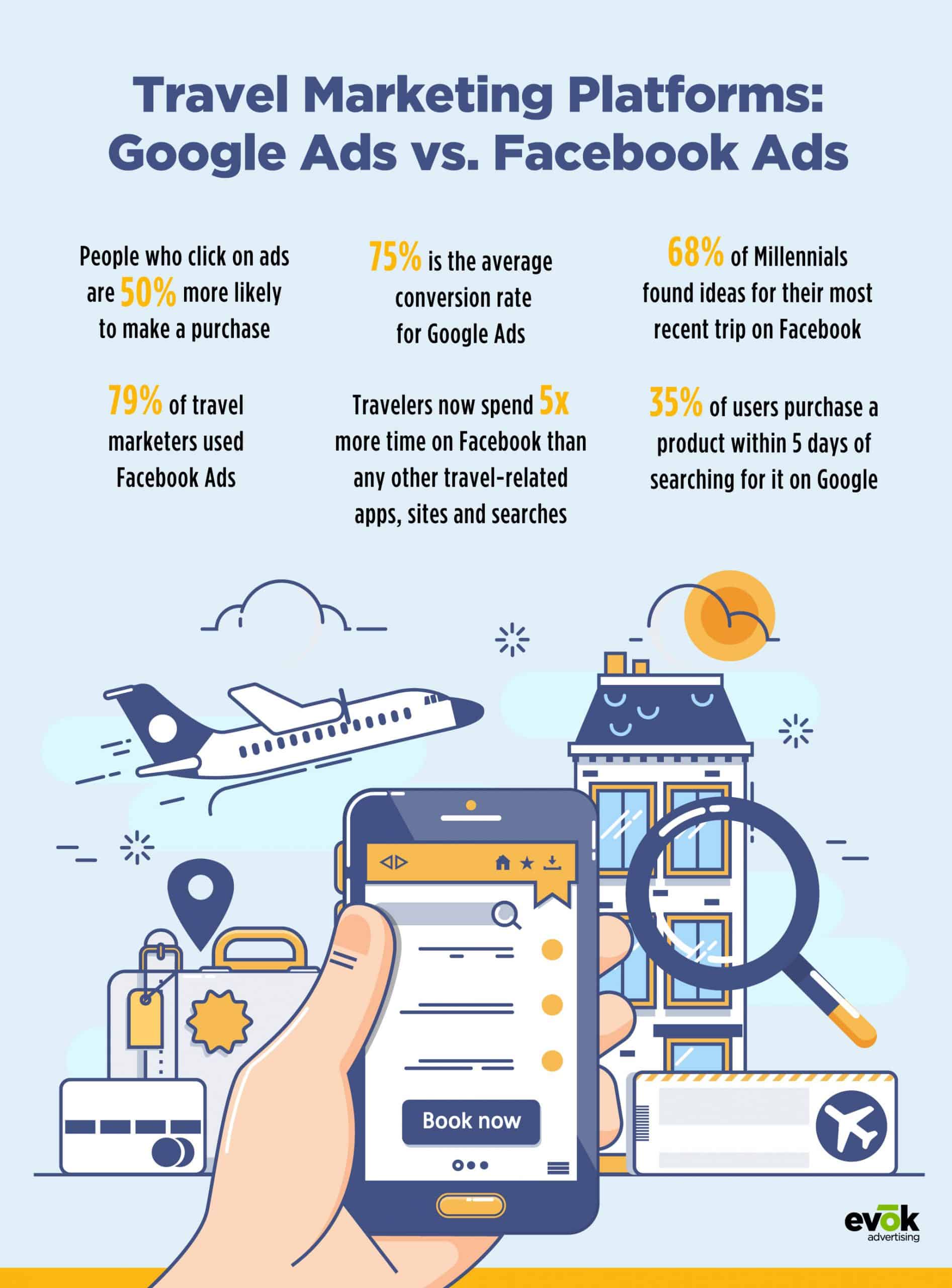
Google Ads and social media ads serve distinct purposes in promoting tourism businesses. Google Ads focus on capturing demand from users actively searching for travel-related services, while social media ads target users based on interests and demographics. In 2023, Google Ads generated an average click-through rate of 3.17% for travel-related campaigns, compared to approximately 0.9% for social media ads.
Google Ads are primarily keyword-driven, allowing businesses to bid on relevant search terms. This approach targets users who exhibit intent, resulting in higher conversion rates for immediate bookings. Conversely, social media ads leverage visual content and audience targeting to build brand awareness and engage users in a more casual context. This can be effective for fostering interest and consideration but may not translate to immediate sales.
Key differences between Google Ads and social media advertising for tourism include:
- Targeting Mechanism: Google Ads target users based on search intent, while social media ads focus on user interests and behaviors.
- Ad Format: Google Ads primarily utilize text and search ads, while social media ads are often visual, including images and videos.
- Conversion Timing: Google Ads can drive immediate bookings as users are actively searching, whereas social media ads may require multiple touchpoints before a conversion occurs.
Expert insight: For tourism businesses, a balanced strategy that combines both Google Ads and social media ads can yield optimal results. Utilizing Google Ads for immediate demand while employing social media to nurture long-term engagement can enhance overall marketing effectiveness.
Maximizing ROI: Advanced Strategies for Google Ads in Tourism
This section delves into advanced strategies for optimizing Google Ads campaigns specifically tailored for the tourism sector. Implementing these tactics can significantly enhance ad performance and increase return on investment.

Utilizing Remarketing Techniques
Remarketing allows businesses to re-engage users who previously interacted with their website but did not complete a desired action, such as making a booking. By targeting these potential customers with tailored ads, tourism businesses can remind them of their interest. According to recent studies, remarketing campaigns can yield conversion rates up to 10 times higher than standard display ads.
Implementing A/B Testing
A/B testing is crucial for refining ad copy and landing pages. By systematically comparing two versions of an ad or landing page, businesses can identify which elements resonate more with their audience. Key factors to test include:
- Headlines and calls-to-action
- Images or videos used in the ads
- Ad formats and sizes
Data from 2024 suggests that companies using A/B testing for Google Ads see an average increase in click-through rates by 20-30%.
Leveraging Seasonal Trends and Local Events
Aligning ad campaigns with seasonal trends and local events can enhance relevance and effectiveness. For instance, promoting ski packages during winter or highlighting local festivals can attract more tourists. Utilize tools like Google Trends to identify peak travel times and local happenings. Campaigns tailored to these periods can see an increase in engagement by up to 50% compared to general campaigns.
Analyzing Competitor Strategies
Conducting a thorough analysis of competitor strategies can provide insights into effective targeting and messaging. Tools like SEMrush and SpyFu allow marketers to view competitor keywords, ad copies, and performance metrics. Key areas to observe include:
- Top-performing keywords
- Ad scheduling and frequency
- Landing page effectiveness
This competitive intelligence can inform adjustments to your own campaigns, enhancing targeting precision and overall performance.
Common misconceptions about Google Ads in the tourism sector often revolve around the belief that a high budget guarantees success. In reality, effective targeting, compelling ad copy, and strategic planning play a more critical role. Additionally, many underestimate the value of ongoing optimization; campaigns should be continuously monitored and adjusted based on performance data rather than left stagnant.
To apply these strategies, start by implementing a remarketing campaign targeting previous visitors. Next, set up an A/B test for your top-performing ads to identify the most effective variations. Research upcoming local events and seasonal trends to adjust your campaigns accordingly. Finally, utilize competitive analysis tools to refine your ad targeting and enhance your market positioning. Focusing on these areas will enable tourism businesses to maximize their ROI with Google Ads.
Common Mistakes in Google Ads for Tourism and How to Avoid Them
This section identifies frequent pitfalls that tourism businesses encounter in their Google Ads campaigns and provides actionable solutions to enhance performance and drive bookings.
Neglecting Keyword Research
Keyword research is the foundation of any successful Google Ads campaign. Failing to identify the right keywords can lead to irrelevant ad placements, wasting budget and reducing click-through rates. For tourism businesses, this means missing out on potential customers actively searching for travel experiences. A study in 2024 showed that ads utilizing well-researched keywords can achieve a 30% higher click-through rate compared to those that do not prioritize keyword strategy.
Overlooking Mobile Optimization
With over 60% of travel-related searches conducted on mobile devices, overlooking mobile optimization can significantly hinder ad performance. Ads and landing pages that are not optimized for mobile may lead to higher bounce rates and lower conversion rates. Ensuring that both ads and landing pages are mobile-friendly can enhance user experience and boost engagement. Implement responsive design techniques and test loading speeds to improve mobile usability.
Failing to Track Conversions
Conversion tracking is essential for understanding campaign effectiveness. Without tracking, businesses miss critical insights into which ads and keywords are driving bookings. Implement Google Ads conversion tracking to measure actions such as form submissions, phone calls, and completed bookings. In 2025, businesses that utilized conversion tracking reported a 25% increase in return on ad spend (ROAS) due to data-driven adjustments.
Setting Unrealistic Budgets and Expectations
Setting budgets without a clear strategy can lead to overspending or underinvestment in effective campaigns. Many tourism businesses mistakenly assume that higher budgets guarantee better results. Instead, focus on establishing a realistic budget based on historical performance data and campaign goals. Monitor performance regularly and adjust budgets accordingly to ensure optimal spending levels.
Nuanced Considerations
Many tourism businesses overlook the importance of seasonal trends in their Google Ads campaigns. For example, travel patterns can vary significantly based on holidays, weather, and local events. Implementing seasonal keyword adjustments and ad scheduling can optimize ad visibility during peak travel times. Additionally, misconceptions about the effectiveness of broad match keywords can lead to wasted ad spend. Utilizing a mix of broad, phrase, and exact match types can enhance targeting precision, maximizing ad relevance and performance.
Practical Application
- Conduct thorough keyword research using tools like Google Keyword Planner to identify high-potential search terms.
- Ensure all ads and landing pages are mobile-optimized for seamless user experience.
- Implement Google Ads conversion tracking to assess and refine campaign effectiveness.
- Set a realistic budget based on data analysis and monitor it regularly for adjustments.
Real-World Applications: Case Studies of Successful Google Ads Campaigns in Tourism
This section examines practical examples of how various tourism-related businesses successfully utilized Google Ads to enhance their visibility and drive sales. By analyzing these case studies, insights can be drawn on effective strategies and tactics that can be replicated in the tourism sector.
Small Travel Agency Achieves Remarkable Growth
One case study involves a small travel agency based in a competitive market. By implementing a targeted Google Ads campaign focusing on niche travel experiences, the agency saw a 150% increase in website traffic within six months. The campaign utilized specific keywords related to adventure travel and family vacations, leading to a 30% increase in bookings year-over-year. Additionally, the agency employed ad extensions, which provided potential customers with more information and options, further enhancing engagement.
Hotel Chain’s Retargeting Success
A prominent hotel chain successfully executed a retargeting campaign through Google Ads, aiming to recapture visitors who showed interest but did not complete a booking. By employing dynamic remarketing ads that displayed tailored offers based on users’ previous interactions, the hotel chain achieved a 25% higher conversion rate compared to standard ads. The campaign focused on personalized messaging, which resonated well with potential guests, resulting in a 40% increase in direct bookings over the campaign duration.
Tour Operator Leverages Seasonal Promotions
A tour operator specializing in eco-tours effectively utilized Google Ads to promote seasonal packages. By launching a campaign during peak booking seasons, the operator employed strategies such as limited-time offers and captivating visuals of destinations. The results were significant: a 200% return on ad spend (ROAS) was recorded during this campaign, with a substantial uptick in inquiries and bookings. This example illustrates how timing and compelling offers can significantly impact campaign performance.
Destination Marketing Organization’s Strategic Approach
A destination marketing organization (DMO) implemented a comprehensive Google Ads strategy to promote tourism in a less-traveled region. By utilizing a combination of search and display ads, the DMO targeted specific demographics and interests, resulting in a 50% increase in website visits and a 35% rise in visitor inquiries within a year. The DMO also made use of local attractions and events in ad copy, which enhanced the relevance of the ads for potential visitors.
Common misconceptions in Google Ads for tourism include the belief that high spending guarantees visibility and success. In reality, precision targeting and ad relevance are crucial for achieving desired outcomes. Furthermore, many businesses overlook the importance of A/B testing ad copy and landing pages, which can lead to enhanced performance and lower customer acquisition costs.
To effectively leverage the insights gained from these case studies, tourism businesses should consider the following actionable steps:
- Identify niche markets and tailor Google Ads campaigns to specific audience segments.
- Utilize retargeting strategies to re-engage visitors who did not convert initially.
- Implement seasonal promotions to capitalize on peak travel times.
- Regularly analyze and optimize ad performance through A/B testing and data-driven adjustments.
The Future of Google Ads in Tourism: Trends to Watch
This section examines emerging trends and technologies poised to reshape Google Ads in the tourism industry, emphasizing their significance for travel businesses seeking to optimize their online presence.

The Rise of AI and Machine Learning in Ad Targeting
Artificial Intelligence (AI) and machine learning are revolutionizing the way businesses target consumers through Google Ads. By analyzing vast amounts of data, AI algorithms can identify patterns in user behavior, preferences, and travel intentions. This enables tourism marketers to deliver highly relevant ads to potential customers at the right time. According to a 2024 report, over 60% of travel companies are expected to incorporate AI-driven strategies into their advertising efforts, leading to a projected 30% increase in conversion rates.
Increased Focus on Personalized Travel Experiences
Personalization has become a cornerstone of effective advertising, particularly in the tourism sector. Travelers now expect tailored experiences that cater to their specific interests and needs. Google Ads for tourism can leverage user data to create dynamic ad content that resonates with individual audiences. For instance, 65% of consumers are more likely to engage with ads that reflect their personal travel preferences. Marketers should utilize tools like audience segmentation and remarketing to enhance personalization and boost engagement.
The Impact of Voice Search on Tourism Advertising
Voice search is transforming how consumers seek travel information, with studies indicating that 55% of households are expected to own a smart speaker by 2025. This trend impacts Google Ads for tourism by necessitating a shift in keyword strategies and ad formats. Advertisers must optimize content for natural language queries and create succinct, informative ads that align with voice search behaviors. This adaptation is critical as voice search queries tend to be longer and more conversational compared to traditional text searches.
Shifts in Consumer Behavior Post-Pandemic
The COVID-19 pandemic has significantly altered consumer behavior in the tourism industry. Travelers are increasingly prioritizing safety, flexibility, and unique experiences. A survey in 2025 revealed that 70% of respondents are more likely to book trips with flexible cancellation policies. Consequently, Google Ads campaigns must emphasize these aspects to resonate with a more cautious audience. Advertisers should highlight safety measures and adaptable booking options to align with current consumer expectations.
Furthermore, the growing interest in sustainable travel presents an opportunity for targeted advertising. Brands that promote eco-friendly practices are likely to attract a more conscious consumer base. Incorporating sustainability into Google Ads messaging can enhance brand loyalty in a shifting market landscape.
While the advancements in AI and voice search represent significant opportunities, some common misconceptions persist. Many advertisers mistakenly believe that AI can fully automate ad management without human oversight. In reality, human expertise is essential for setting strategic goals, interpreting AI insights, and ensuring brand alignment.
To effectively leverage these trends, tourism marketers should take the following actionable steps:
- Invest in AI tools to enhance ad targeting and personalization efforts.
- Regularly analyze consumer behavior data to adapt campaigns to changing preferences.
- Optimize content for voice search by incorporating natural language keywords.
- Emphasize safety and flexibility in ad messaging to appeal to post-pandemic travelers.
- Highlight sustainable practices in advertising to attract eco-conscious consumers.
Evaluating the Best Google Ads For Tourism
Choosing the right advertising provider is crucial for tourism businesses aiming to maximize their online presence. With the global online travel market projected to reach $1.3 trillion by 2026, understanding the nuances of each advertising option can significantly impact visibility and engagement. Factors such as pricing, audience targeting, and key features should guide your decision-making process.
| Provider / Option | Best For | Pricing | Key Feature |
|---|---|---|---|
| Google Ads | Comprehensive advertising solutions | $1 to $2 per click, varies by industry | Extensive reach and targeting options |
| Tripadvisor Ads | Travel-related businesses | Varies; typically $1 to $5 per click | Targeted to travel enthusiasts |
| Facebook Ads | Engaging travel audiences | $0.50 to $2 per click | Visual storytelling capabilities |
| Bing Ads | Cost-effective alternatives | $0.50 to $1 per click | Less competition than Google |
| AdRoll | Retargeting visitors | Varies; average $1 to $3 per click | Cross-platform retargeting |
| TravelClick | Hotel and accommodation ads | Custom pricing based on services | Specialized in travel industry |
Criteria for Evaluating Program Quality
- Targeting Options: Evaluate the depth of audience targeting available. Effective targeting can significantly enhance ad performance and return on investment.
- Pricing Structure: Understand the cost per click and any additional fees involved. A clear pricing model helps in budgeting and optimizing ad spend.
- Ad Formats: Different providers offer various ad formats. Consider which formats best suit your marketing strategy and audience engagement goals.
- Analytics and Reporting: Robust analytics tools are essential for measuring campaign success. Look for providers that offer detailed reporting features to track performance effectively.
How to Assess the Reputation and Reliability of Providers
- Research Reviews: Look for customer reviews on independent sites to gauge user satisfaction and performance experiences with the provider.
- Check Case Studies: Seek out case studies or success stories that demonstrate the effectiveness of the provider’s services in the tourism sector.
- Evaluate Customer Support: Assess the quality of customer support by contacting them with queries. Reliable support can make a significant difference in campaign management.
- Verify Industry Experience: Ensure the provider has a proven track record in the tourism industry, as specialized knowledge can enhance campaign effectiveness.
Which Google Ads For Tourism Is Right for You?
Choosing the right Google Ads solution for your tourism-related business hinges on your unique needs, budget, and objectives. This guide provides tailored recommendations to help you make an informed decision that aligns with your specific goals.
Small travel agencies
Google Ads is an excellent choice for small travel agencies aiming to boost local visibility. Implement targeted campaigns using location-based keywords; for instance, a budget of $500 to $1,500 per month can effectively drive traffic from nearby customers actively searching for travel services.
Hotels and accommodations
TravelClick offers specialized advertising solutions specifically designed for hotels, optimizing your booking potential. By leveraging their targeted reach, hotels can expect to invest around $750 to $2,000 monthly, focusing on high-conversion keywords related to their amenities and services.
Tour operators
Tripadvisor Ads provide an effective platform for tour operators to connect with travel enthusiasts. Utilizing sponsored placements can enhance visibility; a budget of $400 to $1,200 per month can significantly increase bookings by showcasing unique tours and experiences directly to interested travelers.
Freelance travel marketers
Freelance travel marketers should consider Facebook Ads for their engaging ad creation tools, which allow for dynamic content that resonates with potential travelers. A budget of $300 to $800 can yield substantial engagement through visually appealing ads targeted at specific demographics and interests.
Destination marketing organizations
Bing Ads can serve as a cost-effective solution for destination marketing organizations aiming to reach a diverse audience. With an estimated budget of $500 to $1,500 per month, organizations can effectively promote attractions and events, leveraging Bing’s unique audience demographics.
| If You Are… | Best Approach |
|---|---|
| Small travel agencies | Google Ads with targeted local campaigns |
| Hotels and accommodations | TravelClick for specialized advertising |
| Tour operators | Tripadvisor Ads to target travel enthusiasts |
| Freelance travel marketers | Facebook Ads for engaging content creation |
| Destination marketing organizations | Bing Ads for cost-effective audience reach |
Local Insights for Google Ads in the Tourism Sector
Understanding local market dynamics is crucial for optimizing Google Ads for tourism. According to a 2023 study, 76% of people who search for something nearby visit a business within a day, highlighting the importance of targeting local search intent effectively. Tailoring ads to the geographic nuances of your market can significantly enhance visibility and conversion rates.
Geographic Market Differences
In competitive markets like New York City or San Francisco, tourism businesses must leverage hyper-targeted ads to stand out, focusing on specific neighborhoods or attractions. Conversely, in less competitive regions, broader targeting may yield better results, but local relevance remains critical. Businesses should analyze local tourism trends to adjust their strategies accordingly.
Local Business Applications
Local tourism businesses can uniquely leverage Google Ads to capture nearby travelers. Specific applications include:
- Promoting seasonal events or attractions that appeal to local residents and visitors.
- Targeting specific demographics through localized keywords, such as “family-friendly activities in [city].”
- Utilizing location-based ad extensions to highlight nearby services or attractions directly in the ad.
- Running time-sensitive promotions to attract last-minute travelers or weekend visitors.
Local Search and Visibility Impact
Google Ads for tourism directly influences local search rankings and visibility. To improve local search performance, businesses should:
- Optimize Google Business Profiles with accurate information, high-quality images, and regular updates.
- Utilize local keywords in ad copy and landing pages to enhance relevance.
- Encourage customer reviews on Google to improve visibility and trust.
- Implement local citations across relevant directories to boost local authority.
Pricing and Cost in Local Markets
Costs for Google Ads in tourism can vary significantly by geographic market. In metropolitan areas, businesses may pay between $2 to $10 per click, while in smaller markets, the cost can range from $1 to $5 per click. Local businesses should budget approximately 10-15% of their annual revenue for digital advertising to remain competitive against national players who typically allocate a larger portion of their marketing budget to Google Ads.
Local Implementation Checklist:
- Conduct a local keyword analysis to identify high-traffic terms specific to your area.
- Set up Google Ads campaigns focused on local attractions and events.
- Regularly update your Google Business Profile with promotions and new offerings.
- Utilize location targeting to reach potential visitors in nearby areas.
- Monitor and respond to customer reviews to enhance your local reputation.
- Adjust bids based on peak tourist seasons to maximize visibility.
- Track conversions from ads to optimize future campaigns effectively.
For Tourism businesses looking to generate local leads through Google Ads or Local SEO, GMB Ranger LLC offers hands-on campaign management. Specialist Md Tangeer Mehedi personally handles campaign setup and ongoing optimization — with no payment required until the first lead comes in.
Frequently Asked Questions
What are Google Ads for tourism?
Google Ads for tourism are online advertising campaigns designed to promote travel-related businesses, such as hotels, tours, and attractions. These ads appear on Google search results and across its display network, targeting potential travelers actively searching for related services.
How to create a Google Ads campaign for a travel business?
To create a Google Ads campaign for a travel business, start by setting up a Google Ads account and defining your campaign goals. Select relevant keywords, craft compelling ad copy, and set a budget to effectively reach your target audience.
What is the average cost of Google Ads for tourism?
The average cost of Google Ads for tourism varies widely based on competition and targeting, typically ranging from $1 to $5 per click. High-demand keywords may incur higher costs, impacting overall campaign budgets.
How long does it take to see results from Google Ads for tourism?
Results from Google Ads for tourism can often be seen within a few days to weeks, depending on the campaign’s optimization and budget. However, significant insights and improvements may take several weeks of data collection and analysis.
What are the best practices for Google Ads in tourism?
Best practices for Google Ads in tourism include using targeted keywords, creating location-specific ads, and utilizing ad extensions to enhance visibility. Regularly monitoring and optimizing campaigns based on performance data is also crucial for success.
How do Google Ads compare to social media ads for tourism?
Google Ads typically focus on capturing intent-driven searches, while social media ads are more about engagement and brand awareness. Both platforms can be effective, but their strategies and audience targeting differ significantly in the tourism sector.
Final Thoughts on Google Ads for Tourism
Leveraging Google Ads for tourism can significantly enhance visibility and attract targeted customers, ultimately driving revenue growth. Success hinges on a strategic approach that incorporates data analysis, compelling ad copy, and careful budget management.
Travel businesses should conduct a thorough competitive analysis and utilize A/B testing to refine their campaigns, ensuring optimal performance and maximizing return on investment.
Ready to elevate your travel business? Partner with a google ads agency that understands the unique needs of the tourism industry and watch your bookings soar!
In an increasingly digital world, mastering Google Ads is essential for tourism professionals seeking to stay ahead and capitalize on emerging market trends.
Leave a Reply