
What are google ads for pest control companies?
Google Ads for pest control companies is a targeted advertising strategy designed to connect businesses with potential customers actively seeking pest control services. With over 3.5 billion searches conducted daily, effective Google Ads campaigns can significantly enhance visibility and lead generation for pest control companies.
Understanding Google Ads for pest control companies is crucial for businesses in this competitive industry. As digital advertising continues to evolve, pest control companies must leverage effective online strategies to capture the attention of potential customers. According to recent industry reports, companies investing in digital marketing can see up to a 200% return on their advertising spend.
Failure to grasp the nuances of Google Ads can lead to missed revenue opportunities, inefficient use of marketing budgets, and a significant competitive disadvantage in the pest control market. Companies that do not adapt risk being overshadowed by competitors who effectively utilize these advertising tools.
This article provides a comprehensive guide on Google Ads for pest control companies, covering key topics such as comparisons of top advertising platforms, cost breakdowns, best practices for campaign management, and the integration of local SEO strategies to maximize reach and effectiveness.
For pest control companies looking to generate local leads through Google Ads or Local SEO, GMB Ranger LLC offers hands-on campaign management. Specialist Md Tangeer Mehedi personally handles campaign setup and ongoing optimization — with no payment required until the first lead comes in.
What are Google Ads for pest control companies?
Google Ads for pest control companies are paid online advertisements that allow these businesses to appear prominently in search results and on partner websites when potential customers search for pest control services. This advertising platform enables targeted marketing efforts that can lead to increased visibility and customer acquisition.
For pest control companies, Google Ads can be highly effective due to the ability to target specific demographics, locations, and keywords. Advertisers can tailor their campaigns to reach homeowners or businesses actively seeking pest control solutions. Key components of Google Ads for this industry include:
- Keyword targeting: Selecting relevant keywords such as “termite treatment” or “rodent control” to match user searches.
- Geographic targeting: Focusing on specific regions or localities to ensure ads reach potential customers in service areas.
- Ad formats: Utilizing various formats like text ads, display ads, and video ads to engage users effectively.
The effectiveness of Google Ads can be measured through metrics such as click-through rates (CTR) and conversion rates. For instance, businesses can expect an average CTR of around 3.17% for search ads across all industries, demonstrating the potential for high engagement when executed correctly. Moreover, investing in Google Ads can yield a return on investment (ROI) of up to $2 for every $1 spent, making it a financially sound strategy for pest control companies.
Expert insight: To maximize the effectiveness of Google Ads, regularly analyze campaign performance and adjust targeting settings based on seasonal pest activity trends, ensuring that ads reach the right audience at the right time.
How can pest control companies optimize their Google Ads?
Pest control companies can optimize their Google Ads by focusing on targeted keyword selection, compelling ad copy, and effective A/B testing. Implementing these strategies can significantly improve click-through rates (CTR) and conversion rates, with some companies experiencing up to a 30% increase in leads through optimized campaigns.
1. Keyword Selection: Start by conducting thorough keyword research using tools like Google Keyword Planner. Focus on specific terms that potential customers are likely to search for, such as “termite control” or “ant extermination,” rather than generic phrases. Aim for a mix of high-traffic and long-tail keywords to capture both broad and niche audiences.
2. Ad Copywriting: Write clear and persuasive ad copy that highlights unique selling propositions (USPs) such as guaranteed services, eco-friendly options, or free estimates. Use strong calls to action (CTAs) like “Call Now for a Free Quote” to encourage immediate engagement. Ensure that the ad copy aligns with the keywords to improve Quality Score and ad relevance.
3. A/B Testing: Regularly test different versions of your ads to determine which performs better. Change one variable at a time, such as headlines, CTAs, or descriptions, and monitor the results over a few weeks. Use the insights gained from A/B testing to refine your campaigns continuously and allocate budget more effectively.
Expert insight: To maximize the effectiveness of your Google Ads, consider leveraging ad extensions such as location and call extensions, which can enhance visibility and improve click-through rates by providing additional information to potential customers directly in the ad. Regularly review performance metrics to adapt strategies based on real-time data.
What is the average cost of Google Ads for pest control?
The average cost-per-click (CPC) for Google Ads in the pest control industry typically ranges from $4 to $10. However, costs can vary based on several factors, including location, competition, and specific services offered.
Several elements influence the cost of Google Ads for pest control companies:
- Geographic Location: Prices can differ significantly by region. Urban areas with higher competition for pest control services often see elevated CPC rates.
- Service Type: Specific services, such as termite control or bed bug treatments, may incur higher costs due to increased demand and competition.
- Ad Quality and Relevance: Google rewards well-optimized ads with lower CPCs. Higher click-through rates and better ad relevance can lower overall costs.
Additionally, the overall advertising budget plays a crucial role in determining how effectively a pest control company can compete for clicks. A budget of $500 to $2,000 per month is often recommended for small to medium-sized pest control businesses, allowing for sufficient exposure while managing costs effectively.
Expert insight: To maximize ROI, pest control companies should invest in targeted keyword research and consider seasonal trends in pest activity to optimize their ad spend effectively.
How long does it take to see results from Google Ads?
Typically, businesses can expect to see initial results from Google Ads within 1 to 3 months. However, achieving optimal performance may take up to 6 months or longer, depending on various factors.
Several key factors influence the timeline for seeing results from Google Ads. First, the competitiveness of the pest control market in your area plays a significant role. In highly competitive regions, it may take longer to establish a foothold and generate leads due to the need for higher ad spend and more refined targeting strategies. Conversely, in less saturated markets, results can manifest more quickly.
Second, the quality of your ad campaigns affects speed. Well-crafted ads with compelling copy and targeted keywords often yield faster results. Additionally, optimizing landing pages for conversion can significantly impact lead generation. Google’s algorithm favors high-quality ads, which can lead to better placements and lower costs per click, enhancing overall performance. Lastly, the initial budget allocated to the campaign is crucial; higher budgets typically allow for more data collection and quicker adjustments, leading to faster results.
Expert insight: Regularly monitor and adjust your campaigns based on performance data. This proactive approach can significantly reduce the time needed to achieve desired outcomes.
What are the best practices for Google Ads in pest control?
Effective Google Ads strategies for pest control companies focus on targeting the right audience and optimizing campaigns for maximum return on investment. According to recent data, businesses that use targeted Google Ads can see conversion rates increase by up to 50%. Implementing best practices can significantly enhance campaign performance.
To optimize Google Ads for pest control companies, consider the following best practices:
- Keyword Research: Conduct thorough keyword research to identify high-intent search terms relevant to pest control services. Utilize tools like Google Keyword Planner to find keywords with good search volume and manageable competition.
- Ad Extensions: Leverage ad extensions such as call extensions and location extensions. These features enhance visibility and provide potential customers with easy access to contact information, increasing the likelihood of engagement.
- Target Local Audiences: Focus on local targeting to reach customers in your service area. Use geo-targeting settings to refine your audience, ensuring that ads are shown to users within a specific radius of your business.
- A/B Testing: Regularly perform A/B testing on ad copy and landing pages. Test different headlines, calls to action, and visuals to determine which combinations yield the best conversion rates.
- Optimize Landing Pages: Ensure landing pages are relevant to your ad content and designed for conversions. Use clear calls to action and provide valuable information about services offered, enhancing user experience and increasing the likelihood of inquiries.
Monitoring and adjusting campaigns based on performance metrics is essential for ongoing success. Analyze click-through rates (CTR), conversion rates, and return on ad spend (ROAS) to identify areas for improvement. Regularly update keywords and ad copy based on seasonal trends and customer feedback.
Expert insight: Implementing a robust tracking system, such as Google Analytics, allows for precise measurement of campaign performance, enabling data-driven decisions that enhance overall marketing effectiveness in pest control services.
How do Google Ads compare to SEO for pest control companies?
Google Ads and SEO are two distinct strategies for driving traffic to pest control companies. Google Ads offers immediate visibility through paid placements, while SEO focuses on organic search rankings that require time and effort to achieve. According to a 2024 report, businesses leveraging Google Ads can see an ROI of up to 200% within the first month, whereas SEO typically takes 3 to 6 months to yield significant results.
One of the primary differences lies in cost structure. Google Ads operates on a pay-per-click (PPC) model, meaning companies only pay when users click their ads. This can lead to quick traffic but can become costly if not managed effectively. In contrast, SEO is often considered a long-term investment with associated costs for content creation and optimization but no direct payment for clicks once the site ranks organically. While initial SEO efforts may be more expensive, they often result in sustained traffic without ongoing costs per click.
Another key difference is the speed of results. Google Ads can generate immediate traffic, making it ideal for promotions or seasonal services. This allows pest control companies to capitalize on urgent customer needs quickly. Conversely, SEO builds authority and trust over time, leading to higher click-through rates and better customer retention. In the long run, a well-optimized SEO strategy can surpass the effectiveness of Google Ads due to its sustainable nature.
Expert insight: Balancing Google Ads with a strong SEO strategy can maximize visibility and customer acquisition. Invest in SEO for long-term growth while utilizing Google Ads for immediate impact, especially during peak pest seasons.
Advanced Targeting Strategies for Pest Control Ads
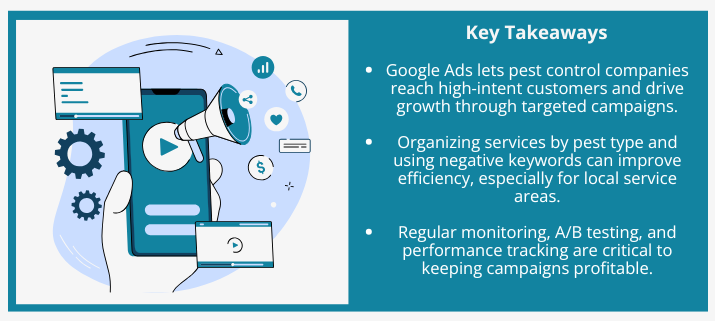
Effective targeting in Google Ads can significantly enhance the visibility and performance of pest control campaigns. This section explores advanced strategies that ensure ads reach the most relevant audiences, driving higher conversion rates and maximizing marketing budgets.
Utilizing Geo-Targeting to Focus on Local Markets
Geo-targeting enables pest control companies to concentrate their advertising efforts on specific geographic areas. By defining service regions, businesses can ensure their ads are only displayed to users searching for pest control services within those locations. This not only reduces wasted ad spend but also increases the likelihood of generating leads from local customers.
- Radius targeting: Set a radius around your business location to capture nearby clients.
- Location groups: Target specific neighborhoods or zip codes with high pest control needs.
- Location-based keywords: Incorporate local terms into ad copy for better relevance.
Leveraging Demographic Targeting to Reach Specific Customer Segments
Demographic targeting allows pest control companies to refine their audience based on characteristics such as age, gender, household income, and more. By analyzing customer data, businesses can identify which segments are most likely to require their services, enabling more personalized and effective advertising.
For example, targeting higher-income households may yield better results for premium pest control services. In 2024, demographic targeting is projected to increase ad engagement rates by up to 30% for niche markets, highlighting its effectiveness.
Implementing Remarketing Strategies to Re-Engage Previous Visitors
Remarketing is a powerful strategy that targets users who have previously interacted with a pest control company’s website or ads. By displaying tailored ads to these individuals, businesses can remind them of their services and encourage them to return and convert.
Effective remarketing strategies include:
- Custom audience lists: Create lists based on user behavior, such as website visits or service inquiries.
- Dynamic ads: Use ads that showcase specific services users viewed previously.
- Frequency capping: Control how often users see ads to avoid ad fatigue.
Analyzing Seasonal Trends to Time Campaigns Effectively
Pest control demand often fluctuates seasonally, influenced by factors such as weather patterns and pest activity. Analyzing these trends allows companies to time their campaigns for maximum impact. For instance, pest control services generally see increased demand during spring and summer months when pests are most active.
Utilizing tools like Google Trends can provide insights into seasonal search behavior, enabling businesses to plan their advertising strategies accordingly. Companies that align their campaigns with peak seasons can experience up to a 40% increase in lead generation.
In the realm of google ads for pest control companies, a common misconception is that basic targeting suffices. However, advanced strategies are essential for standing out in a competitive market. Companies often overlook the importance of continuous analysis and adaptation of targeting strategies, which can lead to missed opportunities for engagement and conversion.
To implement these strategies effectively:
- Define your target geographic areas and set up geo-targeting in your Google Ads account.
- Analyze customer demographics to adjust your targeting settings.
- Set up remarketing lists to capture potential customers who have previously shown interest.
- Monitor seasonal trends and adjust your ad schedules accordingly.
By adopting these advanced targeting strategies, pest control companies can enhance their advertising efforts, ensuring they reach the right audience at the right time.
Crafting Compelling Ad Copy for Pest Control Services
This section provides actionable strategies for developing persuasive ad copy tailored for pest control services. Effective ad copy directly addresses customer concerns and drives conversions, making it essential for maximizing the impact of Google Ads for pest control companies.
Identifying Customer Pain Points
Potential customers often experience specific pain points when dealing with pest infestations. Addressing these concerns in ad copy can significantly enhance engagement. Common issues include:
- Health risks associated with pests, such as allergies and disease transmission.
- Damage to property and belongings caused by infestations.
- Emotional distress from living with pests, impacting comfort and peace of mind.
By incorporating language that resonates with these pain points, ad copy can create an immediate connection with the audience, increasing the likelihood of conversion.
Strong Calls-to-Action
Effective calls-to-action (CTAs) are crucial for encouraging immediate responses from potential customers. CTAs should be clear, urgent, and action-oriented. Examples include:
- “Call Now for a Free Inspection!” – Creates urgency.
- “Get 20% Off Your First Treatment!” – Offers a tangible incentive.
-
“Schedule Your Pest Control today!”
– Direct and straightforward.
Using CTAs that emphasize immediate action can significantly improve click-through rates and lead generation.
Incorporating Local Keywords
Local keywords enhance ad relevance, ensuring that the right audience sees the ads. Including geo-specific terms in ad copy can increase visibility in search results. Examples of effective local keywords may include:
- “Pest Control in [City Name]”
- “Exterminators near [Neighborhood]”
- “Best Pest Services in [Region]”
Incorporating these keywords can lead to a higher quality score in Google Ads, which can reduce costs and improve ad positioning.
Testing Ad Formats
Experimenting with various ad formats can help determine which style resonates best with target customers. Consider testing the following formats:
- Text ads with concise messaging.
- Responsive search ads that adapt to user queries.
- Image or video ads showcasing services or testimonials.
Monitoring performance metrics such as click-through rates and conversion rates will provide insights into the most effective ad formats for a pest control business.
Many articles on this topic often overlook the importance of personalization in ad copy. Customizing messages based on customer demographics, previous interactions, and even seasonal pest issues can enhance relevance and engagement. For instance, highlighting specific pest problems prevalent during certain seasons can make ads more timely and pertinent. Additionally, incorporating A/B testing for ad variations not only identifies effective messaging but also allows for ongoing optimization based on real-time data.
To apply these strategies effectively, pest control companies should start by analyzing customer demographics and identifying common pain points. Craft ad copy that speaks directly to these concerns, using strong CTAs and local keywords. Regularly test different ad formats and monitor performance metrics to refine messaging. By implementing these practices, businesses can enhance the effectiveness of their Google Ads campaigns and drive higher conversion rates.
Common Mistakes to Avoid in Google Ads for Pest Control
Effective Google Ads management can significantly enhance the visibility and profitability of pest control companies. However, several common mistakes can hinder campaign performance and waste budget. Recognizing and avoiding these pitfalls is essential for optimizing advertising strategies.

Neglecting Negative Keywords
One of the most detrimental errors in Google Ads for pest control companies is failing to utilize negative keywords. These keywords prevent ads from showing up in searches that are irrelevant to your services. For instance, if you only provide residential pest control, adding “commercial” as a negative keyword can help filter out irrelevant traffic, thus improving click-through rates (CTR) and reducing wasted spend. According to recent data, campaigns that effectively use negative keywords can see a 20%-30% improvement in ROI.
Inadequate Conversion Tracking
Measuring the effectiveness of Google Ads requires precise conversion tracking. Many pest control companies overlook this vital component, resulting in a lack of insight into what drives actual business. Without understanding which ads lead to genuine inquiries or bookings, it is challenging to optimize campaigns effectively. Implementing conversion tracking can provide critical data on customer behavior, enabling businesses to refine their strategies and allocate budgets to the most effective ads. A study showed that businesses that track conversions can increase their ROI by up to 50%.
Unrealistic Budgeting and CPC Understanding
Setting an unrealistic budget without grasping cost-per-click (CPC) dynamics can lead to ineffective campaigns. Pest control companies must analyze their local market to determine average CPC rates for keywords relevant to their services. For example, if the average CPC for “pest control services” in a specific region is around $4, setting a daily budget of $5 may not yield sufficient impressions or clicks. A more informed budget based on market data allows for better competitiveness in bids and increases the likelihood of capturing leads.
Overlooking Ad Extensions
Ad extensions are powerful tools that enhance ad visibility and provide additional information to potential customers. Many pest control companies fail to leverage these features, missing opportunities to stand out against competitors. Utilizing ad extensions, such as call extensions or location extensions, can increase CTR by up to 15%. These extensions not only provide essential details but also improve the overall quality score of ads, leading to better placement at lower costs.
Expert Insights and Nuances
A common misconception is that more keywords lead to better visibility. However, focusing on a broad range of keywords can dilute the effectiveness of campaigns. Instead, pest control companies should prioritize a smaller set of highly relevant, targeted keywords that align closely with their services. Additionally, the competitive landscape is continually evolving; hence, regular reviews and adjustments to keyword strategies and budgets are essential. Many companies overlook the importance of A/B testing different ad copies and landing pages, which can yield surprising insights into what resonates with potential customers.
Practical Application
- Implement a negative keyword strategy to filter out irrelevant traffic.
- Set up robust conversion tracking to measure ROI accurately.
- Research local CPC rates to establish realistic budgets.
- Use ad extensions to improve visibility and user engagement.
- Regularly review and adjust keyword strategies based on performance data.
By addressing these common mistakes, pest control companies can significantly improve their Google Ads performance, ensuring better resource allocation and higher conversion rates.
Case Studies: Successful Google Ads Campaigns in Pest Control
This section examines real-world examples of pest control companies that have effectively utilized Google Ads, highlighting their campaign objectives, strategies, and measurable outcomes. Analyzing these case studies provides valuable insights and actionable lessons for other businesses in the industry.
Case Study 1: ABC Pest Solutions
ABC Pest Solutions aimed to increase its customer base by targeting homeowners in suburban areas. The campaign focused on seasonal pest control services, particularly during peak infestation months. By utilizing targeted keywords such as “ant control,” “rodent removal,” and “termite inspection,” they created tailored ads that resonated with local homeowners.
- Campaign Objective: Increase service bookings by 30% during peak season.
- Strategy: Implemented geo-targeting to focus on specific zip codes with high infestation reports.
- Ad Formats: Used a mix of text ads and responsive search ads to optimize performance.
Results showed a 40% increase in bookings compared to the previous year, with a click-through rate (CTR) of 6.5%, well above the industry average of 3.7%. The cost-per-click (CPC) averaged $2.50, providing a strong return on investment.
Case Study 2: PestGuard Inc.
PestGuard Inc. aimed to enhance its brand visibility and lead generation through Google Ads. The company focused on a broader range of pest control services, including commercial pest management. Their strategy involved creating a comprehensive keyword list that included both general and niche terms, such as “commercial pest control” and “bed bug extermination.”
- Campaign Objective: Generate 100 new leads per month.
- Strategy: Emphasized ad extensions, such as callouts and structured snippets, to provide additional information.
- Ad Formats: Primarily used display ads in addition to search ads to capture a wider audience.
By the end of the campaign, PestGuard Inc. achieved a 150% increase in leads, with a CTR of 7.2%. Their CPC was approximately $3.00, resulting in a cost-per-lead of $30, significantly lower than their previous marketing efforts.
Key Takeaways and Best Practices
- Targeted Keywords: Focus on specific terms relevant to your services and local market.
- Geo-Targeting: Utilize location settings to reach potential customers in high-demand areas.
- Ad Extensions: Implement various ad extensions to enhance visibility and provide essential information.
These case studies illustrate the effectiveness of targeted Google Ads strategies for pest control companies. By focusing on specific objectives, leveraging the right keywords, and utilizing ad extensions, companies can significantly improve their ad performance and lead generation.
To replicate these successes, pest control companies should begin by conducting thorough keyword research and analyzing local market trends. Setting clear objectives and employing geo-targeting can further refine ad campaigns. Regularly reviewing campaign metrics and adapting strategies based on performance data will enhance overall effectiveness in utilizing Google Ads for pest control companies.
In summary, implementing targeted Google Ads strategies while continuously optimizing based on data analytics can lead to substantial growth in customer acquisition and brand visibility in the pest control industry.
Evaluating the Best Google Ads For Pest Control Companies
In the rapidly growing digital advertising landscape, comparing paid advertising options is essential for pest control companies aiming to maximize their return on investment. The global online advertising market is projected to reach $1 trillion by 2026, highlighting the importance of selecting the right provider. Key criteria for evaluation include pricing, features, and suitability for specific business sizes.
| Provider / Option | Best For | Pricing | Key Feature |
|---|---|---|---|
| Google Ads | All-around PPC advertising | $1 – $2 per click on average | Extensive reach and targeting options |
| WordStream | Small to medium businesses | $300 – $1,000 monthly | User-friendly interface with optimization tools |
| SEMrush | Comprehensive marketing analysis | $119.95 – $449.95 per month | Competitor analysis and keyword tracking |
| AdEspresso | Facebook and Google Ads integration | $49 – $259 monthly | A/B testing for ad optimization |
| SpyFu | Competitor keyword research | $39 – $299 monthly | Historical data on competitors’ ads |
Criteria for Evaluating Program Quality
- Pricing: Assess the cost structure to ensure it aligns with your budget. Consider both monthly fees and per-click costs to gauge total expenditure.
- Targeting Options: Evaluate the granularity of targeting features, as effective audience targeting can significantly improve ad performance and conversion rates.
- User Experience: A user-friendly interface can streamline ad management, especially for smaller businesses without dedicated marketing teams. Look for intuitive dashboards and support resources.
- Feature Set: Compare the unique features each provider offers, such as A/B testing, keyword tracking, and competitor analysis. These tools can enhance your advertising strategy.
How to Assess the Reputation and Reliability of Providers
- Research Online Reviews: Look for customer feedback on platforms like Trustpilot or G2 to gain insights into user experiences and satisfaction levels.
- Check Industry Certifications: Verify if the provider holds certifications such as Google Partner or Facebook Marketing Partner, indicating credibility in the advertising space.
- Request Case Studies: Ask potential providers for case studies or success stories that demonstrate their effectiveness in similar industries.
- Evaluate Customer Support: Assess the quality and availability of customer support services to ensure assistance is readily available when needed.
Which Google Ads For Pest Control Companies Is Right for You?
Selecting the best Google Ads strategy for pest control companies hinges on unique business needs, budget constraints, and marketing goals. This guide offers tailored recommendations to help you find the most effective solution for your specific audience segment.
Solo pest control business owner
For solo pest control business owners, Google Ads provides the most direct access to local customers actively seeking pest control services. Implementing a targeted local search campaign can yield results with a budget of $500 to $1,500 per month, focusing on geo-targeted keywords that resonate with your service area.
Mid-sized pest control company
Mid-sized pest control companies should consider using WordStream for its robust optimization features tailored for growing businesses. With a monthly budget of $1,500 to $5,000, this platform can help streamline ad management and improve ROI through its automated bidding and performance tracking tools.
Large pest control franchise
Large pest control franchises will benefit from SEMrush, which offers comprehensive marketing analysis and competitor insights. Investing around $3,000 to $10,000 per month allows franchises to leverage in-depth analytics to refine their ad strategies and outpace competitors in the digital landscape.
Digital marketing agency for pest control
For digital marketing agencies specializing in pest control, AdEspresso is ideal for managing multiple ad campaigns across various platforms efficiently. With a flexible budget starting at $49 per month, agencies can optimize ad performance and streamline reporting, making it easier to manage diverse client needs.
| If You Are… | Best Approach |
|---|---|
| Solo pest control business owner | Google Ads with local targeting ($500-$1,500/month) |
| Mid-sized pest control company | WordStream ($1,500-$5,000/month) |
| Large pest control franchise | SEMrush ($3,000-$10,000/month) |
| Digital marketing agency for pest control | AdEspresso (from $49/month) |
Local Insights for Google Ads Targeting Pest Control Companies
Understanding local market dynamics is crucial for pest control companies leveraging Google Ads. In fact, 46% of all Google searches are seeking local information, highlighting the importance of geo-targeting in ad campaigns. Businesses that effectively utilize local SEO strategies can see a 14% conversion rate, significantly higher than the average 2.35% for non-localized searches.
Geographic Market Differences
In competitive urban markets like Los Angeles or New York City, pest control companies must focus on targeted keywords and localized ad copy to stand out. Conversely, in smaller towns or less competitive regions, broader terms may yield better results. Companies should adapt their strategies based on local competition and search volume specific to their area.
Local Business Applications
Local pest control businesses can maximize their Google Ads effectiveness through tailored strategies:
- Geo-targeted Campaigns: Focus ads on specific neighborhoods with a high prevalence of pest issues.
- Localized Ad Copy: Use phrases like “Best pest control in [City Name]” to resonate with local searchers.
- Seasonal Promotions: Highlight services relevant to local pest seasons, like termite treatments in spring.
- Customer Reviews: Incorporate local testimonials in ads to build trust and credibility within the community.
Local Search and Visibility Impact
Google Ads for pest control companies directly influences local search rankings and visibility. To enhance their presence, businesses should:
- Optimize their Google Business Profile with accurate location, services, and hours.
- Encourage satisfied customers to leave positive reviews on Google.
- Utilize local keywords in ad campaigns to improve relevance.
- Regularly update their Google Business Profile with promotions and new services.
Pricing and Cost in Local Markets
Costs associated with Google Ads can vary significantly by geographic market. For example, pest control companies in metropolitan areas like Chicago might spend between $2.50 to $5.00 per click, while businesses in rural areas may see costs as low as $1.00 to $2.00 per click. Local businesses should budget around $500 to $2,000 per month for effective campaigns, compared to national players who might allocate $10,000 or more for broader reach.
Local Implementation Checklist:
- Conduct keyword research specific to local pest issues.
- Set up geo-targeted Google Ads campaigns.
- Create localized ad copy that speaks to your community.
- Optimize your Google Business Profile regularly.
- Encourage and manage customer reviews actively.
- Monitor ad performance and adjust bids based on local competition.
- Keep track of local pest trends and adjust services accordingly.
For pest control companies looking to generate local leads through Google Ads or Local SEO, GMB Ranger LLC offers hands-on campaign management. Specialist Md Tangeer Mehedi personally handles campaign setup and ongoing optimization — with no payment required until the first lead comes in.
Frequently Asked Questions
What are Google Ads for pest control companies?
Google Ads for pest control companies are paid advertisements that appear in Google search results and on partner websites. These ads help businesses reach potential customers actively searching for pest control services.
How can pest control companies optimize their Google Ads?
Pest control companies can optimize their Google Ads by using targeted keywords, creating compelling ad copy, and utilizing location targeting. Regularly analyzing performance metrics and adjusting bids can also enhance ad effectiveness.
What is the average cost of Google Ads for pest control?
The average cost of Google Ads for pest control varies widely, typically ranging from $1 to $10 per click. Factors influencing cost include competition, location, and the specific services being advertised.
How long does it take to see results from Google Ads?
Results from Google Ads can typically be seen within a few days to a couple of weeks. However, achieving optimal performance may take longer as campaigns are adjusted and refined based on data.
What are the best practices for Google Ads in pest control?
Best practices for Google Ads in pest control include using relevant keywords, writing clear and persuasive ad copy, and implementing ad extensions. Regularly monitoring and optimizing campaigns based on performance data is also crucial.
How do Google Ads compare to SEO for pest control companies?
Google Ads provide immediate visibility and traffic, while SEO focuses on long-term organic search rankings. Both strategies are complementary; combining them can maximize online presence and lead generation for pest control companies.
Final Thoughts on Google Ads for Pest Control Companies
Successful Google Ads campaigns for pest control companies hinge on strategic targeting, compelling ad copy, and vigilant monitoring of performance metrics. By avoiding common pitfalls and embracing best practices, businesses can significantly enhance their visibility and lead generation capabilities in a competitive market.
To maximize the effectiveness of your campaigns, conduct a thorough keyword analysis specific to your service area, ensuring you target phrases that potential customers are actively searching for.
To maximize your pest control business’s potential, consider partnering with a google ads management agency that specializes in tailored advertising strategies.
Investing in Google Ads is not just an option but a necessity for pest control companies aiming to dominate their local markets and drive sustainable growth.
Leave a Reply