
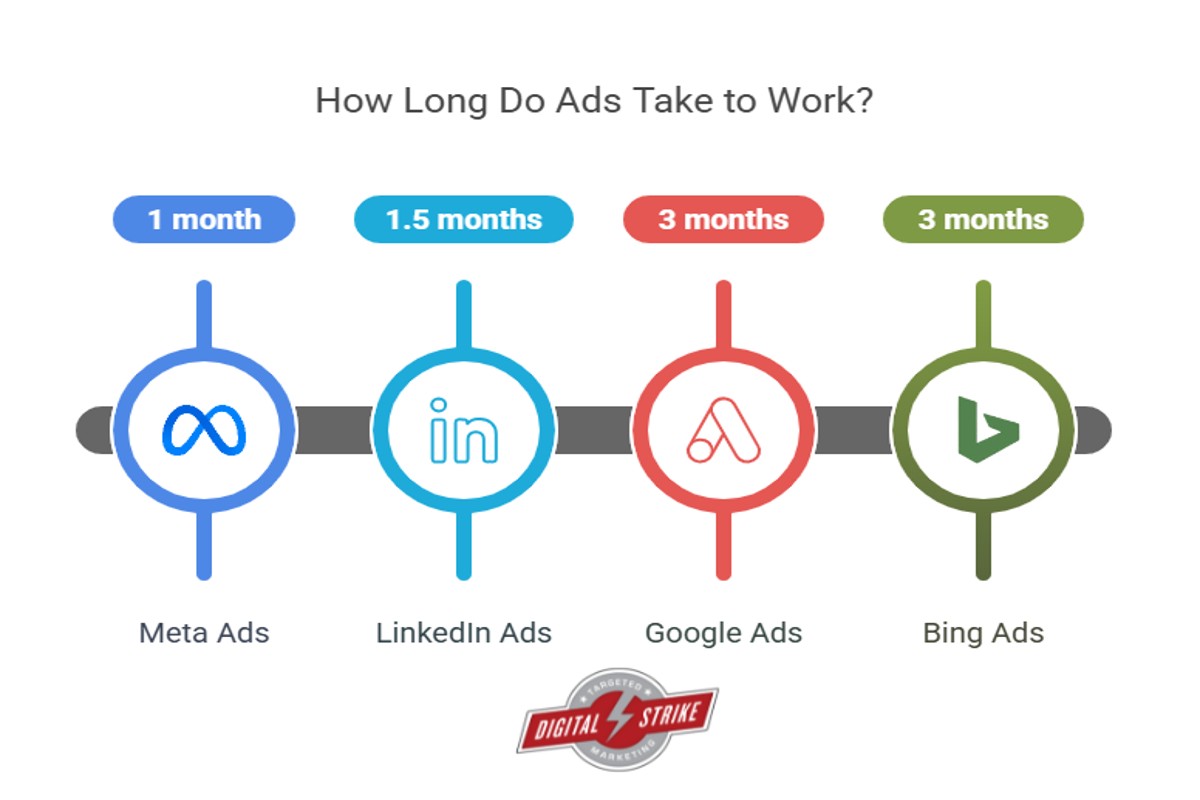
How long does it take for Google Ads to work? Typically, Google Ads can start showing results within a few days, but optimal performance often takes 3-6 months. This timeframe allows for data collection and campaign optimization, ultimately leading to more effective ad strategies.
Understanding the timeframe for Google Ads effectiveness is crucial for businesses seeking to enhance their online presence and drive sales. With global digital ad spending projected to surpass $500 billion in 2023, knowing how to leverage Google Ads efficiently can significantly impact a company’s market position and return on investment. Delays in understanding this process can lead to missed opportunities in a competitive landscape.
Failure to grasp the timeline for Google Ads can result in wasted budgets, unrealized leads, and a diminished competitive edge. Businesses may struggle to achieve their advertising goals, leading to lost revenue and ineffective marketing strategies.
This article will explore the intricacies of Google Ads performance, including the timeline for results, best practices for campaign optimization, common pitfalls to avoid, and insights into maximizing your return on investment. Readers will gain a comprehensive understanding of how to effectively utilize Google Ads for their marketing needs.
For How Long Does It Take For Google Ads To Work businesses looking to generate local leads through Google Ads or Local SEO, GMB Ranger LLC offers hands-on campaign management. Specialist Md Tangeer Mehedi personally handles campaign setup and ongoing optimization — with no payment required until the first lead comes in.
How quickly can I see results from Google Ads?
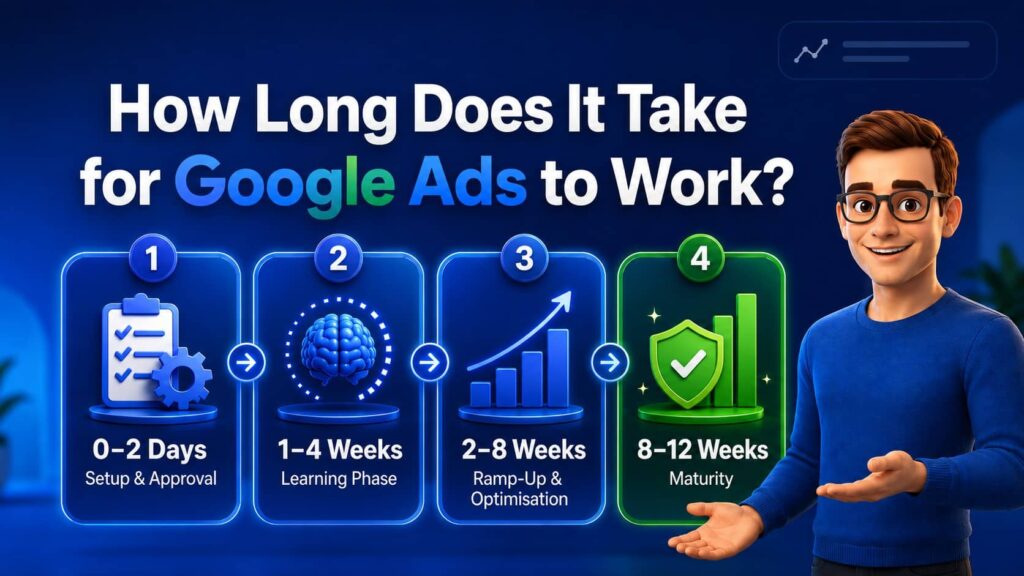
Results from Google Ads can begin to appear within a few days, but optimal performance typically takes 3 to 6 months. Initial visibility, such as impressions and clicks, may be immediate, while conversions and return on investment (ROI) require more time to stabilize.
Several factors influence the timeline for seeing results from Google Ads. The complexity of the campaign, including the number of keywords and ad groups, can affect how quickly data accumulates. Additionally, the competitiveness of the industry and the quality of the ads play a significant role. For instance, campaigns in highly competitive sectors may take longer to yield meaningful results due to the need for continuous optimization and budget adjustments.
Moreover, the learning phase of Google Ads can impact timing. During the first few weeks, Google’s algorithms gather data on user interactions, which helps in optimizing ad placements and targeting. This phase is crucial for ensuring that ads reach the right audience effectively. Advertisers often see fluctuations in performance during this period, which can stabilize as the campaign progresses and data becomes more robust.
Expert insight: Regularly monitor key performance indicators (KPIs) such as click-through rates (CTR) and conversion rates to assess campaign effectiveness. Adjustments based on this data can significantly improve results within the 3 to 6-month window.
What factors influence how long Google Ads take to work?
The time it takes for Google Ads to yield results is influenced by several factors, including budget, competition, ad quality, and targeting precision. Generally, advertisers can start seeing initial results within a few days, but achieving optimal performance may take several weeks or months.
One of the most significant factors is the budget. A higher budget allows for more ad exposure, which can lead to quicker results. Conversely, a limited budget may slow down the data collection process needed to optimize campaigns effectively. Another crucial aspect is the level of competition in the chosen market. In highly competitive industries, it may take longer to see significant results as the ad must compete against many others for visibility.
- Ad Quality: Google uses a Quality Score that evaluates the relevance and quality of your ads and landing pages. Higher-quality ads typically lead to better placement and lower costs per click, accelerating results.
- Targeting Precision: Effective targeting ensures that ads reach the right audience. The more precise the targeting, the more likely the ads will resonate, leading to faster conversions.
- Campaign Optimization: Continuous monitoring and optimization of the campaign can significantly impact performance. Adjusting bids, keywords, and ad copy based on performance data can shorten the time needed to achieve desired results.
Expert insight: Regularly analyze performance metrics and adjust your strategy accordingly. This proactive approach can dramatically enhance the effectiveness of your Google Ads campaigns and expedite the time it takes to see substantial results.
How does Google Ads compare to SEO in terms of speed?
Google Ads provides immediate visibility and traffic, typically within hours of launching a campaign, whereas SEO strategies generally take several months to yield significant results. For instance, businesses may start seeing traffic from Google Ads almost instantly, while SEO can take anywhere from three to six months to significantly impact organic search rankings.
Google Ads operates on a pay-per-click model, allowing advertisers to bid on keywords and appear at the top of search results as soon as their campaigns are live. This immediacy is advantageous for businesses needing quick traffic or promoting time-sensitive offers. In contrast, SEO focuses on optimizing content and website structure to improve organic visibility. This process involves keyword research, content creation, and link-building, which requires time to establish authority and relevance in search engine algorithms.
Moreover, the effectiveness of Google Ads can be influenced by factors such as budget, ad quality, and competition for keywords. A well-optimized ad campaign can lead to high conversion rates shortly after launch. Conversely, SEO’s success is contingent on ongoing efforts, including regular content updates and technical enhancements, which cumulatively build over time. This long-term approach can ultimately lead to sustainable traffic and lower customer acquisition costs.
Expert insight: For businesses seeking quick results, Google Ads can be a powerful tool, but integrating SEO strategies ensures lasting online presence and reduced reliance on paid advertising over time.
What is the average cost of Google Ads?
The average cost of Google Ads typically ranges from $1 to $2 per click, depending on the industry and the level of competition. In some highly competitive sectors, costs can exceed this range significantly.
Several factors influence the cost of Google Ads. The most prominent include:
- Industry Competition: Industries such as finance, insurance, and legal services often see higher costs due to intense competition for ad placements.
- Keyword Selection: Costs vary based on the keywords targeted. Highly searched keywords tend to be more expensive.
- Quality Score: Google assigns a Quality Score based on ad relevance and landing page experience. Higher scores can lower costs.
- Geographic Targeting: Ads targeted to larger metropolitan areas may incur higher costs compared to rural regions.
- Ad Rank: This is determined by bid amount and Quality Score, influencing the position and cost of the ad.
The practical implications of these factors mean that businesses should carefully consider their target keywords and industry dynamics when budgeting for Google Ads. A well-optimized campaign can lead to lower costs and higher returns on investment.
Expert insight: Businesses should continuously monitor their campaigns and adjust bids and keywords to optimize spending, ensuring they remain competitive while maximizing their advertising budget.
What are best practices for optimizing Google Ads?
To achieve optimal results with Google Ads, implement best practices that enhance ad performance and maximize return on investment. Strategies such as thorough keyword research, continuous ad testing, and regular performance analysis are essential. Effective optimization can lead to a 30% increase in click-through rates (CTR) and a significant reduction in cost per acquisition (CPA).
First, conduct comprehensive keyword research to identify terms that resonate with your target audience. Utilize tools like Google Keyword Planner and competitor analysis to uncover high-traffic keywords with manageable competition. Focus on long-tail keywords, which often yield higher conversion rates due to their specific nature. Aim for a mix of broad, phrase, and exact match keywords to capture a diverse audience.
Next, test your ads consistently. A/B testing allows advertisers to compare different ad copies, headlines, and calls to action. This iterative process helps identify what resonates best with your audience. Implement variations in a controlled manner, testing one element at a time to determine its impact on performance. Aim to run tests for at least two weeks to gather sufficient data before making decisions.
Finally, engage in regular performance analysis. Monitor key metrics such as CTR, conversion rate, and CPA to gauge the effectiveness of your campaigns. Use Google Ads reporting tools to assess traffic sources and user behavior. Schedule monthly reviews to evaluate performance against your goals, making necessary adjustments to your strategy based on data insights.
Expert insight: Prioritize optimizing your landing pages alongside your ads; a well-optimized landing page can improve your Quality Score, leading to lower costs and better ad placements.
Understanding the Google Ads Auction System
This section delves into the mechanics of the Google Ads auction system, emphasizing how bidding strategies, Quality Score, and ad rank influence ad visibility and effectiveness. Understanding these elements is essential for optimizing campaigns and achieving desired results.

How Bidding Affects Ad Placement
Bidding is a fundamental component of the Google Ads auction system. Advertisers set a maximum bid, which represents the highest amount they are willing to pay for a click on their ad. The auction occurs each time a user performs a search that triggers relevant ads. The position of an ad is determined not only by the bid amount but also by other factors, such as the competition for the keywords and the overall budget of the campaign. According to recent data, 65% of advertisers report that increasing their bids leads to higher ad placements.
The Role of Quality Score in Ad Performance
Quality Score significantly influences ad performance and placement. This metric evaluates the relevance of your ads, keywords, and landing pages on a scale from 1 to 10. A higher Quality Score can lead to lower costs per click (CPC) and better ad positions. For example, ads with a Quality Score of 8-10 often enjoy a 20-50% lower CPC compared to those with lower scores. This means that optimizing ad relevance and user experience is crucial for achieving effective results in a competitive landscape.
Understanding Ad Rank and Its Implications
Ad Rank is the value that determines your ad position in the auction. It is calculated based on your bid amount multiplied by your Quality Score. Thus, even with a lower bid, a high Quality Score can secure a better position than a higher bid with a poor Quality Score. This ranking system emphasizes the importance of both bidding strategies and ad quality in achieving visibility. In 2024, the average Ad Rank for top-performing campaigns showed a 30% increase in effectiveness when Quality Scores were prioritized over bid amounts alone.
Factors That Can Speed Up Ad Approval and Visibility
- Ad Content Compliance: Ensure that ads comply with Google’s advertising policies to avoid delays.
- Account History: A well-maintained account with a positive history can expedite the approval process.
- Ad Extensions: Using ad extensions can enhance visibility and improve ad performance, leading to quicker approvals.
Many advertisers mistakenly believe that simply increasing their bids will guarantee better performance. However, the interplay between bid amounts and Quality Scores is crucial. A low Quality Score can negate the advantages of a high bid, leading to wasted budget and ineffective campaigns. Additionally, some campaigns may experience delays due to initial learning phases, which can extend the time it takes for ads to work effectively.
To implement these insights, advertisers should focus on optimizing their Quality Scores through relevant keywords and engaging ad copy. Regularly review and adjust bids based on ad performance data, and consider utilizing ad extensions to enhance visibility. By prioritizing Quality Score alongside an informed bidding strategy, advertisers can significantly improve their Google Ads performance and shorten the time it takes for their campaigns to yield results.
Common Mistakes That Delay Google Ads Success
Effective management of Google Ads requires attention to detail and strategic thinking. Several common mistakes can significantly delay the success of campaigns, impacting both performance and return on investment.
Not Utilizing Negative Keywords
Many advertisers overlook the importance of negative keywords, which prevent ads from showing for irrelevant search queries. Without this critical tool, campaigns may attract clicks that do not convert, leading to wasted budget. Research indicates that advertisers who effectively manage negative keywords can improve their click-through rates (CTR) by up to 20% in 2025.
Failing to Track Conversions
Conversion tracking is essential for measuring the success of Google Ads campaigns. Without proper tracking, businesses cannot ascertain which ads or keywords are driving sales or leads. In 2026, studies showed that companies that implemented robust conversion tracking saw an average increase of 30% in ROI. This data is crucial for optimizing campaigns and reallocating budgets toward the most effective strategies.
Ignoring A/B Testing for Ads
A/B testing is a powerful method for improving ad performance by comparing different versions of an ad to determine which one resonates more with the target audience. Failing to conduct these tests can result in missed opportunities for optimization. According to a 2024 report, advertisers who regularly A/B test their ads achieve a 15% higher conversion rate compared to those who do not.
Overlooking Mobile Optimization
With over 60% of all Google searches originating from mobile devices in 2026, neglecting mobile optimization can severely limit campaign effectiveness. Ads not tailored for mobile users may lead to poor user experiences, resulting in high bounce rates. Ensuring that ads are mobile-friendly can significantly enhance engagement and conversion rates.
Nuanced Insights into Common Pitfalls
Many advertisers mistakenly believe that simply launching a Google Ads campaign will yield immediate results. However, campaigns require ongoing adjustments and optimizations. For instance, a common misconception is that higher bids guarantee better placements; in reality, ad quality and relevance play a more substantial role in determining ad rank. Additionally, not all industries will see immediate results from Google Ads, as some markets naturally have longer sales cycles.
Practical Application
- Implement a list of negative keywords to filter out irrelevant traffic.
- Set up conversion tracking to monitor performance and identify successful strategies.
- Conduct A/B tests regularly to refine ad messaging and design.
- Ensure ads are optimized for mobile viewing to capture a broader audience.
By addressing these common mistakes, advertisers can significantly improve the effectiveness of their Google Ads campaigns and accelerate the timeline for achieving desired results. Taking proactive measures will ultimately lead to better performance and higher ROI.
Real-World Case Studies of Google Ads Success
This section examines real-world examples of businesses that have successfully leveraged Google Ads to achieve remarkable results. These case studies illustrate the diverse applications of Google Ads across different industries and the timelines for seeing tangible outcomes.
Local Business Increasing Foot Traffic
A local coffee shop in Austin, Texas, implemented Google Ads to enhance its visibility and attract more customers. By targeting specific keywords related to coffee and local attractions, the business saw a 40% increase in foot traffic within just three months. The campaign focused on geo-targeting, ensuring ads appeared to users within a five-mile radius. The shop’s owner reported that the average daily sales rose from $500 to $700 during peak hours thanks to the increased foot traffic.
E-Commerce Store Doubling Sales Through Targeted Ads
An online fashion retailer utilized Google Ads to drive traffic to its website. By creating targeted ad campaigns focused on seasonal promotions and specific demographics, the store experienced a 100% increase in sales over a four-month period. The retailer optimized its ads using Google’s Smart Bidding strategies, which allowed for more efficient use of the budget. The average cost per acquisition (CPA) dropped by 30%, leading to a more profitable return on ad spend (ROAS) of 500%.
B2B service Provider Generating Leads Efficiently
A B2B marketing agency in New York City turned to Google Ads to attract new clients. The agency developed a series of lead generation campaigns targeting niche industries. Within six weeks, the agency generated 150 qualified leads, resulting in a conversion rate of 25%. The use of targeted landing pages and compelling ad copy significantly contributed to this success. The agency reported that the lifetime value of these new clients exceeded $100,000.
- Local Business: 40% increase in foot traffic in three months.
- E-Commerce Store: 100% sales growth in four months.
- B2B Service Provider: 150 qualified leads in six weeks with a 25% conversion rate.
These case studies highlight the potential of google ads to deliver substantial results across various sectors. They demonstrate that with strategic targeting, effective ad copy, and optimized bidding strategies, businesses can achieve their marketing objectives within a relatively short timeframe.
Common misconceptions about Google Ads suggest that immediate results are guaranteed. However, success often depends on factors like industry competition, ad quality, and campaign optimization. For instance, while some businesses may see significant results within weeks, others may require months of fine-tuning to achieve similar outcomes. Recognizing that Google Ads is not a one-size-fits-all solution is crucial for setting realistic expectations.
To apply these insights, businesses should:
-
Define clear objectives for their google ads campaigns.
- Conduct thorough keyword research to target the right audience.
- Utilize ad extensions and compelling call-to-action phrases.
- Continuously monitor and optimize campaigns based on performance data.
These actionable steps will help businesses maximize the effectiveness of their Google Ads efforts and enhance their chances of achieving significant results quickly.
Evaluating the Best How Long Does It Take For Google Ads To Work
In the rapidly evolving digital advertising landscape, understanding the various options available is crucial for effective campaign management. According to eMarketer, the global digital ad spending is projected to reach $645 billion by 2026, highlighting the importance of selecting the right provider. Key criteria for comparison include pricing, targeting capabilities, and the specific use case for each platform.
| Provider / Option | Best For | Pricing | Key Feature |
|---|---|---|---|
| Google Ads | Comprehensive ad solutions | $1 to $2 per click (CPC model) | Extensive reach and targeting options |
| Facebook Ads | Visual and social campaigns | $0.50 to $2 per click | Highly engaging visual formats |
| Bing Ads | Cost-effective alternatives | $1 to $3 per click | Lower competition than Google |
| Amazon Advertising | E-commerce businesses | Varies widely based on product category | Direct access to purchase-ready customers |
| LinkedIn Ads | B2B marketing | $2 to $7 per click | Professional targeting options |
Criteria for Evaluating Program Quality
Pricing: Understanding the cost per click (CPC) is essential for budgeting. Providers with lower CPC may offer more cost-effective solutions, but consider the overall value and return on investment.
Targeting Options: Evaluate how well each provider allows you to target your desired audience. Extensive targeting features can lead to better ad performance and higher conversion rates.
Ad Formats: The type of ad formats available can significantly impact engagement. Platforms offering diverse formats (e.g., video, carousel) may provide more opportunities for creative expression and audience interaction.
Market Reach: Consider the audience size and reach of each platform. A provider with a larger user base may offer more exposure, but niche platforms could yield better results for specific industries.
How to Assess the Reputation and Reliability of Providers
- Check Reviews and Testimonials: Look for customer feedback on platforms like Trustpilot or G2 to gauge user satisfaction and effectiveness.
- Analyze Case Studies: Review case studies provided by the provider to understand how they have successfully helped similar businesses.
- Evaluate Customer Support: Assess the availability and responsiveness of customer support through reviews or direct inquiries.
- Examine Industry Recognition: Look for awards or recognitions that showcase the provider’s standing within the industry.
- Request a Demo or Trial: If possible, test the platform with a demo or trial period to evaluate its usability and effectiveness firsthand.
Which How Long Does It Take For Google Ads To Work Is Right for You?
The effectiveness of Google Ads varies based on the specific needs, budget constraints, and goals of your business. This guide outlines tailored recommendations for different audience segments, ensuring you choose the best advertising approach for your unique situation.
Small business owners
Google Ads is particularly beneficial for small businesses aiming to boost local visibility swiftly. Utilizing location targeting features, you can set a budget as low as $5 to $10 per day to drive traffic to your website or physical store. Focus on local keywords to attract nearby customers effectively.
E-commerce brands
For e-commerce brands, Amazon Advertising is the optimal choice to reach customers ready to make a purchase. Sponsored Products and Sponsored Brands ads can start at around $0.75 to $2.00 per click, depending on competition. This approach ensures your products are prominently displayed to buyers actively seeking similar items.
B2B companies
B2B companies should consider LinkedIn Ads to effectively reach decision-makers within specific industries. With options like Sponsored Content and InMail, budgets can range from $5 to $10 per click, allowing for targeted outreach to professionals that align with your business objectives.
Freelancers
Freelancers can leverage Facebook Ads to visually showcase their work and attract potential clients. With a flexible budget starting from $5 per day, ads can be tailored to specific demographics or interests, helping you connect with your desired audience and increase your client base.
| If You Are… | Best Approach |
|---|---|
| Small business owners | Google Ads with local targeting ($5-$10/day) |
| E-commerce brands | Amazon Advertising (Sponsored Products, $0.75-$2.00/click) |
| B2B companies | LinkedIn Ads (Sponsored Content, $5-$10/click) |
| Freelancers | Facebook Ads ($5/day minimum) |
Local Factors Influencing How Long Google Ads Take to Work
Understanding how long it takes for Google Ads to work is crucial for local businesses, as geographic and market-specific factors can significantly impact ad performance. According to a recent study, 78% of mobile local searches result in an offline purchase, emphasizing the importance of timely and effective advertising strategies in local markets.
Geographic Market Differences
In competitive urban markets like New York or San Francisco, local businesses may find that it takes longer for Google Ads to yield results due to higher competition and ad spend. Conversely, businesses in smaller towns or less saturated regions may see quicker returns on investment. Businesses should be prepared for potential variances in performance based on their local market dynamics.
Local Business Applications
Local businesses can leverage Google Ads to drive targeted traffic effectively. Here are some specific applications:
- Promoting seasonal offers for local services, such as landscaping or home improvement, during peak seasons.
- Targeting nearby customers with location-based promotions, like a “10% off your first visit” for a local café.
- Utilizing call-only campaigns to encourage immediate customer inquiries for services like plumbing or electrical work.
- Running geo-targeted ads that highlight local events, such as festivals or community gatherings, to draw foot traffic.
Local Search and Visibility Impact
The effectiveness of Google Ads is closely tied to local search rankings and visibility. A well-optimized Google Business Profile (GBP) can enhance ad performance. Businesses should consider the following actions:
- Ensure the GBP is fully optimized with accurate business information, photos, and customer reviews.
- Incorporate local keywords in ad copy to improve relevance for local searches.
- Monitor and adjust bidding strategies based on local search trends and competitor activity.
- Utilize location extensions in Google Ads to provide potential customers with easy access to your address and contact information.
Pricing and Cost in Local Markets
Advertising costs can vary significantly by geographic market. For example, a local business in a metropolitan area may pay $3 to $10 per click, while businesses in smaller markets may see costs ranging from $1 to $5 per click. Local businesses should budget accordingly, often allocating 5-10% of their revenue towards advertising, especially when competing against national players who may have larger budgets.
Local Implementation Checklist:
- Research local competition to gauge Google Ads effectiveness in your area.
- Optimize your Google Business Profile to enhance ad visibility.
- Set a realistic budget based on local cost-per-click data.
- Create location-specific ad copy to attract local customers.
- Monitor ad performance regularly and adjust bids based on local trends.
- Utilize local extensions to improve ad visibility and engagement.
- Track conversions and adjust strategies based on customer behavior.
For How Long Does It Take For Google Ads To Work businesses looking to generate local leads through Google Ads or Local SEO, GMB Ranger LLC offers hands-on campaign management. Specialist Md Tangeer Mehedi personally handles campaign setup and ongoing optimization — with no payment required until the first lead comes in.
Frequently Asked Questions
How quickly can I see results from Google Ads?
Results from Google Ads can be visible within hours of launching a campaign, depending on budget and targeting. However, optimal performance often takes a few weeks as data is collected and adjustments are made.
What factors influence how long Google Ads take to work?
Several factors impact the effectiveness of Google Ads, including campaign budget, targeting settings, ad quality, and competition in the industry. These elements can either expedite or delay the visibility of results.
How does Google Ads compare to SEO in terms of speed?
Google Ads typically delivers faster results compared to SEO, which can take months to build organic traffic. Ads can generate immediate visibility and clicks, while SEO focuses on long-term growth and sustainability.
What is the average cost of Google Ads?
The average cost of Google Ads varies widely based on industry, competition, and targeting options, with costs typically ranging from $1 to $2 per click. Businesses should set a budget that aligns with their marketing goals and expected return on investment.
What are best practices for optimizing Google Ads?
Best practices for optimizing Google Ads include conducting thorough keyword research, regularly testing ad variations, and utilizing negative keywords to filter out irrelevant traffic. Continuous monitoring and adjustments based on performance data are also essential for maximizing effectiveness.
Final Thoughts on how long does it take for google ads to work
Successful Google Ads implementation can yield results rapidly, but the timeline is heavily influenced by campaign optimization, industry competition, and budget allocation. Understanding the intricacies of the Google Ads auction system and avoiding common pitfalls are essential for accelerating success and maximizing return on investment.
To effectively shorten the time it takes for Google Ads to work, prioritize continuous optimization of your campaigns by regularly analyzing performance metrics and adjusting ad copy, targeting, and bidding strategies based on data-driven insights.
Ready to see real results? Consider partnering with a google ads management agency to accelerate your advertising success today!
Mastering Google Ads is crucial for harnessing immediate visibility and driving revenue growth in an increasingly competitive digital landscape.
Leave a Reply