
What are google ads for real estate?
Google Ads for real estate refers to targeted online advertising strategies that enable real estate agents to connect with potential buyers through Google’s extensive search network. With over 3.5 billion searches conducted daily, utilizing Google Ads can significantly enhance visibility and lead generation, ultimately driving higher property sales.
The importance of google ads for real estate cannot be overstated. Real estate professionals must understand how to effectively leverage this tool to remain competitive in a market where digital presence is critical for success. According to the National Association of Realtors, 97% of homebuyers use online resources during their property search, highlighting the necessity for agents to harness online advertising effectively.
Failure to grasp the nuances of Google Ads can result in missed revenue opportunities, wasted marketing budgets, and a significant competitive disadvantage in a saturated market. Without a strategic approach, real estate agents risk falling behind as their competitors capitalize on digital advertising avenues.
This article will provide a comprehensive overview of Google Ads for real estate, including a comparison of top advertising providers, a detailed cost breakdown, best practices for campaign management, and insights into integrating local SEO strategies for enhanced visibility.
For Real Estate businesses looking to generate local leads through Google Ads or Local SEO, GMB Ranger LLC offers hands-on campaign management. Specialist Md Tangeer Mehedi personally handles campaign setup and ongoing optimization — with no payment required until the first lead comes in.
What are Google Ads for real estate?
google ads for real estate are online advertising tools that allow real estate professionals to promote properties and services to targeted audiences. These ads appear on Google search results and across the Google Display Network, reaching potential buyers and renters effectively.
Real estate professionals can leverage Google Ads to increase visibility for listings, drive traffic to websites, and generate leads. In 2024, businesses that used Google Ads reported an average return on investment (ROI) of $8 for every dollar spent, making it a powerful marketing tool. The platform allows for precise targeting based on demographics, location, and user behavior, ensuring that ads reach the most relevant audience.
- Search Ads: These ads appear at the top of Google search results when users search for specific real estate terms, such as “homes for sale in [location].”
- Display Ads: These visually engaging ads appear on websites within the Google Display Network, helping to build brand awareness.
- Video Ads: These ads can be placed on YouTube to showcase properties through virtual tours and highlight features, engaging potential buyers.
Choosing the right type of ad depends on the target audience and marketing goals. For instance, search ads are effective for capturing immediate interest, while display and video ads can nurture leads over time. Additionally, tracking performance metrics such as click-through rates (CTR) and conversion rates is crucial for optimizing ad campaigns and maximizing ROI.
Expert insight: Utilize geo-targeting to focus your ads on specific neighborhoods or regions, ensuring that your marketing budget is spent effectively and efficiently on the most promising markets.
How to set up Google Ads for real estate?
To set up Google Ads for real estate, start by creating a Google Ads account, defining your target audience, selecting relevant keywords, and crafting compelling ad copy. Investing in Google Ads can generate a return on investment (ROI) as high as 200% for real estate professionals within the first six months of campaigns.
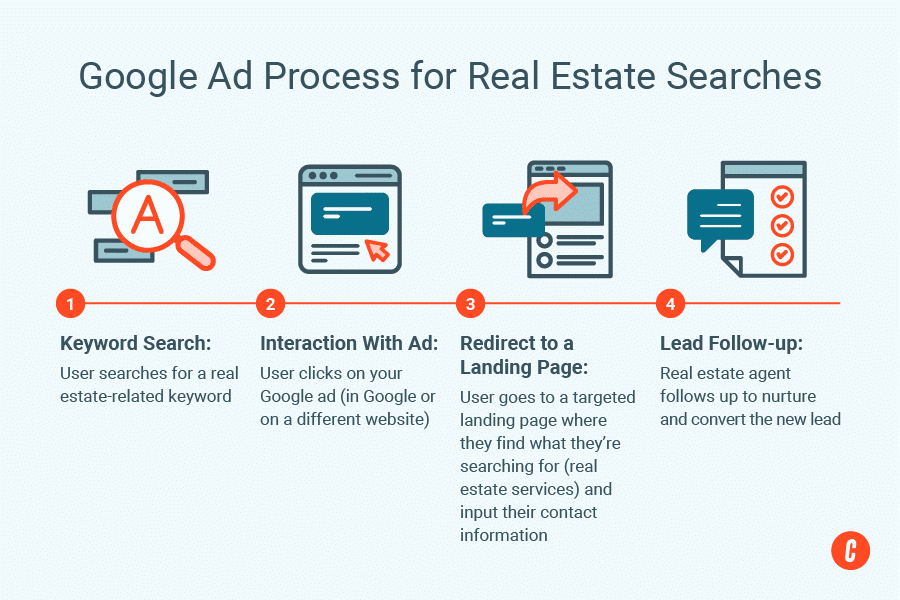
Begin by creating a Google Ads account at ads.google.com. Once your account is established, identify your target audience based on demographics, location, and interests. Real estate ads should focus on local markets to attract potential buyers or renters within specific geographic areas. Understanding your audience will help you tailor your campaigns effectively.
Next, conduct keyword research to select terms that potential clients might use when searching for properties. Use tools like Google Keyword Planner to identify high-volume keywords relevant to your listings, such as “homes for sale in [location]” or “apartments near [landmark].” Choosing the right keywords is crucial for optimizing your ad visibility and ensuring you reach interested buyers.
After selecting keywords, focus on creating compelling ad copy that captures attention. Highlight unique selling points of the properties, include a clear call-to-action, and ensure the ad aligns with the keywords selected. A/B testing different ad formats and messaging can help determine what resonates best with your audience.
Expert insight: Regularly analyze your ad performance metrics, such as click-through rates and conversion rates, to optimize your campaigns. Adjusting bids and refining keywords based on performance data can significantly enhance the effectiveness of your Google Ads strategy for real estate.
What is the cost of Google Ads for real estate?
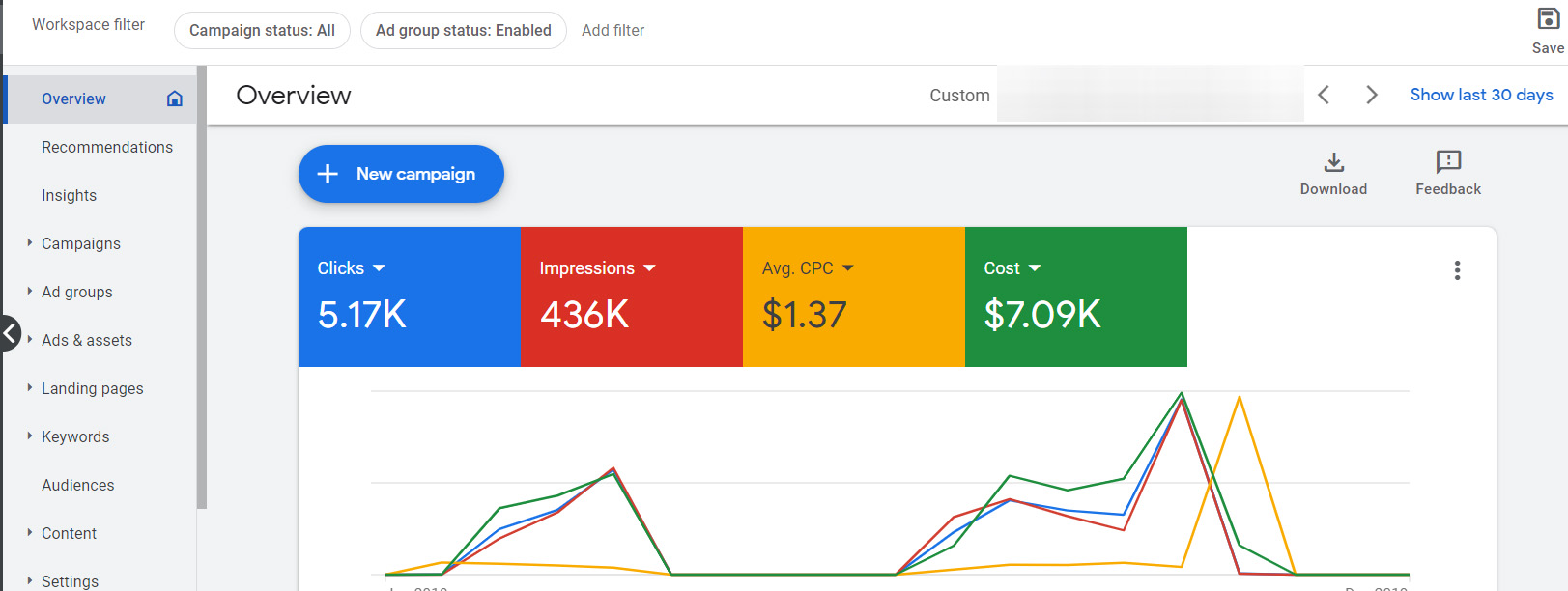
The cost of Google Ads for real estate typically ranges from $1 to $2 per click. This range can vary significantly based on several factors, including competition, location, and targeting options.
Several key factors influence the cost of Google Ads in the real estate sector. Understanding these can help businesses optimize their advertising budget:
- Competition: Areas with high demand for real estate often have more advertisers, driving up the cost per click. Urban markets generally see higher rates compared to rural locations.
- Keywords: The choice of keywords plays a crucial role. Highly sought-after terms, such as “luxury homes” or “real estate agent,” typically incur higher costs compared to more generic keywords.
- Targeting Options: Geographic targeting, demographic targeting, and even device targeting can affect costs. More refined targeting strategies may lead to higher click costs but can yield better conversion rates.
Moreover, the quality and relevance of the ad can impact its cost. Google uses a bidding system combined with a quality score to determine ad placement and cost. Higher quality ads that resonate with users can lower costs over time.
Expert insight: Regularly reviewing and optimizing ad campaigns based on performance metrics is essential. Adjusting keywords, ad copy, and targeting parameters can lead to significant cost savings and improved ROI in Google Ads campaigns for real estate.
How long does it take to see results from Google Ads for real estate?
You can start seeing results from Google Ads for real estate within a few days to a couple of weeks, depending on your budget and the quality of your ads. Typically, advertisers may observe initial engagement metrics, such as clicks and impressions, shortly after launching their campaigns.
Several factors influence the timing of results. First, the budget allocated to the campaign plays a critical role. A higher budget can lead to greater visibility and quicker results due to increased ad placements. Second, the quality of the ads, including relevance and user engagement, can impact performance. Google rewards well-performing ads with better placement and lower costs per click.
Additionally, competition in the local real estate market affects how quickly results materialize. In highly competitive areas, it may take longer to gain traction as multiple advertisers vie for the same audience. Furthermore, the optimization of keywords and targeting settings can lead to more effective campaigns. Continuous monitoring and adjusting of campaigns are essential for achieving faster results.
Expert insight: Regularly review your campaign metrics and adjust your targeting and budget to maximize results. A/B testing different ad copies can also reveal what resonates best with your audience, accelerating your path to successful outcomes.
What are the best practices for Google Ads in real estate?
Effective Google Ads for real estate require a strategic approach to maximize visibility and engagement. Best practices include utilizing location targeting, optimizing ad copy for clarity, and regularly analyzing campaign performance. According to recent data, targeted ads can increase click-through rates by up to 50%.
Location targeting is essential in real estate advertising. By focusing on specific geographic areas, agents can reach potential buyers actively searching for properties in their desired locations. Utilize Google’s advanced targeting options to refine your audience based on demographics, interests, and behaviors. This ensures that your ads appear to individuals most likely to convert.
- Optimize ad copy for clarity: Craft clear, concise, and compelling ad copy. Highlight unique property features, benefits, and calls-to-action that resonate with your target audience. Strong headlines and descriptive text can significantly improve engagement rates.
- Utilize ad extensions: Leverage ad extensions such as location, call, and structured snippets to provide additional information without cluttering the main ad. This increases the ad’s visibility and offers potential clients more ways to engage.
- Regularly analyze campaign performance: Monitor performance metrics such as click-through rates, conversion rates, and return on ad spend. Use this data to make informed adjustments to your campaigns, enabling continuous improvement and better allocation of resources.
Expert insight: Regularly A/B test different ad formats and copy variations to identify the most effective combinations for your audience. This data-driven approach can significantly enhance ad performance over time.
How do Google Ads compare to Facebook Ads for real estate?
Google Ads and Facebook Ads serve different purposes in real estate marketing. Google Ads primarily targets users actively searching for properties, capitalizing on intent-driven traffic. In contrast, Facebook Ads focus on engaging users based on their interests and behaviors, often reaching a broader audience.
When evaluating the effectiveness of these advertising platforms, consider the following key differences:
- Targeting Approach: Google Ads uses keyword targeting, allowing real estate agents to reach potential buyers at the moment they express interest through search queries. Facebook Ads, on the other hand, rely on demographic and psychographic targeting, enabling advertisers to engage users who may not be actively searching for properties but fit certain profiles.
- Ad Format: Google Ads typically features text-based ads that appear on search engine results pages (SERPs), while Facebook Ads can include visually engaging formats like carousel ads, videos, and stories, which can showcase properties in a more appealing manner.
- Cost Structure: Google Ads often operates on a pay-per-click (PPC) model, where advertisers pay for each click on their ad. Facebook Ads generally follow a cost-per-thousand-impressions (CPM) model, which can be more cost-effective for generating brand awareness, but may lead to lower conversion rates compared to Google Ads.
Both platforms can complement each other in a well-rounded marketing strategy. Utilizing Google Ads can capture high-intent leads actively searching for real estate, while Facebook Ads can build brand awareness and nurture leads through engaging content. The choice depends on specific marketing goals, target audience, and budget allocation.
Expert insight: Combining both Google Ads and Facebook Ads can maximize reach and conversion potential by targeting users at different stages of the buying journey. Consider using retargeting strategies on Facebook to re-engage visitors who clicked on Google Ads but did not convert.
What keywords should I use for Google Ads in real estate?
For effective Google Ads targeting in real estate, use keywords like “homes for sale in [location],” “real estate agent near me,” and “buy a house in [location].” These phrases are frequently searched by potential buyers and can significantly improve your ad visibility.
When selecting keywords, consider the local market dynamics. For instance, if you are targeting a suburban area, incorporating specific neighborhoods or towns into your keywords can yield better results. For example, using “luxury homes for sale in Beverly Hills” can attract high-end buyers who are searching for premium properties. According to industry data, localized keywords can increase click-through rates by over 30% compared to broader terms.
Additionally, consider including long-tail keywords that reflect specific buyer intent. Phrases like “first-time home buyers in [location]” or “best neighborhoods to buy a home in [city]” cater to specific demographics and buyer motivations. These keywords not only improve ad relevance but also enhance the chances of conversion, as they target users who are further along in the purchasing process.
Expert insight: Regularly review and adjust your keyword strategy based on performance metrics. Utilize tools like Google Keyword Planner to identify emerging trends and ensure your ads remain competitive in the evolving real estate landscape.
Advanced Targeting Techniques for Real Estate Ads
Specialized targeting strategies enhance the effectiveness of Google Ads for real estate by ensuring advertisements reach the most relevant audiences. Leveraging advanced techniques can significantly improve engagement and conversion rates.
Demographic Targeting for Specific Buyer Profiles
Demographic targeting allows real estate professionals to tailor their ads based on factors such as age, gender, income level, and family status. For example, targeting ads to young professionals might focus on urban properties with amenities like gyms and co-working spaces, while ads aimed at families may emphasize spacious homes in good school districts. According to a 2024 study, 68% of real estate transactions involved buyers from specific demographic segments, highlighting the need for precision in targeting.
Implementing Remarketing Strategies
Remarketing strategies are essential for re-engaging potential buyers who have previously interacted with your website. By displaying targeted ads to users who have visited specific property listings or engaged with your content, you can keep your properties top of mind. An effective remarketing campaign can increase conversions by up to 50%, as it capitalizes on users’ previous interest and familiarity with your offerings.
Location-Based Targeting for Local Markets
Location-based targeting enables real estate advertisers to focus on specific geographic areas. This is particularly beneficial for local markets where buyers often seek properties within a certain radius. Utilizing Google Ads’ location settings, advertisers can target users based on their current location, or even set up geofencing around properties to capture interest from nearby potential buyers. In 2025, 79% of homebuyers reported that they searched for properties within a 30-minute commute to their workplace, underscoring the effectiveness of this targeted approach.
Integrating Audience Insights for Tailored Ad Experiences
Leveraging audience insights can help in creating personalized ad experiences. By analyzing data on user behavior, interests, and preferences, real estate professionals can craft messages that resonate with specific audiences. For instance, if data indicates a high interest in eco-friendly homes, ads can highlight energy-efficient features and sustainability certifications. Customized ads based on audience insights can lead to a 25% increase in click-through rates.
While many real estate marketers focus solely on keywords and basic targeting, they often overlook the profound impact of these advanced techniques. Each method not only enhances the relevance of ads but also contributes to a more effective allocation of advertising budgets. For example, a common misconception is that demographic targeting is only beneficial for luxury properties; however, even entry-level homes can benefit from tailored messaging that addresses specific buyer personas.
To implement these advanced targeting techniques effectively, real estate professionals should:
- Analyze demographic data to identify target buyer segments.
- Set up remarketing campaigns to reach past visitors and nurture leads.
- Utilize Google Ads geotargeting features to focus on local markets.
- Collect and analyze audience insights to create personalized ad content.
By applying these strategies, real estate advertisers can significantly enhance their campaign performance, leading to increased property sales and improved return on investment.
Common Mistakes to Avoid in Google Ads for Real Estate
Effective Google Ads for real estate can significantly enhance property sales, but common pitfalls can undermine campaign success. This section outlines critical mistakes that can lead to budget waste and reduced effectiveness.
Neglecting to Optimize Landing Pages for Conversions
Landing pages are pivotal in converting clicks into leads. A well-designed landing page should align with the ad’s promise and provide a seamless user experience. Key elements include a clear call to action, concise information, and visually appealing design. According to recent studies, optimizing landing pages can boost conversion rates by up to 300%.
Overlooking Negative Keywords to Filter Out Irrelevant Traffic
Negative keywords prevent ads from showing for irrelevant searches, saving budget and focusing on qualified leads. For instance, if advertising luxury properties, using negative keywords like “cheap” or “foreclosure” can filter out unqualified traffic. Without this strategy, campaigns may attract clicks from users not interested in the properties offered, leading to wasted spend.
Failing to Track and Analyze Ad Performance Metrics
Monitoring ad performance is essential for informed decision-making. Key metrics include click-through rate (CTR), conversion rate, and cost per acquisition (CPA). A failure to track these metrics can result in misallocation of resources. In 2024, businesses that actively analyzed their data saw an average 25% increase in campaign effectiveness.
Not Adjusting Bidding Strategies Based on Campaign Goals
Bidding strategies should align with specific campaign objectives, whether maximizing clicks, conversions, or return on investment (ROI). A static bidding approach can lead to missed opportunities or overspending. For example, a cost-per-click (CPC) strategy may work well for brand awareness, while a target CPA strategy is better suited for conversions. Adjusting bids based on real-time performance data is crucial for optimizing outcomes.
Nuances in google ads for Real Estate
Many marketers mistakenly believe that a high budget guarantees success. While a larger budget can provide more exposure, it does not replace the need for strategic planning and execution. Additionally, targeting broad geographic areas can dilute efforts. Instead, focusing on specific neighborhoods or demographics often yields better results. Understanding the unique dynamics of the real estate market is vital for crafting campaigns that resonate.
Practical Application
- Review and optimize landing pages regularly to enhance user experience and conversion rates.
- Implement negative keywords to refine traffic and ensure relevance.
- Utilize analytics tools to track performance metrics and adjust strategies accordingly.
- Align bidding strategies with specific campaign goals to maximize efficiency.
Real-World Case Studies: Successful Google Ads Campaigns
This section explores real-world examples of successful Google Ads campaigns in the real estate sector, highlighting effective strategies and their outcomes. By analyzing these case studies, real estate professionals can glean valuable insights to enhance their own advertising efforts.
Case Study: A Successful Agent’s Lead Generation
A top-performing real estate agent in Austin, Texas, leveraged Google Ads to generate high-quality leads. By utilizing targeted keywords such as “homes for sale in Austin” and “buy luxury property in Austin,” the agent achieved a conversion rate of 12% over a six-month campaign. The agent invested $2,500 monthly in ads and reported closing 15 transactions directly linked to the campaign, resulting in an estimated revenue of $1.5 million.
Targeting Luxury Buyers: A Firm’s Campaign Analysis
A luxury real estate firm in Miami implemented a Google Ads strategy focused on affluent buyers. The firm utilized demographic targeting, reaching individuals with high disposable incomes. By creating visually appealing ads featuring high-quality images of properties, the firm saw a 25% increase in inquiries from potential buyers. The average cost per click (CPC) was $5.00, which was considered cost-effective given the high average sale price of their listings.
Insights from a Commercial Real Estate Agency
A commercial real estate agency in New York City ran a Google Ads campaign targeting business investors and entrepreneurs. The agency focused on keywords like “commercial spaces for lease in NYC” and “investment properties in NYC.” The campaign generated over 1,000 leads within three months, with a click-through rate (CTR) of 8%. The agency noted that ads emphasizing competitive pricing and location yielded the highest engagement.
Lessons from Failed Campaigns
Not all campaigns yield success. A mid-range real estate company in California experienced a poorly performing Google Ads campaign due to vague targeting and ineffective ad copy. Initial efforts focused on broad keywords that attracted irrelevant traffic, resulting in a conversion rate of less than 2%. After analyzing performance data, the company restructured its strategy by narrowing its focus to specific neighborhoods and enhancing ad copy to highlight unique selling propositions. This adjustment led to a remarkable turnaround, with a new conversion rate of 10% within two months.
Expert Insights
Many real estate professionals mistakenly believe that simply increasing their ad budget will result in better performance. However, effective Google Ads campaigns depend on a combination of targeted keyword selection, compelling ad copy, and continuous performance monitoring. Additionally, understanding the importance of remarketing—targeting users who have previously interacted with your website—can significantly improve conversion rates. Neglecting this aspect can lead to lost opportunities and wasted ad spend.
Practical Applications
- Conduct thorough keyword research to identify niche and long-tail keywords relevant to your market.
- Create compelling ad copy that highlights the unique features of your listings.
- Implement demographic targeting to reach specific buyer personas effectively.
- Regularly analyze campaign performance metrics to make data-driven adjustments.
- Consider remarketing strategies to re-engage previous website visitors.
Integrating Google Ads with Local SEO Strategies
This section explores how Google Ads can enhance local SEO efforts specifically for real estate professionals. By leveraging both paid and organic strategies, agents can significantly improve their visibility and drive property sales.

Benefits of Combining Paid and Organic Search Strategies
Integrating Google Ads with local SEO offers several advantages for real estate professionals. First, it enables a comprehensive approach to visibility, ensuring that listings appear in both paid and organic search results. This dual presence can increase brand awareness and establish credibility in a competitive market.
Moreover, utilizing both strategies can enhance click-through rates (CTR). According to a 2024 study, listings that appear in both paid and organic search results experience a CTR increase of up to 30%. This synergy not only drives more traffic but also improves the chances of converting leads into sales.
Using Google My Business to Enhance Ad Visibility
Google My Business (GMB) is a crucial tool for real estate agents aiming to improve their local presence. By optimizing GMB profiles, agents can ensure that their ads are more visible in local search results. This includes adding accurate business information, high-quality images, and positive customer reviews.
Additionally, GMB integrates seamlessly with Google Ads, allowing properties to appear in local pack listings. Listings in the local pack can receive up to 70% of all clicks for local searches. Regular updates to GMB listings can further enhance visibility and engagement.
Creating Localized Content to Support Ad Campaigns
Localized content plays a vital role in supporting Google Ads for real estate. By creating content that addresses the specific needs and interests of local audiences, agents can enhance their relevance in search results. This can include blog posts about local market trends, neighborhood guides, and community events.
- Develop neighborhood-specific landing pages.
- Utilize local keywords in ad copy and content.
- Engage with local influencers or community organizations for content collaboration.
Incorporating localized keywords can improve organic rankings, leading to increased visibility for both ads and search results. Data from 2025 indicates that localized content can boost organic traffic by up to 50% for real estate websites.
Measuring the Impact of Local SEO on Ad Performance
Monitoring the performance of Google Ads in conjunction with local SEO is essential for optimizing marketing strategies. Key performance indicators (KPIs) to consider include conversion rates, CTR, and the number of leads generated from local searches. Tools like Google Analytics and Google Ads reporting can provide insights into how local SEO efforts impact ad performance.
Real estate professionals should regularly analyze these metrics to identify trends and adjust strategies. For instance, a significant increase in organic traffic may correlate with specific ad campaigns, indicating successful integration.
While many believe that Google Ads can stand alone, the integration with local SEO creates a more robust marketing approach. However, a common misconception is that paid ads can replace the need for strong organic presence. In reality, a balanced strategy yields the best results for long-term success in real estate.
To effectively integrate Google Ads with local SEO, real estate agents should:
- Optimize their Google My Business profile with accurate information and engaging visuals.
- Create localized content that resonates with the target audience.
- Regularly analyze ad performance in relation to local SEO efforts for continuous improvement.
By implementing these strategies, agents can maximize their reach and drive more property sales through a comprehensive marketing approach.
Evaluating the Best Google Ads For Real Estate
As the real estate advertising market is projected to reach $20 billion by 2026, evaluating different providers is crucial for maximizing return on investment. Key criteria include pricing, target audience, and unique features that cater specifically to real estate needs. Understanding these factors will help real estate professionals make informed decisions about their advertising strategies.
| Provider / Option | Best For | Pricing | Key Feature |
|---|---|---|---|
| Google Ads | All-around advertising solution | $1-$2 per click on average | Extensive targeting options |
| Facebook Ads | Social media engagement | $0.50-$2 per click | Visual content promotion |
| Zillow Premier Agent | Real estate professionals | $20-$60 per lead | Real estate-specific platform |
| Realtor.com Ads | Home buyers targeting | $1-$3 per click | High traffic real estate site |
| Adwerx | Local market advertising | $50-$500 per month | Automated ad campaigns |
| Homesnap Pro Ads | Mobile advertising | $0.10-$0.50 per click | Mobile-first approach |
Criteria for Evaluating Program Quality
Pricing: Evaluate the cost per click or lead for each provider to ensure it aligns with your budget. Understanding the pricing structure can help you allocate resources effectively.
Target Audience: Assess how well each platform reaches your desired demographic. Platforms like Zillow and Realtor.com are tailored for real estate, making them more effective for specific audiences.
Key Features: Consider unique features that can enhance your advertising efforts. For instance, Google Ads offers extensive targeting options, while Adwerx automates ad campaigns for efficiency.
Performance Metrics: Look for providers that offer analytics and reporting tools. Being able to track performance will help you refine your strategies and improve ROI over time.
How to Assess the Reputation and Reliability of Providers
- Check Reviews: Research online reviews and testimonials from other real estate professionals to gauge satisfaction levels with the provider.
- Evaluate Case Studies: Look for case studies or success stories that highlight the provider’s effectiveness in real estate advertising.
- Request References: Ask the provider for references from clients in the real estate sector to gain insights into their reliability and service quality.
- Analyze Customer Support: Assess the quality of customer support offered by the provider, as prompt assistance is crucial for resolving issues.
- Review Terms and Conditions: Carefully read the terms of service to understand any potential hidden fees or restrictions that may impact your advertising campaigns.
Which Google Ads For Real Estate Is Right for You?
The best Google Ads strategy for real estate professionals hinges on distinct business needs, budget constraints, and specific marketing goals. This guide offers tailored recommendations to help you choose the most effective advertising approach for your unique situation.
New real estate agents
Google Ads is ideal for new agents aiming to quickly establish a market presence and attract leads. Starting with a budget of around $500 to $1,000 per month can allow for targeted campaigns that focus on local keywords such as “homes for sale in [your area].” Utilize Google’s location targeting to reach potential clients in your immediate vicinity.
Established real estate firms
For established firms, a combined strategy using both Google Ads and Facebook Ads can maximize reach and engagement among target demographics. Allocating a monthly budget of $2,000 to $5,000 can enable firms to run remarketing campaigns on Google while simultaneously leveraging Facebook’s detailed demographic targeting to engage potential buyers and sellers effectively.
Real estate investors
Real estate investors should focus on platforms like Zillow Premier Agent and Realtor.com Ads, which are tailored for targeting specific investment properties and generating leads. A budget of $500 to $1,500 per month can yield high-quality leads, especially when focusing on niche markets such as multi-family units or commercial properties.
Luxury property sellers
For sellers in the luxury market, employing high-quality visuals in Facebook Ads can effectively attract affluent buyers. Consider a budget of $1,000 to $3,000 per month to create visually stunning ads that showcase luxury listings, utilizing Facebook’s carousel and video ad formats to engage potential clients with rich media content.
Commercial real estate agents
Commercial real estate agents can benefit from Google Ads with specific industry targeting to reach commercial buyers effectively. A monthly budget of $1,000 to $3,000 can facilitate targeted campaigns that focus on keywords related to commercial properties, ensuring ads are displayed to a relevant audience actively searching for commercial real estate opportunities.
| If You Are… | Best Approach |
|---|---|
| New real estate agents | Google Ads with local targeting ($500-$1,000/month) |
| Established real estate firms | Google Ads + Facebook Ads ($2,000-$5,000/month) |
| Real estate investors | Zillow Premier Agent & Realtor.com Ads ($500-$1,500/month) |
| Luxury property sellers | High-quality Facebook Ads ($1,000-$3,000/month) |
| Commercial real estate agents | Google Ads with industry targeting ($1,000-$3,000/month) |
Local Insights for Google Ads in Real Estate
Understanding geographic and local market factors is crucial for maximizing the effectiveness of Google Ads for real estate. In fact, 46% of all Google searches are seeking local information, making it imperative for real estate professionals to tailor their advertising strategies to their specific markets.
Geographic Market Differences
In larger metropolitan areas like Los Angeles or New York City, competition for Google Ads in real estate is fierce, often requiring higher bids to achieve visibility. Conversely, in smaller markets or rural areas, ad costs may be lower, but the audience is also smaller. Real estate businesses should analyze local competition levels and adjust their bidding strategies accordingly to maximize ROI.
Local Business Applications
Local real estate businesses can leverage Google Ads to target specific neighborhoods or demographics effectively. Here are some concrete applications:
- Targeting ads for first-time homebuyers in emerging neighborhoods, utilizing local keywords.
- Promoting open houses with geo-targeted ads to reach potential buyers within a specific radius.
- Highlighting local market reports or success stories in ads to build credibility and attract leads.
- Utilizing seasonal campaigns tailored to local events or market trends, like back-to-school or holiday promotions.
Local Search and Visibility Impact
Integrating Google Ads with local SEO strategies significantly enhances visibility in local search results. Businesses should focus on the following actions:
- Optimize Google Business Profile (GBP) with accurate location, hours, and services to improve local rankings.
- Incorporate local keywords in ad copy and landing pages to align with user search intent.
- Encourage customer reviews on GBP to enhance credibility and improve ad performance.
- Utilize local landing pages for specific neighborhoods to increase relevance and ad quality scores.
Pricing and Cost in Local Markets
Costs for Google Ads in real estate vary significantly by geographic area. In competitive markets like San Francisco, average CPC (cost-per-click) can range from $2.50 to $6.00, while less competitive areas might see rates as low as $1.00 to $3.00. Local businesses should budget accordingly, typically allocating at least $500 to $1,000 per month for effective campaigns, while national players might invest upwards of $5,000 monthly for broader reach.
Local Implementation Checklist:
- Research local competition and adjust your ad bidding strategy.
- Optimize your Google Business Profile with up-to-date information.
- Create targeted ads for specific neighborhoods or demographics.
- Use local keywords in ad copy and landing pages.
- Encourage and manage customer reviews on your GBP.
- Monitor and adjust ad performance based on local search trends.
- Set a monthly budget that reflects your market’s competitive landscape.
For Real Estate businesses looking to generate local leads through Google Ads or Local SEO, GMB Ranger LLC offers hands-on campaign management. Specialist Md Tangeer Mehedi personally handles campaign setup and ongoing optimization — with no payment required until the first lead comes in.
Frequently Asked Questions
What are Google Ads for real estate?
Google Ads for real estate are online advertising campaigns specifically designed to promote property listings, real estate services, and brand awareness. They utilize targeted keywords and demographics to reach potential buyers and sellers effectively.
How to set up Google Ads for real estate?
To set up Google Ads for real estate, create a Google Ads account, define your campaign goals, and select your target audience. Next, choose relevant keywords, create compelling ad copy, and set a budget for your campaign.
What is the cost of Google Ads for real estate?
The cost of Google Ads for real estate varies based on competition, keywords, and targeting options. Advertisers typically pay on a cost-per-click (CPC) basis, with average costs ranging from $1 to $5 per click, depending on the market.
How long does it take to see results from Google Ads for real estate?
Results from Google Ads for real estate can typically be seen within a few days to weeks after launching a campaign. However, significant performance improvements may take several weeks as data is collected and optimizations are made.
What are the best practices for Google Ads in real estate?
Best practices for Google Ads in real estate include using targeted keywords, creating specific ad groups, and writing compelling ad copy that highlights unique property features. Regularly monitor and optimize campaigns based on performance data to maximize ROI.
How do Google Ads compare to Facebook Ads for real estate?
Google Ads target users actively searching for properties, making them effective for immediate leads, while Facebook Ads focus on demographic targeting and brand awareness. Both platforms can complement each other in a comprehensive marketing strategy.
What keywords should I use for Google Ads in real estate?
Effective keywords for Google Ads in real estate include location-specific terms, property types, and phrases like “homes for sale” or “real estate agent.” Researching local market trends can help identify high-performing keywords for your campaigns.
Final Thoughts on Google Ads for Real Estate
Harnessing the power of Google Ads for real estate can significantly elevate property sales by enhancing visibility and targeting the right audience. With the right strategies, including advanced targeting techniques and avoiding common pitfalls, real estate professionals can achieve impressive campaign results.
To capitalize on this opportunity, real estate agents should conduct a thorough keyword analysis specific to their market, ensuring that their ads are optimized for high-intent searches that drive qualified leads.
Ready to take your property sales to the next level? Consider partnering with a google ads management agency that specializes in real estate!
In an increasingly competitive landscape, mastering Google Ads is not just an advantage; it is essential for sustained success in real estate marketing.
Leave a Reply